

Aerial Sprays
Published in academic literature
App Summary
App Screenshots
Detailed Description
Functionality & Mechanism
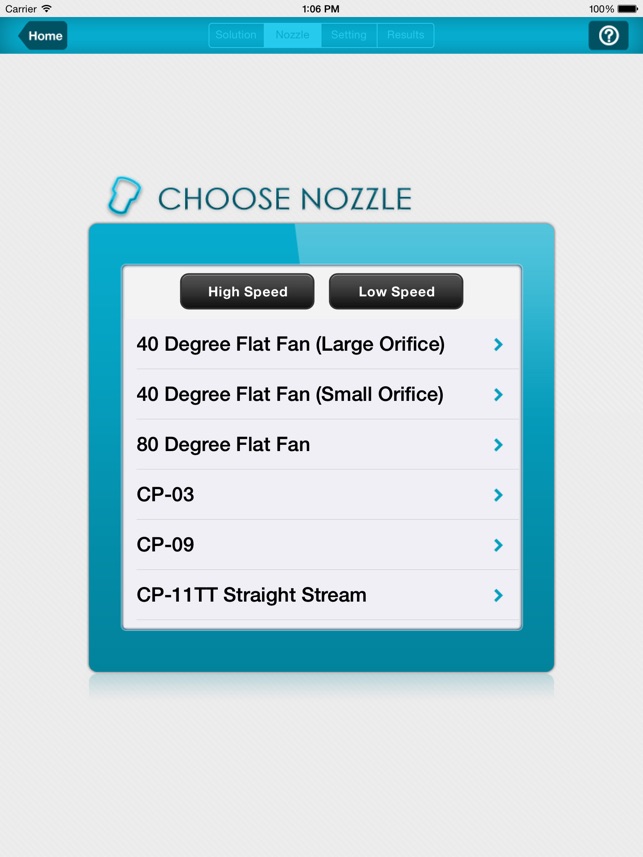
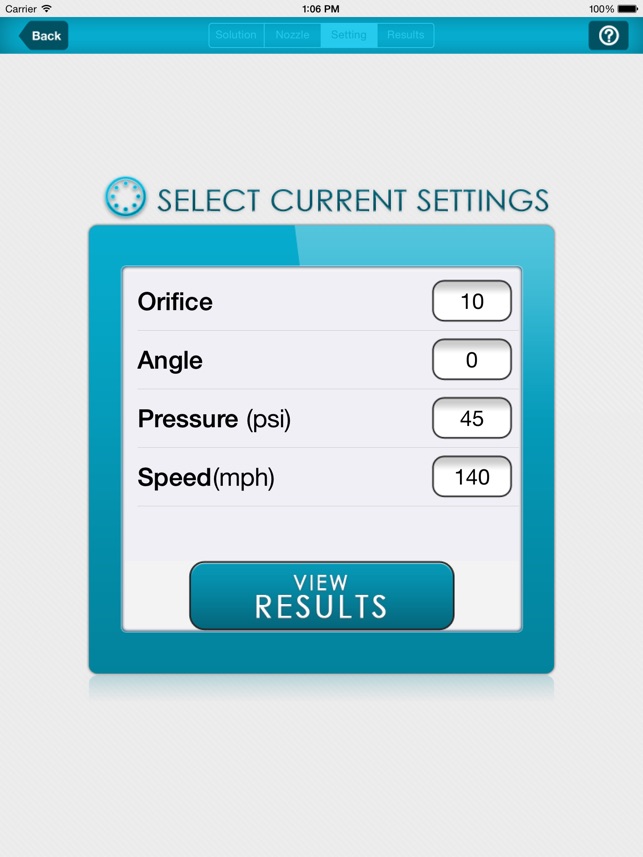
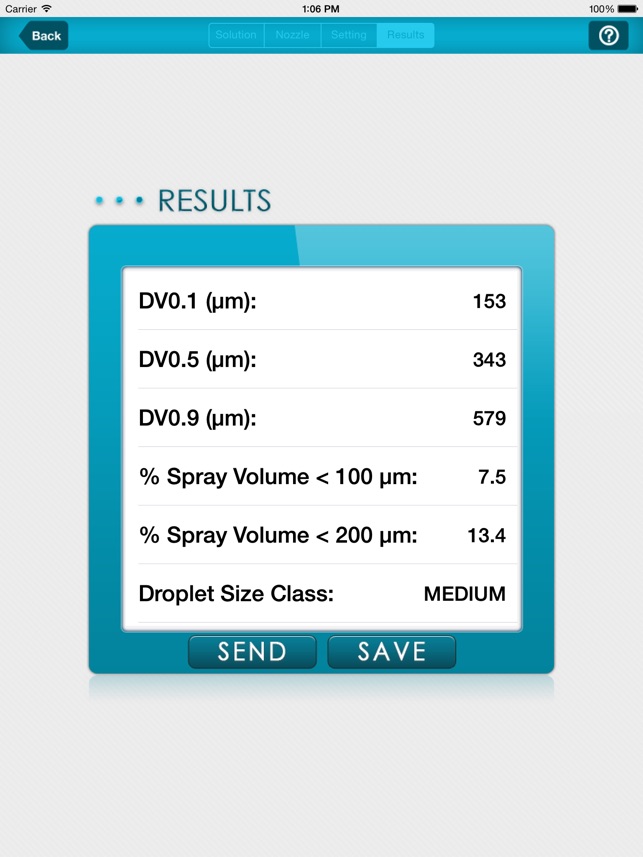
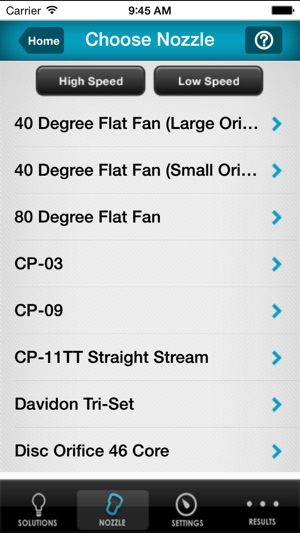
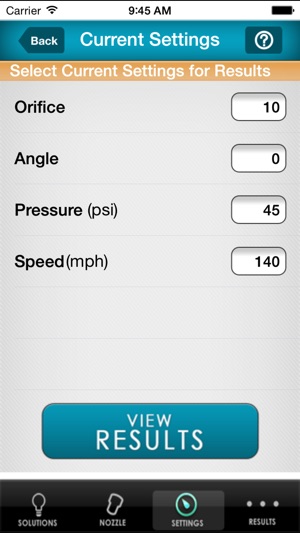
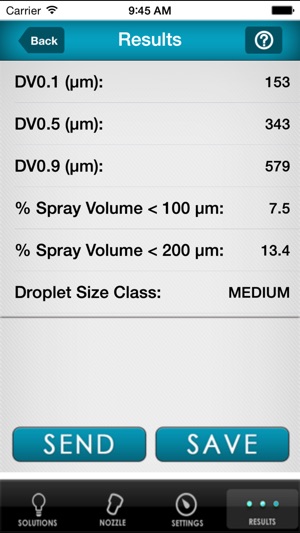
Developed by the USDA Agricultural Research Service (USDA-ARS), this system provides predictive atomization models for aerial spray applications. The interface captures four operational parameters: nozzle orifice size, orientation, spray pressure, and airspeed. The system processes these inputs to calculate spray droplet size distribution metrics (DV0.1, DV0.5, DV0.9), the volume percentage of fine droplets, and a final spray classification based on the ASABE S572 engineering standard. Session results are time-stamped and can be saved or exported.
Evidence & Research Context
- The associated research describes these models as decision-support tools designed to optimize on-target application efficacy and mitigate off-target spray drift.
- The system is engineered to function across low-speed (<120 mph) and high-speed (>120 mph) operational regimes, independent of aircraft platform.
- The underlying models are intended to facilitate applicator compliance with product label requirements concerning specific spray quality and droplet size classifications.
- The system integrates nozzle and boom flow rate calculations, allowing for the simultaneous determination of droplet classification and the required setup to achieve a target application rate.
Intended Use & Scope
This tool is designed for professional aerial applicators and agricultural producers for pre-application spray setup calibration. Its primary utility is predicting droplet size to support operational planning and regulatory compliance. The system generates model-based estimates; it does not measure real-time deposition or account for variable atmospheric conditions that influence final spray behavior.
Studies & Publications
Peer-reviewed research associated with this app.
Atomization Models
United States Department et al. (2022) · USDA ARS
Describes the research-driven development of this appApp Information
Category
Evidence Profile
Published in academic literature
Platforms
Updated
Sep 2016
© 2025 United States Department of Agriculture
Tags


Aerial Sprays
Free