
AVID Deer
Initial evidence from research studies
App Summary
App Screenshots
Detailed Description
Functionality & Mechanism
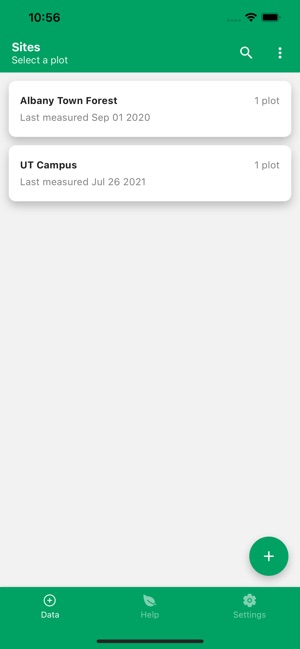
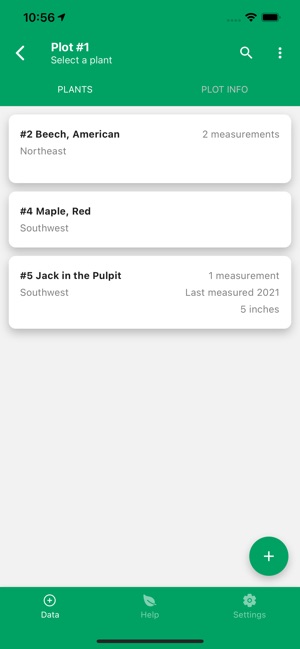
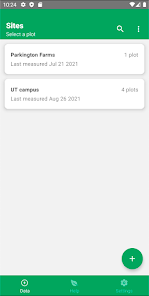
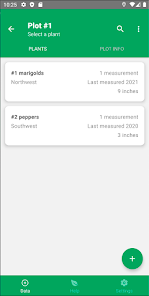
AVID (Assessing Vegetation Impacts from Deer) is a standardized citizen-science protocol for collecting field data on forest regeneration. The system guides participants through establishing monitoring plots and conducting annual measurements of seedling height for key tree species. This rapid field method is designed for deployment by trained volunteers, landowners, and professionals. Data collection facilitates long-term tracking of deer browsing effects on specific forest sites, contributing to a broader regional dataset intended to inform conservation management.
Evidence & Research Context
- A validation study across 10 research sites in New York demonstrated the protocol's sensitivity in detecting deer impacts by comparing fenced and unfenced plots.
- The method confirmed that deer browsing reduced the average height growth of palatable tree species several-fold relative to protected seedlings.
- The protocol has been effectively deployed as a citizen-science tool, with 1,399 participants trained and 83 monitoring sites established between 2016 and 2020.
- Data collected via the AVID protocol is intended to inform deer management decisions by the New York State Department of Environmental Conservation.
Intended Use & Scope
This protocol is intended for landowners, citizen scientists, and resource management professionals to systematically monitor forest health. Its primary utility is standardized data collection for assessing long-term deer browse impacts on tree regeneration. The protocol does not generate management recommendations; collected data requires expert analysis to inform conservation and land management decision-making.
Studies & Publications
Peer-reviewed research associated with this app.
AVID: A rapid method for assessing deer browsing of hardwood regeneration
Curtis et al. (2021) · Forest Ecology and Management
Successfully detected deer browsing impacts on forest regeneration across 83 sites using citizen scientists.
In the Media
Deer Impact Toolbox provides guidance for Indiana forest landowners and managers
Purdue Forestry and Natural Resources Extension developed the Deer Impact Toolbox in collaboration with The Nature Conservancy to help Indiana landowners understand and mitigate deer impacts on forest ecosystems, using a comprehensive set of four publications and two instructional videos. "When deer become overabundant â there are more deer than there is food on the landscape â this can have a negative impact on different aspects of the forest, such as the plant or wildlife diversity, tree regeneration and growth," said extension wildlife specialist Jarred Brooke. The toolbox is now accessible through Purdue FNR Extension's website and the Purdue Education Store.
Assessing Vegetation for Impacts from Deer (AVID)
Cornell Cooperative Extension developed AVID Deer to evaluate deer browsing impacts on forest vegetation, using a rapid assessment method where participants tag and measure tree seedlings and wildflowers. Field data is being collected by individuals and organizations across New York State and submitted to a central database to track plant responses to deer browsing over time. The app helps guide deer management decisions at local and regional levels while teaching users forest ecology and wildflower identification.
Assessing Vegetation Impacts from Deer
The University of Minnesota Extension developed AVID Deer to monitor deer impacts on vegetation in Minnesota woodlands, using a citizen science approach with volunteer data collectors. The program addresses a critical knowledge gap, as surprisingly little information exists statewide that determines deer impacts to vegetation across multiple ownerships. Woodland owners, naturalists, and others with basic plant identification knowledge participate by establishing monitoring plots and recording annual measurements in wooded areas.
App Information
Developer
University of TennesseeCategory
Evidence Profile
Initial evidence from research studies
Platforms
Updated
Oct 2023
© 2025 University of Tennessee