AppsFromResearch
AWN CropAI icon

AWN CropAI

Evidence Tier:DOCUMENTED

Published in academic literature

For:Researchers & AcademicsIndustry Professionals

App Summary

AWN CropAI is a smartphone application for fruit growers that integrates with thermal cameras to provide real-time sunburn risk assessment and fruit color analysis. The associated evaluation study describes how the app uses artificial intelligence to analyze thermal-RGB images, automatically calculating fruit surface temperature and quantifying fruit color. By providing growers with on-site forecasts and objective fruit data, the authors conclude the tool can support informed, real-time decisions regarding irrigation, cooling, and harvest timing.

App Screenshots

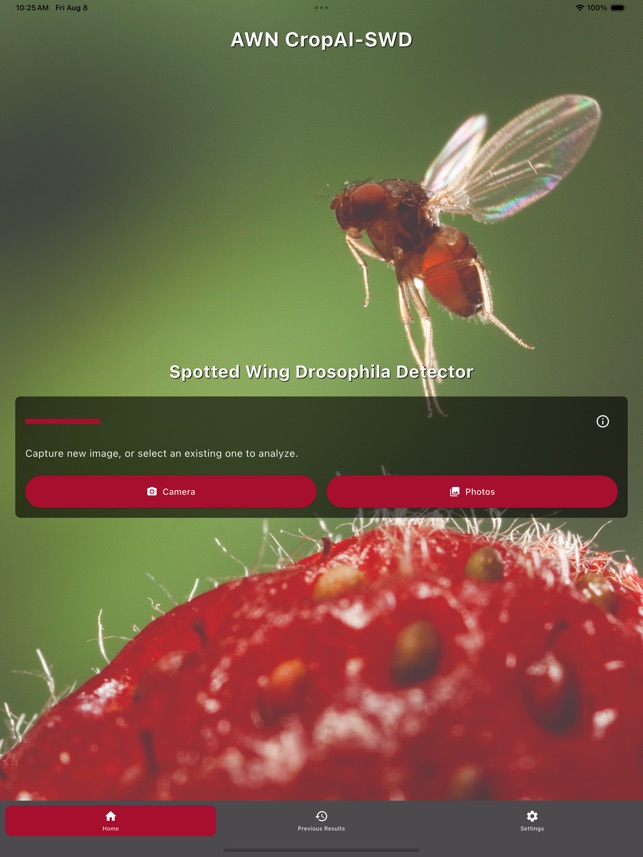
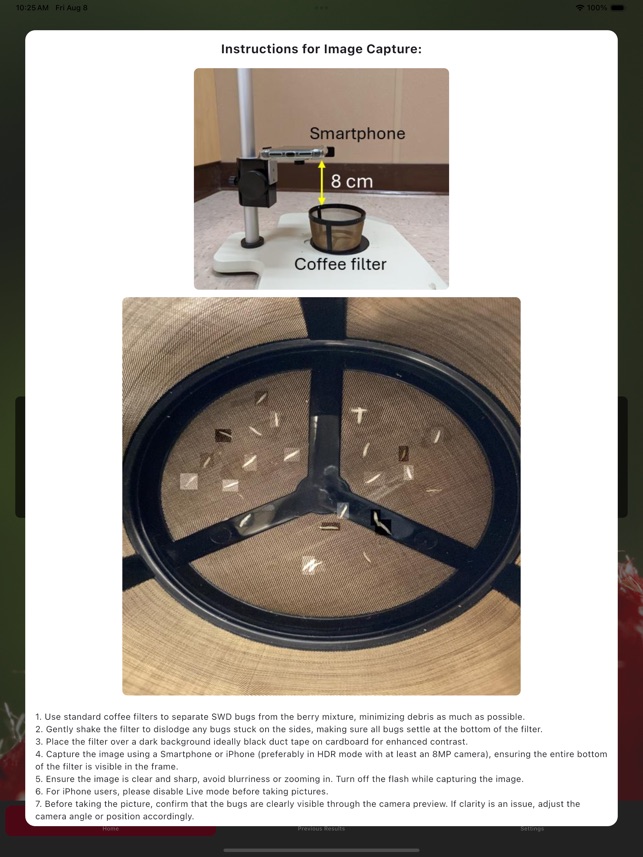
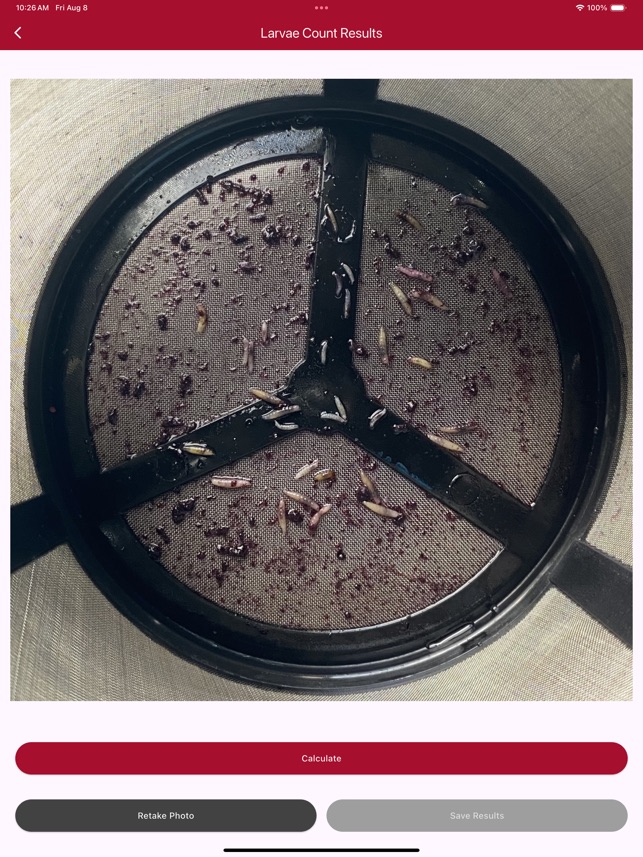
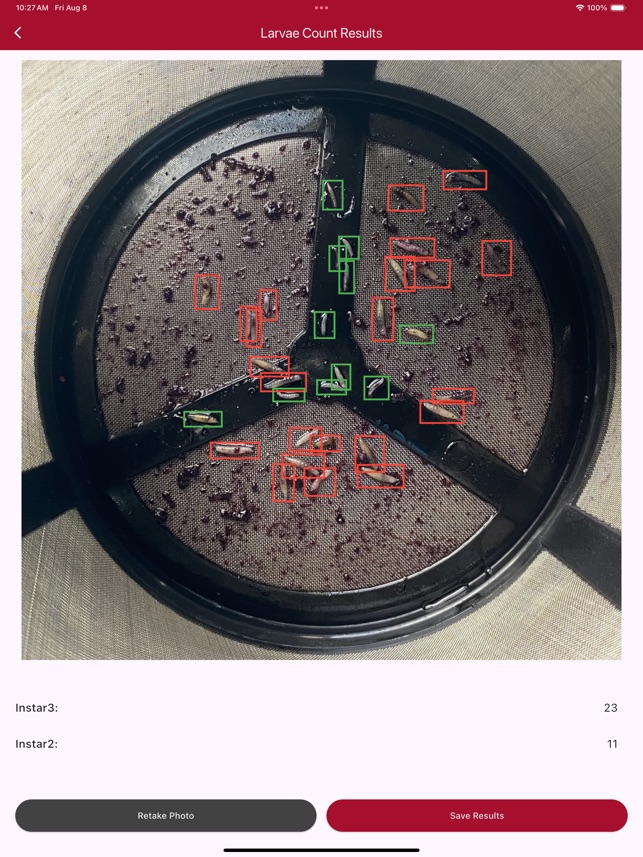
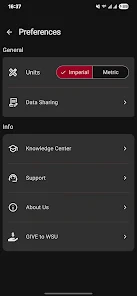
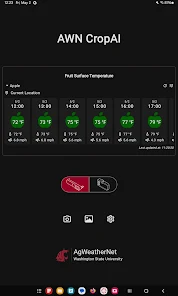
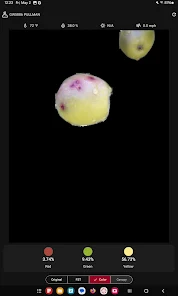
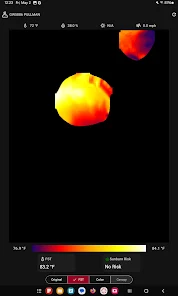
AWN CropAI screenshot 1 of 23AWN CropAI screenshot 2 of 23AWN CropAI screenshot 3 of 23AWN CropAI screenshot 4 of 23AWN CropAI screenshot 5 of 23AWN CropAI screenshot 6 of 23AWN CropAI screenshot 7 of 23AWN CropAI screenshot 8 of 23AWN CropAI screenshot 9 of 23AWN CropAI screenshot 10 of 23AWN CropAI screenshot 11 of 23AWN CropAI screenshot 12 of 23AWN CropAI screenshot 13 of 23AWN CropAI screenshot 14 of 23AWN CropAI screenshot 15 of 23AWN CropAI screenshot 16 of 23AWN CropAI screenshot 17 of 23AWN CropAI screenshot 18 of 23AWN CropAI screenshot 19 of 23AWN CropAI screenshot 20 of 23AWN CropAI screenshot 21 of 23AWN CropAI screenshot 22 of 23AWN CropAI screenshot 23 of 23

Detailed Description

Functionality & Mechanism

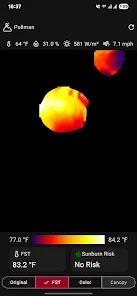
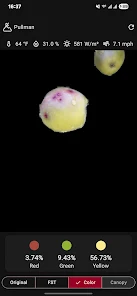
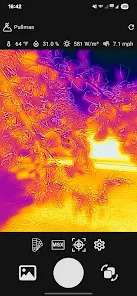
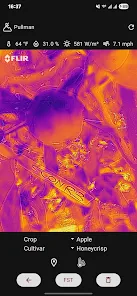
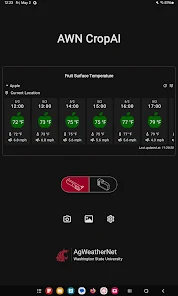
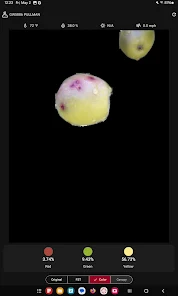
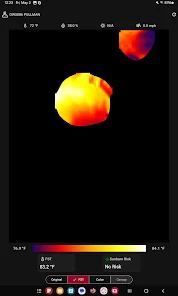
Developed by Washington State University's AgWeatherNet, the system integrates with supported thermal-RGB cameras to capture in-field imagery of fruit. The interface facilitates automated fruit detection via segmentation algorithms, which then calculate fruit surface temperature (FST) using the hottest 20% of pixels to assess sunburn risk. A parallel module conducts HSV color analysis to quantify red, green, and yellow proportions for maturity tracking. The platform also delivers hourly, weather-guided FST forecasts based on user location and regional network data.

Evidence & Research Context

  • The application's design and scientific basis are detailed in a development and evaluation paper from the WSU PrecisionAg Laboratory.
  • The system leverages fruit surface temperature (FST)—a validated, non-destructive indicator of sunburn susceptibility in apples—as its primary metric for risk assessment.
  • Its weather-guided FST forecast model is currently calibrated specifically for the 'Honeycrisp' apple cultivar.
  • The platform incorporates an optional crowdsourcing feature, enabling users to contribute anonymized thermal-RGB imagery to refine and expand forecasting models for additional cultivars.

Intended Use & Scope

This system is designed for apple growers, crop consultants, and agricultural researchers as a field-based decision support tool. Its primary utility is the real-time assessment of sunburn risk and fruit color to inform management strategies, such as optimizing the timing of irrigation or shade deployment. The tool provides risk data, not prescriptive treatments.

Studies & Publications

1 publication

Peer-reviewed research associated with this app.

Development/Design Paper

AWN CropAI: AI-Powered Sunburn Risk Assessment and Fruit Color Tracking App

Thennakoon et al. (2025) · WSU Tree Fruit

Describes the research-driven development of this app
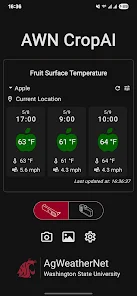
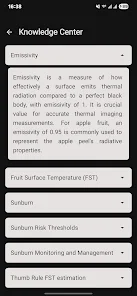
Introduction Sunburn is a major concern in apple production, especially in Washington State, where it can lead to yield losses of over 10% annually and up to 40% under severe conditions (Racsko & Schrader, 2012) (Bolivar-Medina & Kalcsits, 2022) . It remains the leading cause of apple cullage and reduced packouts in the region (Schmidt, 2018). Fruit surface temperature (FST) is a reliable indicator of sunburn susceptibility (Wang, Ranjan, Khot, & Peters, 2020), but traditional methods of measuring FST—such as thermocouples or bulb thermometers—are invasive and unsuitable for commercial use (Li, Peters, Zhang, & Zhang, 2014). Thermal infrared (IR) imaging provides a non-destructive alternative and integrating IR cameras with (iOS® or Android®) smartphones offers a handy solution for real-time in-field FST monitoring within orchard blocks. Beyond FST, apple fruit color is a critical quality attribute influencing harvest timing, marketability, and consumer acceptance. Monitoring both FST and fruit color using smartphone applications can help growers make informed management decisions throughout the growing season. AWN CropAI AWN CropAI is a smartphone application platform designed by AgWeatherNet to support growers in managing crop stressors through a suite of innovative applications. To support growers in managing sunburn risk and fruit quality, we have developed a smartphone-based application within AWN CropAI platform, that combines radiometric thermal imaging technology with artificial intelligence for real-time fruit sunburn risk assessment. Besides FST, applications also quantify fruit color (i.e., %red, %green, %yellow) in real time. Designed for on-site decision-making, this application provides an easy-to-use interface with multiple integrated features as detailed below. AWN CropAI is available for free on both Android® and iOS® platforms. Growers, researchers, and industry professionals can download the app using the links below: Apple App Store: https://apps.apple.com/us/app/awn-cropai/id6744830192?uo=2 Google Play Store: https://play.google.com/store/apps/details?id=edu.wsu.weather.fst&hl=en_US Weather guided Fruit Surface Temperature Forecasting AWN CropAI provides accurate, weather-guided hourly forecasts (Figure 1) of FST based on the user's current location or a custom location. This feature uses neaby AgWeatherNet station and associated forecats to help growers anticipate heat stress events in advance and optimize the timing of mitigation strategies such as irrigation, shade deployment, or evaporative cooling. Image of the interface for the AgWeatherNet Station showing fruit surface temperature. Figure 1: AgWeatherNet Station based weather and hourly forecast guided FST estimates. The FST forecasts are color coded from green to red based on the sunburn risk. a) Android, b) iOS. Thermal-RGB Imagery driven Fruit Surface Temperature Estimation The application seamlessly connects with supported thermal-RGB cameras (e.g., FLIR ONE® Pro (USB) and FLIR ONE® Edge Pro (Wireless), (Figure 2), allowing users to capture thermal-RGB images of fruits within the field of view directly within the application (Figure 3). The segmentation algorithms run in the background then automatically detect fruits in the captured image and calculate the average FST using the hottest 20% of pixels to provide the sunburn risk level (Figure 4). Photo of AWN Crop AI interface showing FLIR ONE Edge Pro Camera connecting to app. Figure 2: Thermal-RGB camera connection interface. a) Android, b) iOS. Image of a plant as seen through the lens of live thermal imaging. Figure 3: Live thermal image preview displayed in the application. a) Android, b) iOS. Colour map depicting the hue, saturation, and value of fruits. Figure 4: FST Results — The application displays average, minimum, and maximum fruit surface temperature (FST), along with a heat map and corresponding sunburn risk. a) Android, b) iOS. Fruit Color Analysis The application also performs HSV (Hue, Saturation, Value) color analysis of the captured images to quantify the proportions of red, green, and yellow colors in the detected fruits (Figure 5). This information can help growers in assessing fruit maturity, optimize harvest timing, and ensure the fruit meets market quality standards. Image of the app interface for the fruit color analysis results. Figure 5: Fruit color analysis results — The application displays the proportions of red, green, and yellow within the detected fruits. a) Android, b) iOS. Application Knowledge Center The application also includes an in-app knowledge center (Figure 6) designed for a quick glance of key concepts related to fruit surface temperature, sunburn risk, and fruit color analysis. It provides practical guidance and background information to support effective use of the application in the field. Photo of the AWN CropAI in-app knowledge center interface. Figure 6: In-app knowledge center. a) Android, b) iOS. The FUTURE We are actively working to expand the capabilities of AWN CropAI to support a wider range of crops and applications. In the immediate future, we will be adding features to use the application for estimating i) grape berry surface temperature, and ii) apple/grape canopy stress. In addition to its practical features, AWN CropAI supports research by enabling growers/users to contribute to the improvement of weather-guided fruit surface temperature forecasting models through crowdsourcing. Currently, the application's weather guided FST forecast is calibrated specifically for the Honeycrisp apple cultivar. To expand forecasting support to other cultivars, the application allows users to share anonymized thermal-RGB images and related metadata. Data sharing is entirely optional—users may opt in and opt out at any time via the app's settings. This ground truth imagery data is essential for refining and validating cultivar/region specific (or independent) models. For example, these models will be trained using nearby weather station data (along with forecasts) as inputs with application collected thermal-RGB imagery as ground truth. We plan to work with AI modelers, involved in WSU-led AgAID Institute to realize these efforts in the near future. If you are interested in beta testing and helping with model improvement efforts, please write us at weather@wsu.edu. Funding and acknowledgements This application is a byproduct of the research conducted in WSU PrecisionAg Laboratory with support from NSF/USDA NIFA Cyber–Physical Systems (Award No: 2021–67021–34336, project #0745) and Washington Tree Fruit Research Commission. It will be further improved with support from NSF/USDA NIFA funded and WSU led AgAID Institute. Dheeraj Vurukuti contributed towards application development and refinement. Dr. Basavaraj Amogi developed the weather guided FST estimation algorithm and contributed to the conceptualization and refinement as this work is in part progression of his PhD Dissertation (Amogi, 2023).
... Read More

AWN CropAI

Free