
Bariatric Surgery Calculator
Initial evidence from research studies
App Summary
App Screenshots
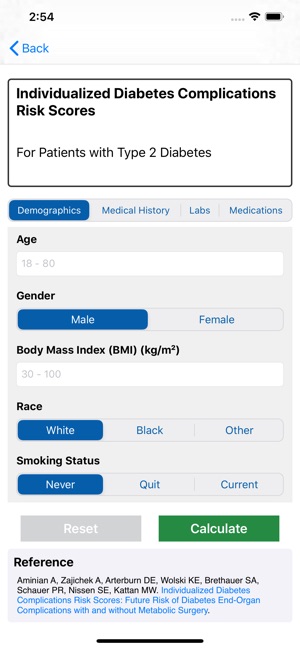
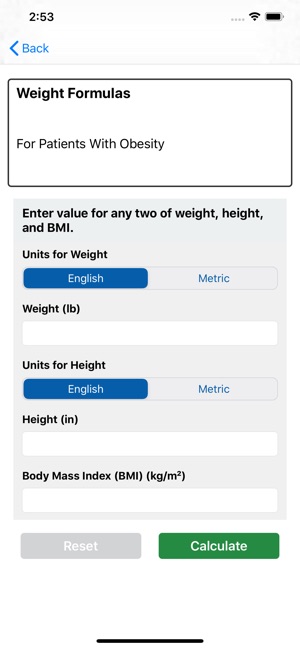
Detailed Description
Functionality & Mechanism
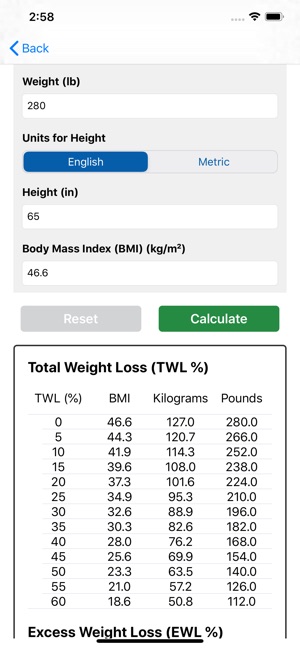
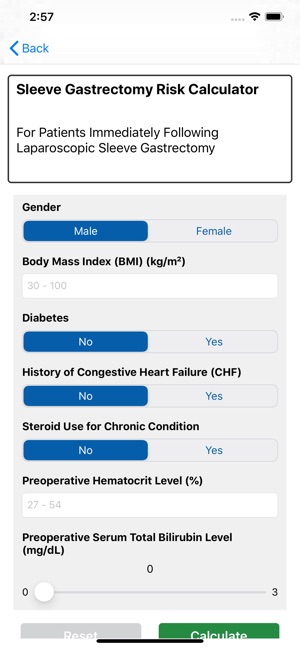
This clinical decision support tool provides bariatric surgeons with rapid, evidence-based guidance for procedure selection in patients with type 2 diabetes (T2DM). The mobile interface facilitates the input of four key patient variables: diabetes duration, number of medications, insulin use, and HbA1c levels. The system then calculates the Individualized Metabolic Surgery (IMS) score, which stratifies T2DM severity into three distinct stages. This output informs clinical judgment regarding the relative efficacy of Roux-en-Y gastric bypass versus sleeve gastrectomy.
Evidence & Research Context
- The underlying Individualized Metabolic Surgery (IMS) score was developed and externally validated using a cohort of 900 patients with long-term glycemic follow-up (median 7 years).
- The model incorporates four independent predictors of long-term diabetes remission: preoperative T2DM duration, number of diabetes medications, insulin use, and glycemic control (HbA1C).
- For patients with intermediate-severity diabetes, the model indicates that Roux-en-Y gastric bypass (RYGB) is significantly more effective for remission than sleeve gastrectomy (SG).
- In cases of mild T2DM, both procedures offer high efficacy, whereas in severe T2DM, both demonstrate limited potential for long-term diabetes remission.
Intended Use & Scope
This tool is intended for bariatric surgeons to aid in evidence-based procedural selection for patients with type 2 diabetes. Its primary utility is as a clinical decision support system to stratify T2DM severity and inform discussions on surgical options. The calculator does not replace comprehensive clinical judgment or account for all patient-specific factors and comorbidities.
Studies & Publications
Peer-reviewed research associated with this app.
Bariatric Surgery Decision-Making Calculator: A Novel Mobile App for Evidence-Based Clinical Practice
Aminian et al. (2017) · Surgery for Obesity and Related Diseases
Describes the research-driven development of this appIndividualized Metabolic Surgery Score: Procedure Selection Based on Diabetes Severity
Aminian et al. (2017) · Annals of Surgery
The scoring system successfully predicted which patients would achieve diabetes remission five years after surgery.
In the Media
Cleveland Clinic Study Shows Greater Long-Term Benefits of Bariatric Surgery Compared to GLP-1 Medicines
Cleveland Clinic researchers conducted the M6 study following 3,932 adults with diabetes and obesity for up to 10 years, comparing outcomes between metabolic surgery and GLP-1 receptor agonist medicines. "Even with today's best medicines, metabolic surgery offers unique and lasting benefits for people with obesity and diabetes," said Dr. Ali Aminian, noting that surgery patients averaged 21.6% body weight loss compared to 6.8% with GLP-1 medicines over the decade-long study. The research published in Nature Medicine found surgery patients experienced better blood sugar control and required fewer diabetes and heart medications.
Cleveland Clinic Study Shows Bariatric Surgery Outperforms GLP-1 Diabetes Drugs for Kidney Protection
Cleveland Clinic researchers developed a study comparing bariatric surgery to GLP-1 medications for protecting kidney function in patients with type 2 diabetes, obesity, and chronic kidney disease. The study of 425 patients showed that bariatric surgery was associated with a 60% lower risk of kidney disease progression and a 44% lower risk of developing kidney failure or death compared to GLP-1 treatments. Lead author Dr. Ali Aminian stated that "bariatric surgery can protect the kidneys and prevent the worsening of kidney function" and "can change the trajectory of the disease."
New App Shows Patients Individualized Health Risks, With and Without Bariatric Surgery
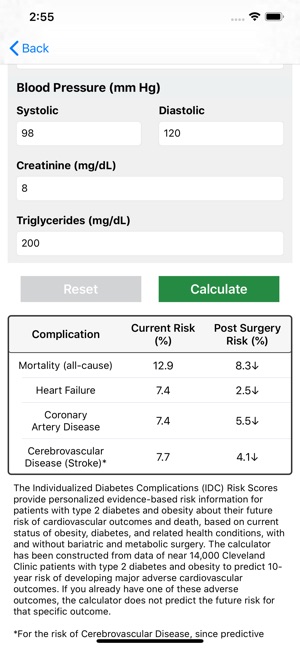
Cleveland Clinic researchers developed the Bariatric Surgery Calculator to help patients with obesity and Type 2 diabetes make informed treatment decisions, using machine-learning algorithms that analyze 26 patient-specific variables to predict 10-year health risks. "A patient can see, for example, that their risk of dying in 10 years would be 7% without the surgery, but with the surgery it would drop to 2%," says bariatric surgeon Dr. Ali Aminian. The predictive tool was introduced at the Obesity Week 2019 international conference.
Cleveland Clinic Develops Calculator To Estimate 10-Year Risk Of Diabetes Complications
Cleveland Clinic researchers developed the Bariatric Surgery Calculator to help patients with type 2 diabetes and obesity estimate their 10-year risk of major health complications when choosing between usual medical care or weight-loss surgery. "The calculator can be a useful tool for physicians and patients with type 2 diabetes and obesity. It shows a patient's risk of heart disease, stroke, heart failure, diabetic kidney disease, and death over the next 10 years with usual care," said Dr. Ali Aminian, the lead researcher. The research was presented as one of the Top 10 studies at ObesityWeek 2019 international conference.
App Information
Developer
Cleveland ClinicCategory
Evidence Profile
Initial evidence from research studies
Platforms
Updated
Nov 2019
© 2025 Cleveland Clinic
Tags
Relevant Links
Privacy Policy


Bariatric Surgery Calculator
Free