
AppsFromResearch
BladderSafe icon

BladderSafe

Evidence Tier:DOCUMENTED

Published in academic literature

For:Clinicians & Healthcare Professionals

App Summary

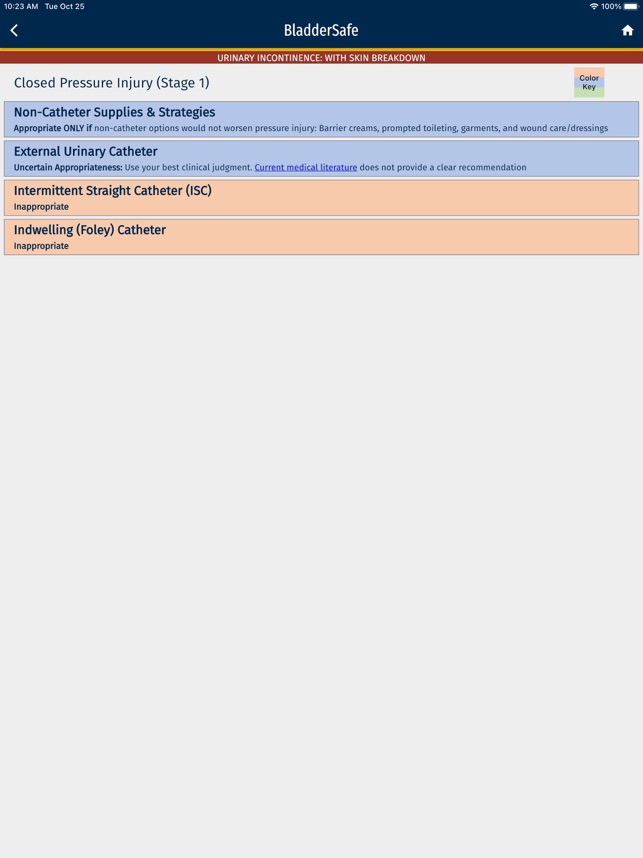
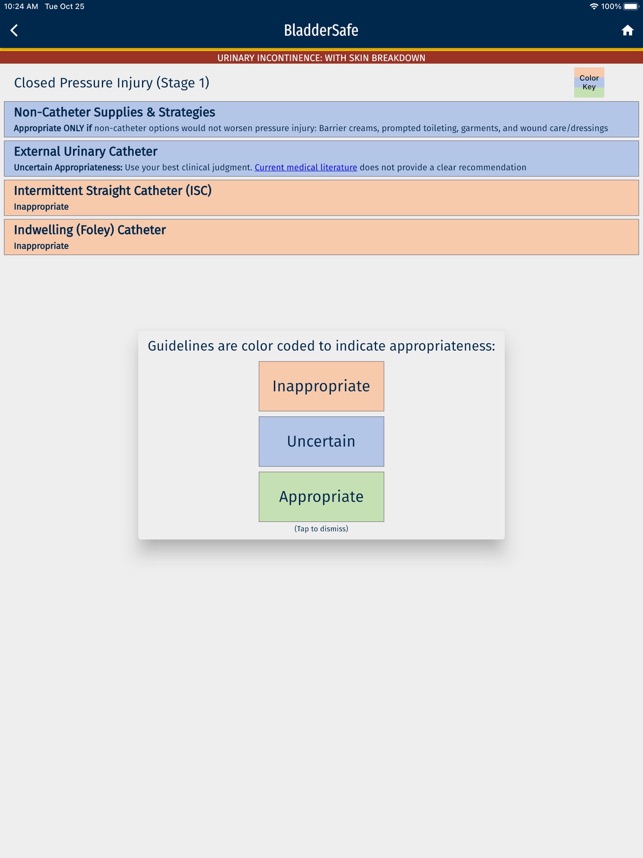
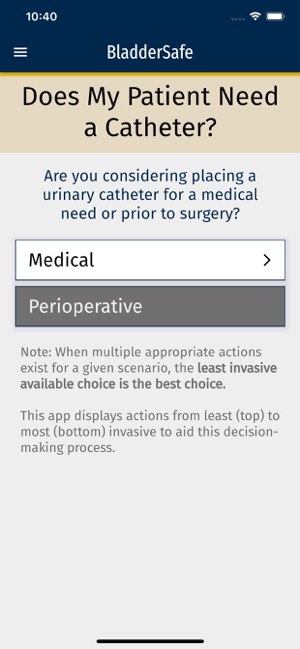
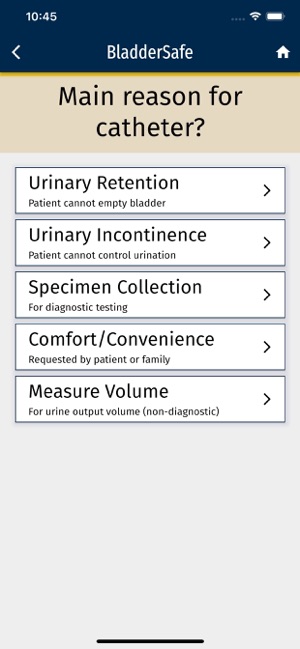
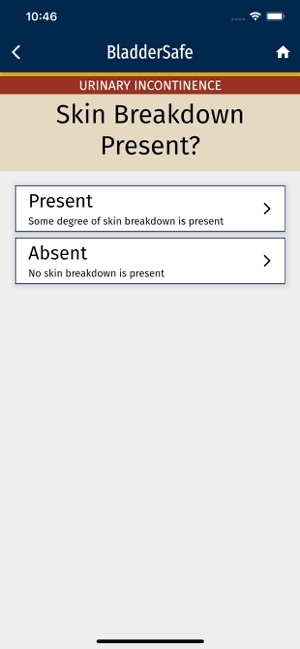
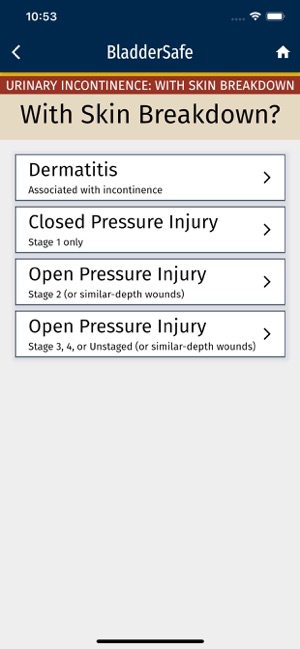
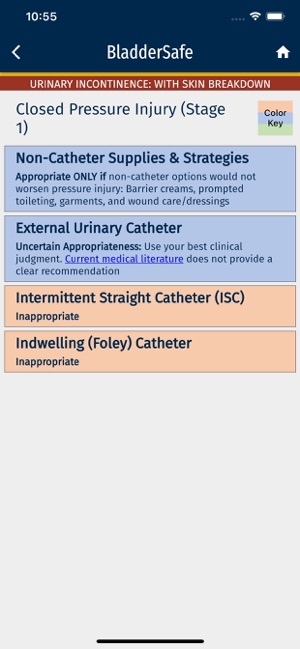
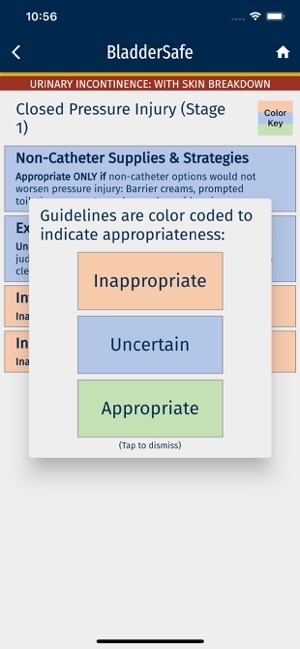
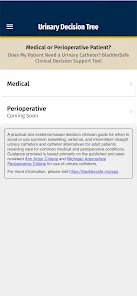
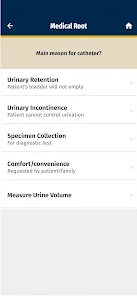
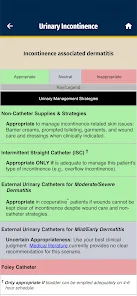
BladderSafe is a clinical reference tool for medical professionals that provides a decision tree to guide appropriate urinary catheter use for hospitalized medical and surgical patients. The app operationalizes the Ann Arbor and Michigan Appropriate Perioperative (MAP) criteria, which were developed through a formal consensus process where multidisciplinary expert panels rated the appropriateness of catheter use across numerous clinical scenarios. The associated research concludes that applying these criteria can inform clinical efforts to reduce inappropriate catheterization and related patient complications.

App Screenshots

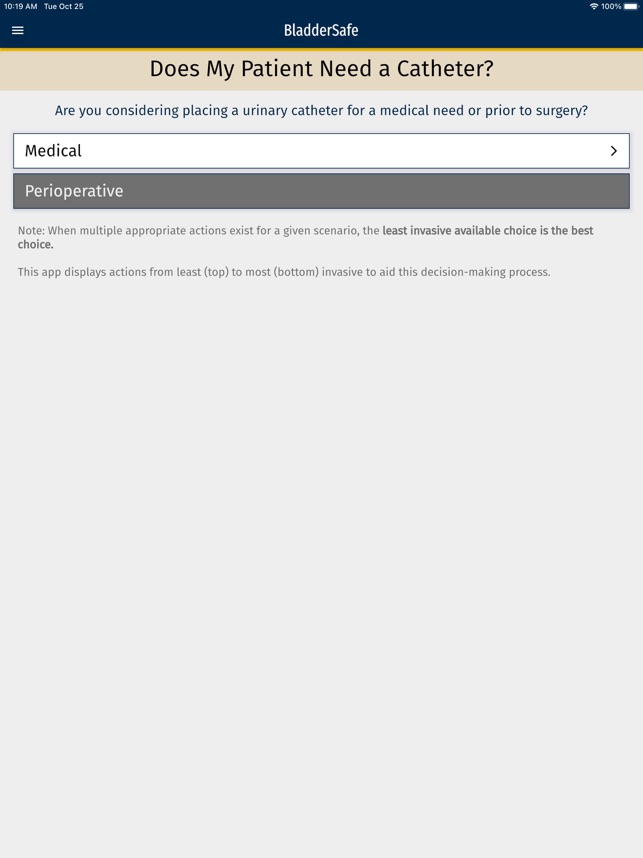
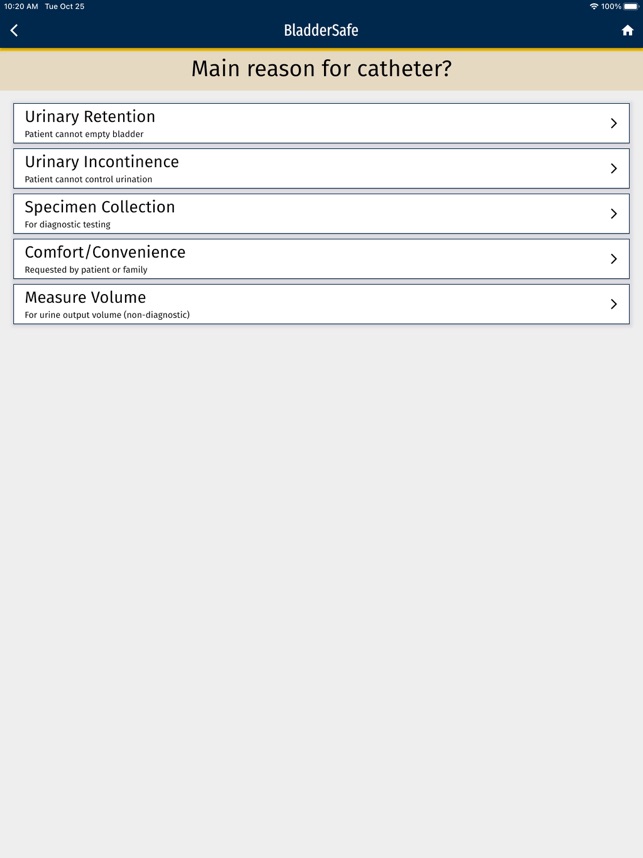
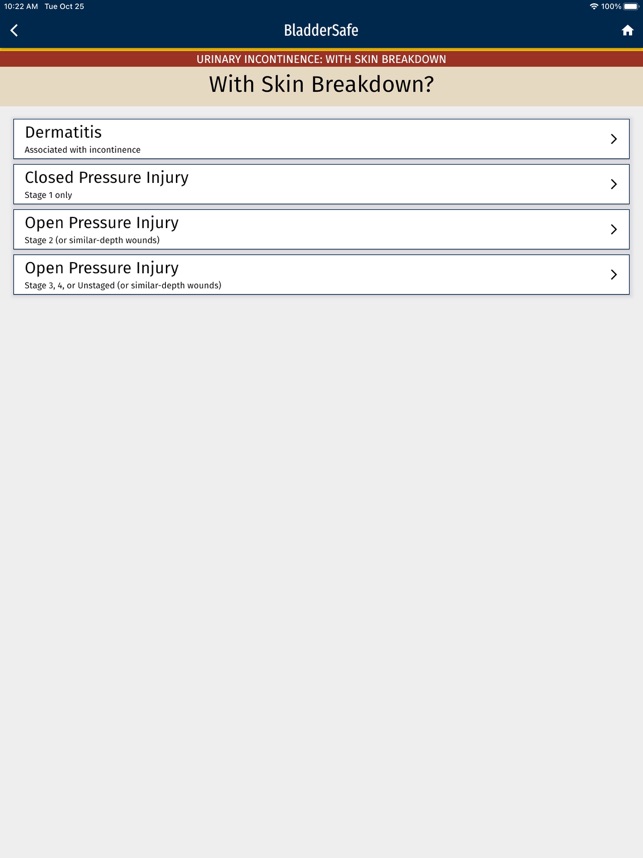
BladderSafe screenshot 1 of 18BladderSafe screenshot 2 of 18BladderSafe screenshot 3 of 18BladderSafe screenshot 4 of 18BladderSafe screenshot 5 of 18BladderSafe screenshot 6 of 18BladderSafe screenshot 7 of 18BladderSafe screenshot 8 of 18BladderSafe screenshot 9 of 18BladderSafe screenshot 10 of 18BladderSafe screenshot 11 of 18BladderSafe screenshot 12 of 18BladderSafe screenshot 13 of 18BladderSafe screenshot 14 of 18BladderSafe screenshot 15 of 18BladderSafe screenshot 16 of 18BladderSafe screenshot 17 of 18BladderSafe screenshot 18 of 18

Detailed Description

Functionality & Mechanism

BladderSafe functions as a clinical decision-support tool for medical professionals, developed by the Patient Safety Enhancement Program at the University of Michigan. The system integrates a decision tree to guide appropriate urinary catheter use across diverse medical and surgical contexts. The interface facilitates evidence-based practice by navigating clinicians through specific patient scenarios, leveraging the Ann Arbor Criteria and Michigan Appropriate Perioperative (MAP) Criteria to generate recommendations on catheter placement, type, and duration.

Evidence & Research Context

  • The app's guidance for hospitalized medical patients is based on the Ann Arbor Criteria, which were established using the RAND/UCLA Appropriateness Method to evaluate 299 clinical scenarios with a 15-member multidisciplinary panel.
  • Recommendations for surgical patients are derived from the Michigan Appropriate Perioperative (MAP) Criteria, which used a formal consensus method to rate catheter appropriateness across 127 common general and orthopaedic procedures.
  • The underlying research established that intensive care unit location alone is not a sufficient indication for catheter use and defined procedure-specific timings for postoperative catheter removal to minimize complications.

Intended Use & Scope

This application is designed for medical professionals, including physicians and nurses, as a point-of-care reference tool. Its primary utility is to facilitate evidence-based decision-making regarding urinary catheter use and reduce associated complications. The system provides guideline-based recommendations and does not substitute for independent clinical judgment or comprehensive patient assessment.

Studies & Publications

2 publications

Peer-reviewed research associated with this app.

Non-Evaluative Reference

Michigan Appropriate Perioperative (MAP) criteria for urinary catheter use in common general and orthopaedic surgeries: results obtained using the RAND/UCLA Appropriateness Method

Meddings et al. (2018) · BMJ Quality & Safety

Referenced in academic literature; no direct evaluation of the app
Background Indwelling urinary catheters are commonly used for patients undergoing general and orthopaedic surgery. Despite infectious and non-infectious harms of urinary catheters, there is limited guidance available to surgery teams regarding appropriate perioperative catheter use. Objective Using the RAND Corporation/University of California Los Angeles (RAND/UCLA) Appropriateness Method, we assessed the appropriateness of indwelling urinary catheter placement and different timings of catheter removal for routine general and orthopaedic surgery procedures. Methods Two multidisciplinary panels consisting of 13 and 11 members (physicians and nurses) for general and orthopaedic surgery, respectively, reviewed the available literature regarding the impact of different perioperative catheter use strategies. Using a standardised, multiround rating process, the panels independently rated clinical scenarios (91 general surgery, 36 orthopaedic surgery) for urinary catheter placement and postoperative duration of use as appropriate (ie, benefits outweigh risks), inappropriate or of uncertain appropriateness. Results Appropriateness of catheter use varied by procedure, accounting for procedure-specific risks as well as expected procedure time and intravenous fluids. Procedural appropriateness ratings for catheters were summarised for clinical use into three groups: (1) can perform surgery without catheter; (2) use intraoperatively only, ideally remove before leaving the operating room; and (3) use intraoperatively and keep catheter until postoperative days 1–4. Specific recommendations were provided by procedure, with postoperative day 1 being appropriate for catheter removal for first voiding trial for many procedures. Conclusion We defined the appropriateness of indwelling urinary catheter use during and after common general and orthopaedic surgical procedures. These ratings may help reduce catheter-associated complications for patients undergoing these procedures.
... Read More
Non-Evaluative Reference

The Ann Arbor Criteria for Appropriate Urinary Catheter Use in Hospitalized Medical Patients: Results Obtained by Using the RAND/UCLA Appropriateness Method

Meddings et al. (2015) · Annals of Internal Medicine

Referenced in academic literature; no direct evaluation of the app
Interventions to reduce urinary catheter use involve lists of "appropriate" indications developed from limited evidence without substantial multidisciplinary input. Implementing these lists, however, is challenging given broad interpretation of indications, such as "critical illness." To refine criteria for appropriate catheter use—defined as use in which benefits outweigh risks—the RAND/UCLA Appropriateness Method was applied. After reviewing the literature, a 15-member multidisciplinary panel of physicians, nurses, and specialists in infection prevention rated scenarios for catheter use as appropriate, inappropriate, or of uncertain appropriateness by using a standardized, multiround rating process. The appropriateness of Foley catheters, intermittent straight catheters (ISCs), and external condom catheters for hospitalized adults on medical services was assessed in 299 scenarios, including urinary retention, incontinence, wounds, urine volume measurement, urine sample collection, and comfort. The scenarios included patient-specific issues, such as difficulty turning and catheter placement challenges. The panel rated 105 Foley scenarios (43 appropriate, 48 inappropriate, 14 uncertain), 97 ISC scenarios (15 appropriate, 66 inappropriate, 16 uncertain), and 97 external catheter scenarios (30 appropriate, 51 inappropriate, 16 uncertain). The refined criteria clarify that Foley catheters are appropriate for measuring and collecting urine only when fluid status or urine cannot be assessed by other means; specify that patients in the intensive care unit (ICU) need specific medical indications for catheters because ICU location alone is not an appropriate indication; and recognize that Foley and external catheters may be pragmatically appropriate to manage urinary incontinence in select patients. These new appropriateness criteria can inform large-scale collaborative and bedside efforts to reduce inappropriate urinary catheter use.
... Read More

BladderSafe

Free