
AppsFromResearch
Body Quest icon

Body Quest

Validated with strong research evidence

For:Kids & Youth

App Summary

Body Quest is a gamified educational app for third-grade students designed to teach healthy eating habits as part of a school-based obesity prevention program. A study that randomized 3,568 third-graders to either the Body Quest curriculum or a control group found the program led to significant improvements (p<0.001) in nutrition, physical activity, and screen time behaviors. The associated research concludes that engaging, age-appropriate educational programs can positively impact key behaviors related to childhood obesity prevention.

App Screenshots

Body Quest screenshot 1 of 2Body Quest screenshot 2 of 2

Detailed Description

Functionality & Mechanism

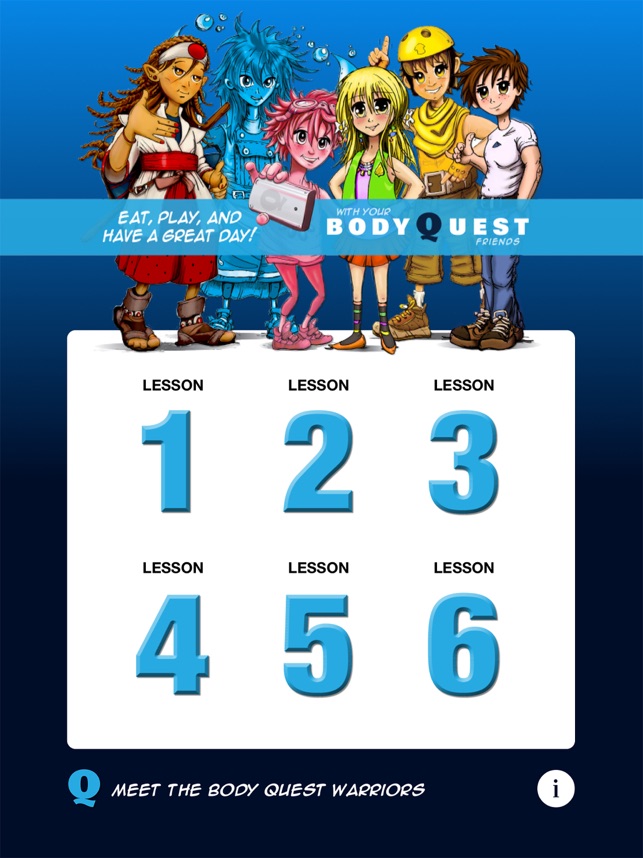
Developed by Alabama Extension, Body Quest is an educational iPad application that delivers nutrition science content through a game-based interface. The system comprises an introduction and six sequential lessons, each guided by a unique "warrior" character representing a core nutritional concept. Sessions engage students in interactive challenges designed to reinforce curriculum topics, including food groups, balanced meal construction, and the physiological benefits of specific nutrients. The platform is structured to supplement formal classroom instruction.

Evidence & Research Context

  • A randomized study of third-grade students (N=3,568) found the Body Quest curriculum yielded significant improvements (p<0.001) versus a control group on key obesity prevention indicators.
  • Measured improvements included increased fruit and vegetable intake, higher physical activity levels, and greater breakfast consumption, alongside reduced screen time and sugar-sweetened beverage intake.
  • A separate evaluation of a supplemental text-message program for parents (N=794) demonstrated significant improvements in the home food environment, including increased vegetable accessibility (p=.009).
  • The parent intervention also significantly increased parental modeling of vegetable consumption (p=.002), with over 54% of participants reporting preparation of all program-provided recipes.
  • Research has focused on the program's implementation within Supplemental Nutrition Assistance Program–Education (SNAP-Ed) eligible elementary school populations.

Intended Use & Scope

This application is designed for educators and public health practitioners as a curriculum-reinforcement tool for elementary school students. Its primary utility is to supplement formal nutrition education through an engaging, game-based format. The system does not function as a clinical diagnostic or weight management program and should be integrated within a structured health curriculum.

Studies & Publications

2 publications

Peer-reviewed research associated with this app.

Effectiveness/Outcome Study

Body Quest Parent: A text message education intervention to supplement a school-based obesity prevention initiative for third-graders

Funderburk et al. (2018) · Journal of Nutrition Education and Behavior

Parents significantly increased vegetable accessibility at home and modeling of vegetable consumption after the text-based intervention.

Introduction School-based nutrition interventions can be a tool for encouraging parents to improve home food environments. However, interventions should address barriers to receiving and applying nutrition education such as time, money, transportation, preferences of family members, and limited cooking skills.1 Text-based education may address these barriers. Research shows that 91% of American adults are cell phone owners and 78% of lower-income cell phone owners send and receive texts.2 Program Development and Implementation Body Quest (BQ)3 is an Alabama Extension obesity prevention program for third-graders in Supplemental Nutrition Assistance Program–Education (SNAP-Ed)-eligible schools. To supplement BQ, Alabama Extension also developed Body Quest Parent (BQP), a text message–based nutrition education intervention for parents designed to decrease barriers to traditional education methods. In addition to receiving texts, parents acted as recipe testers in a model that increased vegetable consumption in an adult SNAP-Ed population.4 The goal of this study was to determine the effectiveness of BQP to improve the home food environment related to (1) vegetable accessibility, (2) parental modeling of vegetable consumption, and (3) preparation of vegetable-rich recipes. The Auburn University Institutional Review Board approved this study. In fall, 2014, parents (n?=?3,567) of BQ students consented to participate in BQP simultaneously. Parents were 93% female, 40% were black and 60% were white, and 70% had a high school education or less. Extension educators read standardized recruitment scripts to students explaining the parent initiative and sent home consent forms for parents to sign and return. Parents were asked to provide a cell phone number to receive text messages and participate in phone surveys; 95% of consenting parents (n?=?3,398) provided a cell phone number. Text messages containing educational tips and action prompts were sent via short message service marketing software. During the 15-week intervention, parents received 3 weekly texts, each of which targeted 1 of the 3 home food environment BQP goals. Every 2 weeks, Extension educators provided students with free recipe magnets featuring easy-to-prepare vegetables dishes to give to parents for home preparation (Figure 1). To encourage recipe preparation, texts included tips specific to vegetables featured in each recipe. Figure?1 Figure?1 Recipes were printed on Body Quest-themed magnets and included nutrition tips. Evaluation and Results The researchers conducted 2 types of evaluation. First, a phone assessment was adapted for BQP from existing instruments measuring recipe preparation4 and the home food environment.5 Before the start and at the conclusion of the intervention, phone interviews were conducted verbally in English by trained interviewers with a random sample of parents (n?=?794). Second, a texting poll was conducted with a randomly generated subsample of parents (n?=?614) to gather descriptive information and feedback. There was a 22% response rate (n?=?135). For the phone assessments, t tests analyzed differences from preintervention to postintervention. Parents made 3 positive changes in the home environment. First, they significantly increased accessibility of vegetables in the home for third-graders by making vegetables easier to see, reach, and eat (t?=??2.67; P?=?.009). Second, parents significantly increased modeling of vegetable consumption by enjoying vegetables with their third-graders (t?=??3.10; P?=?.002). Third, parents prepared vegetable recipes at home throughout the intervention; over 54% of parents participating in phone surveys reported making all 6 recipes at home within 2 weeks of receiving them. Descriptive statistics of texting poll results showed (1) satisfaction, through positive feedback; and (2) effectiveness, through self-reported positive behaviors related to vegetables, of the texting initiative within the sample (Figure 2). Parents could opt out of the texting program at any time, but 76% of enrollees chose to continue receiving text messages for the entire intervention. Figure?2 Figure?2 Text message poll responses showed the percentage of participants (n?=?135) reporting positive experiences and behaviors after the texting initiative. Limitations of this study included a small sample size for the texting poll that could not represent the whole sample accurately. There was also lack of follow-up to assess whether changes were sustained after 15 weeks. In addition, three fourths of parents did not respond to the texting poll for unknown reasons. Finally, measurements of vegetable intakes of parents and children were lacking. Body Quest Parent encouraged parents to improve the home food environment through text message-based education. Acknowledgments Auburn University's Institutional Review Board approved this study. Artwork for BQP recipe magnets is available for free download at https://store.aces.edu/itemdetail.aspx?ProductID=18461. Body Quest Parent was funded by Alabama Extension and the US Department of Agriculture's SNAP-Ed. Appreciation is given to SNAP-Ed educators who helped implement BQP.
... Read More
RCT

Impact of Body Quest: Food of the Warrior on Key Indicators for Childhood Obesity Prevention

Parmer et al. (2015) · Austin Journal of Pediatrics

Third graders showed significant improvements in five obesity prevention behaviors compared to control group.

Strategies to combat childhood obesity are a top public health priority as overweight and obesity rates in children have risen to alarming rates over the past two decades. Overweight and obese children are at greater risk for many adult on-set diseases such as cardiovascular disease, diabetes, and bone and joint problems, as well as adult obesity. Determining effective childhood obesity prevention initiatives is one step toward combating early on-set of disease and reversing these staggering statistics in children. Body Quest is an initiative developed to combat childhood obesity in a SNAP-Ed eligible, thirdgrade population. The purpose of this study was to evaluate the effect of the BQ curriculum on behaviors and intentions related to obesity prevention measures in 3,568 third-grade students. Students were randomized into treatment (BQ education) or control. Treatment students were exposed to vegetables bi-weekly during the 17-week BQ curriculum.Treatment students reported significant improvements,compared to control students (p<0.001), on five key indicators related to accepted obesity prevention initiatives: increasing fruit and vegetable intake, physical activity and breakfast consumption; as well as reducing screen time and sugar sweetened beverages. These outcomes add to the evidence that educationally appropriate, engaging programs, targeted to children can positively impact several key indicators to assist with obesity prevention efforts.
... Read More

Body Quest

Free