
AppsFromResearch
CalfScan icon

CalfScan

Evidence Tier:CLINICAL GRADE

Validated in clinical trials

For:Clinicians & Healthcare ProfessionalsIndustry Professionals

App Summary

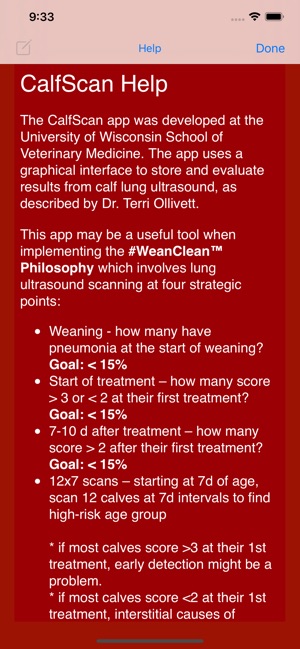
CalfScan assists veterinarians and farm managers in implementing a systematic lung ultrasound protocol to screen for respiratory disease in preweaned dairy calves. The underlying thoracic ultrasound method was validated in a study (N=25) that demonstrated 94% sensitivity and 100% specificity for detecting lung lesions in calves with subclinical disease. The associated research concludes that systematically using this method helps identify calves at risk for poor growth, assisting with management decisions to maintain animal wellbeing and profitability.

App Screenshots

CalfScan screenshot 1 of 8CalfScan screenshot 2 of 8CalfScan screenshot 3 of 8CalfScan screenshot 4 of 8CalfScan screenshot 5 of 8CalfScan screenshot 6 of 8CalfScan screenshot 7 of 8CalfScan screenshot 8 of 8

Detailed Description

Functionality & Mechanism

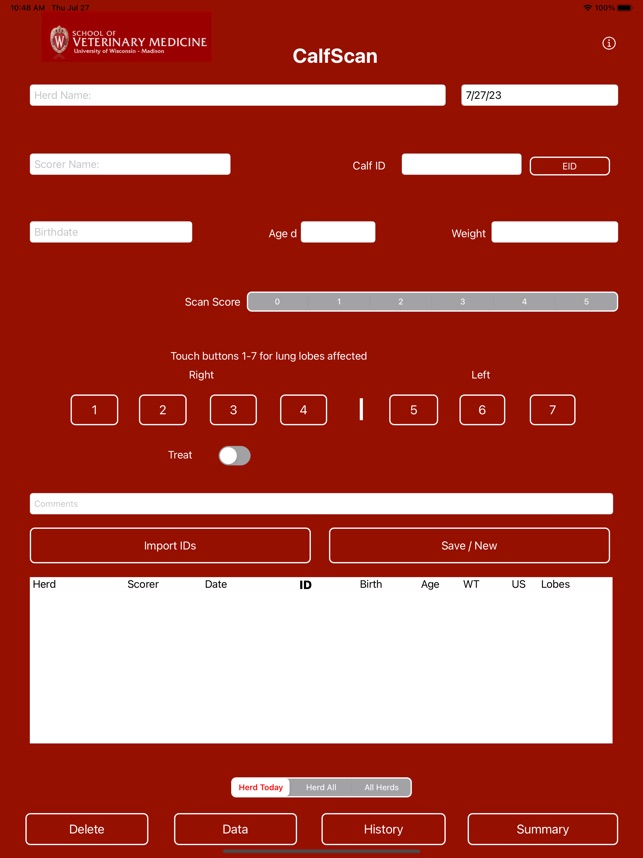
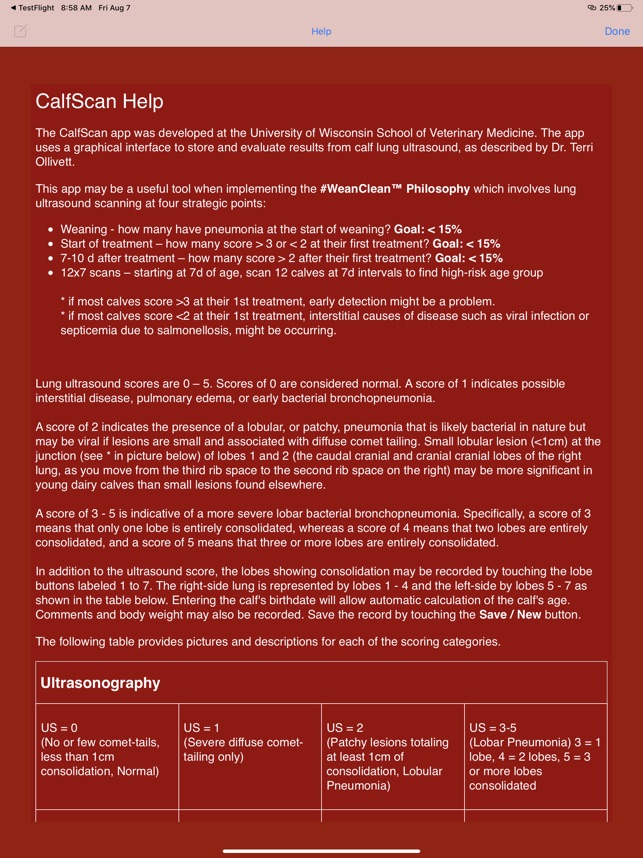
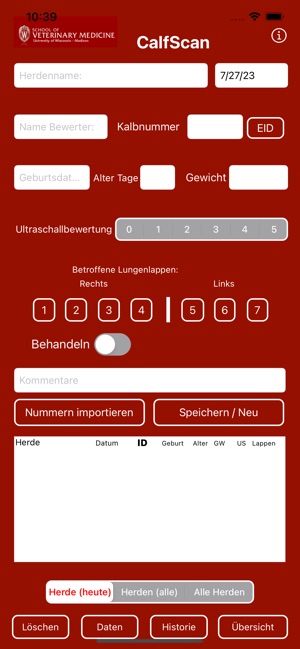
CalfScan provides a graphical interface for the systematic storage and evaluation of calf lung ultrasonography results. The system is designed to implement the thoracic ultrasound scoring methodology described by Dr. Terri Ollivett. The interface facilitates the entry of findings based on a systematic lung examination, generating standardized scores to track subclinical and clinical respiratory disease over time. This structured data capture enables longitudinal monitoring of lung health within a herd and assists in executing health management protocols.

Evidence & Research Context

  • A longitudinal cohort study of preweaned dairy calves (N=233) demonstrated that lung consolidation identified via ultrasound was associated with significantly lower average daily gain (0.73 kg/d vs. 0.85 kg/d).
  • The same cohort study supported the use of a simplified 2-level ultrasound score (presence/absence of consolidation) as a practical method for identifying at-risk calves on-farm.
  • A prospective validation study (N=25) established the high diagnostic accuracy of the underlying method, thoracic ultrasound, with 94% sensitivity and 100% specificity for detecting lung lesions compared to postmortem examination.
  • Associated research advocates for routine thoracic ultrasonography to monitor herd-level respiratory health, noting the low sensitivity of producer-based visual diagnosis for subclinical disease.

Intended Use & Scope

This system is intended for veterinarians and trained farm personnel for the surveillance and management of bovine respiratory disease in preweaned calves. Its primary utility is as a data capture and scoring tool to standardize lung health assessments. CalfScan facilitates diagnosis but does not replace a comprehensive clinical examination, which is required for definitive management decisions.

Studies & Publications

3 publications

Peer-reviewed research associated with this app.

Cohort/Longitudinal Study

Growth of preweaned, group-housed dairy calves diagnosed with respiratory disease using clinical respiratory scoring and thoracic ultrasound—A cohort study

Cramer et al. (2019) · Journal of Dairy Science

Both ultrasound and clinical scores successfully predicted poor weight gain in calves with respiratory disease.

The objectives of this cohort study were to identify a cut point on a previously described 6-level ultrasound score (USS6) at which average daily gain (ADG) is affected and to determine whether there is any additional benefit of using a clinical respiratory score. Calves from a commercial herd in Ohio were enrolled at entry to an automated calf feeder barn at (mean ± standard deviation) 21 ± 6 d of age (n = 308). Calves that survived until 50 d (n = 233) were included in the analyses. Twice-weekly health exams included a clinical respiratory score (CRS), USS6 (0–5, based on lung mass involved), and body weight. For the CRS, the nose, eyes, ears, cough, and rectal temperature were assigned a score (0–3), and calves were considered positive (CRS+) when at least 2 areas scored ?2. For analysis, USS6 and CRS status were based on a calf's first bovine respiratory disease event identified during the study period. The first multivariable linear model was fit to determine whether USS6 was associated with ADG and controlled for CRS. We detected no difference in ADG among calves with USS6 scores of 2, 3, 4, and 5. Based on this finding, we proposed a simplified 2-level ultrasound score (USS2; without lung consolidation or with lung consolidation ?1 cm2). A second multivariable model was fit to assess the association between USS2 and ADG; this model controlled for CRS, birth weight category, breed, and cohort. Calves with lung consolidation (n = 169) had lower ADG than calves without lung consolidation (n = 64; 0.73 vs. 0.85 kg/d, respectively). Calves that were CRS+ (n = 61) had lower ADG than calves that were CRS? (n = 172; 0.74 vs. 0.84 kg/d, respectively). Although CRS did not affect the relationship between USS2 and ADG, both CRS and USS2 are necessary to explain variation in ADG. We simplified USS6 and proposed USS2 based on how lung consolidation affected ADG. A simplified 2-level ultrasound score may be more practical for veterinarians to identify calves that may be at risk for poor growth. The effect on ADG was similar between calves with lung consolidation and calves identified as CRS+. Therefore, both thoracic ultrasonography and CRS should be used to identify calves with all types of respiratory disease that affect growth. However, this study represents calves in group housing from 21 to 50 d of age on 1 farm with high disease incidence. We encourage studies that investigate the effects of lung consolidation and CRS on ADG in different management systems.
... Read More
Non-Evaluative Reference

Thoracic ultrasound to monitor lung health and assist decision making in preweaned dairy calves

Ollivett et al. (2018) · American Association of Bovine Practitioners Conference Proceedings

Referenced in academic literature; no direct evaluation of the app
In young dairy cattle, respiratory disease is economically challenging, subclinical disease exists, and producer based diagnosis lacks in sensitivity. Therefore, monitoring lung health in young cattle should be considered a priority for maintaining proper drug use, animal wellbeing, and profitability. Incorporating lung ultrasound at regular intervals provides an understanding of the epidemiology of respiratory disease in client herds, and can help identify problems before they become catastrophic. The growing pains from learning how to perform lung ultrasound are worthwhile, and will help you become indispensable to your clients. This article will review the available technologies, the benefits of a systematic examination, and how to implement thoracic ultrasound to monitor lung health and assist in management decisions.
... Read More

CalfScan

1.99 USD