
AppsFromResearch
Caremap - navigate healthcare icon

Caremap - navigate healthcare

Evidence Tier:EVALUATED

Assessed for usability and quality

For:Patients & Caregivers

App Summary

Caremap is a digital personal health record app designed for families of children with special healthcare needs to help them securely track, share, and manage complex medical information and care goals. In a simulation study (N=38), participating families rated the app highly for usability and care coordination, giving it an average score of 4 out of 5 on an adapted Mobile Application Rating Scale (uMARS). The associated research concludes that this type of end-user testing successfully generates actionable feedback for improving digital tools that support families in coordinating complex care.

App Screenshots

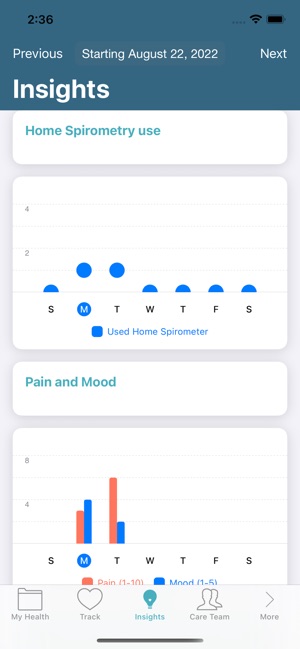
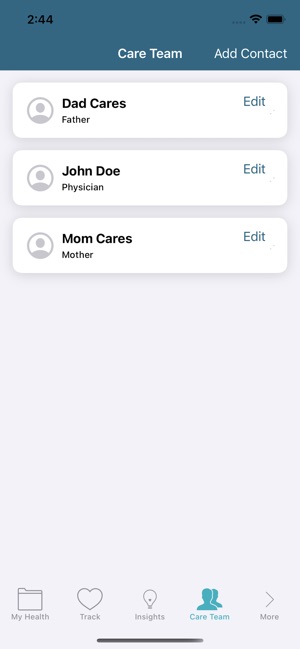
Caremap - navigate healthcare screenshot 1 of 10Caremap - navigate healthcare screenshot 2 of 10Caremap - navigate healthcare screenshot 3 of 10Caremap - navigate healthcare screenshot 4 of 10Caremap - navigate healthcare screenshot 5 of 10Caremap - navigate healthcare screenshot 6 of 10Caremap - navigate healthcare screenshot 7 of 10Caremap - navigate healthcare screenshot 8 of 10Caremap - navigate healthcare screenshot 9 of 10Caremap - navigate healthcare screenshot 10 of 10

Detailed Description

Functionality & Mechanism

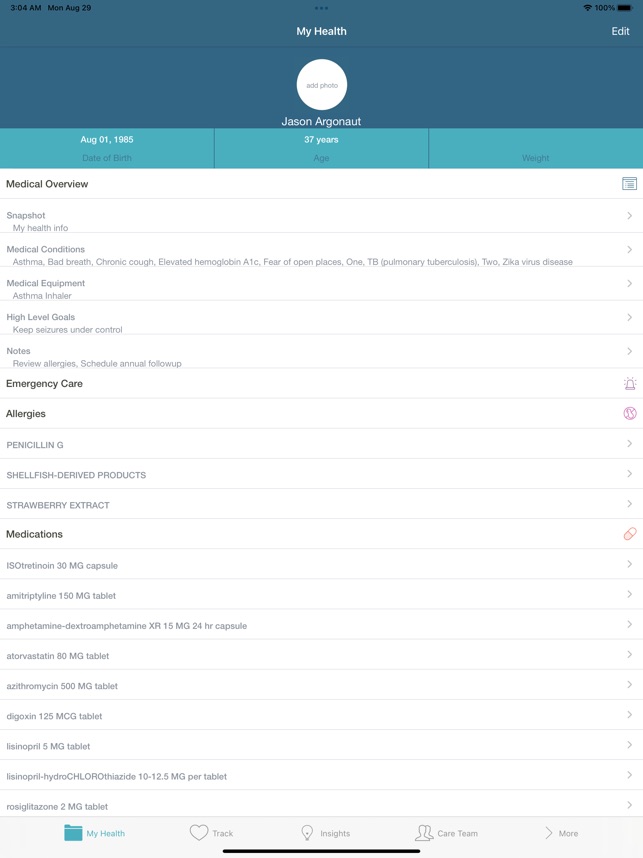
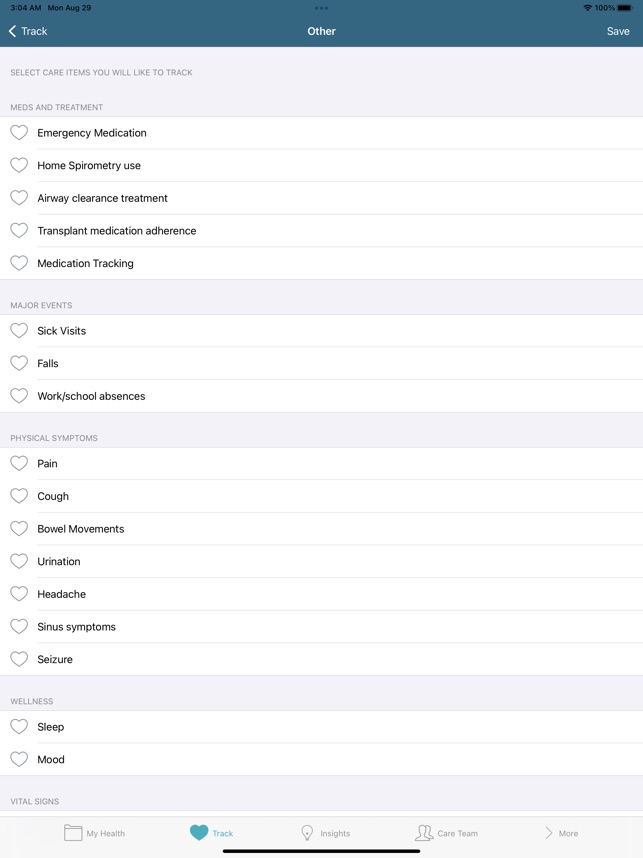
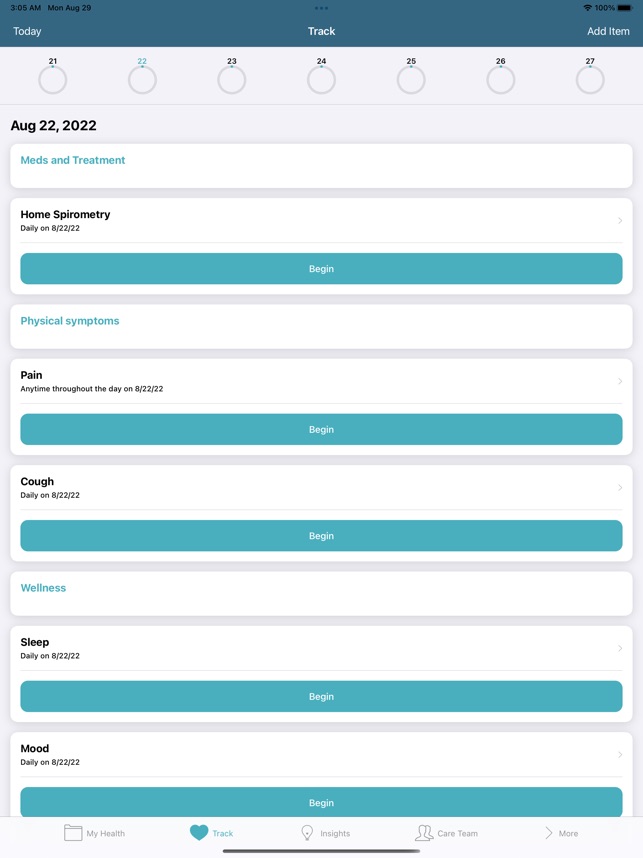
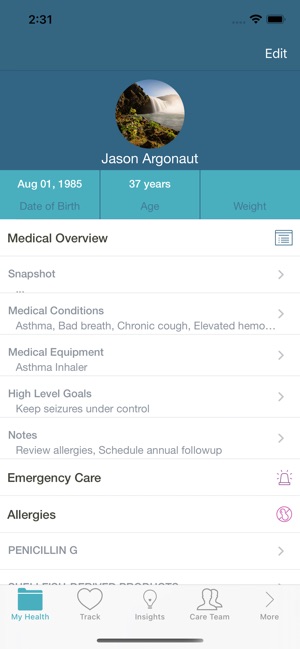
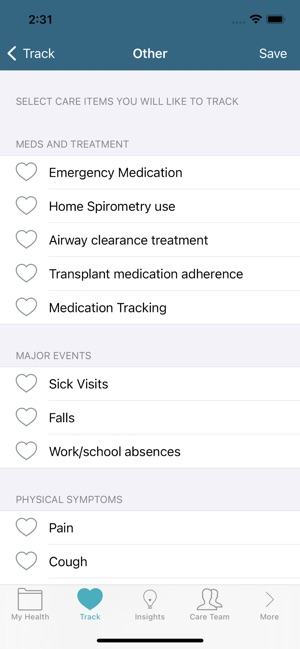
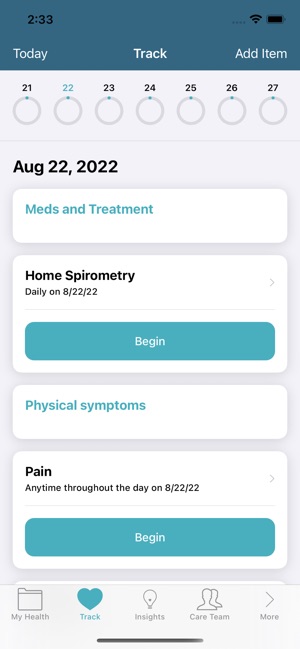
Developed by Duke Health and Boston Children's Hospital, Caremap is a digital personal health record for families of children with special healthcare needs. The system leverages the Apple CareKit and Fast Healthcare Interoperability Resources (FHIR) frameworks to integrate with electronic health records (EHRs). Its interface enables caregivers to securely store medical information, track patient- and family-defined care goals, and visualize health trends. A clinician dashboard permits providers to view family-generated data, facilitating shared care coordination.

Evidence & Research Context

  • A simulation study (N=38 caregivers of children with special health care needs) established proof-of-concept and indicated high usability, with average ratings of 4.1/5 on an adapted Pediatric Integrated Care Survey and 4.0/5 on an adapted Mobile Application Rating Scale.
  • The app's design is grounded in a co-design process that integrated formative feedback from families to enhance its patient-centered features and functionality.
  • A prospective, single-arm feasibility trial (N=40) is evaluating the app's real-world implementation and its impact on patient-reported outcomes over a 6-month period in a primary care setting.

Intended Use & Scope

This application is intended for caregivers of children with special healthcare needs to use in collaboration with their clinical care teams. Its primary utility is as an adjunct tool for care coordination, goal tracking, and personal health record management. The system does not provide medical advice and is not a substitute for direct professional consultation.

Studies & Publications

2 publications

Peer-reviewed research associated with this app.

Study Protocol

Feasibility of Implementation of a Mobile Digital Personal Health Record to Coordinate Care for Children and Youth With Special Health Care Needs in Primary Care: Protocol for a Mixed Methods Study

Ming et al. (2025) · JMIR Research Protocols

Research study planned or in progress; results not yet available
Background Electronic health record (EHR)–integrated digital personal health records (PHRs) via Fast Healthcare Interoperability Resources (FHIR) are promising digital health tools to support care coordination (CC) for children and youth with special health care needs but remain widely unadopted; as their adoption grows, mixed methods and implementation research could guide real-world implementation and evaluation. Objective This study (1) evaluates the feasibility of an FHIR-enabled digital PHR app for CC for children and youth with special health care needs, (2) characterizes determinants of implementation, and (3) explores associations between adoption and patient- or family-reported outcomes. Methods This nonrandomized, single-arm, prospective feasibility trial will test an FHIR-enabled digital PHR app's use among families of children and youth with special health care needs in primary care settings. Key app features are FHIR-enabled access to structured data from the child's medical record, families' abilities to longitudinally track patient- or family-centered care goals, and sharing progress toward care goals with the child's primary care provider via a clinician dashboard. We shall enroll 40 parents or caregivers of children and youth with special health care needs to use the app for 6 months. Inclusion criteria for children and youth with special health care needs are age 0-16 years; primary care at a participating site; complex needs benefiting from CC; high hospitalization risk in the next 6 months; English speaking; having requisite technology at home (internet access, Apple iOS mobile device); and an active web-based EHR patient portal account to which a parent or caregiver has full proxy access. Digital prescriptions will be used to disseminate study recruitment materials directly to eligible participants via their existing EHR patient portal accounts. We will apply an intervention mixed methods design to link quantitative and qualitative (semistructured interviews and family engagement panels with parents of children and youth with special health care needs) data and characterize implementation determinants. Two CC frameworks (Pediatric Care Coordination Framework; Patient-Centered Medical Home) and 2 evaluation frameworks (Consolidated Framework for Implementation Research; Technology Acceptance Model) provide theoretical foundations for this study. Results Participant recruitment began in fall 2022, before which we identified >300 potentially eligible patients in EHR data. A family engagement panel in fall 2021 generated formative feedback from family partners. Integrated analysis of pretrial quantitative and qualitative data informed family-centered enhancements to study procedures. Conclusions Our findings will inform how to integrate an FHIR-enabled digital PHR app for children and youth with special health care needs into clinical care. Mixed methods and implementation research will help strengthen implementation in diverse clinical settings. The study is positioned to advance knowledge of how to use digital health innovations for improving care and outcomes for children and youth with special health care needs and their families. Trial Registration ClinicalTrials.gov NCT05513235; https://clinicaltrials.gov/study/NCT05513235
... Read More
Usability Study

Outcomes of End-User Testing of a Care Coordination Mobile App With Families of Children With Special Health Care Needs: Simulation Study

Wong et al. (2023) · JMIR Formative Research

Families found the Caremap app easy to use and provided helpful feedback for improvements.

Background: Care for children with special health care needs relies on a network of providers who work to address the medical, behavioral, developmental, educational, social, and economic needs of the child and their family. Family-directed, manually created visual depictions of care team composition (ie, care mapping) and detailed note-taking curated by caregivers (eg, care binders) have been shown to enhance care coordination for families of these children, but they are difficult to implement in clinical settings owing to a lack of integration with electronic health records and limited visibility of family-generated insights for care providers. Caremap is an electronic health record–integrated digital personal health record mobile app designed to integrate the benefits of care mapping and care binders. Currently, there is sparse literature describing end-user participation in the co-design of digital health tools. In this paper, we describe a project that evaluated the usability and proof of concept of the Caremap app through end-user simulation. Objective: This study aimed to conduct proof-of-concept testing of the Caremap app to coordinate care for children with special health care needs and explore early end-user engagement in simulation testing. The specific aims included engaging end users in app co-design via app simulation, evaluating the usability of the app using validated measures, and exploring user perspectives on how to make further improvements to the app. Methods: Caregivers of children with special health care needs were recruited to participate in a simulation exercise using Caremap to coordinate care for a simulated case of a child with complex medical and behavioral needs. Participants completed a postsimulation questionnaire adapted from 2 validated surveys: the Pediatric Integrated Care Survey (PICS) and the user version of the Mobile Application Rating Scale (uMARS). A key informant interview was also conducted with a liaison to Spanish-speaking families regarding app accessibility for non–English-speaking users. Results: A Caremap simulation was successfully developed in partnership with families of children with special health care needs. Overall, 38 families recruited from 19 different US states participated in the simulation exercise and completed the survey. The average rating for the survey adapted from the PICS was 4.1 (SD 0.82) out of 5, and the average rating for the adapted uMARS survey was 4 (SD 0.83) out of 5. The highest-rated app feature was the ability to track progress toward short-term, patient- and family-defined care goals. Conclusions: Internet-based simulation successfully facilitated end-user engagement and feedback for a digital health care coordination app for families of children with special health care needs. The families who completed simulation with Caremap rated it highly across several domains related to care coordination. The simulation study results elucidated key areas for improvement that translated into actionable next steps in app development.
... Read More

In the Media

New App Helps Parents Keep Track Of Medical Records

Researchers at Boston Children's Hospital and Duke University developed Caremap to help parents and individuals track medical records and health issues, replacing accumulated paper from multiple doctor visits. Dr. Michael Docktor explains the app can monitor "pain, sleep, mood, bathroom habits, nutrition... temper tantrums or school attendance or whatever is important to your child and your family." The iPhone app is currently available for free in the Apple app store, though it can only track one child at a time and doesn't sync between devices.

CbsnewsRead article

Duke Health System, Boston Children's Hospital unveil pediatric app that gives parents more control

Boston Children's Hospital and Duke Health System developed Caremap to help parents of children with complex medical needs easily share medical information with new providers, using Apple's CareKit framework. "Effectively managing communication between numerous providers who care for a child with medical complexity can be a full-time job for parents," said Dr. David Y. Ming, clinical advisor and director of Duke Children's Complex Care Service. The free iPhone app securely stores medical information and allows parents to email PDFs or share data directly with unfamiliar clinicians.

FiercehealthcareRead article

Boston Children's Hospital Caremap iPhone app utilizes CareKit to track, share pediatric data

Boston Children's Hospital developed Caremap in conjunction with Duke University to simplify medical data management for parents with children who have special medical needs, utilizing Apple's CareKit platform. "Effectively managing communication between numerous providers who care for a child with medical complexity can be a full time job for parents," said Dr. David Y. Ming, clinical advisor and director of Duke Children's Complex Care Service. The free app allows families to securely store and share critical information like allergies and prescriptions while tracking daily metrics such as seizure frequency and mood.

AppleinsiderRead article

New iPhone app, Caremap, helps families securely track their children's health

Boston Children's Hospital's Innovation & Digital Health Accelerator developed Caremap in collaboration with Duke Health System to help families of children with complex medical needs track health information and communicate with care providers, using Apple's CareKit framework. "We wanted to provide a trusted and much-needed resource that would harness the patient voice and family perspective," says clinical lead Dr. Michael Docktor. The free iOS app serves an estimated 500,000 children with complex medical needs in the U.S.

PR NewswireRead article

Caremap - navigate healthcare

Free