Concussion Coach
Validated in clinical trials · Initial evidence
App Summary
App Screenshots
Detailed Description
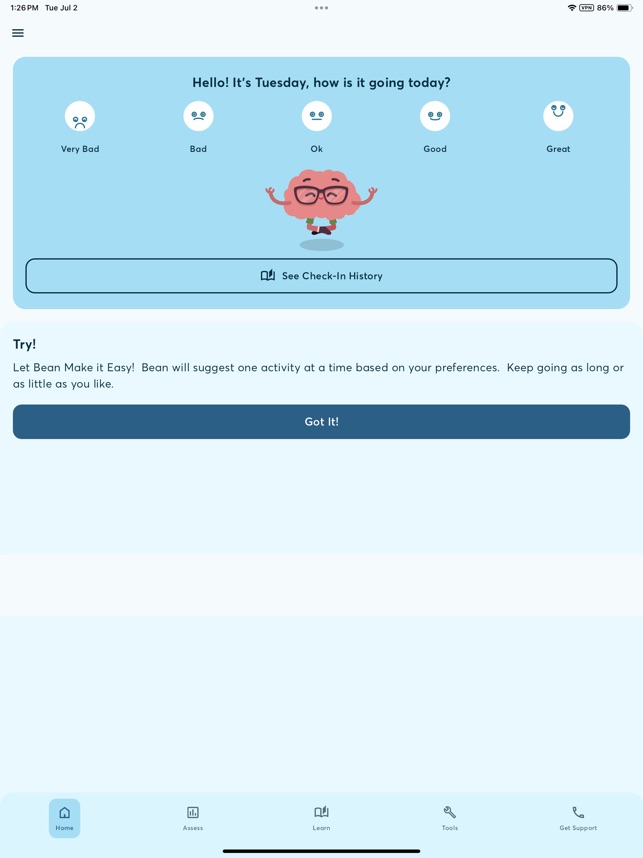
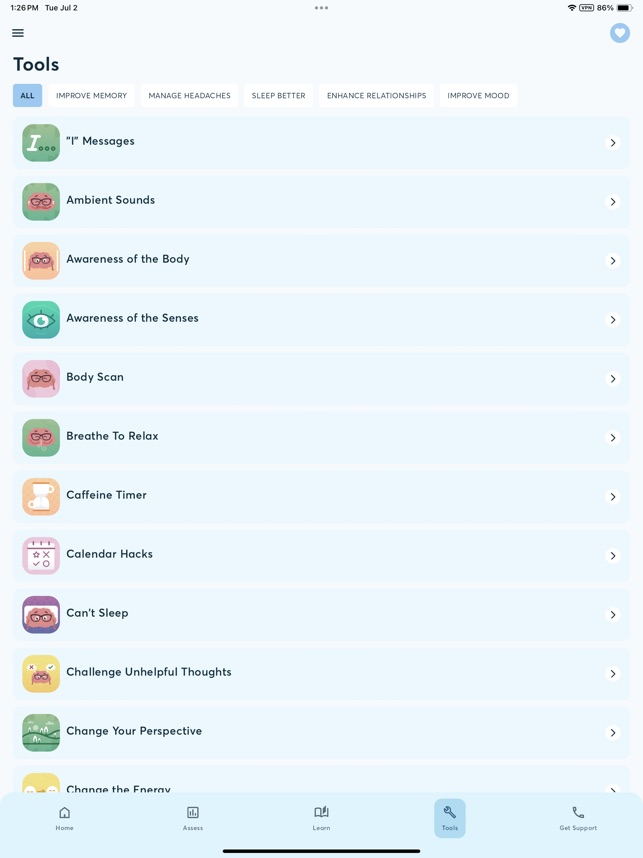
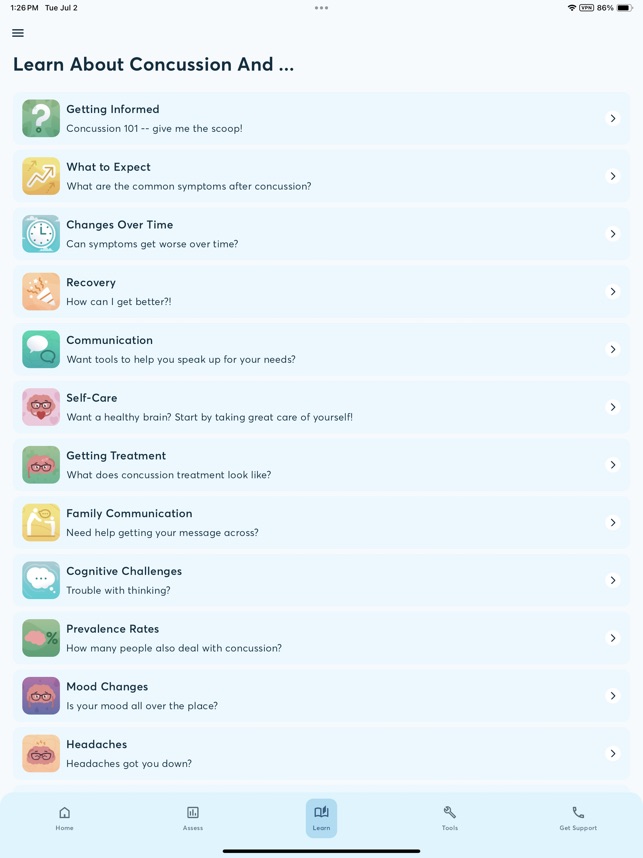
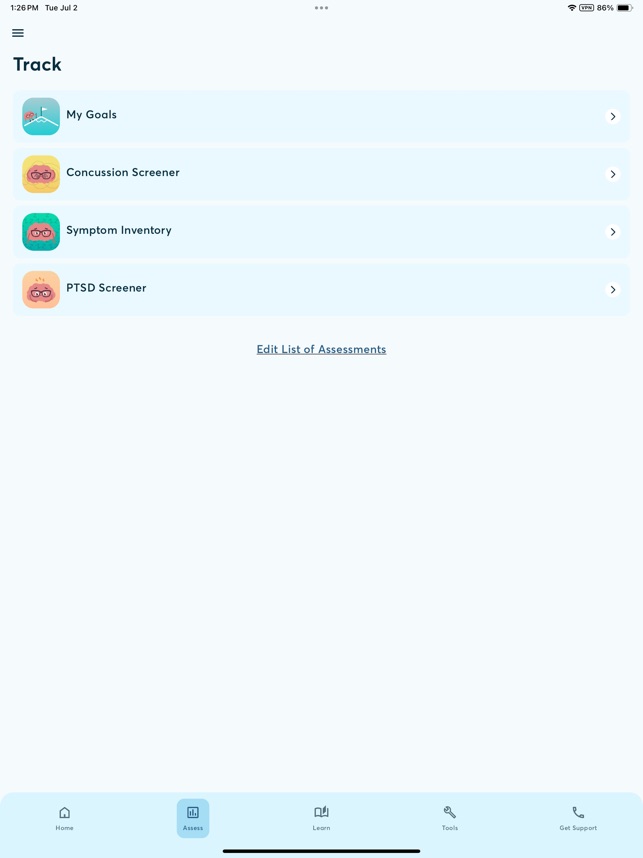
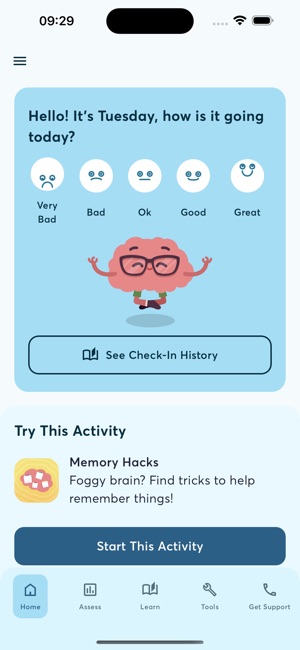
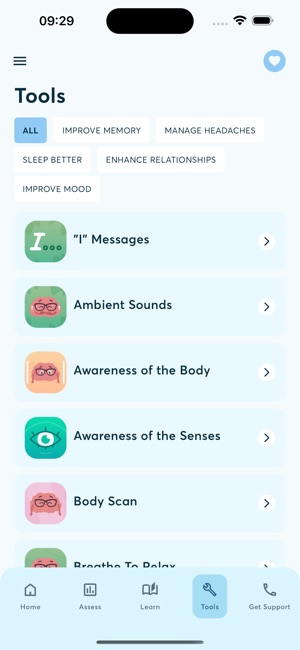
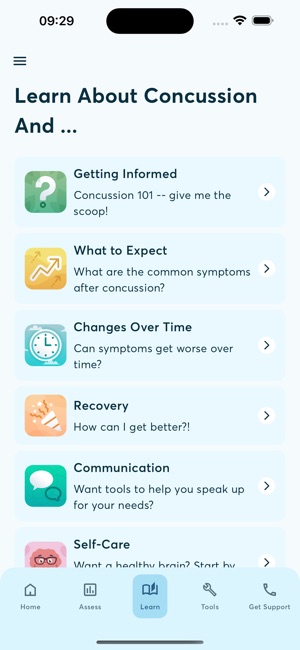
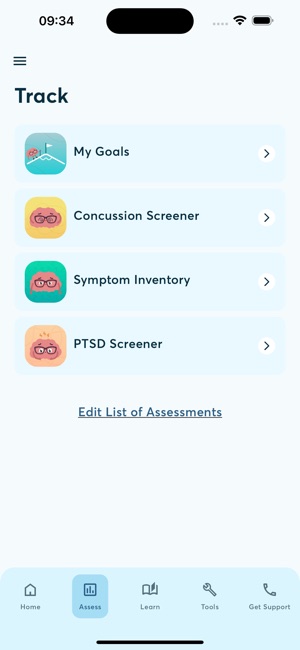
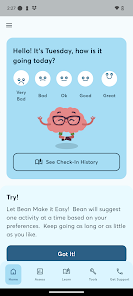
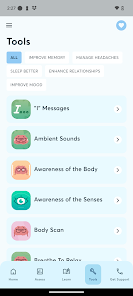
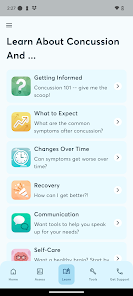
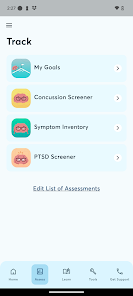
Functionality & Mechanism Developed by the VA's National Center for PTSD, Concussion Coach delivers a guided program to facilitate self-management of post-concussive symptoms. The system integrates educational content with science-based tools designed to address emotional, cognitive, and physical recovery domains. A structured interface presents curated, 'bite-sized' activities and leverages integrated trackers to monitor symptom progression over time. The application also provides direct access to resources for obtaining professional care, augmenting its function as a self-care tool.
Evidence & Research Context
- A randomized controlled trial (N=461) of U.S. Veterans with a history of mild traumatic brain injury (mild TBI) established the app's efficacy.
- The Concussion Coach group demonstrated a significantly greater probability of reduced post-concussive symptom severity compared to a treatment-as-usual control group (OR=1.29).
- The intervention was also associated with a greater probability of increased self-efficacy (OR=1.42), a factor linked to reduced psychological distress and symptom severity.
- The app is a component of the U.S. Department of Veterans Affairs' suite of evidence-informed mobile health tools designed for self-management and treatment augmentation.
Intended Use & Scope This application is designed for individuals, including military Veterans, managing residual symptoms following a mild TBI. Its primary utility is as a stand-alone self-management resource or as an adjunct to professional clinical care. The app does not provide a diagnosis of concussion and is not a substitute for medical evaluation or emergency treatment.
Studies & Publications
Peer-reviewed research associated with this app.
Concussion coach for postconcussive symptoms: A randomized, controlled trial of a smartphone application with Afghanistan and Iraq war Veterans
Belanger et al. (2021) · The Clinical Neuropsychologist
Veterans using Concussion Coach experienced reduced postconcussive symptoms and psychological distress compared to usual care.
VA mobile apps for PTSD and related problems: public health resources for veterans and those who care for them
Owen et al. (2018) · mHealth
Referenced in academic literature; no direct evaluation of the appIn the Media
Deployment Psychology Blog
The Center for Deployment Psychology developed Concussion Coach to address traumatic brain injury recovery needs among military personnel, using evidence-based therapeutic approaches. The app addresses often overlooked risk factors in military mental health, as the center notes that "lurking quietly, often unnoticed and unspoken, is another powerful risk factor, one that rarely makes it onto the paperwork or into clinical interviews." Research shows younger veterans are three times more likely to screen positive for PTSD compared to older veterans, highlighting the critical need for accessible digital mental health tools.
VA releases "Concussion Coach" app to help vets assess, cope
The Department of Veterans Affairs developed Concussion Coach to help veterans and service members evaluate concussion symptoms and cope with related issues, featuring customizable symptom feedback tools and relaxation exercises. VA's Rehabilitation and Prosthetic Services partnered with the National Center for Post-Traumatic Stress Disorder and the Department of Defense's National Center for Telehealth and Technology to create the app. The free app launched through the Apple store with VA emphasizing it does not replace professional medical treatment.
VA Develops Mobile Application "Concussion Coach" To Help Support Treatment for Veterans Who Suffer From Mild to Moderate Concussions
The Department of Veterans Affairs developed Concussion Coach to help Veterans and others with mild to moderate concussions manage symptoms and build resilience, using portable tools for symptom recognition and coping strategies. "In developing the Concussion Coach, we applied the science and the clinical recommendations that have emerged from the recent efforts of researchers and practitioners across many agencies, organizations and institutions to better understand the nature and consequences of injury to the brain," said Dr. Micaela Cornis-Pop, Speech Pathologist and lead subject matter expert for the application. The app is available to the public through VA National Center for PTSD and DOD.
VA Launches Mobile App Tool To Assess Concussion Symptoms
The VA's Polytrauma/TBI System of Care developed Concussion Coach to provide portable tools for assessing symptoms and facilitating coping strategies for mild to moderate concussion. The mobile app was collaboratively developed by VA's Rehabilitation and Prosthetic Services, the National Center for Posttraumatic Stress Disorder, and the Department of Defense National Center for Telehealth and Technology. The app launched for Apple devices with Google Play availability planned for later in 2014.
App Information
Developer
US Department of Veterans AffairsCategory
Evidence Profile
Validated in clinical trials · Initial evidence
Platforms
Updated
Jun 2026
© 2025 US Department of Veterans Affairs