
AppsFromResearch
Discovery Tool Our Voice icon

Discovery Tool Our Voice

Evidence Tier:VALIDATED

Shows promise in preliminary research

For:Researchers & AcademicsGeneral Public & Enthusiasts

App Summary

Discovery Tool Our Voice is a participatory research app that enables citizen scientists to systematically document features of their local environment—using photos, audio, and biometric data—that impact well-being and health equity. A preliminary pilot study (N=14) demonstrated the feasibility of combining the app's qualitative data with wearable sensor data, finding significant associations between participants' stress levels and specific environmental features. The associated research concludes that this citizen science approach provides a powerful toolkit for empowering communities to generate evidence and advocate for health-promoting environmental changes.

App Screenshots

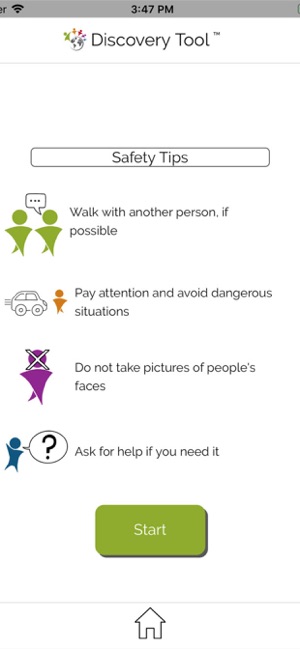
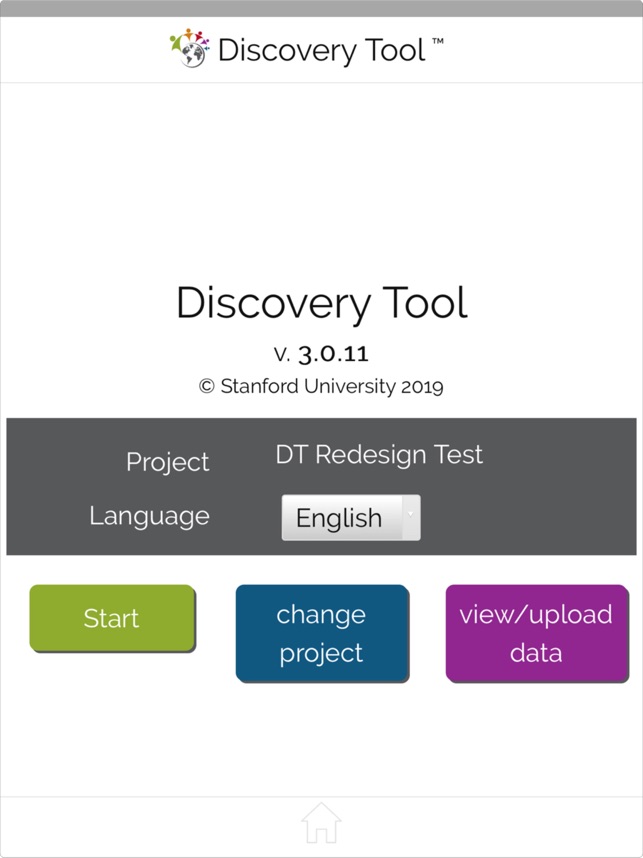
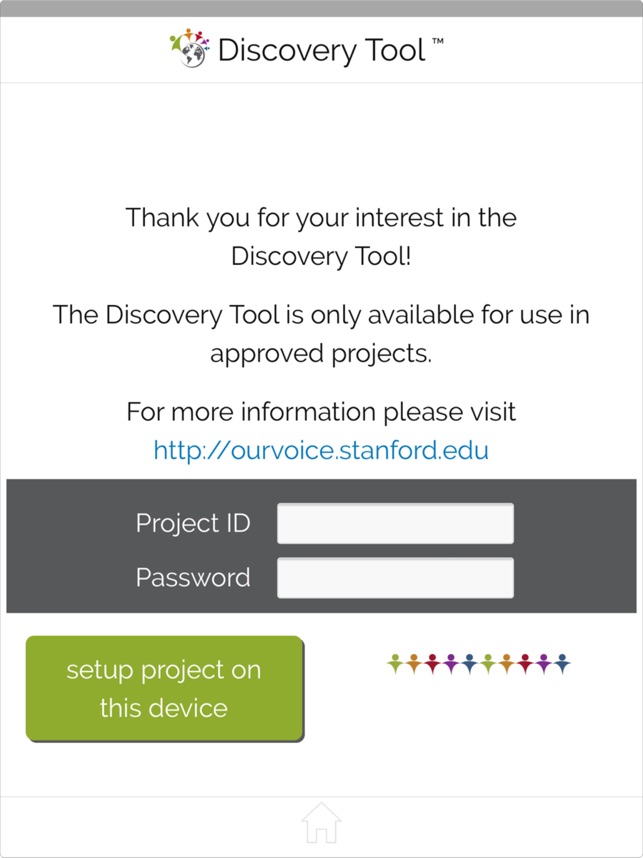
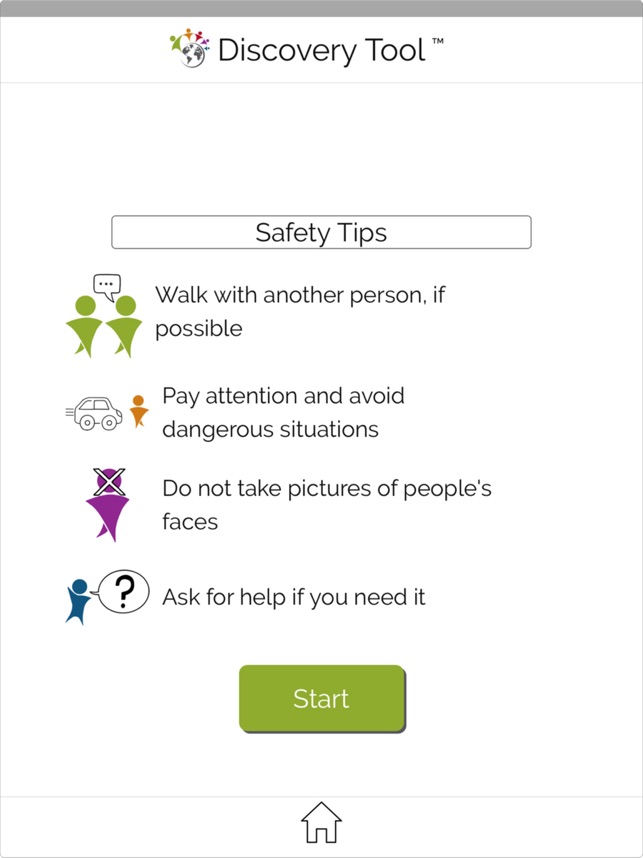
Discovery Tool Our Voice screenshot 1 of 7Discovery Tool Our Voice screenshot 2 of 7Discovery Tool Our Voice screenshot 3 of 7Discovery Tool Our Voice screenshot 4 of 7Discovery Tool Our Voice screenshot 5 of 7Discovery Tool Our Voice screenshot 6 of 7Discovery Tool Our Voice screenshot 7 of 7

Detailed Description

Functionality & Mechanism

The Discovery Tool is a mobile application supporting the 'Our Voice' citizen science methodology for environmental assessment. The interface facilitates in-situ data collection, enabling community members to capture geolocated photographic evidence and audio narratives of local features influencing well-being. During guided community walks, participants systematically document and rate environmental barriers and assets. The collected qualitative and geospatial data are then aggregated to identify community-defined priorities for advocacy and intervention, forming the basis for subsequent discussions with local decision-makers.

Evidence & Research Context

  • A preliminary pilot study (N=14) demonstrated the tool's feasibility for capturing qualitative environmental data (174 images, 124 audio files) and integrating biometric sensor input to identify spatial clusters of perceived environmental stress.
  • The tool's design and the broader 'Our Voice' methodology are grounded in an evidence-based framework prioritizing measures that demonstrate feasibility, accuracy, propriety, and utility for community-based participatory research.
  • Associated research positions the 'Our Voice' method, enabled by the Discovery Tool, as a mechanism for citizen scientists to systematically gather data and advocate for environmental changes that advance health equity outcomes.

Intended Use & Scope

The Discovery Tool is intended for researchers, community health practitioners, and citizen scientists engaged in participatory action research. Its primary utility is systematic data collection for community-led environmental assessment and health advocacy. The tool does not provide clinical diagnoses or professional environmental analyses; data interpretation and subsequent action require expert facilitation and engagement with decision-makers.

Studies & Publications

3 publications

Peer-reviewed research associated with this app.

Non-Evaluative Reference

The "Our Voice" Method: Participatory Action Citizen Science Research to Advance Behavioral Health and Health Equity Outcomes

Pedersen et al. (2022) · International Journal of Environmental Research and Public Health

Referenced in academic literature; no direct evaluation of the app
Citizen science research that more fully engages the community can systematically involve people from under-resourced groups to create practical health-enhancing improvements across physical, social and food environments. Exemplary health equity-focused outcomes include key health behaviors (e.g., healthy eating or physical activity) and community-level changes (e.g., public transit to food shops) that are central to health promotion while being demonstrably impacted by local environmental contexts. Yet, few examples of this approach are readily available for application within complex, community-based settings. In this paper, we present the Our Voice (OV) four-step method to demonstrate an integrated participatory citizen science approach and its usability for action-focused researchers and community health practitioners. In addition, we present a summary of the major research, processes, and community outcomes, with examples drawn from nutrition and healthy food access areas, among others. Finally, we explore the hallmark features of the OV method that effectively engage citizen scientists, empowering action and fostering solution-building across social and environmental structures impacting community health. Expanding research that marries participatory research philosophies with innovative citizen science methods, supported by systematic data collection, visualization, and delivery technologies, in turn provides a powerful toolkit for tackling local to global health equity challenges.
... Read More
Pilot/Feasibility Study

Stress experiences in neighborhood and social environments (SENSE): a pilot study to integrate the quantified self with citizen science to improve the built environment and health

Chrisinger et al. (2018) · International Journal of Health Geographics

Feasibility confirmed — successfully integrated location tracking with stress monitoring in community environmental assessment.

Identifying elements of one's environment—observable and unobservable—that contribute to chronic stress including the perception of comfort and discomfort associated with different settings, presents many methodological and analytical challenges. However, it also presents an opportunity to engage the public in collecting and analyzing their own geospatial and biometric data to increase community member understanding of their local environments and activate potential environmental improvements. In this first-generation project, we developed a methodology to integrate geospatial technology with biometric sensing within a previously developed, evidence-based "citizen science" protocol, called "Our Voice." Participants used a smartphone/tablet-based application, called the Discovery Tool (DT), to collect photos and audio narratives about elements of the built environment that contributed to or detracted from their well-being. A wrist-worn sensor (Empatica E4) was used to collect time-stamped data, including 3-axis accelerometry, skin temperature, blood volume pressure, heart rate, heartbeat inter-beat interval, and electrodermal activity (EDA). Open-source R packages were employed to automatically organize, clean, geocode, and visualize the biometric data. In total, 14 adults (8 women, 6 men) were successfully recruited to participate in the investigation. Participants recorded 174 images and 124 audio files with the DT. Among captured images with a participant-determined positive or negative rating (n = 131), over half were positive (58.8%, n = 77). Within-participant positive/negative rating ratios were similar, with most participants rating 53.0% of their images as positive (SD 21.4%). Significant spatial clusters of positive and negative photos were identified using the Getis-Ord Gi* local statistic, and significant associations between participant EDA and distance to DT photos, and street and land use characteristics were also observed with linear mixed models. Interactive data maps allowed participants to (1) reflect on data collected during the neighborhood walk, (2) see how EDA levels changed over the course of the walk in relation to objective neighborhood features (using basemap and DT app photos), and (3) compare their data to other participants along the same route. Participants identified a variety of social and environmental features that contributed to or detracted from their well-being. This initial investigation sets the stage for further research combining qualitative and quantitative data capture and interpretation to identify objective and perceived elements of the built environment influence our embodied experience in different settings. It provides a systematic process for simultaneously collecting multiple kinds of data, and lays a foundation for future statistical and spatial analyses in addition to more in-depth interpretation of how these responses vary within and between individuals.
... Read More

Discovery Tool Our Voice

Free