

eBird
Assessed for usability and quality
App Summary
App Screenshots
Detailed Description
Functionality & Mechanism
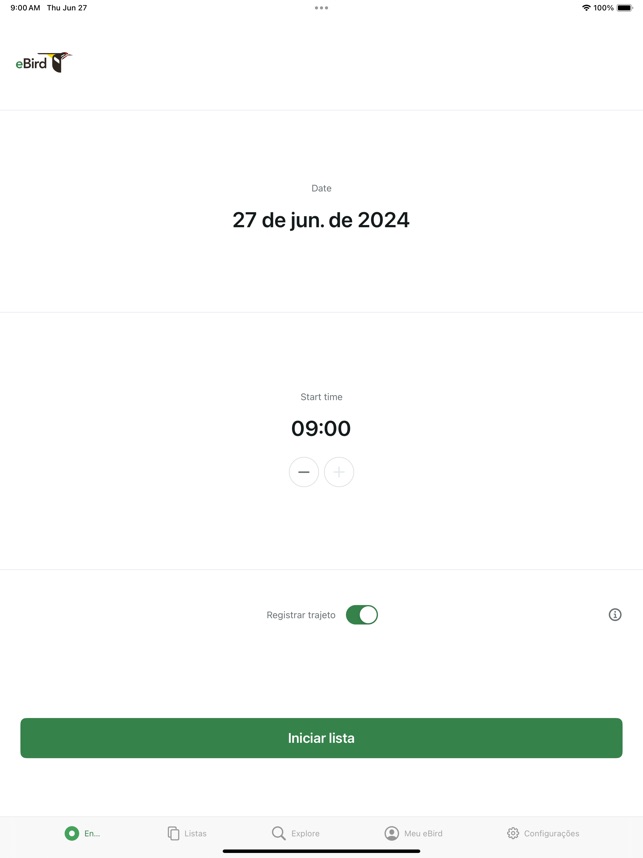
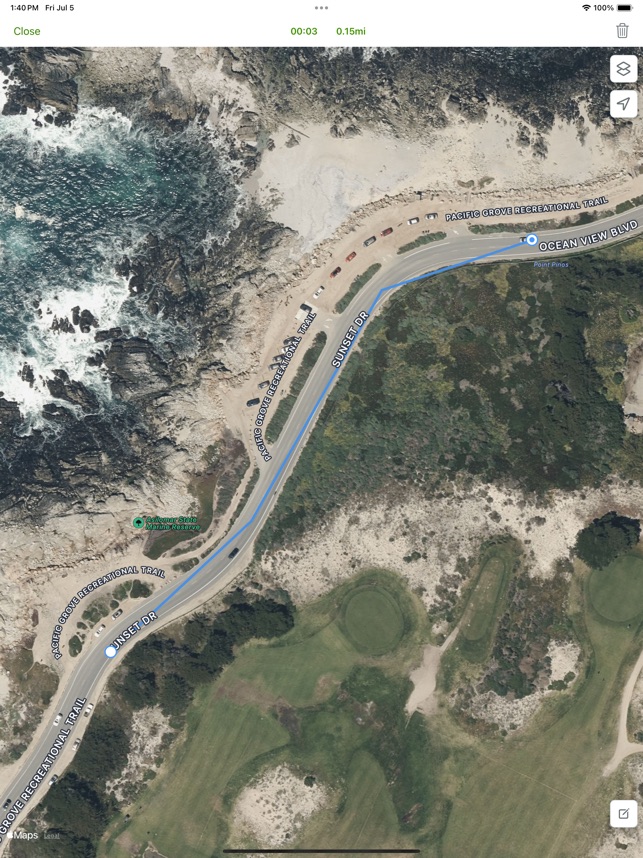
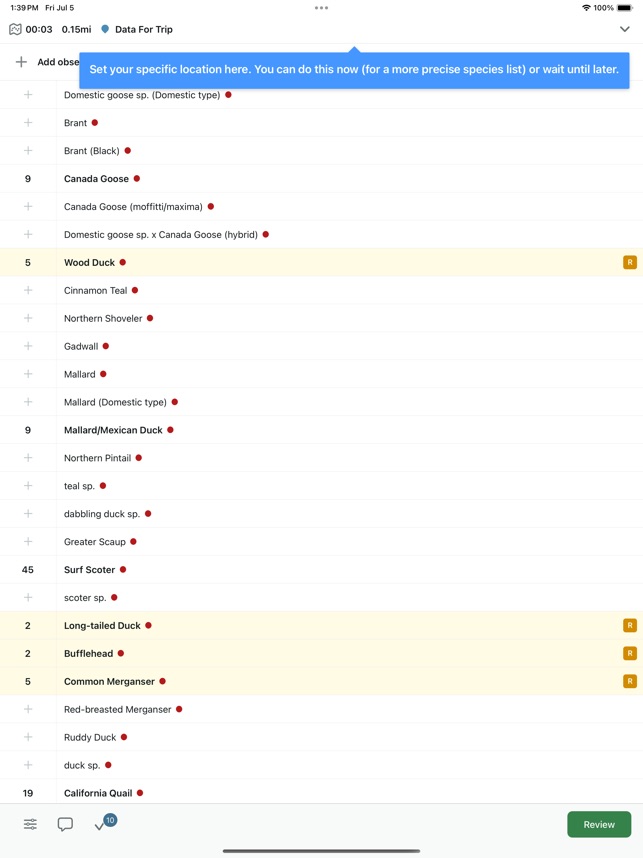
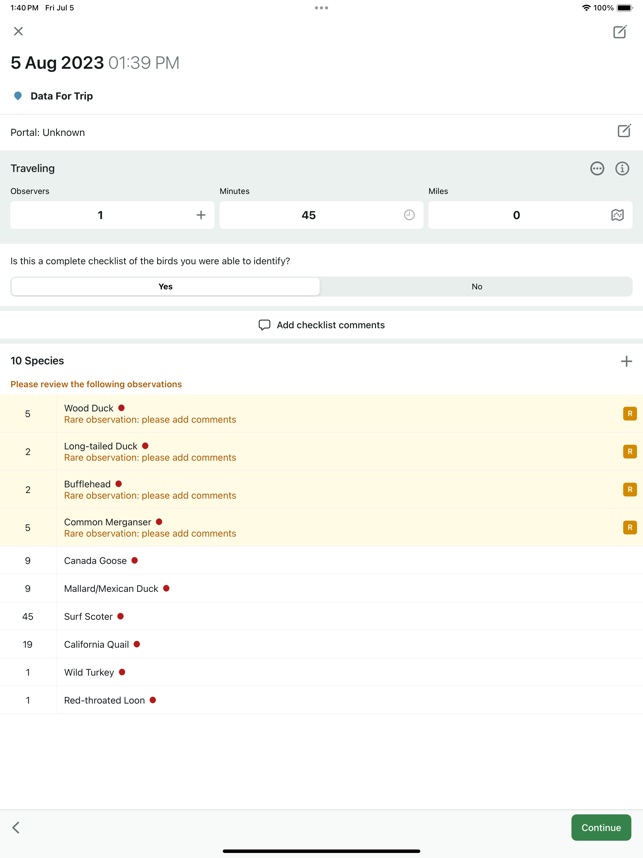
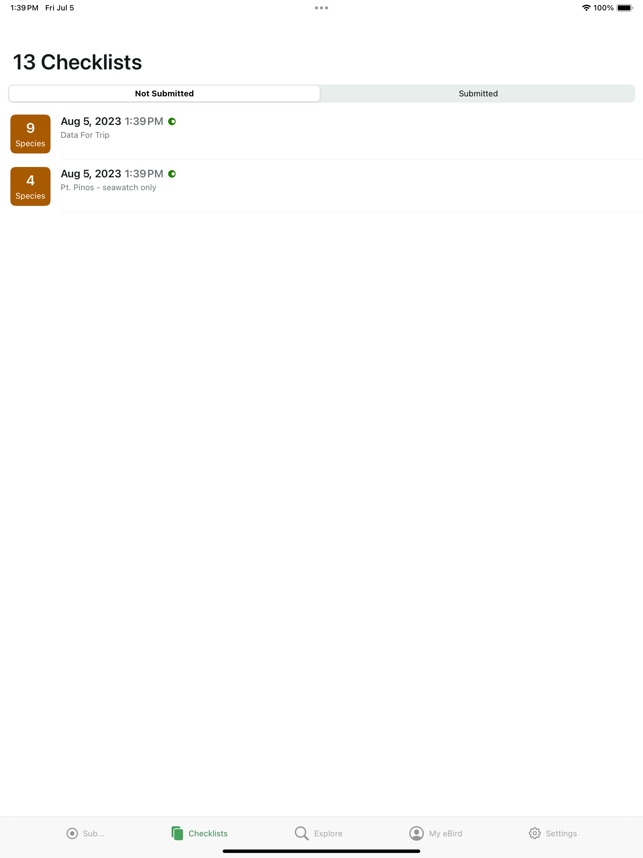
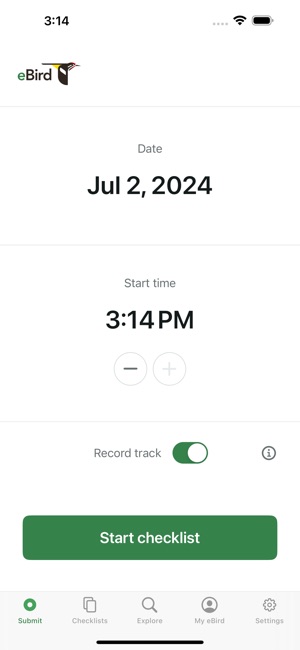
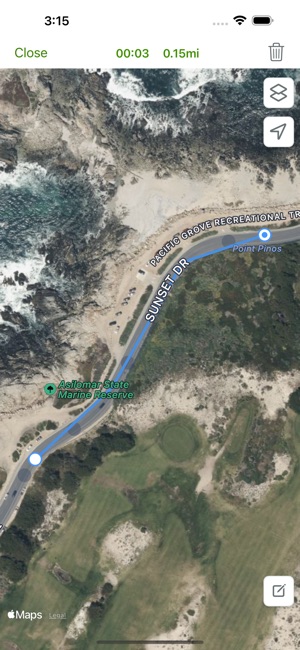
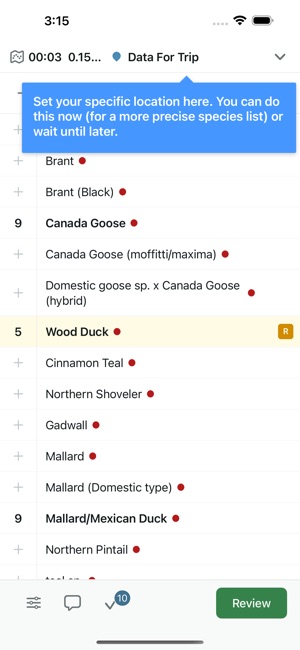
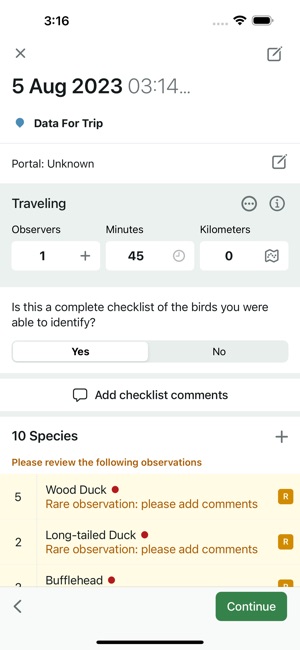
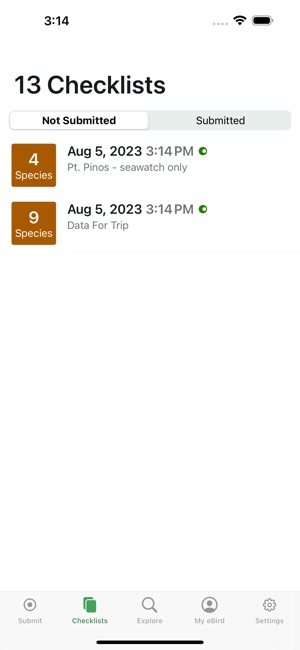
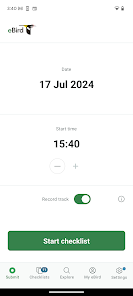
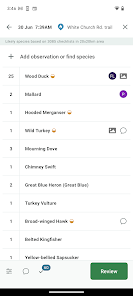
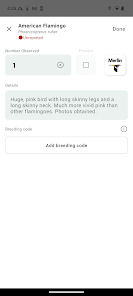
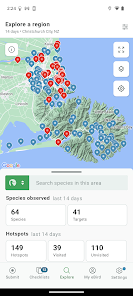
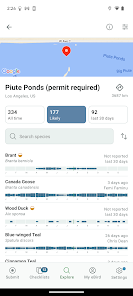
Developed by the Cornell Lab of Ornithology, the eBird system facilitates the field-based submission of avian observations to a global database. The mobile interface leverages GPS for precise location plotting and generates customized checklists of probable species based on historical spatiotemporal data. Sessions involve the creation of these checklists, with functionality for incremental, offline data entry. The platform integrates automated data filters and a network of expert reviewers to maintain scientific integrity upon submission.
Evidence & Research Context
- The system has aggregated a database of over 140 million observations from a global network, serving as a primary source of biodiversity data for scientific and conservation applications.
- Data quality is maintained through a multi-tiered process that combines automated data filters with manual review of unusual records by a network of over 450 regional experts.
- A methodological case study demonstrated that the scientific reliability of eBird data is significantly improved when analyses utilize "complete checklists" and include statistical covariates for observation effort.
- The project is described in associated research as an integrated enterprise that leverages expertise from ecology, statistics, and computer science to quantify and control for observer variability and collection bias.
Intended Use & Scope
This system is designed for citizen scientists, researchers, and conservation professionals for the large-scale collection of avian distribution and abundance data. Its primary utility is as a research database, not as a standalone bird identification guide. The scientific application of its data requires appropriate statistical methods to control for inherent observer and effort biases.
Studies & Publications
Peer-reviewed research associated with this app.
Best practices for making reliable inferences from citizen science data: case study using eBird to estimate species distributions
Kelling et al. (2019) · bioRxiv
Data refinement methods improved the accuracy of species distribution estimates from citizen science observations.
eBird: Curating Citizen Science Data for Use by Diverse Communities
Lagoze et al. (2014) · International Journal of Digital Curation
Referenced in academic literature; no direct evaluation of the appIn the Media
Lab of Ornithology hits 2 billion bird sightings, 3 million recordings
The Cornell Lab of Ornithology developed eBird as a participatory-science platform to gather global bird observation data for research and conservation, allowing anyone worldwide to submit bird sightings and sounds. The program recently hit major milestones with 2 billion bird sightings and 3 million sound recordings, amassing more than 150 million checklists from over 1 million users since launching in 2002. "In the early days, we had aspirations for being able to use eBird as a platform that would be able to gather a lot of data, but we didn't really have any idea how we were going to do it," said Christopher Wood, eBird program director.
News Room
The Cornell Lab of Ornithology developed eBird to support targeted conservation efforts across North America, using millions of bird sightings from citizen scientists. A new study demonstrates how eBird data align with results from the North American Breeding Bird Survey, with differences by species and region underscoring the importance of using multiple data sources.
"Think globally, act locally" with new bird conservation tool
The Cornell Lab of Ornithology developed eBird Trends to tackle declining bird populations worldwide, using the most expansive visualizations ever produced to show bird population trends within an 8-mile radius for 586 species. "You can't solve what you can't see," said Daniel Fink, senior research associate at the Cornell Lab, noting that "we've never been able to see population change with this level of detail across continental extents for so many species." The tool combines raw eBird reports with satellite data and statistical models to create interactive maps showing localized population trends from 2007 through 2021.
Partnership boosts worldwide bird conservation
The Cornell Lab of Ornithology partnered with BirdLife International to monitor global bird populations using eBird's massive citizen science database, integrating data from over 13,000 Important Bird and Biodiversity Areas across more than 100 countries. "The partnership connects eBird's database of 1.25 billion bird sightings with BirdLife's hundreds of conservation partner organizations that are changing the world through their local conservation efforts," said eBird coordinator Ian Davies. The collaboration leverages eBird's 800,000 citizen scientists to provide real-time monitoring data that helps identify new conservation sites and track population trends for threatened species.
Cornell's eBird releases hundreds of animated maps
The Cornell Lab of Ornithology's eBird program released 500 animated maps showing bird occupation and movement across the western hemisphere, merging millions of observations from bird watchers with NASA satellite images. "This type of spatial and temporal information helps guide more flexible conservation solutions that can more readily accommodate human and ecological needs," said Amanda Rodewald, the Garvin Professor and co-director of the Center for Avian Population Studies at the Cornell Lab. The maps are publicly available for researchers, educators and conservationists.
App Information
Developer
Cornell UniversityCategory
Evidence Profile
Assessed for usability and quality
Platforms
Updated
Aug 2026
© 2025 Cornell University