
AppsFromResearch
NestWatch by the Cornell Lab icon

NestWatch by the Cornell Lab

Evidence Tier:DOCUMENTED

Published in academic literature

For:Researchers & AcademicsGeneral Public & Enthusiasts

App Summary

NestWatch is a citizen-science app for volunteers and professionals to report observations on North American bird nests, contributing to a large-scale database for avian ecology and conservation research. An evaluation of individuals who monitor nest boxes (N=947) found that NestWatch participants scored higher on bird identification tasks and were more likely to manage for invasive species than non-participants. The associated research concludes that citizen science projects can play an important role in increasing knowledge and shaping public attitudes and management behaviors toward invasive species.

App Screenshots

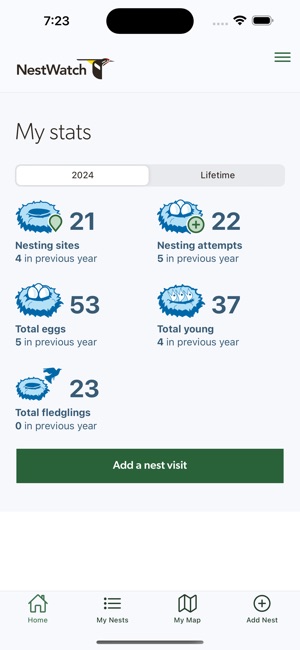
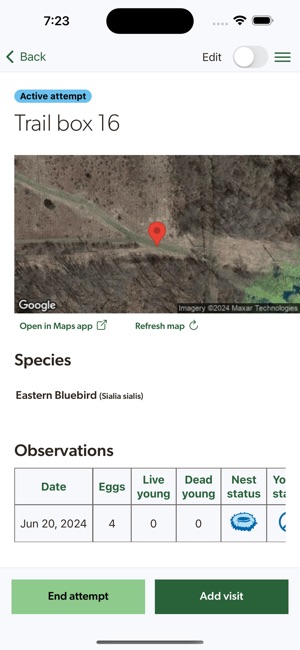
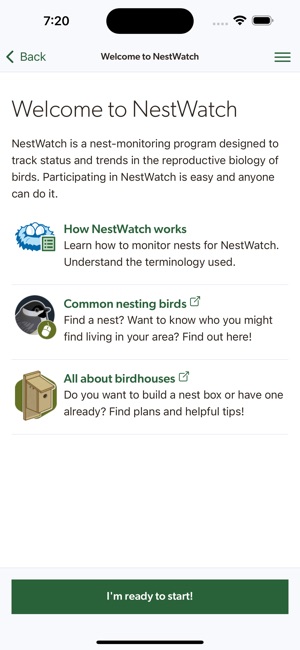
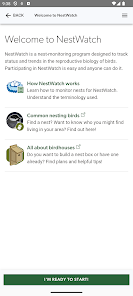
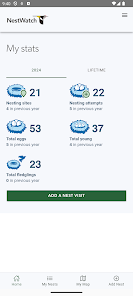
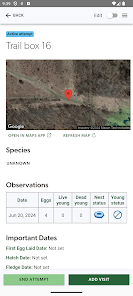
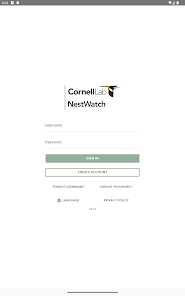
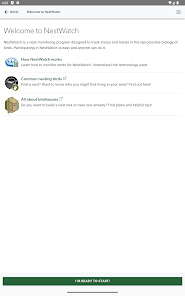
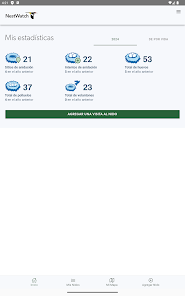
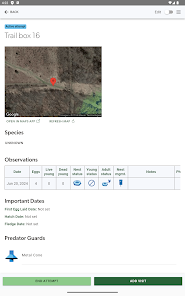
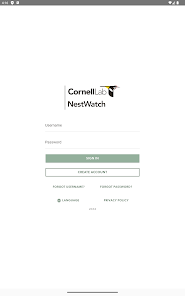
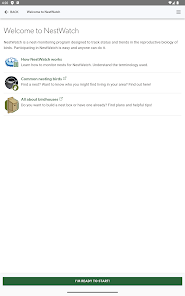
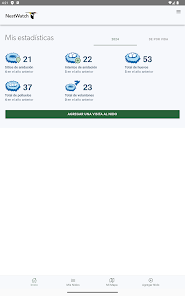
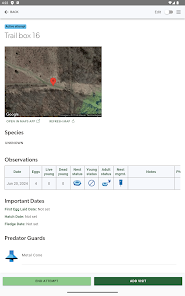
NestWatch by the Cornell Lab screenshot 1 of 20NestWatch by the Cornell Lab screenshot 2 of 20NestWatch by the Cornell Lab screenshot 3 of 20NestWatch by the Cornell Lab screenshot 4 of 20NestWatch by the Cornell Lab screenshot 5 of 20NestWatch by the Cornell Lab screenshot 6 of 20NestWatch by the Cornell Lab screenshot 7 of 20NestWatch by the Cornell Lab screenshot 8 of 20NestWatch by the Cornell Lab screenshot 9 of 20NestWatch by the Cornell Lab screenshot 10 of 20NestWatch by the Cornell Lab screenshot 11 of 20NestWatch by the Cornell Lab screenshot 12 of 20NestWatch by the Cornell Lab screenshot 13 of 20NestWatch by the Cornell Lab screenshot 14 of 20NestWatch by the Cornell Lab screenshot 15 of 20NestWatch by the Cornell Lab screenshot 16 of 20NestWatch by the Cornell Lab screenshot 17 of 20NestWatch by the Cornell Lab screenshot 18 of 20NestWatch by the Cornell Lab screenshot 19 of 20NestWatch by the Cornell Lab screenshot 20 of 20

Detailed Description

Functionality & Mechanism

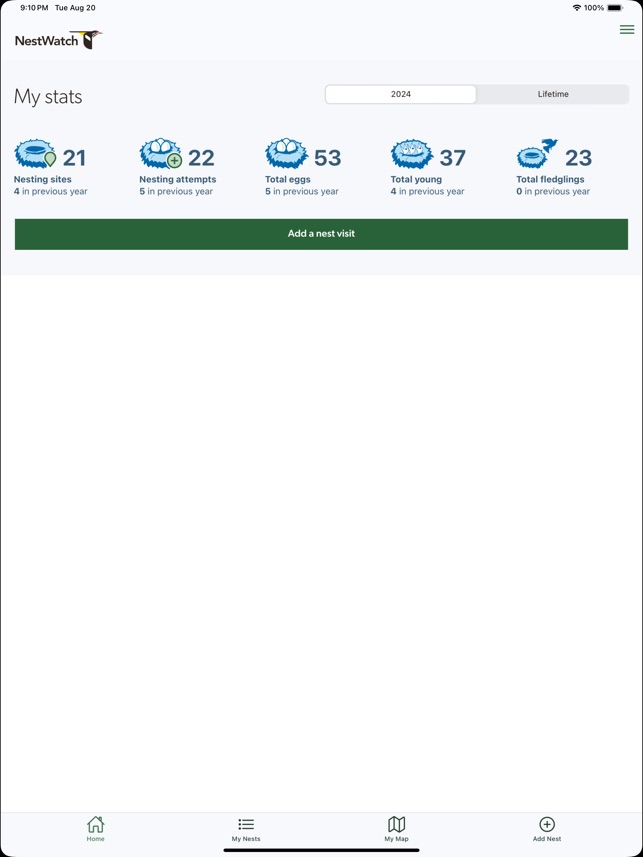
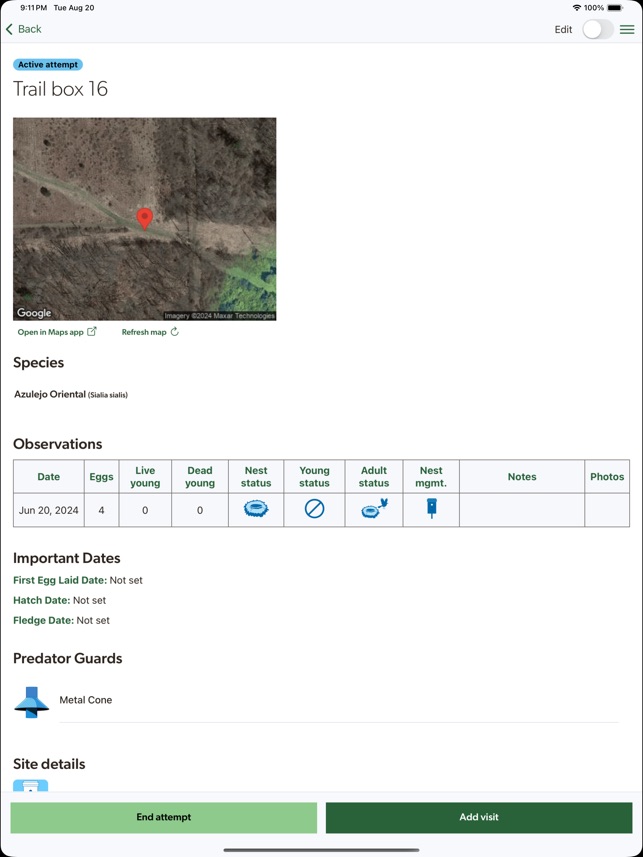
NestWatch is a citizen-science data collection system developed by the Cornell Lab of Ornithology. The interface facilitates the standardized submission of avian nesting observations across North America. An initial session involves mapping a nest location. Subsequent data entry captures details such as species, clutch size, number of young, and key phenological dates. The system functions fully offline, automatically synchronizing with the central web-based database when connectivity is restored to ensure data integrity and multi-user accessibility.

Evidence & Research Context

  • The app contributes to an open-access dataset containing over 574,000 nest records, which is utilized by researchers to analyze large-scale effects of environmental change on avian reproductive biology.
  • The associated research describes the dataset's utility in examining geographical and temporal variation in breeding success, nesting phenology, and other key ecological metrics.
  • In a study of nest box monitors (N=947), individuals participating in NestWatch scored significantly higher on bird identification tasks compared to non-participants.
  • The same study indicated that NestWatch participants were more likely to identify non-native species as problematic and undertake management activities for invasive species.

Intended Use & Scope

This tool is designed for citizen scientists, researchers, and land managers participating in standardized avian nesting monitoring. Its primary function is to serve as a field data entry instrument for a long-term, longitudinal research database. The application does not provide bird or nest identification assistance; users are expected to adhere to established monitoring protocols independently.

Studies & Publications

2 publications

Peer-reviewed research associated with this app.

Non-Evaluative Reference

NestWatch: An open-access, long-term data set on avian reproductive success

Bailey et al. (2023) · Ecology

Referenced in academic literature; no direct evaluation of the app
Long‐term avian nesting data are valuable to researchers studying various aspects of avian ecology, conservation, and management. Administered by the Cornell Lab of Ornithology, NestWatch accepts nesting data from volunteers and professionals who agree to follow its protocol and submit data in a standardized form using either the website NestWatch.org, the mobile app, or a bulk upload template. These data (N = 574,288 nest records currently spanning 1874–2023) have been used to examine geographical and temporal variation in breeding success, clutch size, nesting phenology, and other metrics of interest to researchers. When combined with other data sets (e.g., climate, land cover, maps of environmental stressors), NestWatch data have been used to explore the large‐scale effects of anthropogenic change on nesting biology. These data can also be incorporated into investigations of status and trends for declining species and can potentially be aggregated with other large‐scale nest‐monitoring data sets to explore hemispheric or even global change. By committing these data to the public domain, we aimed to increase their use among researchers and stimulate novel studies. The NestWatch Open Data Set by the Cornell Lab of Ornithology is licensed under CC BY‐NC 3.0 (creativecommons.org); users are free to copy, redistribute, remix, transform, and build upon the material in any medium or format, but must give appropriate credit, provide a link to the license, and indicate if changes were made. Users may do so reasonably, but not in any way that suggests the licensor endorses such use, and may not use the material for commercial purposes.
... Read More
Survey/Cross-sectional

The role of citizen science in management of invasive avian species: What people think, know, and do

Phillips et al. (2020) · Journal of Environmental Management

Citizen science participation was associated with increased knowledge and management of invasive bird species.
In North America, nest site competition from invasive cavity-nesting birds can limit the opportunities for successful nesting by native birds. Managing invasive species is costly and complex, requiring input from biologists, decision makers, and the public. An informed and engaged public can play an important role in mitigating the negative effects of invasive avian species. However, little is known regarding the publics' knowledge, attitudes, and behaviors toward non-native bird species. We examined the association between participating in a citizen science project and enjoyment, knowledge, and management of two non-native avian species in North America: European starlings (Sturnus vulgaris) and house sparrows (Passer domesticus). We administered a pre and post survey to 947 people who monitor nest boxes in the United States and Canada, 30% of whom were also reporting their observations to NestWatch, a citizen science project focused on nesting birds. We found that NestWatch participants were more likely to have negative views of non-native species, score higher on bird identification tasks, and manage for invasive species than non-participants. The most important predictor for undertaking management activities was respondents' perceptions of whether they believed non-native birds to be a problem at the continental scale, underscoring the important role of individual factors such as perception. Our study also highlights the important role citizen science may play in shaping attitudes and behaviors and increasing knowledge. We propose a conceptual model describing the mechanisms by which citizen science can be leveraged for management of invasive species.
... Read More

In the Media

NestWatch project invites people to monitor nearby nests

The Cornell Lab of Ornithology developed NestWatch to help scientists understand how environmental changes affect bird breeding success, using citizen science data collected over 60 years from volunteers monitoring nearby nests. "The widespread declines among many bird populations are well established now, but with the information we get from participants, we can better understand the reasons behind these trends," said NestWatch project leader Robyn Bailey. The free app is available in both English and Spanish through the Apple App Store and Google Play.

SungazetteRead article

It's Nesting Time

The Cornell Lab of Ornithology developed NestWatch to help scientists understand how environmental changes affect bird breeding success, using citizen science data collection that has been ongoing for 60 years. "The widespread declines among many bird populations are well established now, but with the information we get from participants, we can better understand the reasons behind these trends," said NestWatch project leader Robyn Bailey. The free app is available in both English and Spanish through the Apple App Store and Google Play.

CornellRead article

Help NestWatch Track Climate Change's Impact on Birds

The Cornell Lab of Ornithology developed NestWatch to document when and where birds are nesting, using citizen science data to track climate change impacts on breeding patterns. "Researchers are using decades of NestWatch data to delve deeper into the effects of climate change," said project leader Robyn Bailey, noting that recent studies found earlier warm temperatures increase dangers from sudden cold snaps and heat waves that cause nest failures. The free app allows participants to monitor nests and record breeding details, contributing scientific data that shows birds are nesting weeks earlier than they used to.

NewyorkalmanackRead article

NestWatch by the Cornell Lab

Free