AppsFromResearch
See & ID Dolphins & Whales icon

See & ID Dolphins & Whales

Published in academic literature

For:Researchers & AcademicsGeneral Public & Enthusiasts

App Summary

This electronic field guide helps wildlife enthusiasts and educators identify marine mammals in the Southeastern U.S. using visual characteristics, mirroring the scientific technique of photo-identification. The associated research describes photo-identification as a non-invasive method that uses unique physical markings, analogous to fingerprints, to track individual animals and derive critical data on population size, social structure, and anthropogenic threats. By educating the public on identification and responsible viewing guidelines, the app directly supports the conservation management goals informed by this research.

App Screenshots

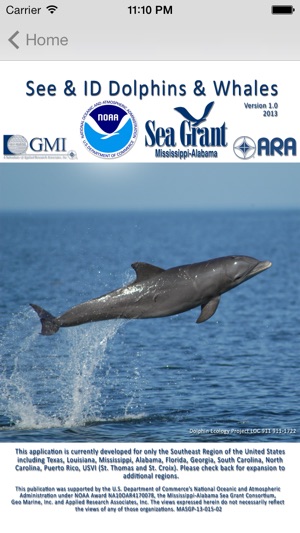
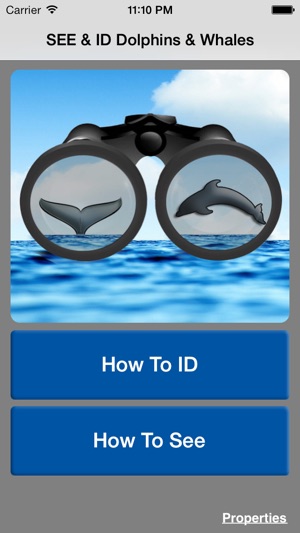
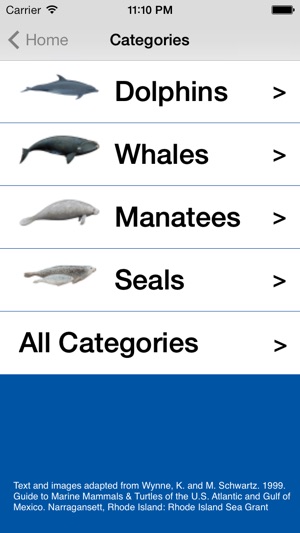
See & ID Dolphins & Whales screenshot 1 of 3See & ID Dolphins & Whales screenshot 2 of 3See & ID Dolphins & Whales screenshot 3 of 3

Detailed Description

Functionality & Mechanism

This digital field guide facilitates the identification of marine mammals indigenous to the Southeastern United States. The interface presents detailed profiles for species including dolphins, whales, seals, and manatees, integrating high-resolution illustrations, photographs, and key physical descriptors. Core modules deliver pedagogical content on species biology, habitat distribution, and conservation status. A primary component disseminates official guidelines for responsible wildlife viewing to minimize disturbance and ensure compliance with the Marine Mammal Protection Act.

Evidence & Research Context

  • The app's conservation content is informed by established non-invasive research methodologies, such as photo-identification, used for the longitudinal monitoring of marine mammal populations.
  • Associated research leverages unique physical markings (e.g., dorsal fin notches, fluke patterns) to derive critical population metrics, including abundance, distribution, and social structure.
  • This research methodology also functions as a diagnostic instrument, documenting anthropogenic threats from vessel strikes, fishery entanglements, and marine debris.
  • Data generated from these monitoring techniques provide the empirical foundation for conservation management and regulatory actions under the Marine Mammal Protection Act.

Intended Use & Scope

This application is designed as an educational field guide for the general public, educators, and eco-tourism operators. Its primary utility is to support species identification and promote adherence to responsible marine mammal viewing practices. The system functions as a reference tool and does not include functionality for citizen science data submission or direct research participation.

Studies & Publications

2 publications

Peer-reviewed research associated with this app.

Non-Evaluative Reference

What Can Marine Mammal Photo-Identification Tell Us?

NOAA Fisheries et al. (2025) · NOAA Fisheries Website

Referenced in academic literature; no direct evaluation of the app
: Photo-identification (photo-ID) serves as a primary tool for deriving quantitative and qualitative data on marine mammal populations in the Southeast United States. This overview examines the utility of photo-ID in estimating population abundance through "capture-mark-recapture" modeling, which utilizes unique natural markings as identifiers to track demographic trends without physical intervention. Beyond enumeration, longitudinal photographic datasets elucidate critical ecological parameters, including geographic range, site fidelity, and complex social structures such as male pair-bonding and matrilineal hierarchies. The methodology further functions as a diagnostic instrument for assessing population health and anthropogenic impact; it enables the monitoring of disease progression, body condition, and wound healing, while providing direct evidence of interactions with vessels, fisheries, and marine debris. These data are essential for guiding management interventions, particularly in response to environmental stressors such as hurricane-induced displacement and harmful algal blooms.
... Read More
Non-Evaluative Reference

Marine Mammal Photo-Identification Research in the Southeast

NOAA Fisheries et al. (2024) · NOAA Fisheries Website

Referenced in academic literature; no direct evaluation of the app
Photo-identification (photo-ID) serves as a critical, non-invasive methodology for the longitudinal monitoring of marine mammal populations. This overview describes the research programs conducted by the NOAA Southeast Fisheries Science Center, targeting key species such as common bottlenose dolphins (Tursiops truncatus), Rice's whales, sperm whales, and killer whales. The technique relies on documenting unique, persistent physical characteristics—including dorsal fin notches, fluke markings, and pigmentation patterns—to identify individuals analogously to human fingerprints. Data collection involves systematic vessel-based photographic surveys, followed by rigorous analysis using cataloging databases (e.g., FinBase) and artificial intelligence algorithms to match new sightings against established records. By tracking individuals over time, researchers derive essential biological and ecological metrics, including population abundance, distribution, site fidelity, social structure, and reproductive rates. Furthermore, photo-ID facilitates the assessment of population health and anthropogenic threats by documenting evidence of disease, vessel strikes, and fishery entanglements, providing the empirical foundation necessary for effective conservation management and regulatory compliance under the Marine Mammal Protection Act.
... Read More

See & ID Dolphins & Whales

Free