

EFM
Published in academic literature
App Summary
App Screenshots
Detailed Description
Functionality & Mechanism
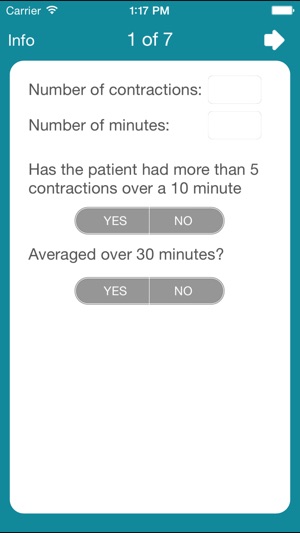
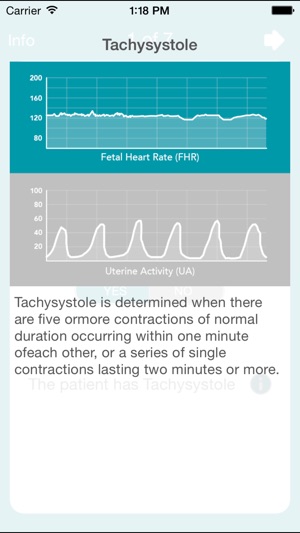
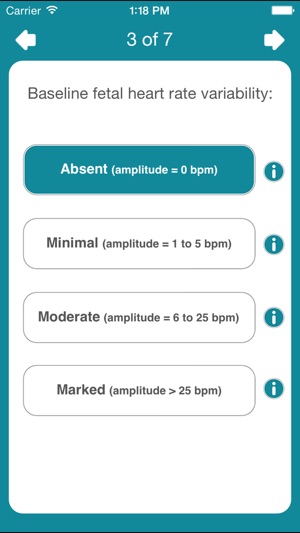
EFM is an instructional application designed to simulate electronic fetal monitoring for educational purposes. The system leverages the National Institute of Child Health and Human Development (NICHD) algorithm and nomenclature to generate realistic fetal heart rate tracings and uterine contraction patterns. The interface enables learners and instructors to conduct live interpretation of EFM strips within simulated obstetric cases. It is engineered for integration into training scenarios, including those with standardized patient actors, providing a cost-effective alternative to high-fidelity manikins.
Evidence & Research Context
- The app's design and development are detailed in a protocol paper that establishes its utility as an educational healthcare technology.
- The system was engineered to address documented limitations in EFM training, including the high cost of simulation manikins and the constraints of training on live patients.
- The application's pedagogical framework is grounded in the standardized NICHD nomenclature for fetal heart rate pattern interpretation.
- As noted by the developers, formal evaluation of the application's effectiveness and acceptability among learners is ongoing.
Intended Use & Scope
This application is intended for healthcare learners and instructors, including medical and nursing students, for educational and simulation-based training. Its primary utility is as an adjunct instructional tool within a formal curriculum. The system is not designed for direct clinical use, patient diagnosis, or as a substitute for supervised clinical judgment and practice.
Studies & Publications
Peer-reviewed research associated with this app.
Design and Development of an Electronic Fetal Monitoring App
Li et al. (2015) · Industrial and Systems Engineering Research Conference
Describes the research-driven development of this appApp Information
Developer
Augusta UniversityCategory
Evidence Profile
Published in academic literature
Platforms
Updated
Mar 2016
© 2025 Augusta University
Tags


EFM
Free