
AppsFromResearch
Find My Understudied Genes icon

Find My Understudied Genes

Evidence Tier:DOCUMENTED

Published in academic literature

For:Researchers & Academics

App Summary

Find My Understudied Genes (FMUG) is a research tool designed to help biologists analyze large datasets and identify understudied but tractable genes for further investigation. The associated research identified 33 reasons why potentially disease-relevant genes are often abandoned early in the research pipeline, finding that publications on understudied genes can garner more attention than those on well-known ones. The authors conclude that the tool can help scientists counteract bias toward well-studied genes and make more informed decisions about which novel targets to pursue.

App Screenshots

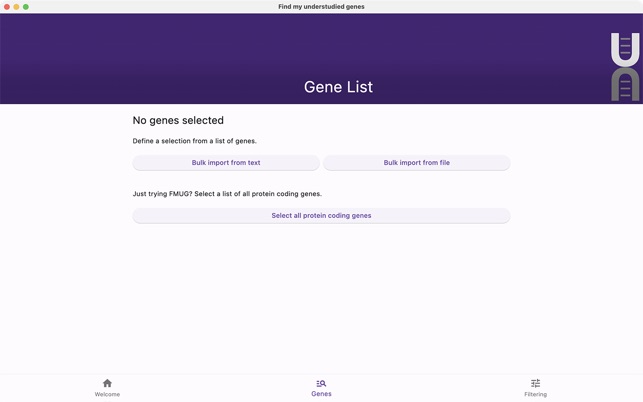
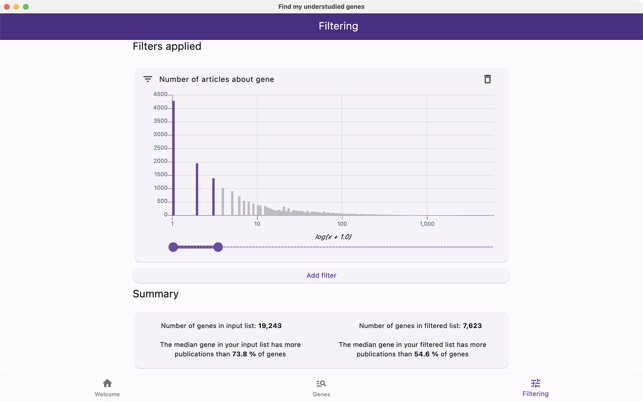
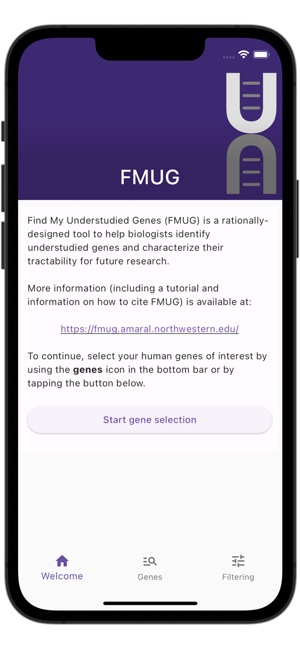
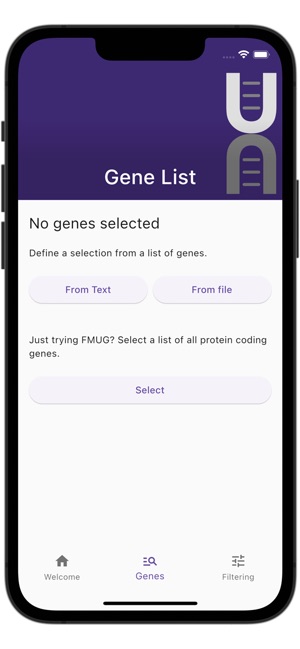
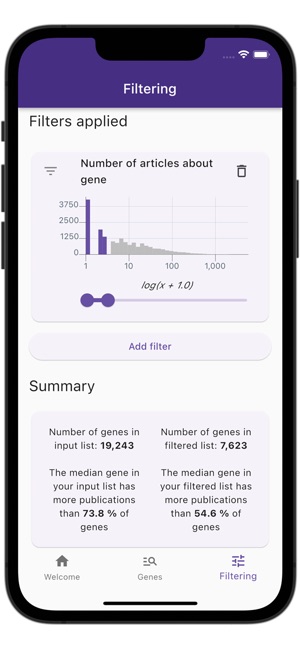
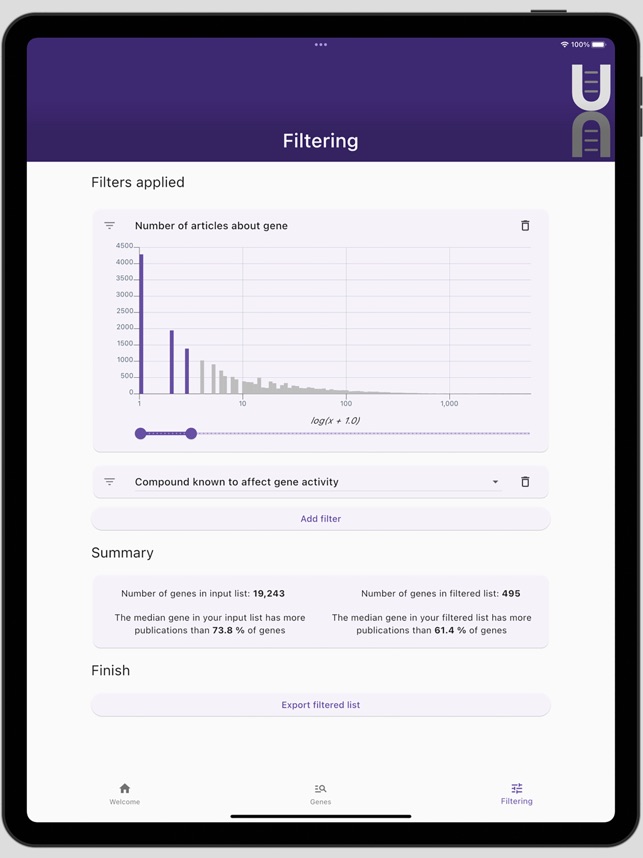
Find My Understudied Genes screenshot 1 of 9Find My Understudied Genes screenshot 2 of 9Find My Understudied Genes screenshot 3 of 9Find My Understudied Genes screenshot 4 of 9Find My Understudied Genes screenshot 5 of 9Find My Understudied Genes screenshot 6 of 9Find My Understudied Genes screenshot 7 of 9Find My Understudied Genes screenshot 8 of 9Find My Understudied Genes screenshot 9 of 9

Detailed Description

Functionality & Mechanism

Find My Understudied Genes (FMUG) is a computational tool designed to facilitate the identification of understudied genes for research prioritization. The system processes user-submitted lists of human genes, typically derived from high-throughput omics experiments. Its interface allows for rational filtering based on numerous tractability metrics, including publication volume, availability of research reagents, homology in model organisms, and the number of articles linking a gene to a specific disease. This process enables researchers to systematically identify promising yet underexplored research targets.

Evidence & Research Context

  • The tool's development was informed by meta-research identifying significant bias in gene-centric studies, with a large proportion of disease-associated genes remaining under-investigated.
  • The foundational analysis noted that 44% of genes associated with Alzheimer's disease lack mention in the title or abstract of any scientific article.
  • The associated research identified 33 distinct reasons why understudied genes are abandoned during the typical research pipeline, from initial discovery to publication.
  • Analysis of publication data indicated that reports focusing on understudied genes often garner more scientific attention than studies on well-established genes.

Intended Use & Scope

This tool is intended for biomedical researchers, geneticists, and biologists to support research planning and target prioritization. Its primary utility is to systematically identify understudied yet tractable genes from large datasets. The system does not validate gene function or provide clinical recommendations; it serves as a decision-support instrument for pre-experimental study design.

Studies & Publications

1 publication

Peer-reviewed research associated with this app.

Development/Design Paper

Meta-Research: Understudied genes are lost in a leaky pipeline between genome-wide assays and reporting of results

Richardson et al. (2024) · eLife

Describes the research-driven development of this app
Modern techniques for studying human genetics have helped to identify 20,000 protein-encoding genes in the human genome. Yet scientists have not studied most of them, including genes linked to human diseases in genome wide studies. For example, about 44% of the genes associated with Alzheimer's disease have never been mentioned in the title or summary of a scientific article. Why so many health-linked genes have yet to be examined is unclear. Many genetic studies instead focus on genes already studied before the Human Genome Project mapped the entire genome in 2003. There are many reasons why scientists may ignore potentially disease-causing genes. They may feel that well-studied genes are safer bets or more likely to result in high-profile publications. Or they may lack the tools to study less well-characterized genes. Richardson et al. analyzed the scientific literature for clues on why so many genes are being ignored by scientists. The analysis included hundreds of articles that used a wide range of genetic techniques, including genome-wide association studies, RNA sequencing, and gene editing tools to scour the genome for disease-linked genes. It revealed that scientists abandon the study of many genes early in the research process and identify 33 reasons why. Contrary to scientists' fears, Richardson et al. show that reports on understudied genes often garner more attention than studies on well-known genes. Richardson et al. used their results to create a downloadable tool called "Find My Understudied Genes (FMUG)" to help scientists identify understudied genes and counteract bias toward more well-studied genes. The app may help scientists make informed decisions about which understudied genes to research. If the tool helps boost investigation of understudied genes, it may help speed up progress towards understanding human genetics and how various genes may contribute to diseases.
... Read More

Find My Understudied Genes

Free