Food Info Network System
Published in academic literature
App Summary
App Screenshots
Detailed Description
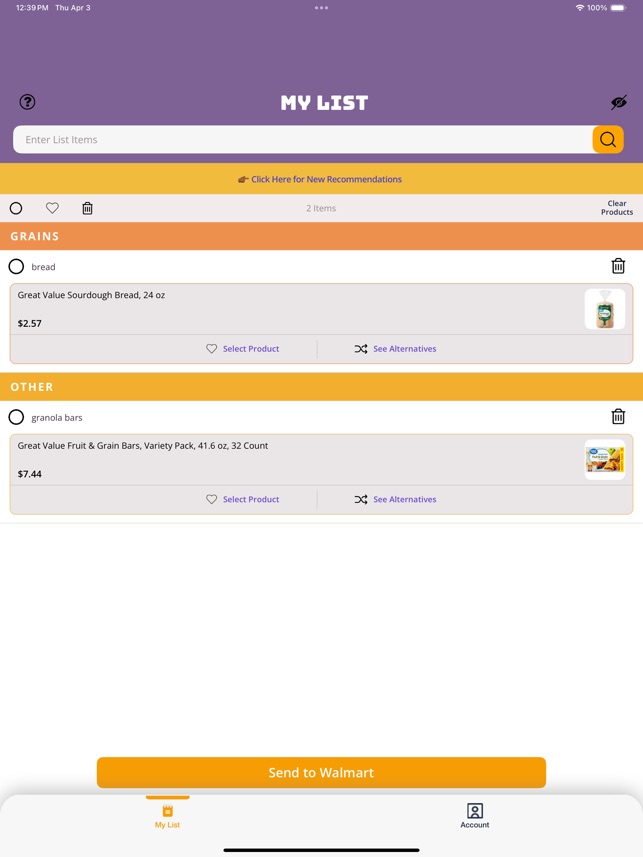
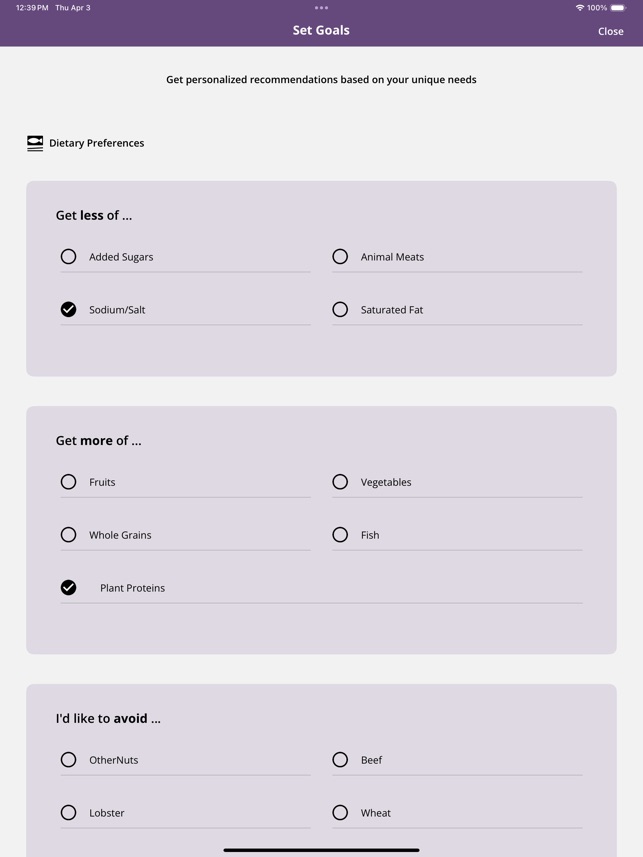
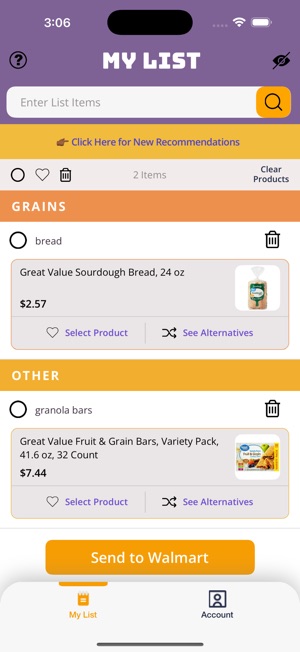
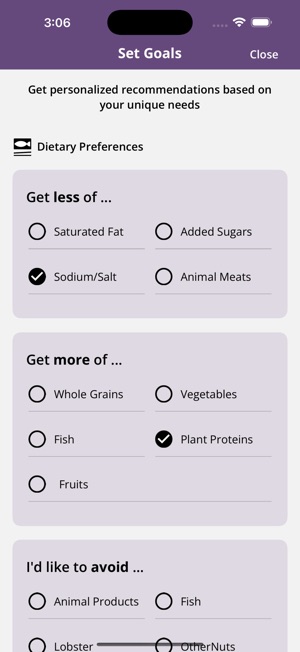
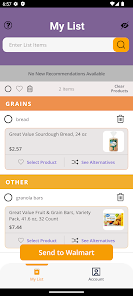
Functionality & Mechanism Developed at the University of Notre Dame, the Food Info Network System optimizes grocery item selection based on user-defined constraints. The interface captures dietary requirements, budget limitations, and a general shopping list. The system then leverages a graph-based recommendation engine, grounded in network science, to analyze complex relationships between food items and user profiles. This process, which integrates textual and structural data, generates a refined and specific purchasing list to guide consumer decisions.
Evidence & Research Context
- The system's recommendation engine is based on published research detailing novel hierarchical graph attention networks (HGAT) and heterogeneous network embedding models (rn2vec).
- Associated research demonstrates that these graph-based models can effectively learn complex representations by integrating textual, structural, and nutritional data for food-related tasks.
- In computational experiments, the underlying algorithms demonstrated superior performance compared to standard baseline methods on recipe recommendation and classification benchmarks.
- The development is supported by RecipeNet, a large-scale, structured corpus of recipe data created to facilitate network-based food studies.
Intended Use & Scope This system is intended for consumers seeking to optimize food purchasing and for researchers in computational food science. Its primary utility is as a decision-support tool for generating grocery lists aligned with dietary and budgetary goals. The tool does not provide medical nutrition therapy and is not a substitute for professional clinical guidance from a registered dietitian for managing health conditions.
Studies & Publications
Peer-reviewed research associated with this app.
Recipe recommendation with hierarchical graph attention network
Tian et al. (2021) · Frontiers in Big Data
Referenced in academic literature; no direct evaluation of the appRecipe representation learning with networks
Tian et al. (2021) · Proceedings of the 30th ACM International Conference on Information & Knowledge Management
Referenced in academic literature; no direct evaluation of the appIn the Media
Using data to feed the world
University of Notre Dame researchers developed the Food Info Network System to address global hunger using data science tools and techniques, supported by nearly $5 million in funding from the Bill & Melinda Gates Foundation. Associate Professor Jaron Porciello emphasized that "we already grow enough food to feed the world" but noted that "we need a broad set of interventions, and we need the data to make those decisions possible." The system supports the Juno Evidence Alliance, which uses Porciello's taxonomy for evidence-based agriculture to foster collaboration between nonprofits, data analysis firms, and governments.
Michelle Sawwan Presents FINs Research Poster
Michelle Sawwan from the Center for Civic Innovation presented research on the Food Info Network System at the National Science Foundation meeting, developing a mobile app to optimize healthy food procurement for lower-income households through NIFA funding. Early project data demonstrated that lower-income heads of households already use technology to inform food procurement decisions by finding sales, searching online for healthy recipe ingredients, or finding foods with short preparation times. The app aims to augment shoppers' existing technology strategies while accounting for their constraints to improve purchasing decisions and health outcomes.
Oasis in the Desert
Professors Ron Metoyer and Ann-Marie Conrado developed the Food Info Network System to address food access challenges in food deserts, using ethnographic research to understand residents' shopping and eating behaviors. "As a design professor with a background in ethnography and qualitative research, my job is to really go out and connect with people and understand not only their needs, their challenges, their frustrations, but also their values, their aspirations, their goals," Conrado said. The study focuses on two food deserts in Detroit and South Bend, where the average poverty rate reaches nearly 36 percent.
App Information
Developer
University of Notre DameCategory
Evidence Profile
Published in academic literature
Platforms
Updated
May 2025
© 2025 University of Notre Dame