

Hellbender Havoc
Initial evidence from research studies
App Summary
App Screenshots


Detailed Description
Functionality & Mechanism
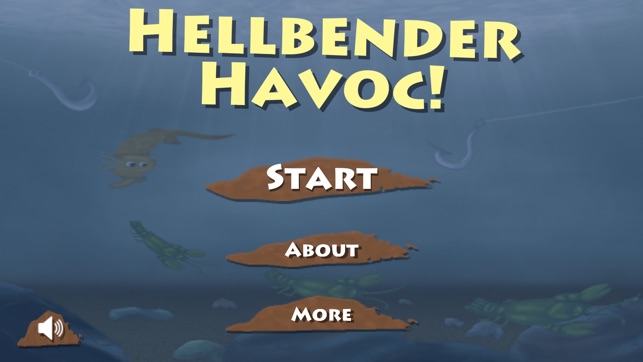
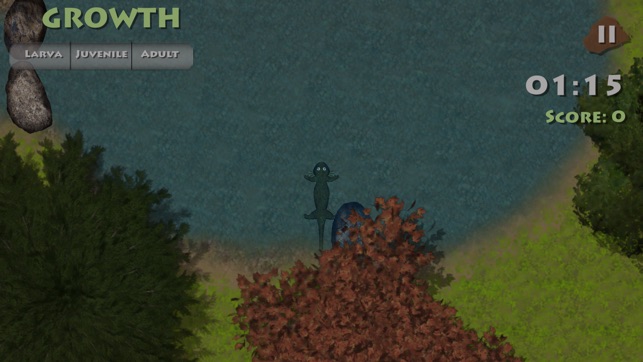
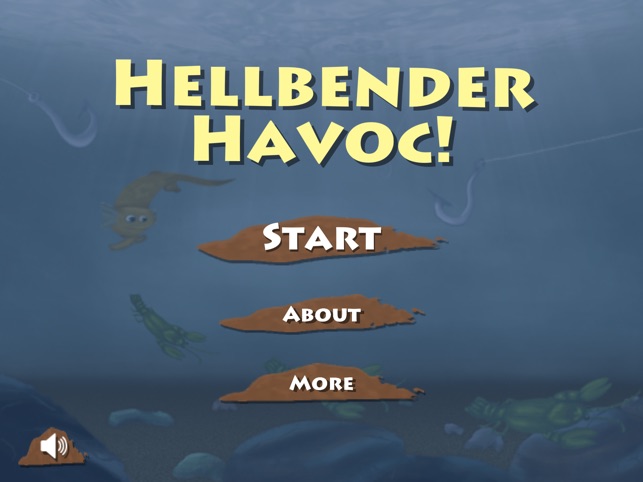
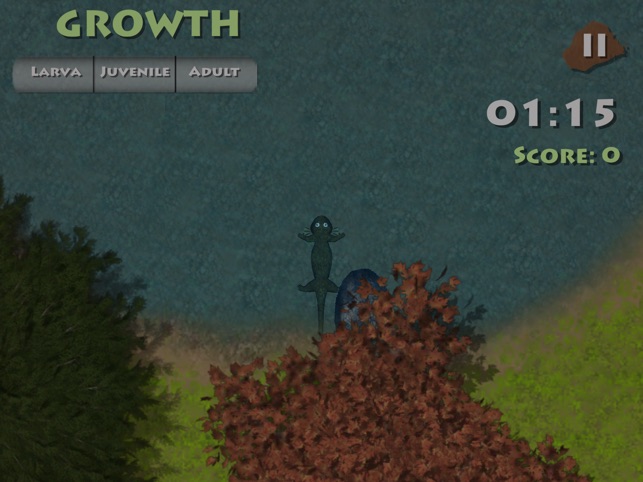
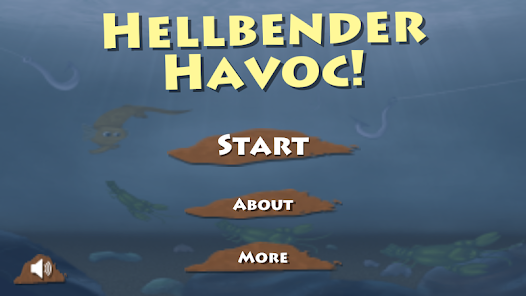
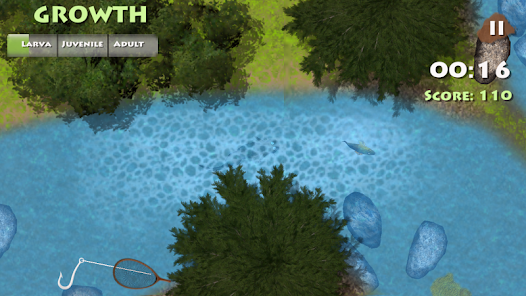
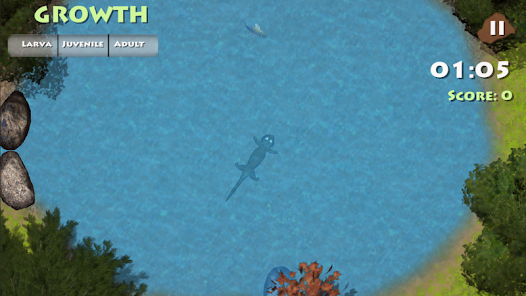
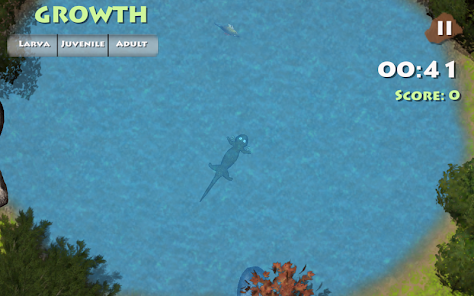
The system delivers pedagogical content through a game-based interface. Players navigate a digital avatar of an Eastern Hellbender salamander through a simulated riverine environment. Core gameplay mechanics involve consuming appropriate food sources (e.g., crawfish) while avoiding natural predators and anthropogenic hazards. This interactive simulation is designed to communicate key concepts related to the species' lifecycle, habitat requirements, and conservation threats. The entire experience is self-contained within the application and requires no external hardware.
Evidence & Research Context
The app's educational content aligns with principles evaluated in research on a related physical exhibit.
- An evaluation of the related exhibit (N=409 adults) indicated that the educational methods effectively prompted positive changes in attitude toward hellbenders and their habitats in over 69% of respondents.
- The same study found that 73% of participants reported an intention to change their behavior to support conservation, and 70% intended to share the information with others.
- The pedagogical framework leverages cognitive, affective, and behavioral learning components to facilitate conservation-oriented knowledge transfer and attitude change.
Intended Use & Scope
This application is intended for the general public, students, and educators as a tool for science communication and informal environmental education. Its primary scope is to increase awareness of Hellbender salamander ecology and conservation issues. The system does not constitute a formal academic curriculum or a data collection tool for scientific research.
Studies & Publications
Peer-reviewed research associated with this app.
A Salamander Tale: Effective Exhibits and Attitude Change
Rollins et al. (2017) · Journal of Extension
69% reported positive attitude changes about salamander conservation and 73% intended to change their behavior.
In the Media
Help the Hellbender Lab Honored for Conservation Efforts
Dr. Rod Williams and the Help the Hellbender lab at Purdue University developed conservation efforts to save the endangered eastern hellbender salamander, spearheading regional conservation and advancing captive propagation techniques. The Indiana Hellbender Partnership represents "the largest and most comprehensive group working to recover an imperiled amphibian in Indiana," collaborating with multiple organizations including the DNR and U.S. Fish & Wildlife Service. The team earned three major conservation honors in 2023 after 17 years of researching and working to rear these ancient aquatic salamanders in captivity for eventual return to the wild.
Help the Hellbender
The Help the Hellbender Project, a joint initiative involving partners from across the country, developed Hellbender Havoc to support conservation of the endangered eastern hellbender through education and engagement. The project secured nearly $2.7 million in RCCP funding to improve hellbender habitat in south central Indiana's four-county region, the only remaining habitat for hellbenders in the state. The research program is based in Purdue Forestry and Natural Resources under Dr. Rod Williams' leadership.
App Information
Developer
Purdue UniversityCategory
Evidence Profile
Initial evidence from research studies
Platforms
Updated
Sep 2016
© 2025 Purdue University