
AppsFromResearch
HIV/HCV Provider Education icon

HIV/HCV Provider Education

Initial evidence from research studies

For:Clinicians & Healthcare Professionals

App Summary

This educational tool provides guidelines and decision support to help HIV providers screen for, evaluate, and treat Hepatitis C (HCV) in coinfected patients. An evaluation of the training program (N=28) found it increased providers' comfort with the topic and led to 89% of participating providers initiating HCV patient evaluations for the first time. The authors conclude that such training can successfully prompt HIV providers to begin HCV evaluation and treatment, even if they have not previously done so.

App Screenshots

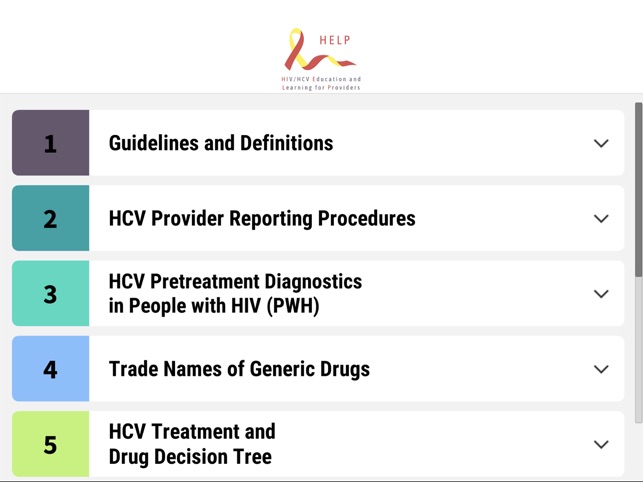
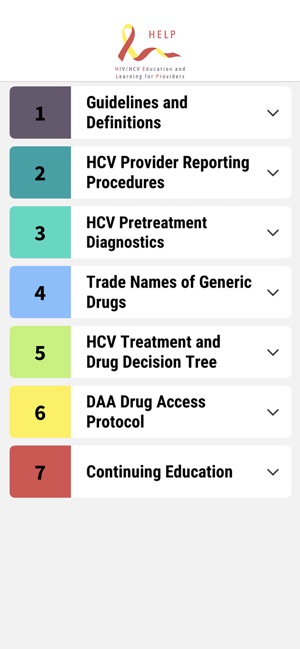
HIV/HCV Provider Education screenshot 1 of 2HIV/HCV Provider Education screenshot 2 of 2

Detailed Description

Functionality & Mechanism

This clinical reference tool delivers evidence-based educational content for healthcare providers managing patients with HIV/HCV coinfection. The system integrates diagnostic and screening guidelines, treatment decision trees, and drug access protocols into a streamlined interface. Its structure is designed to facilitate point-of-care access to critical information, guiding clinicians through the HCV cascade of care, from initial evaluation to treatment initiation and management of potential drug interactions, leveraging content such as pocket cards and flow charts.

Evidence & Research Context

An evaluation of an educational program incorporating materials analogous to the app's content was conducted with HIV providers at a single urban clinic.

  • In the evaluation (N=28 providers), the training program increased provider comfort in discussing HIV/HCV drug interactions from 48% to 80%.
  • Following the intervention, confidence in discussing liver disease progression increased, with the proportion of providers feeling "confident" rising from 38% to 50%.
  • The program was associated with increased clinical action, with 89% of participating providers conducting new HCV evaluation visits and 71% prescribing HCV treatment post-intervention.

Intended Use & Scope

This tool is designed for clinicians, including primary care providers and HIV specialists, as a point-of-care reference for managing HIV/HCV coinfection. Its primary utility is to reinforce clinical knowledge and support treatment decisions based on established guidelines. The system does not replace expert consultation for complex cases or serve as a standalone diagnostic tool, and clinical judgment remains paramount.

Studies & Publications

1 publication

Peer-reviewed research associated with this app.

Effectiveness/Outcome Study

The Impact of HCV Educational Training on HIV Providers' Attitudes, Knowledge, and Uptake of Treatment Initiation in HCV/HIV Co-infected Patients

Lau et al. (2019) · Open Forum Infectious Diseases

Increased provider knowledge and comfort with hepatitis C treatment, with 69% of patients receiving prescriptions.

Background Few HIV clinics train HIV providers on initiation of HCV treatment for their coinfected patients. We sought to evaluate the changes in comfort levels, attitude and knowledge of HCV evaluation and treatment among providers over time and track the uptake of treatment initiation. Methods Our program was implemented in an urban, Ryan-White outpatient clinic in 2018. Providers were given initial didactics and completed a survey that assessed their level of comfort and knowledge with treating HCV. We developed pocket cards and flow charts to help providers navigate the HCV cascade to cure. Additional training one year later through presentations and case-based discussions was given and the same survey was conducted again. We evaluated the number of HCV evaluation visits in 2018 and prescriptions written for HCV treatment. Results The first survey was completed by 21 and the second by 20 out of 28 providers; 70% attended at least one of the trainings. After the initial training, 38% of providers felt "confident" about discussing liver disease progression which increased to 50% after the second training. Similarly, 48% of providers felt "somewhat comfortable" talking about HIV/HCV drug interactions which increased to 80%. 33% of providers noted they were "not comfortable" discussing drug interactions which decreased to 15%. Approximately 1/3 providers felt "confident" talking about HCV treatment in both surveys. About 20% of providers disagreed with treating HIV/HCV patients with active substance use and this did not change. The median knowledge score was 7 (IQR) (6–9) after the first survey and changed to 8(5–9) after the second. Between 2018–2019, 81 HCV evaluation visits were scheduled and 64 (80% Male, 53% Black, 39% uninsured, 23% Medicaid, 73% with history of substance use) were completed and 69% of patients were prescribed HCV treatment. Among all HIV providers, 89% completed a median of 1 (1–3) HCV evaluation visits, and 71% prescribed treatment a median of 1 (1–2). Conclusion Implementation of HCV training to all HIV providers requires continued education and resulted in the initiation of HCV evaluation and treatment amongst the large majority of HIV providers who had previously never treated HCV. Disclosures All authors: No reported disclosures.
... Read More

HIV/HCV Provider Education

Free