AppsFromResearch
IGDI Mobile icon

IGDI Mobile

Evidence Tier:CLINICAL GRADE

Validated in clinical trials

For:Clinicians & Healthcare ProfessionalsGeneral Public & EnthusiastsPatients & Caregivers

App Summary

IGDI Mobile is a screening and progress monitoring tool that helps early childhood providers use Individual Growth and Development Indicators (IGDIs) to track the development of infants and toddlers. The associated research establishes IGDIs as evidence-based measures for identifying children at risk of delays and notes that they can be administered effectively both in-person and remotely via videoconferencing. The authors conclude that the system supports data-based decision-making by helping providers integrate child performance data with their professional judgment and caregiver information to guide early intervention.

App Screenshots

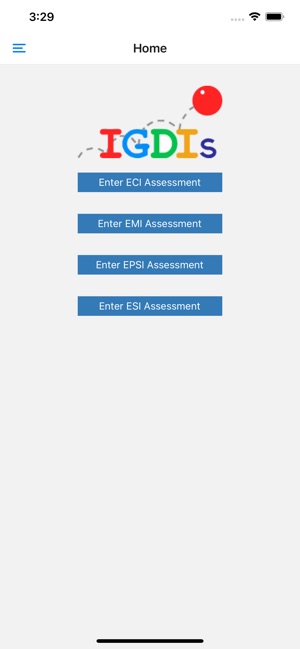
IGDI Mobile screenshot 1 of 1

Detailed Description

Functionality & Mechanism

IGDI Mobile is a web-based application for administering Individual Growth and Development Indicators (IGDIs) to monitor the developmental progress of infants and toddlers. Designed for early childhood professionals, the platform facilitates both in-person and remote assessment protocols. Remote sessions involve practitioner observation of parent-child interactions via videoconference, followed by remote coding of the child's performance. The system integrates IGDI data with professional judgment and caregiver input to structure and document evidence-based, data-informed intervention decisions.

Evidence & Research Context

  • The IGDI methodology is grounded in Response to Intervention (RtI) principles, applying progress monitoring data to guide early childhood intervention decision-making.
  • Associated research describes the system as a tool designed to structure a decision-making process for early intervention service providers using multiple data sources.
  • A study on remote administration protocols demonstrated the feasibility of this approach, reporting score equivalence between in-person assessments and those conducted via videoconference.
  • An implementation evaluation across 10 community-based agencies identified organizational factors, such as staff turnover and staff-to-child ratios, as significant influences on consistent use.

Intended Use & Scope

This tool is intended for early intervention specialists, early childhood educators, and related service providers. Its primary scope is standardized progress monitoring and universal screening to identify infants and toddlers potentially at risk for developmental delays. The system is an assessment aid and does not provide therapeutic interventions; all data require interpretation by a qualified professional to inform intervention planning.

Studies & Publications

4 publications

Peer-reviewed research associated with this app.

Usability Study

Technology to Facilitate Progress Monitoring of Infant–Toddler Growth and Development: Measuring Implementation in Community-Based Agencies

Buzhardt et al. (2022) · Journal of Special Education Technology

Staff turnover and workload barriers limited consistent use of progress monitoring across agencies.

Despite evidence that frequent progress monitoring to identify children at-risk of delays and inform early intervention services improves child outcomes, this practice is rare in infant–toddler settings where children could benefit the most from early intervention. Using a descriptive research design within an Implementation Science framework, we evaluated how 10 community-based infant–toddler agencies implemented a standardized progress monitoring assessment using a web application to monitor children's growth and identify children at-risk for delay. An Implementation Index was developed to quantify implementation progress for each agency, which included their percent of tasks completed, and rate of task implementation over time. Staff turnover and high staff:child ratios were associated with low implementation of progress monitoring. The Implementation Index differentiated between agencies that otherwise demonstrated similar implementation rates. Implications for supporting progress monitoring and other evidence-based practices in community-based infant–toddler childcare settings are discussed.
... Read More
Validation Study

Remote Use of Individual Growth and Development Indicators (IGDIs) for Infants and Toddlers

Greenwood et al. (2021) · Journal of Early Intervention

Remote assessments produced equivalent child scores to in-person administration.

Universal screening and progress monitoring are evidence-based practices in early intervention/early childhood special education (EI/ECSE). Individual Growth and Development Indicators (IGDIs) for infants/toddlers are measures that programs can use for universal screening, progress monitoring, intervention decision-making, and accountability. Prior to the COVID-19 pandemic, IGDIs were administered and scored exclusively in person by certified early educators. Because of COVID-19, EI/ECSE practitioners could no longer conduct in-person assessments. We report how two early intervention programs implemented IGDIs using remote protocols that included (a) preparation of parents for IGDI administration at home, (b) session observation by program staff using videoconferencing, and (c) remote coding of the child's performance by program staff when interacting with a parent/caregiver play partner using the standard toy set. The remote protocols are described, and uptake by the programs is compared before and during the pandemic. Equivalence of children's scores from in-person versus remote protocols is reported, as well as caregivers' and program staff's preferences. Implications for remote early childhood services are discussed.
... Read More

IGDI Mobile

Free