
AppsFromResearch
ImageVis3D Mobile Universal icon

ImageVis3D Mobile Universal

Evidence Tier:EVALUATED

Assessed for usability and quality

For:Researchers & AcademicsIndustry Professionals

App Summary

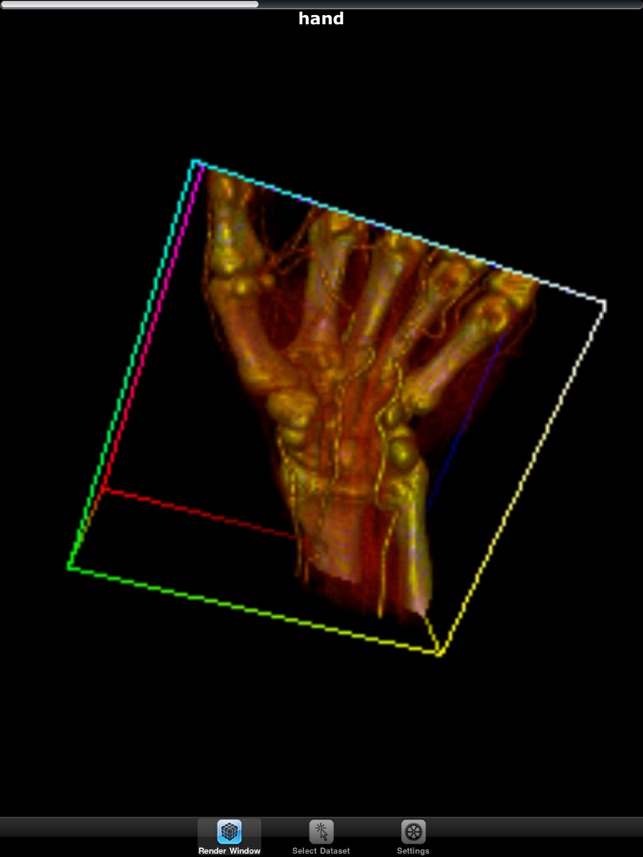
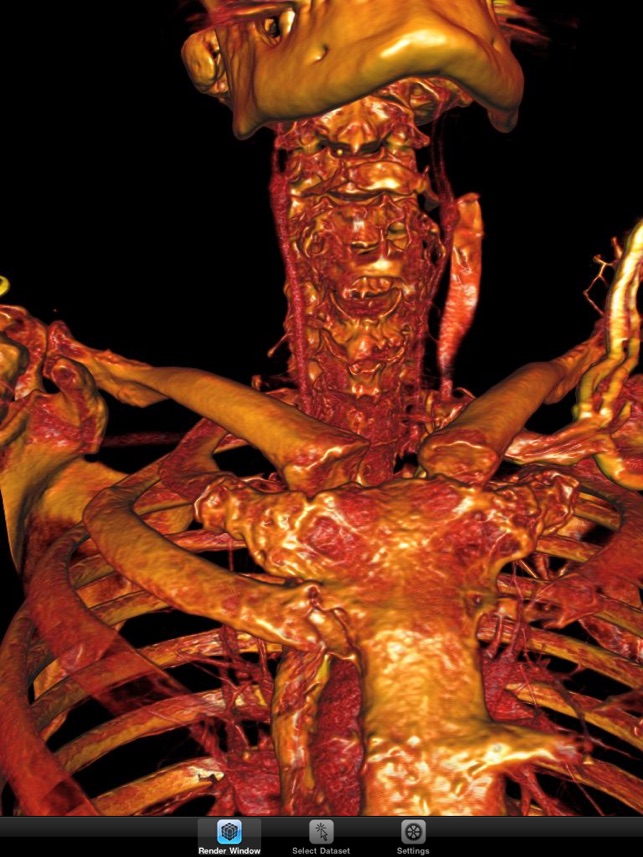
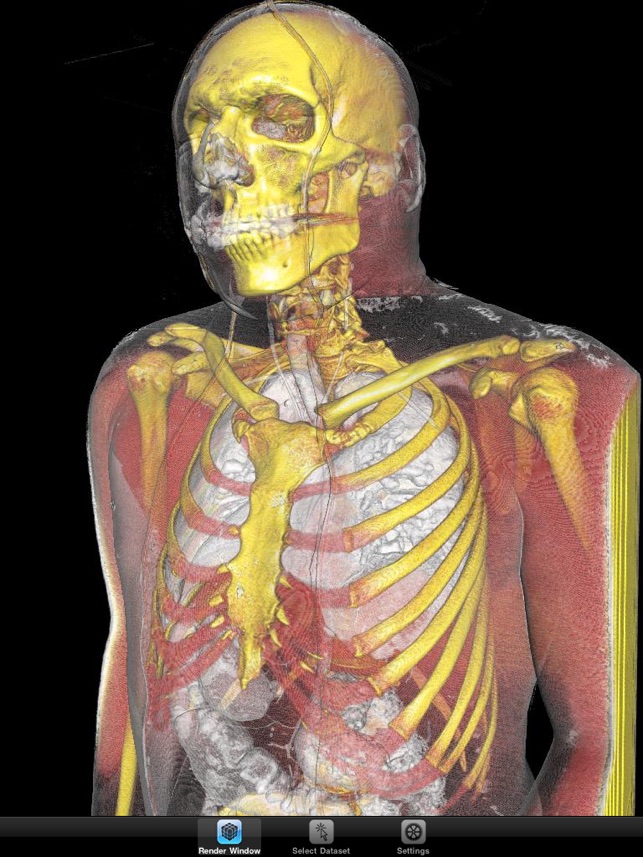
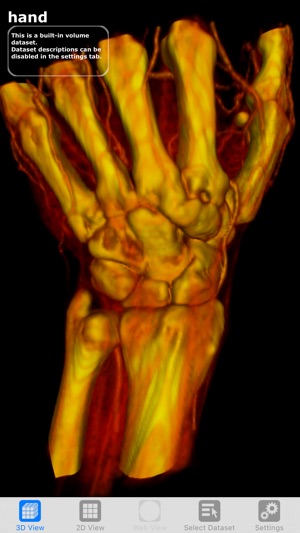
ImageVis3D Mobile Universal is a visualization tool that enables clinicians to interact with patient-specific 3D volume and surface data, such as models used for planning deep brain stimulation (DBS) therapy, directly on a mobile device. An evaluation of the app for DBS planning found that clinicians selected stimulation settings similar to those chosen through standard practice, but in significantly less time. The associated research concludes that providing interactive, patient-specific models at the point of care can help guide and potentially streamline clinical decision-making.

App Screenshots

ImageVis3D Mobile Universal screenshot 1 of 9ImageVis3D Mobile Universal screenshot 2 of 9ImageVis3D Mobile Universal screenshot 3 of 9ImageVis3D Mobile Universal screenshot 4 of 9ImageVis3D Mobile Universal screenshot 5 of 9ImageVis3D Mobile Universal screenshot 6 of 9ImageVis3D Mobile Universal screenshot 7 of 9ImageVis3D Mobile Universal screenshot 8 of 9ImageVis3D Mobile Universal screenshot 9 of 9

Detailed Description

Functionality & Mechanism

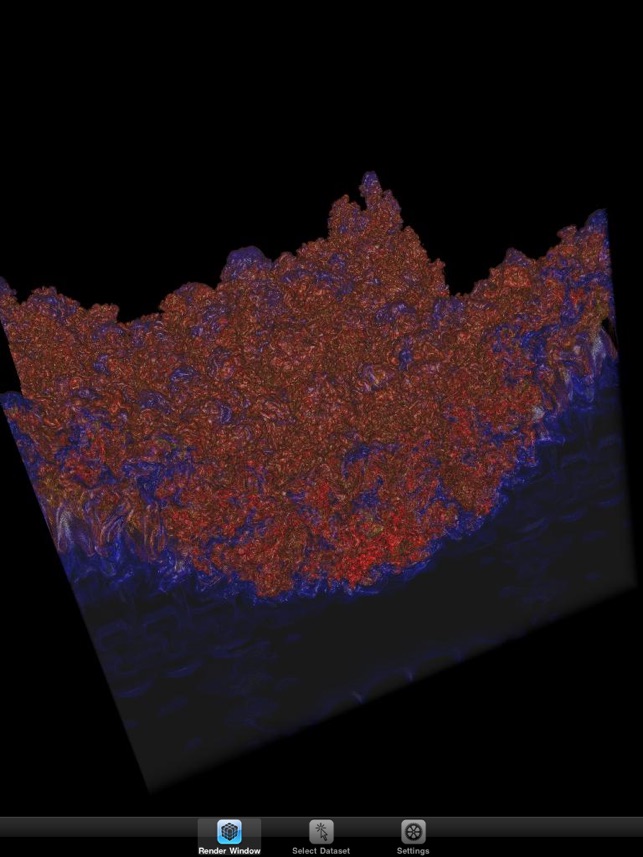
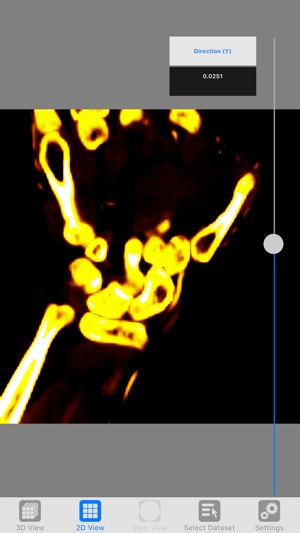
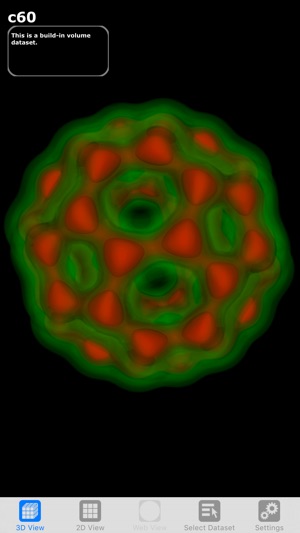
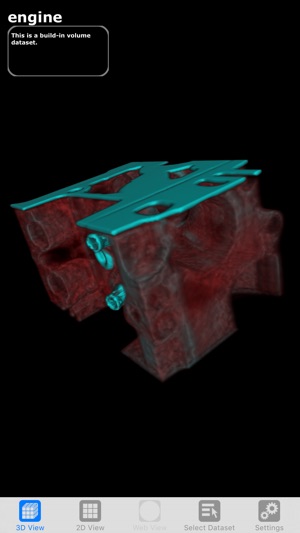
ImageVis3D Mobile Universal is a mobile visualization system for rendering and sharing complex volume and surface data. Developed with support from the NIH/NCRR and NIBIB, the system facilitates data transfer from its desktop counterpart, ImageVis3D, to iOS devices. The interface enables direct, interactive manipulation of patient-specific models and other volumetric datasets. Its architecture leverages advanced mobile graphics hardware to provide high-performance visualization capabilities in portable, point-of-care, or field research settings, supporting detailed data exploration and analysis.

Evidence & Research Context

  • An evaluation study involving movement disorders clinicians found that deep brain stimulation (DBS) settings selected using the app were comparable to those chosen via standard clinical practice.
  • The study further demonstrated that the visualization-guided selection process was completed in drastically less time than the standard clinical workflow.
  • Research has focused on its application for visualizing patient-specific models of Parkinson's disease patients to support therapeutic decision-making at the point of care.
  • The system represents an advancement in mobile volume rendering, a research area focused on leveraging powerful mobile hardware for complex scientific and medical visualization.

Intended Use & Scope

This system is intended for clinicians, researchers, and educators requiring mobile, high-performance visualization of 3D datasets. Its primary scope is to serve as an analytical and decision-support tool, particularly in clinical settings like neuromodulation planning. The app is not a standalone diagnostic instrument and requires external data transfer; all clinical interpretations remain the user's professional responsibility.

Studies & Publications

3 publications

Peer-reviewed research associated with this app.

Non-Evaluative Reference

Mobile Volume Rendering: Past, Present and Future

Noguera et al. (2016) · IEEE Transactions on Visualization and Computer Graphics

Referenced in academic literature; no direct evaluation of the app
Volume rendering has been a relevant topic in scientific visualization for the last decades. However, the exploration of reasonably big volume datasets requires considerable computing power, which has limited this field to the desktop scenario. But the recent advances in mobile graphics hardware have motivated the research community to overcome these restrictions and to bring volume graphics to these ubiquitous handheld platforms. This survey presents the past and present work on mobile volume rendering, and is meant to serve as an overview and introduction to the field. It proposes a classification of the current efforts and covers aspects such as advantages and issues of the mobile platforms, rendering strategies, performance and user interfaces. The paper ends by highlighting promising research directions to motivate the development of new and interesting mobile volume solutions.
... Read More
Non-Evaluative Reference

State of the Art in Mobile Volume Rendering on iOS Devices

Schiewe et al. (2015) · EuroVis Short Papers

Referenced in academic literature; no direct evaluation of the app
The ubiquity of ever-increasing computing power with mobile devices has put last generation desktop-grade hardware in everyone's palms. Mobile computing hardware is rapidly approaching today's desktop-grade hardware capabilities enabling applications of advanced rendering algorithms to previously untouched environments such as medical care. Recent developments in graphics APIs have introduced novel low-level APIs such as AMD's Mantle API for desktops and Apple's Metal API for mobile hardware. Microsoft's DirectX 12 and the OpenGL successor Vulkan will be available in the near future. AAA game titles were announced for which publishers see an advantage-as promised by the creators of the new APIs-over traditional portable implementations. The new APIs are mostly advertised to allow for more draw-calls per frame compared to for example, OpenGL-based solutions. Visualization algorithms and in particular direct volume rendering do not exhibit a significant amount of draw-calls as a bottleneck. This work evaluates and highlights the utility of recent low-level APIs for mobile devices and puts them into perspective with available alternatives.
... Read More

ImageVis3D Mobile Universal

Free