
IoT Assistant
Published in academic literature
App Summary
App Screenshots
Detailed Description
Functionality & Mechanism
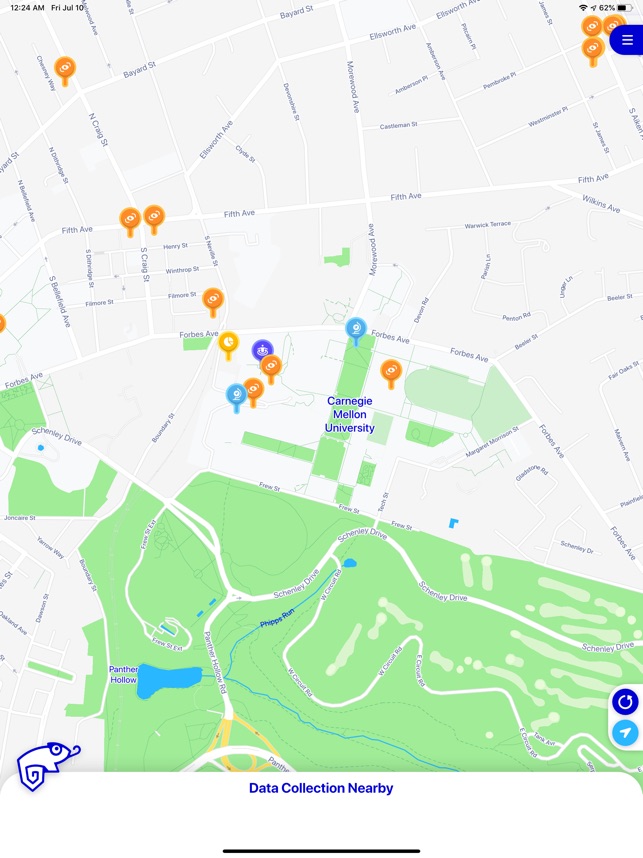
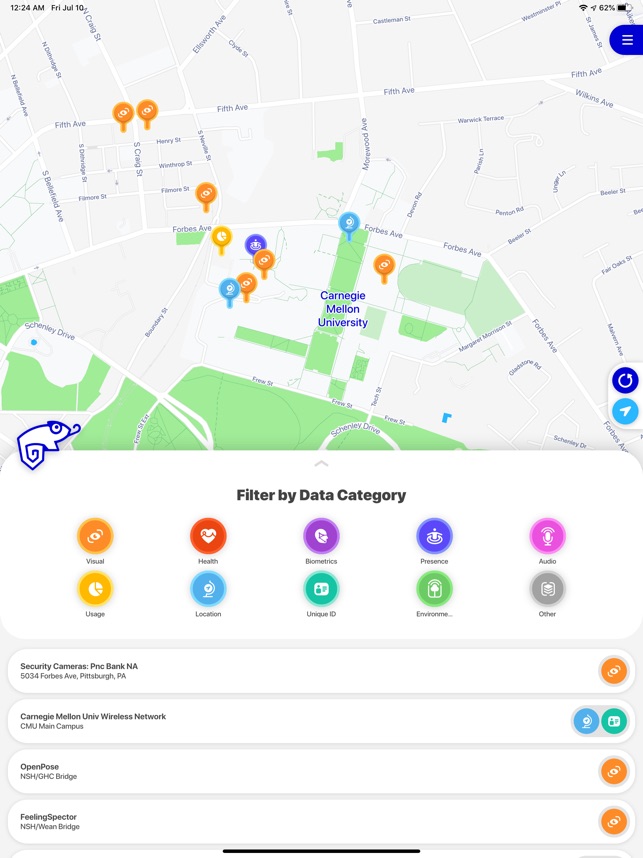
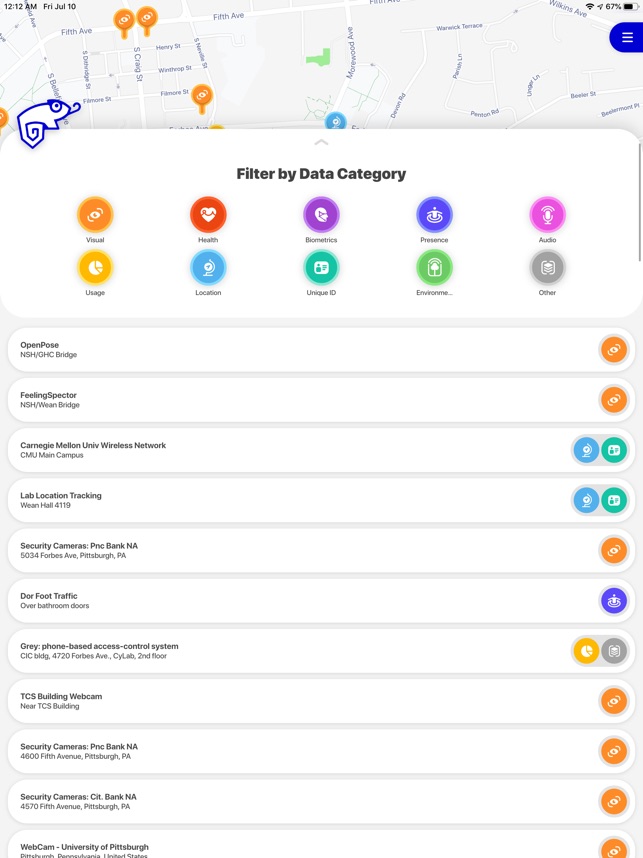
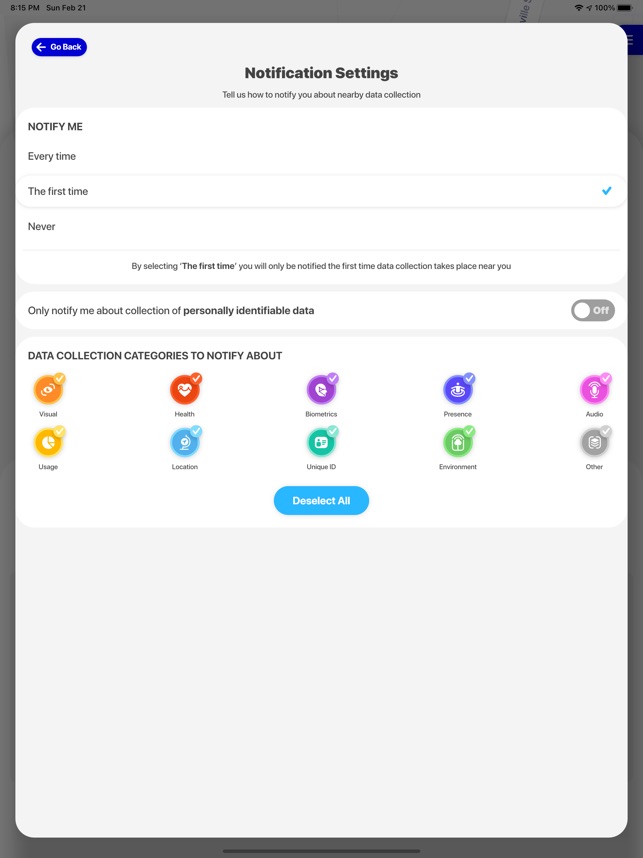
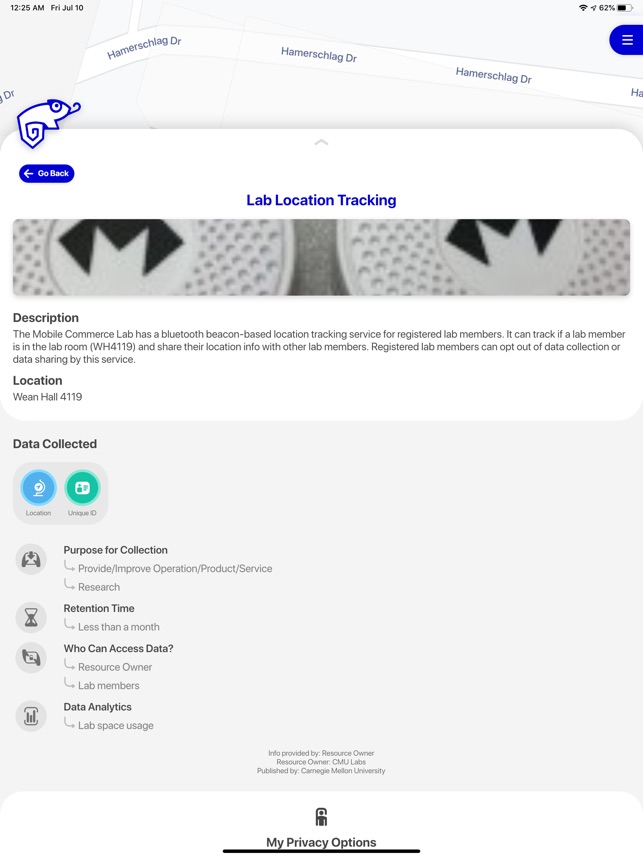
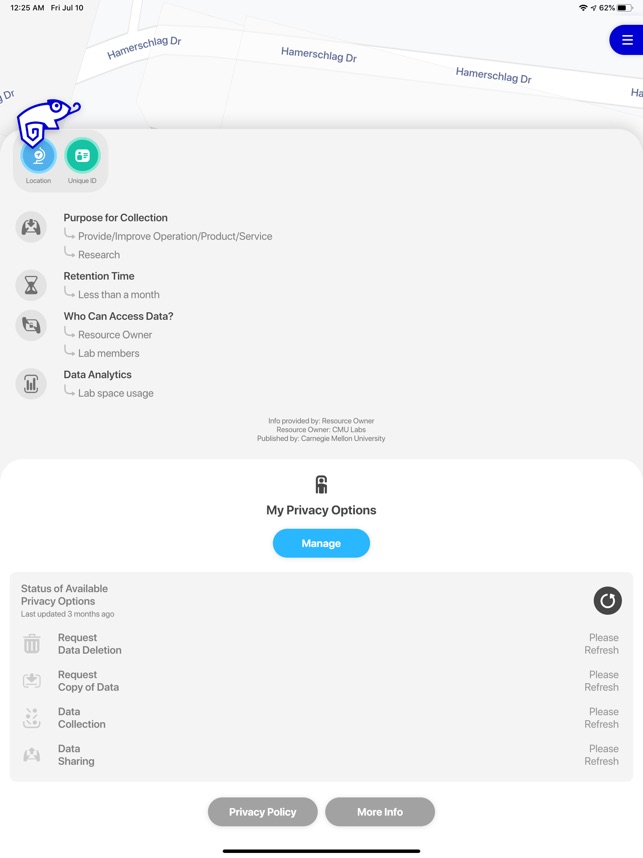
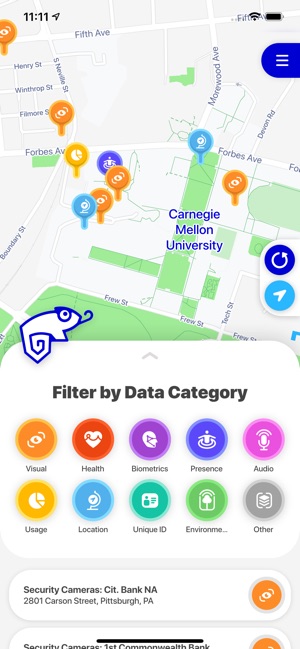
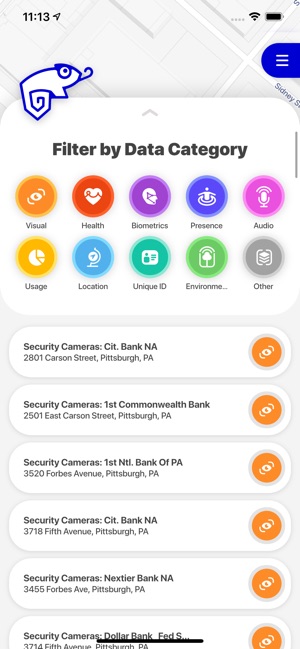
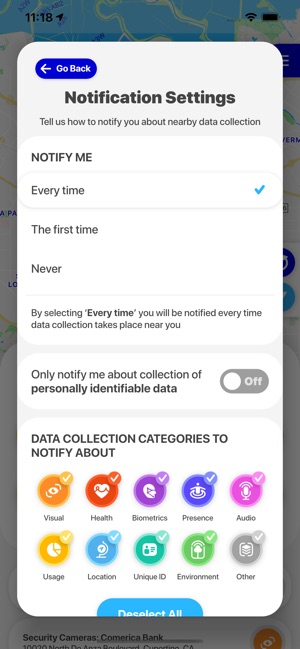
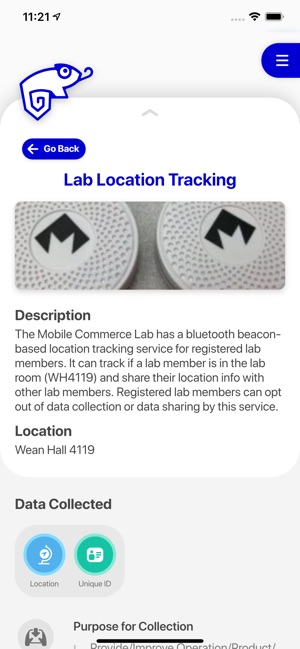
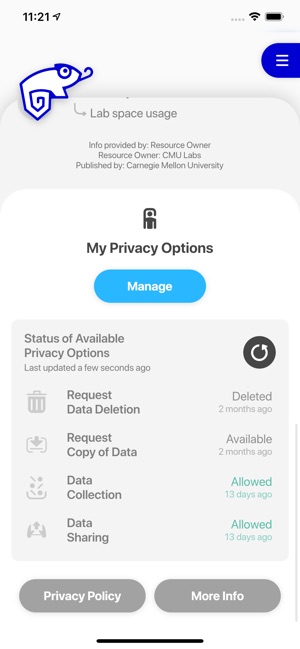
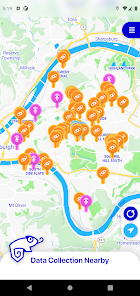
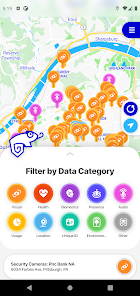
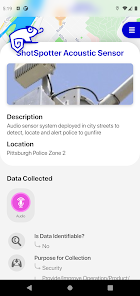
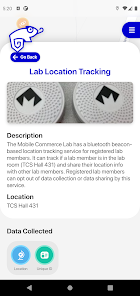
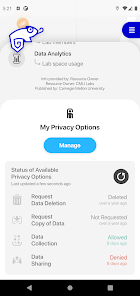
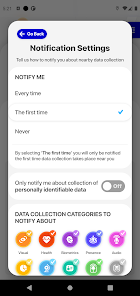
The IoT Assistant system enables the discovery of nearby Internet of Things (IoT) technologies and their associated data collection practices. The application queries a central, crowd-sourced registry of IoT resources to provide details on data controllers, sharing policies, and available privacy controls. The interface facilitates user interaction with these controls, such as opt-in or opt-out functions when made available by the resource owner. A core module delivers customizable notifications regarding specific data collection activities, with user-configurable frequency settings.
Evidence & Research Context
- The app's design is detailed in a protocol paper, predicated on an infrastructure that supports discovery of IoT resources and interaction with user-configurable privacy settings.
- Formative research, including a development study (N=17) using semi-structured interviews, informed the design by identifying user preferences for balancing granular privacy control against cognitive and notification overload.
- A design paper reports significant initial adoption, with the infrastructure registering over 100,000 IoT resource descriptions from a community of over 15,000 users within its first month of deployment.
- Associated research details plans to integrate machine learning to build personalized models of user privacy expectations, enabling the system to deliver more relevant and targeted notifications.
Intended Use & Scope
This application is intended for the general public to enhance awareness of and control over personal data collection by registered IoT technologies. Its primary utility is as a transparency and privacy management tool. The system's effectiveness is contingent on the voluntary, crowd-sourced population of its IoT resource registry; it cannot detect unregistered devices or enforce privacy controls not offered by device operators.
Studies & Publications
Peer-reviewed research associated with this app.
Design of a Privacy Infrastructure for the Internet of Things
Sadeh et al. (2020) · USENIX PEPR Conference
Describes the research-driven development of this appInforming the Design of a Personalized Privacy Assistant for the Internet of Things
Colnago et al. (2020) · CHI Conference Proceedings
Users expressed desire for privacy control in smart devices but worried about managing too many notifications.In the Media
App and infrastructure alert users about data collection around them
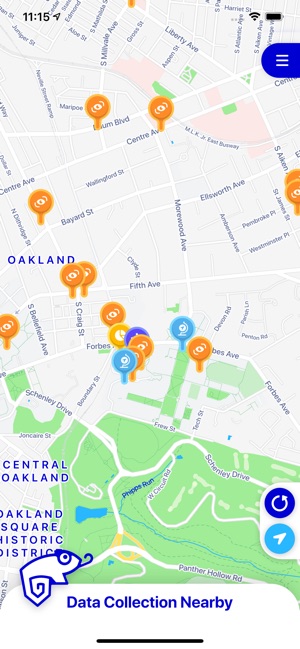
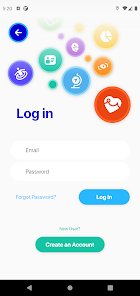
Carnegie Mellon University's CyLab developed IoT Assistant to help users discover hidden IoT devices around them and learn about their data collection practices, using a map-based interface that reveals smart cameras, microphones, and location trackers. "Our app and infrastructure pave the way towards compliance, allowing people to take control of their privacy," says CyLab's Norman Sadeh, the principal investigator of the Personalized Privacy Assistant Project. The IoT Assistant is available in both the App Store and Google Play, requiring no account creation for users to begin exploring IoT devices in their vicinity.
New infrastructure will enhance privacy in today's Internet of Things
Carnegie Mellon researchers developed IoT Assistant to address privacy gaps in the physical world where Internet of Things technologies increasingly track activities without providing notices, using an infrastructure that enables IoT device owners to comply with privacy laws. "Because of new laws like the General Data Protection Regulation (GDPR) and the California Consumer Privacy Act (CCPA), people need to be informed about what data is collected about them and they need to be given some choices over these processes," says Professor Norman Sadeh, the principal investigator on the project. The app launched this week and is available for both iOS and Android phones.
App Information
Developer
Carnegie Mellon UniversityCategory
Evidence Profile
Published in academic literature
Platforms
Updated
Jun 2026
© 2025 Carnegie Mellon University