

Jellywatch
Published in academic literature
App Summary
App Screenshots
Detailed Description
Functionality & Mechanism
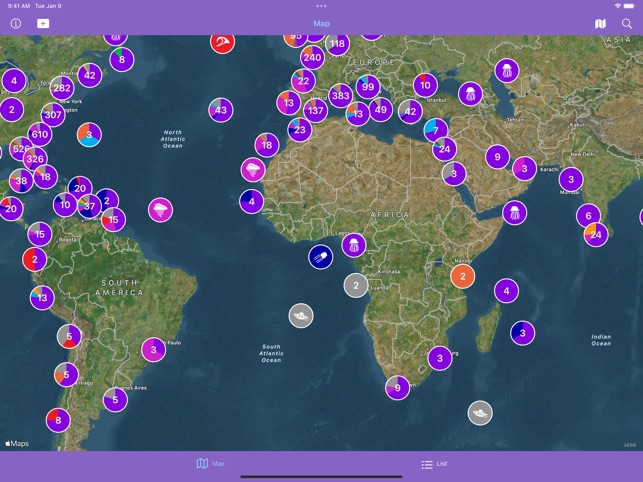
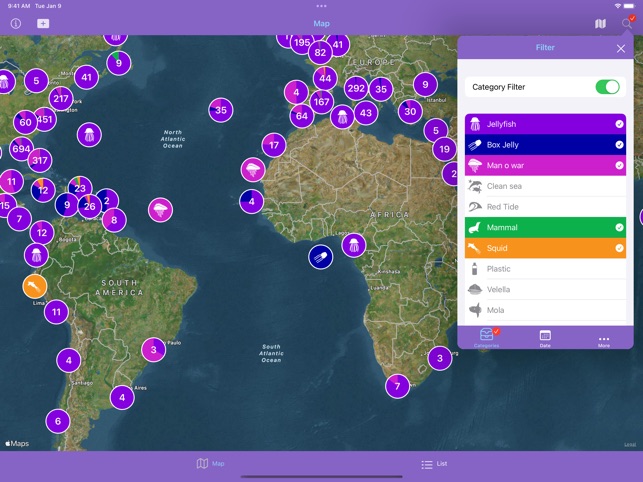
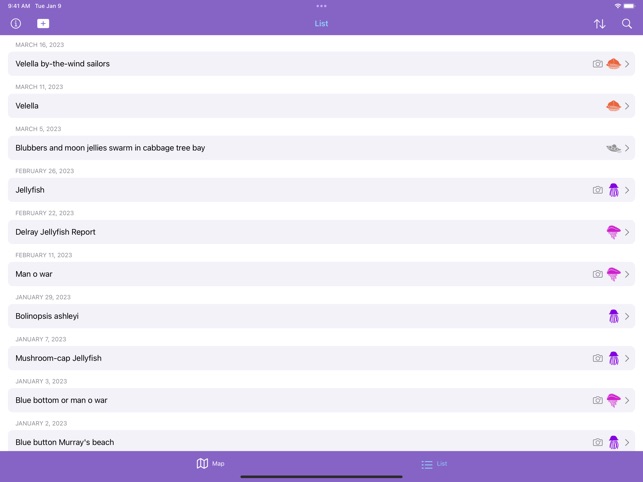
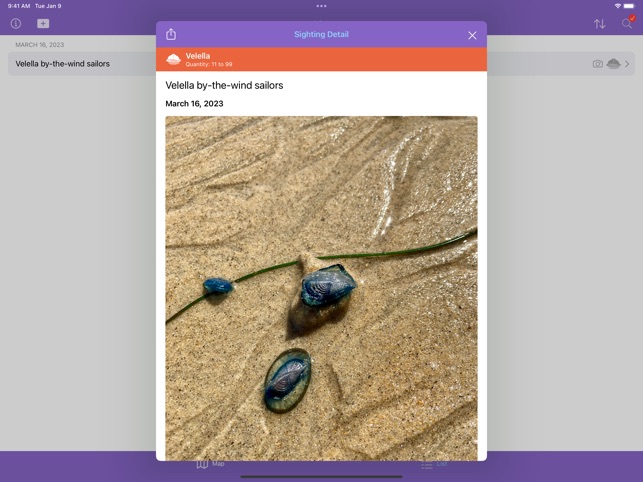
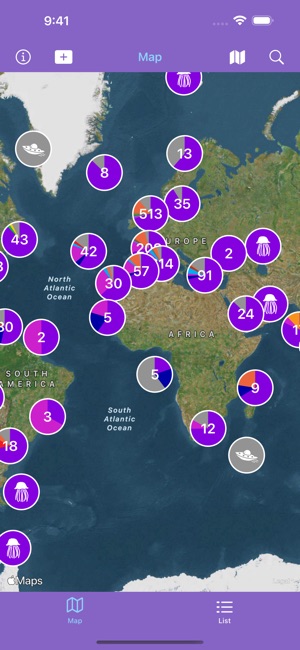
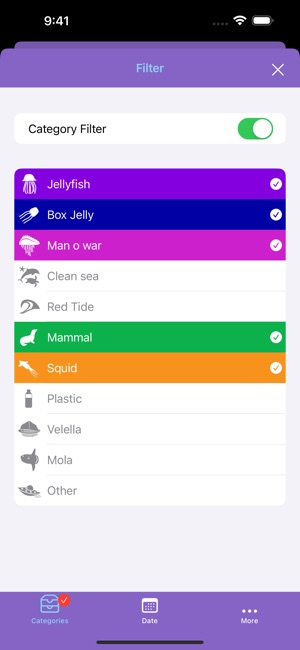
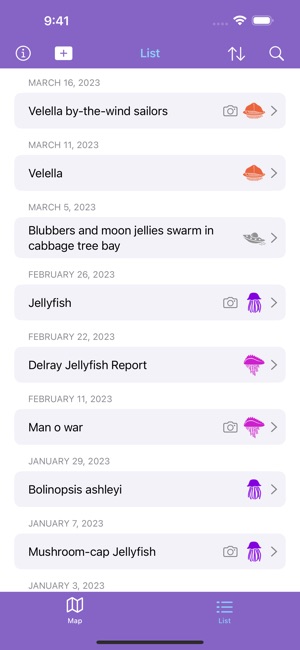
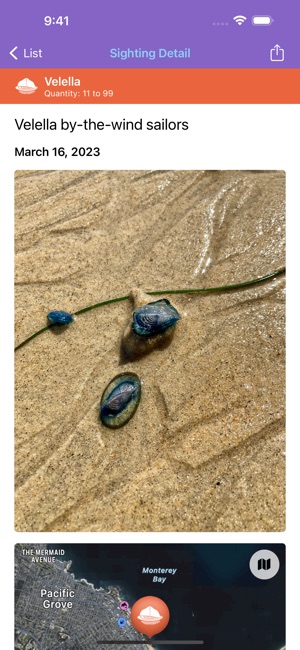
Jellywatch is a citizen science platform designed for the global monitoring of marine biological phenomena. The system's interface facilitates the rapid submission of geolocated observations regarding ocean conditions, specifically jellyfish blooms, red tides, and baseline reports of clear water. A typical submission can be completed in under two minutes. Users may integrate photographic evidence with their reports, which enables subsequent species identification by researchers. The aggregated, publicly accessible dataset supports large-scale ecological analysis.
Evidence & Research Context
- The associated research identifies significant gaps in scientific knowledge of jellyfish biology and ecology, underscoring the need for enhanced monitoring.
- The authors note the detrimental effects of jellyfish blooms on coastal areas and human activities, establishing the requirement for effective tracking programs.
- Citizen science is described as a critical methodology for complementing traditional monitoring, capable of globally enhancing the spatial and temporal resolution of observational data.
Intended Use & Scope
This platform is intended for use by the general public as a data contribution tool and by the scientific community for ecological research. Its primary utility is to aggregate widespread observational data on marine conditions. The tool does not provide ecological forecasts or real-time safety alerts. Data quality is contingent upon user submissions, and species identifications from photos require expert verification.
Studies & Publications
Peer-reviewed research associated with this app.
New approaches to study jellyfish: From autonomous apparatus to citizen science
Magalh et al. (2020) · Zooplankton Ecology (CRC Press)
Referenced in academic literature; no direct evaluation of the appIn the Media
The return of JellyWatch
MBARI's Steve Haddock relaunched JellyWatch to track global jellyfish blooms through citizen science reporting, using a new and improved website funded partly by the National Science Foundation. As Haddock explained, "People have been talking about jelly blooms increasing around the world, but we don't really have a lot of data on this." The enhanced site allows users to submit photos for expert identification and download observation records for analysis.
Volunteers Can Track Jellyfish Through Citizen Science Website
Scientists from Dalhousie University and the Canadian Sea Turtle Network developed Jellywatch to better understand the link between jellyfish populations and leatherback sea turtle movement, using 104 citizen scientists to gather data on stranded jellyfish along Atlantic Canadian beaches. Each volunteer surveyed their assigned beach stretch weekly at low tide, counting and measuring jellyfish using special kits that included identification keys, datasheets, gloves, and tape measures. The research focuses on supporting endangered leatherback sea turtles, which obtain 29-59% of their annual energy from eating jellyfish in Canadian waters.
Ahoy, jellies! Citizen scientist log cnidaria sightings
Dr. Steven Haddock from the University of California, Santa Cruz developed Jellywatch to document jellyfish populations across wider ocean ranges than traditional research allows, using citizen science observations posted on jellywatch.org. "We can actually get a lot of insight into what's happening on a large scale with regard to jellyfish abundances," Haddock said, noting that expensive research boat charters limit his field time while people worldwide experience the ocean daily. The project aims to determine if theories about climate change increasing jellyfish blooms are accurate through more widespread data collection.
Jellywatch: Observing Blobs for Marine Ecology
Monterey Bay Aquarium Research Institute Research Scientist Steven Haddock and other scientists launched Jellywatch to fill information gaps about jellyfish population cycles by gathering data from citizen scientists worldwide. "We are lacking the long-term perspective needed to understand cycles that can happen on 10- or 20-year scales," says Haddock, noting that jellyfish naturally have boom and bust periods. The app allows users to report jellyfish sightings or their absence, plus other marine phenomena like red tides and unusual coastal marine life.
New website tracks jellyfish strandings around the world
MBARI researcher Steve Haddock developed Jellywatch to track global jellyfish strandings and blooms, combining marine biology with social networking to engage citizen scientists worldwide. According to Haddock, "People have been talking about jelly blooms increasing around the world, but we don't really have a lot of data on this," emphasizing that "everyday people can get involved in a real ocean research project." The website uniquely provides worldwide coverage and allows users to both post sightings and view global data from other beachcombers.
App Information
Category
Evidence Profile
Published in academic literature
Platforms
Updated
Dec 2023
© 2025 Monterey Bay Aquarium Research Institute
Tags
Relevant Links
Privacy Policy


Jellywatch
Free