

Kegel Nation
Published in academic literature
App Summary
App Screenshots

Detailed Description
Functionality & Mechanism
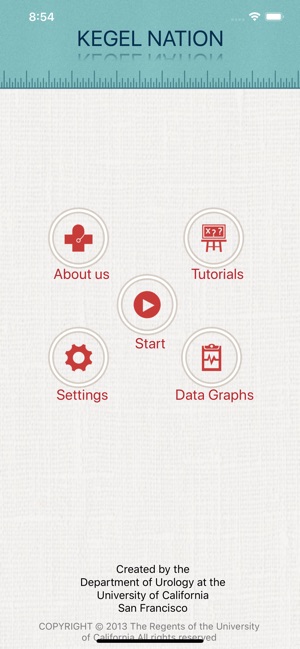
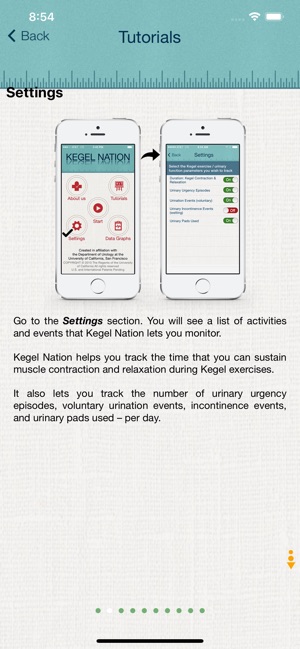
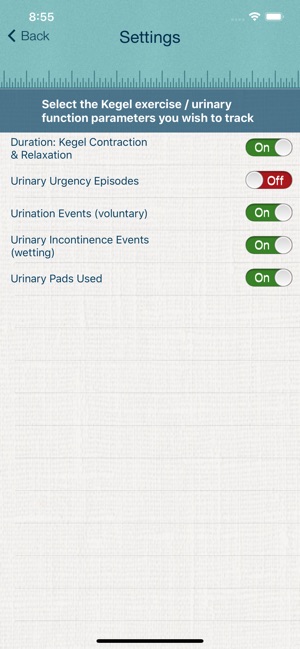
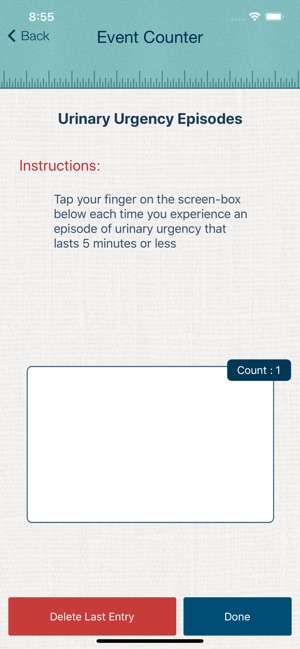
Developed by urology faculty at the University of California San Francisco (UCSF), Kegel Nation facilitates pelvic floor muscle training for men and women. Its core mechanism is a biofeedback feature designed to measure the duration of muscle contraction and relaxation phases during exercises. The system also captures longitudinal data on exercise frequency, urinary urgency, incontinence events, and pad usage. An integrated graphing function allows for visualization of these trends, intended for user self-monitoring or to support clinical consultation.
Evidence & Research Context
- The app's design and clinical rationale are detailed in a research publication, with a specific focus on supporting pelvic floor muscle training and neovaginal self-care in post-operative transgender patients.
- The system's biofeedback mechanism is engineered to provide objective data on the duration of pelvic floor muscle contraction and active relaxation, which are essential parameters of effective training.
- A preliminary evaluation (N=10) with non-medical users assessed the app's time-recording accuracy against a stopwatch and gathered initial subjective feedback on ease of use and perceived utility.
- Its longitudinal tracking of urinary function is intended to assist clinicians and patients in monitoring progress and response to therapy over time.
Intended Use & Scope
This tool is intended for the general public, including men, women, and post-operative transgender individuals, as an adjunct to pelvic floor muscle therapy. It functions as a self-monitoring system to track exercise performance and urinary symptoms. The app does not provide medical diagnoses or substitute for professional medical evaluation, personalized physical therapy, or a prescribed treatment plan.
Studies & Publications
Peer-reviewed research associated with this app.
Rating of Pelvic Floor Muscle Training Mobile Applications for Treatment of Urinary Incontinence in Women
Ho et al. (2020) · Urology
Most apps lacked evidence-based content; only one had been clinically tested for effectiveness.Design and Early Clinical Experience with a Smartphone-Based Biofeedback App to Improve Pelvic Floor Muscle Training (Kegel Exercises) and Routine Neovagina Self-Care after Transgender Gender Affirming Surgery
Garcia et al. (2017) · The Journal of Sexual Medicine
Describes the research-driven development of this appIn the Media
Pelvic floor muscle training app provides biofeedback
University of California, San Francisco researchers Maurice Garcia, MD, and Peter Carroll, MD, developed Kegel Nation to provide real-time biofeedback for patients performing pelvic floor muscle training, addressing the limitation that "assessment of the duration of contraction is only feasible with in-office biofeedback." An initial validation study in 10 non-medical subjects confirmed the app's accuracy for recording muscle contraction and relaxation duration during Kegel exercises, with very positive participant feedback. The app is now available on iTunes with Android availability coming soon.
UCSF Urologists Develop Kegel App
UCSF urologists Maurice Garcia and Peter Carroll developed Kegel Nation to help monitor the frequency, progress and quality of Kegel exercise regimens in both men and women, incorporating unique features like touch-screen measurement of pelvic muscle contractions. The app allows patients to measure contraction and relaxation duration by touching the phone's screen during each exercise phase, then archives and charts the measured times with timestamps. A key feature enables wireless connection to a secure server database, allowing physicians to monitor patient progress and provide customized feedback.
App Information
Category
Evidence Profile
Published in academic literature
Platforms
Updated
Feb 2020
© 2025 University of California, San Francisco
Tags
Relevant Links
Privacy Policy


Kegel Nation
Free