
AppsFromResearch
MAQI2 Anticoagulation Toolkit icon

MAQI2 Anticoagulation Toolkit

Evidence Tier:DOCUMENTED

Published in academic literature

For:Clinicians & Healthcare Professionals

App Summary

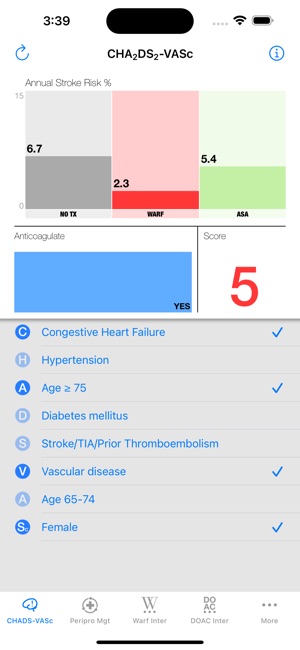
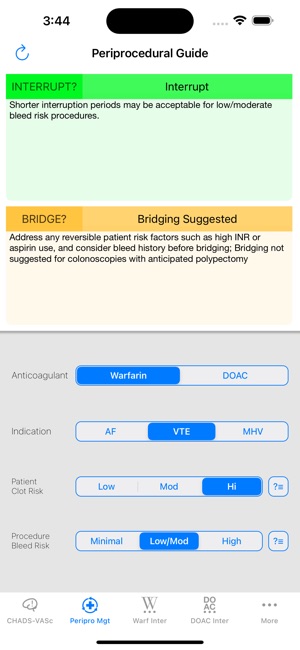
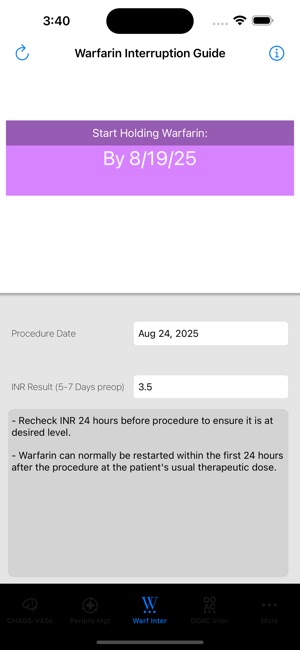
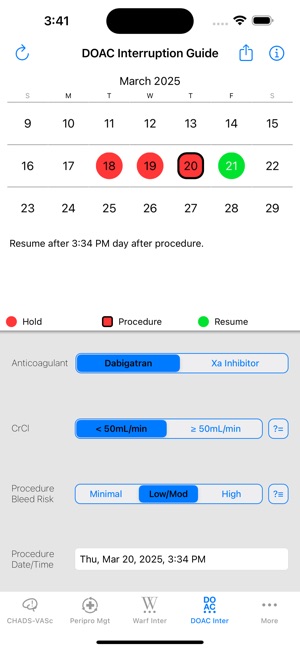
The MAQI2 Anticoagulation Toolkit is a clinical reference tool for healthcare practitioners, synthesizing guidelines and research to support safer management of patients on anticoagulants. The associated research identified significant opportunities for quality improvement, with one study (N=6,907) finding that targeted interventions could reduce GI hemorrhage risk in the majority of high-risk patients on warfarin. By operationalizing this evidence, the authors conclude that clinics are better positioned to play a proactive and holistic role in minimizing preventable adverse events.

App Screenshots

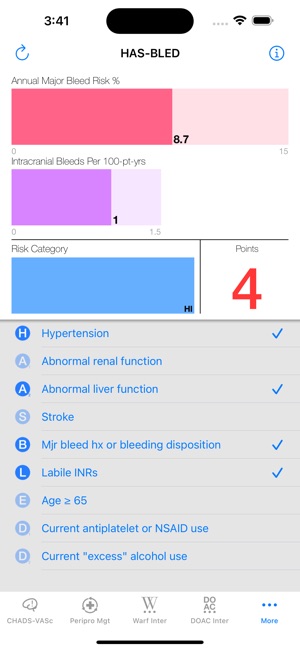
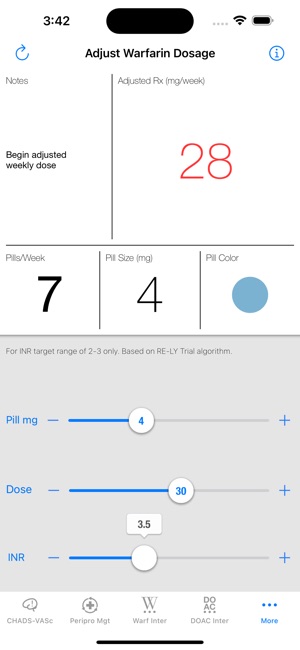
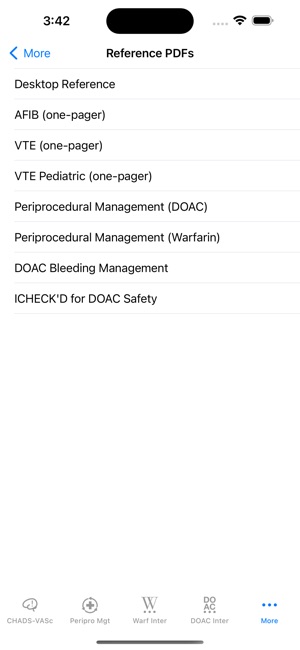
MAQI2 Anticoagulation Toolkit screenshot 1 of 7MAQI2 Anticoagulation Toolkit screenshot 2 of 7MAQI2 Anticoagulation Toolkit screenshot 3 of 7MAQI2 Anticoagulation Toolkit screenshot 4 of 7MAQI2 Anticoagulation Toolkit screenshot 5 of 7MAQI2 Anticoagulation Toolkit screenshot 6 of 7MAQI2 Anticoagulation Toolkit screenshot 7 of 7

Detailed Description

Functionality & Mechanism

Developed by the Michigan Anticoagulation Quality Improvement Initiative (MAQI2), this clinical toolkit serves as a point-of-care reference for managing patients on anticoagulation therapy. The interface delivers content derived from established clinical guidelines and consortium-led research. Clinicians can access synthesized recommendations and protocols to support decision-making for complex patient scenarios, including dosing adjustments, risk factor management, and therapy transitions. The system is designed to facilitate safe and effective anticoagulation management in various clinical practice settings.

Evidence & Research Context

  • The app's development was informed by survey research (N=136) indicating that patients with lower time in therapeutic range (TTR) were receptive to using a mobile support tool for their warfarin therapy.
  • Its content is grounded in extensive research from the MAQI2 consortium, which has published observational studies identifying predictors of warfarin discontinuation (N=734) and modifiable risk factors for upper GI hemorrhage (N=6,907).
  • As a product of a statewide quality improvement collaborative, the toolkit is designed to translate evidence-based findings into clinical practice to enhance patient safety and standardize care protocols.

Intended Use & Scope

This toolkit is designed for healthcare practitioners, including physicians, pharmacists, and nurses, who manage patients on anticoagulation therapies. Its primary utility is as a clinical reference and decision-support resource. The tool is an adjunct to, not a substitute for, comprehensive clinical judgment, direct patient evaluation, and adherence to institutional protocols. It is not intended for direct use by patients.

Studies & Publications

4 publications

Peer-reviewed research associated with this app.

Survey/Cross-sectional

Missed opportunities to prevent upper GI hemorrhage: The experience of the Michigan Anticoagulation Quality Improvement Initiative

Kurlander et al. (2019) · Vascular Medicine

Anticoagulation clinics identified opportunities to reduce bleeding risk by deprescribing unnecessary antiplatelet drugs and prescribing protective medications.
The central premise, and promise, of anticoagulation clinics is that they can provide safer and more reliable therapeutic anticoagulation through protocolized drug monitoring and dosing, and thereby minimize the risk of both de novo thromboembolic and hemorrhagic events. Anticoagulated patients are particularly at risk for gastrointestinal (GI) hemorrhage. It is well known that anticoagulants, whether warfarin or direct oral anticoagulants, nearly double the risk of GI hemorrhage.1 In addition, these patients are often elderly and/or treated with antiplatelet therapy (APT), multiplying hemorrhage risk even further.1,2 Two simple strategies could potentially reduce anticoagulated patients' risk of upper GI hemorrhage: (1) deprescribing of unnecessary APT3 and (2) prescribing proton pump inhibitors (PPI gastroprotection) to patients at high risk for upper GI hemorrhage, a practice which reduces the odds of this adverse event by nearly three-quarters and is supported by a multi-society expert panel.4 In this study, we sought to estimate the proportion of patients referred to a network of anticoagulation clinics who might benefit from either of these practices. We performed a retrospective analysis of patients newly referred to any of six anticoagulation clinics throughout the state of Michigan that participate in a Blue Cross Blue Shield-sponsored quality improvement consortium, the Michigan Anticoagulation Quality Improvement Initiative (MAQI2), between January 2011 and May 2018. The clinics do not routinely discontinue APT or systematically address the use of PPI gastroprotection. Clinic staff obtain a structured medical and medication history when patients enroll in clinic, which is subsequently abstracted into a registry. For all index visits, we extracted data on demographics, comorbidities, indications for anticoagulation, and other risk factors for upper GI hemorrhage, including APT use, glucocorticoids, non-steroidal anti-inflammatory drugs (NSAIDs), and COX-2 inhibitors. We examined prescription of PPIs in 'high-risk' patients according to the 2008 multi-society recommendations (concomitant warfarin + APT) and in standard-risk patients (all other patients). As a sensitivity analysis, we also examined rates of H2 blocker prescription, although this drug class provides inferior gastroprotection and is not recommended. Dosage and frequency of APT and PPI medications were not available in the database. We counted the following as appropriate indications for APT: history of coronary artery disease (CAD) or myocardial infarction (MI), peripheral artery disease, percutaneous intervention, coronary artery bypass graft, cerebrovascular accident or transient ischemic attack, or antiphospholipid antibody syndrome. During the study period, 6907 patients initiated warfarin therapy and enrolled in the MAQI2 registry. The mean age of patients was 65.6 years (SD 15.3), 51.6% were male, 81.0% were Caucasian, 15.3% were African American, and 3.6% reported another race. The two most common indications for anticoagulation were stroke prevention in atrial fibrillation (46.0%) and venous thromboembolism (40.7%). In addition to warfarin, 39.2% of patients used aspirin alone, 2.0% used a thienopyridine alone, and 3.8% used dual-APT. In total, 45.0% of patients were considered high risk for upper GI hemorrhage based on combined use of warfarin and APT (Figure 1). APT was the most prevalent risk factor for upper GI hemorrhage, followed by oral glucocorticoid prescription (8.3%), NSAIDs (3.5%), and COX-2 inhibitors (0.5%). Characteristics of the study sample can be found in the online Supplement 1. PPIs were prescribed to 31.7% of patients overall, and 34.0% of high-risk patients. Considering H2 blockers, in addition to PPIs, 41.0% of high-risk patients were on a gastroprotective medication. Among the 45.0% of patients treated with APT, there was no identifiable indication for APT in 44.6% of them (or 20.0% of the entire patient sample). In all, 36.0% of the entire sample could benefit from one or both of the two strategies to minimize the risk of upper GI hemorrhage. Figure 1. Prevalence of patients at high risk for upper GI hemorrhage, and of patients with opportunities for GI hemorrhage risk reduction based on unnecessary APT or failure to use appropriate PPI gastroprotection. APT, antiplatelet therapy; GI, gastrointestinal; PPI, proton pump inhibitor. In conclusion, our findings show that almost half of patients followed in a network of anticoagulation clinics are treated with APT, conferring a high risk of upper GI hemorrhage. Among these high-risk patients, we found this risk could be greatly reduced in 80% by either discontinuing the APT when no identifiable indication exists, or by initiating PPI gastroprotection. In the past, anticoagulation clinics have generally restricted their activities to laboratory monitoring and warfarin dose adjustment. However, they are well positioned and well advised to play a more proactive and holistic role, including helping patients minimize the risk of serious GI hemorrhage,5 which can often be fatal or disabling, especially in older patients.2 To our knowledge, this is the first time modifiable risk factors for upper GI hemorrhage have been investigated in this population. Study limitations include inability to detect undocumented use of over the counter aspirin, NSAIDs, and PPIs, no data on dosing of PPIs, and no data on medication adherence. These limitations notwithstanding, our data highlight an important opportunity to prevent gastrointestinal morbidity among patients on warfarin therapy, and should serve as a call to action to develop and implement new treatment protocols in anticoagulation clinics.
... Read More
Survey/Cross-sectional

Discontinuation of Warfarin Therapy for Patients With Atrial Fibrillation: The Michigan Anticoagulation Quality Improvement Initiative Experience

Barnes et al. (2017) · JAMA Cardiology

Tracked warfarin discontinuation rates among atrial fibrillation patients.
The use of warfarin significantly reduces the risk of stroke among patients with atrial fibrillation (AF). Unfortunately, up to 60% of patients discontinue therapy within the first year.1 Prior studies did not assess the quality of warfarin therapy or the occurrence of electrical cardioversion (ECV) or radiofrequency ablation (RFA) as predictors of discontinuation of warfarin therapy. Methods Within the Michigan Anticoagulation Quality Improvement Initiative, a 6-center Blue Cross Blue Shield of Michigan/Blue Care Network–sponsored collaborative of anticoagulation management services, we explored the discontinuation rate of warfarin therapy among a randomly sampled, diverse inception cohort of unselected patients with AF. Institutional review board approval was gained at all 6 Michigan Anticoagulation Quality Improvement Initiative sites, and informed consent was waived because the data was collected retrospectively. For each patient, we calculated the Rosendaal time in the therapeutic range and the Congestive Heart Failure, Hypertension, Age, Diabetes Mellitus Stroke or Systemic Embolism, Vascular Disease, and Sex Characteristic (CHA2DS2-VASc) score for stroke risk.2,3 The statistical significance for all P values was set at .05. We explored the predictive ability of these measures and the scheduling of an ECV or RFA based on discontinuation rates among patients enrolled in warfarin therapy from August 2011 to December 2013 and followed up through June 2015. Results Of the 734 patients initiating warfarin therapy for nonvalvular AF between August 2011 and December 2013, 270 (36.8%) discontinued therapy within 1 year of initiation (118 of 218 patients [54.1%] with ECV or RFA and 152 of 516 patients [29.5%] without ECV or RFA; P < .001). The Kaplan-Meier estimated probability that a patient would discontinue warfarin therapy within the first year was 34.8% and was greater for patients with ECV or RFA (P < .001) (Figure). Figure. Kaplan-Meier Estimates for Discontinuation of Warfarin Therapy View LargeDownload Kaplan-Meier Estimates for Discontinuation of Warfarin Therapy(opens in new tab) Kaplan-Meier curves for the discontinuation of warfarin therapy among patients with nonvalvular atrial fibrillation who did or did not undergo electrical cardioversion (ECV) or radiofrequency ablation (RFA). The estimated 1-year discontinuation rates are 51.2% for patients who underwent ECV or RFA and 27.8% for patients who did not. Patients who discontinued warfarin therapy within the first year were more likely than patients who continued therapy to have undergone ECV or RFA (43.7% vs 21.6%; P < .001), a lower CHA2DS2-VASc score (mean [SD] score, 3.0 [1.9] vs 3.7 [1.6]; P < .001), and a lower time in the therapeutic range in the first year (mean [SD], 51.2% [22.7%] vs 65.5% [15.2%]; P < .001). Race/ethnicity was not a statistically significant predictor of discontinuation of warfarin therapy. In the multivariable model (Table), predictors of discontinuation of warfarin therapy within the first year include having undergone ECV or RFA (hazard ratio, 1.86; 95% CI, 1.32-2.61), CHA2DS2-VASc risk group (hazard ratio, 3.89; 95% CI, 2.05-7.36 for low score [0] vs high score [2-9]), and low time in the therapeutic range (hazard ratio, 1.45; 95% CI, 1.33-1.58 for each 10% decrease). Table. Unadjusted and Multivariable Predictors of Discontinuation of Warfarin Therapy Within 1 Year View LargeDownload Unadjusted and Multivariable Predictors of Discontinuation of Warfarin Therapy Within 1 Year(opens in new tab) Predictors All Patients With AF HR (95% CI) P Value Unadjusted ECV or RFA planned 2.14 (1.68-2.72) <.001 Male 1.42 (1.10-1.82) .01 Diabetes 0.72 (0.54-0.96) .03 Coronary artery disease 0.91 (0.70-1.19) .50 Hypertension 0.63 (0.48-0.83) <.001 Heart failure 0.97 (0.73-1.29) .84 Chronic liver disease 1.13 (0.46-2.74) .79 Chronic renal insufficiency 1.04 (0.72-1.50) .85 Prior Stroke 0.47 (0.29-0.75) .002 Heavy alcohol use 1.05 (0.66-1.69) .83 Peripheral artery disease 0.98 (0.61-1.58) .92 NSAID/antiplatelet use 1.19 (0.93-1.53) .18 CHADS2 risk groupa 3.0 (2.14-4.20) <.001 CHA2DS2-VASc riskb 3.99 (2.69-5.91) <.001 HAS-BLED risk groupc 2.51 (1.43-4.43) .001 TTR, per 10% decrease 1.44 (1.32-1.56) <.001 Multivariable ECV or RFA planned 1.86 (1.32-2.61) <.001 CHA2DS2-VASc riskb 3.89 (2.05-7.36) <.001 TTR, per 10% decrease 1.45 (1.33-1.58) <.001 Discussion The association of ECV or RFA with discontinuation of warfarin therapy is an important consideration given the lack of consensus around long-term stroke risk following ECV or RFA. Guidelines suggest at least 4 to 8 weeks of anticoagulation following ECV but do not specify if stopping anticoagulation is appropriate after that initial period.4 Conclusive data are needed regarding the efficacy of extended prophylaxis with warfarin beyond 4 to 8 weeks after a successful ECV or RFA. Identifying poor-quality warfarin control as a predictor of discontinuation has important implications given the abundance of alternative therapies. For some clinicians, poor warfarin therapy control indicates a need to change anticoagulant therapy. While it may seem appealing to use a direct oral anticoagulant for patients with poorly controlled warfarin therapy, there are many situations in which switching is not recommended. Early reports indicate that patients with AF prescribed direct-acting oral anticoagulants for stroke prevention have rates of discontinuation similar to those of warfarin-treated patients.5 The strengths of this analysis include using an unselected inception cohort of warfarin-treated patients at 6 health centers and medical record–abstracted data instead of billing codes for analysis. Our study's limitations include the potential for unmeasured confounders in observational studies, the inability to characterize index AF diagnoses (eg, postoperative and paroxysmal), and the single-state location of all of the clinics. Despite these limitations, our study demonstrates a high rate of discontinuation of warfarin therapy within the first year, especially among patients undergoing ECV or RFA. This suggests a need to better define which patients with AF undergoing ECV or RFA should continue anticoagulation. Additionally, we identified poor-quality warfarin care as a strong predictor of medication discontinuation, without transition to another oral anticoagulant. Further efforts are needed to increase the use and persistence of anticoagulation therapy among patients with nonvalvular AF and to understand the implications of ECV or RFA as an indication for anticoagulation therapy.
... Read More

MAQI2 Anticoagulation Toolkit

Free