
AppsFromResearch
MBSC - Weigh the Odds icon

MBSC - Weigh the Odds

Evidence Tier:CLINICAL GRADE

Validated in clinical trials · Supported by multiple studies

For:Clinicians & Healthcare Professionals

App Summary

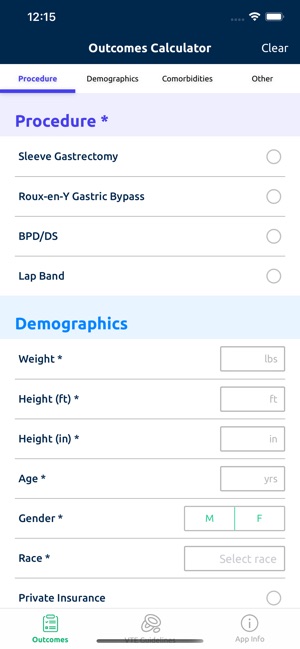
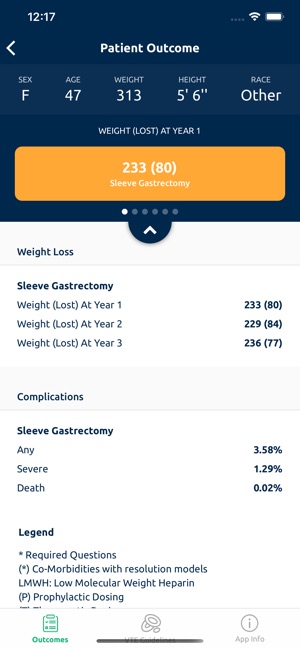
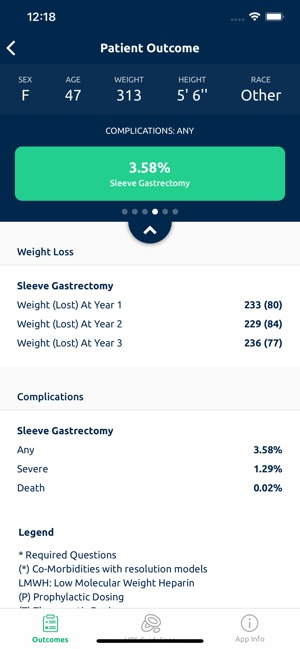
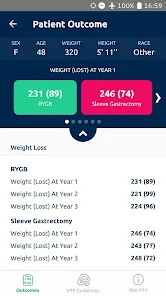
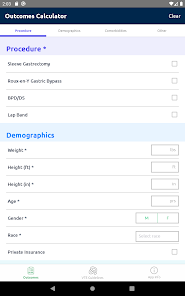
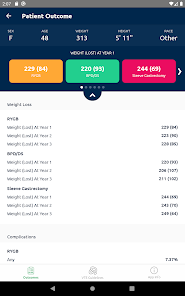
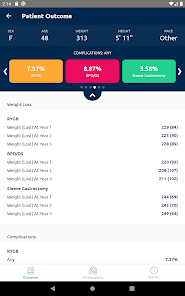
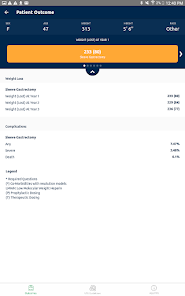
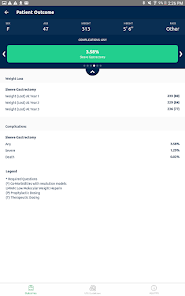
MBSC - Weigh the Odds is a clinical decision support tool for healthcare providers that predicts patient-specific outcomes for bariatric surgery, including projected weight loss, complication rates, and venous thromboembolism (VTE) risk. An external validation study (N=51,291) of the complication model demonstrated good calibration, and a separate validation study (N=276) found strong agreement between actual and predicted 1-year weight loss in a Hispanic population. The associated research concludes that the calculator can improve informed consent and support shared decision-making by providing empirically based, patient-specific projections for risk and weight loss.

App Screenshots

MBSC - Weigh the Odds screenshot 1 of 19MBSC - Weigh the Odds screenshot 2 of 19MBSC - Weigh the Odds screenshot 3 of 19MBSC - Weigh the Odds screenshot 4 of 19MBSC - Weigh the Odds screenshot 5 of 19MBSC - Weigh the Odds screenshot 6 of 19MBSC - Weigh the Odds screenshot 7 of 19MBSC - Weigh the Odds screenshot 8 of 19MBSC - Weigh the Odds screenshot 9 of 19MBSC - Weigh the Odds screenshot 10 of 19MBSC - Weigh the Odds screenshot 11 of 19MBSC - Weigh the Odds screenshot 12 of 19MBSC - Weigh the Odds screenshot 13 of 19MBSC - Weigh the Odds screenshot 14 of 19MBSC - Weigh the Odds screenshot 15 of 19MBSC - Weigh the Odds screenshot 16 of 19MBSC - Weigh the Odds screenshot 17 of 19MBSC - Weigh the Odds screenshot 18 of 19MBSC - Weigh the Odds screenshot 19 of 19

Detailed Description

Functionality & Mechanism

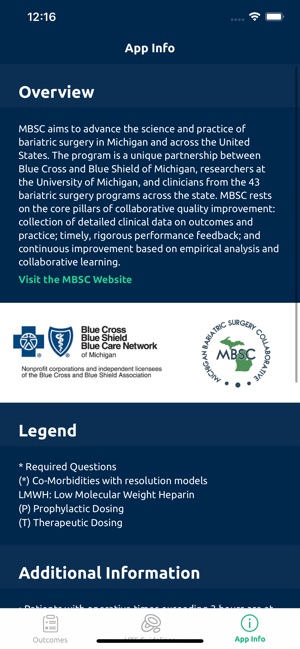
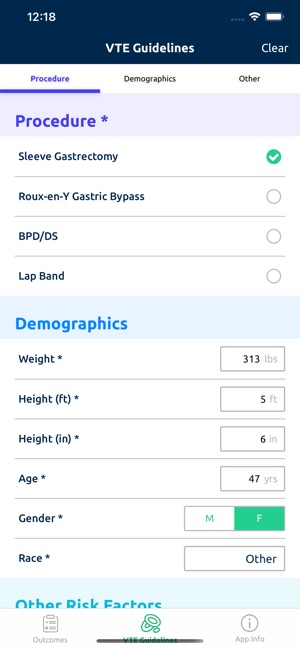
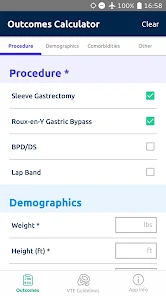
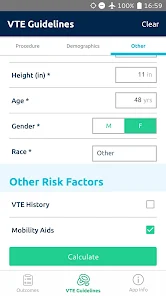
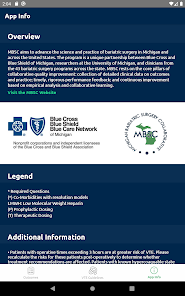
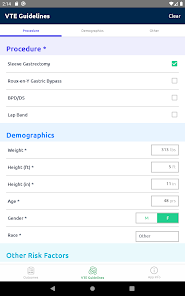
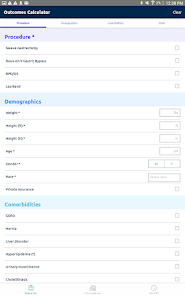
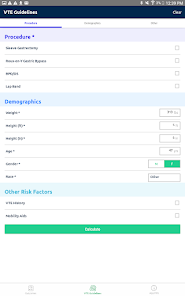
Developed by the Michigan Bariatric Surgery Collaborative, this clinical decision support tool provides risk stratification for bariatric surgery candidates. The system leverages validated prediction models to generate patient-specific outcomes. By processing clinical data such as comorbidities, demographics, and planned procedure type, the interface calculates projected 1-year weight loss, 30-day serious complication risk, and venous thromboembolism (VTE) probability. The VTE module also generates risk-stratified treatment guidelines, facilitating informed preoperative counseling and surgical planning.

Evidence & Research Context

  • The core risk prediction models were developed and internally validated using a prospective clinical registry of over 25,000 bariatric surgery patients in Michigan.
  • The weight loss calculator was validated in a U.S. Hispanic population (N=276), demonstrating strong agreement between predicted and actual 1-year weight (concordance correlation coefficient = .80).
  • An external validation study (N=51,291) in a Dutch population confirmed the serious complication model has good calibration, indicating its generalizability outside the original development cohort.
  • A retrospective study (N=1,050) demonstrated the calculator's utility in identifying patients at risk for lower-than-expected weight loss as early as two months post-surgery.
  • The venous thromboembolism (VTE) risk model was derived from an analysis of 27,818 patients, identifying significant predictors for risk stratification and prophylaxis guidance.

Intended Use & Scope

This tool is designed for bariatric surgeons and clinicians for preoperative risk assessment and patient counseling. Its primary utility is to facilitate shared decision-making by quantifying individualized outcome probabilities. The calculator provides risk estimates, not diagnostic certainties, and is not a substitute for comprehensive clinical evaluation and professional judgment.

Studies & Publications

5 publications

Peer-reviewed research associated with this app.

Validation Study

Validation of the Michigan Bariatric Surgery Collaborative outcomes calculator in a Hispanic population

Chaudhry et al. (2025) · Surgery for Obesity and Related Diseases

Accurately predicted weight loss outcomes in Hispanic bariatric surgery patients.

Background The Michigan Bariatric Surgery Collaborative (MBSC) has developed an app that calculates outcomes, to include predicted weight loss and venous thromboembolism rates. The app is called Weigh the Odds. This app provides an important method for discussing outcomes with patients. Objectives We sought to determine the validity of the MBSC outcomes calculator in a Hispanic population. Setting Community practice in Texas. Methods A community practice with a large percentage of Hispanic patients was used to validate the MBSC calculator. The correlation coefficient was calculated. A chi-square test was used to compare quantitative variables between the operation types. Lin's concordance correlation along with the Bland-Altman plot were performed to estimate the level of agreement between actual and expected weights at 1 year. Results Two hundred seventy-six patients met the eligibility criteria and were included in the study. The average body mass index (BMI) at the time of initial bariatric surgery was 45.2 kg/m2 (standard deviation [SD], 6.68). One hundred seventy-seven patients underwent sleeve gastrectomy (SG), and 99 patients underwent Roux-en-Y gastric bypass (RYGB) as their initial bariatric operation. The mean actual weight at 1 year for the entire cohort was 90.8 kg (SD, 19.6), while the mean expected weight was 89.2 kg (SD, 16.9), leading to a mean difference of 1.6 kg. The concordance correlation coefficient of .80 (95% CI: .76-.84, P < .001) demonstrates a strong agreement between actual and expected weights at 1 year. There was a lower correlation coefficient for RYGB patients. Conclusion The concordance correlation coefficient demonstrated a strong agreement between actual and expected weights at 1 year. These findings validate the MBSC outcomes calculator in a Hispanic population.
... Read More
Validation Study

Predicting serious complication risks after bariatric surgery: external validation of the Michigan Bariatric Surgery Collaborative risk prediction model using the Dutch Audit for Treatment of Obesity

Akpinar et al. (2022) · Surgery for Obesity and Related Diseases

Predicted complication risk accurately overall but showed modest ability to distinguish individual risk levels.

Background Risk-prediction tools can support doctor–patient (shared) decision making in clinical practice by providing information on complication risks for different types of bariatric surgery. However, external validation is imperative to ensure the generalizability of predictions in a new patient population. Objective To perform an external validation of the risk-prediction model for serious complications from the Michigan Bariatric Surgery Collaborative (MBSC) for Dutch bariatric patients using the nationwide Dutch Audit for Treatment of Obesity (DATO). Setting Population-based study, including all 18 hospitals performing bariatric surgery in the Netherlands. Methods All patients registered in the DATO undergoing bariatric surgery between 2015 and 2020 were included as the validation cohort. Serious complications included, among others, abdominal abscess, bowel obstruction, leak, and bleeding. Three risk-prediction models were validated: (1) the original MBSC model from 2011, (2) the original MBSC model including the same variables but updated to more recent patients (2015–2020), and (3) the current MBSC model. The following predictors from the MBSC model were available in the DATO: age, sex, procedure type, cardiovascular disease, and pulmonary disease. Model performance was determined using the area under the curve (AUC) to assess discrimination (i.e., the ability to distinguish patients with events from those without events) and a graphical plot to assess calibration (i.e., whether the predicted absolute risk for patients was similar to the observed prevalence of the outcome). Results The DATO validation cohort included 51,291 patients. Overall, 986 patients (1.92%) experienced serious complications. The original MBSC model, which was extended with the predictors "GERD (yes/no)," "OSAS (yes/no)," "hypertension (yes/no)," and "renal disease (yes/no)," showed the best validation results. This model had a good calibration and an AUC of .602 compared with an AUC of .65 and moderate to good calibration in the Michigan model. Conclusion The DATO prediction model has good calibration but moderate discrimination. To be used in clinical practice, good calibration is essential to accurately predict individual risks in a real-world setting. Therefore, this model could provide valuable information for bariatric surgeons as part of shared decision making in daily practice.
... Read More

MBSC - Weigh the Odds

Free