AppsFromResearch
MedSMA℞T Mobile icon

MedSMA℞T Mobile

Evidence Tier:VALIDATED

Proven effective in research studies · Supported by multiple studies

For:General Public & Enthusiasts

App Summary

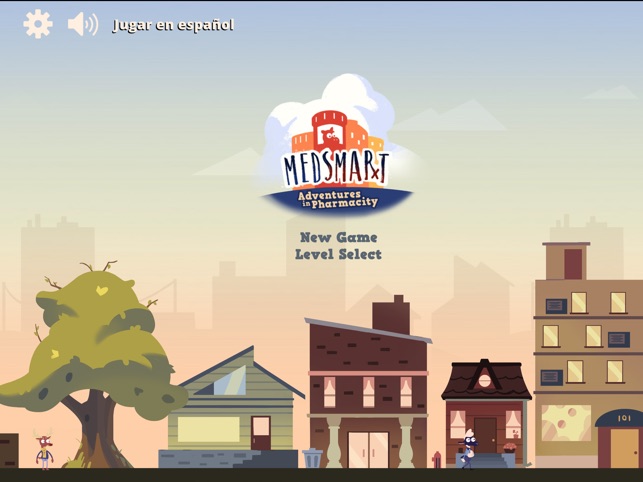
MedSMA℞T Mobile uses an interactive game, 'Adventures in PharmaCity,' to educate adolescents and their families on safe opioid management, including proper storage, disposal, and misuse prevention. A quantitative study (N=128) found that gameplay significantly improved both adolescents' and parents' self-efficacy, perceived knowledge, and behavioral intent related to opioid safety. The associated research concludes that the game is an effective tool to educate families on the responsible use of prescribed opioid medications.

App Screenshots

MedSMA℞T Mobile screenshot 1 of 30MedSMA℞T Mobile screenshot 2 of 30MedSMA℞T Mobile screenshot 3 of 30MedSMA℞T Mobile screenshot 4 of 30MedSMA℞T Mobile screenshot 5 of 30MedSMA℞T Mobile screenshot 6 of 30MedSMA℞T Mobile screenshot 7 of 30MedSMA℞T Mobile screenshot 8 of 30MedSMA℞T Mobile screenshot 9 of 30MedSMA℞T Mobile screenshot 10 of 30MedSMA℞T Mobile screenshot 11 of 30MedSMA℞T Mobile screenshot 12 of 30MedSMA℞T Mobile screenshot 13 of 30MedSMA℞T Mobile screenshot 14 of 30MedSMA℞T Mobile screenshot 15 of 30MedSMA℞T Mobile screenshot 16 of 30MedSMA℞T Mobile screenshot 17 of 30MedSMA℞T Mobile screenshot 18 of 30MedSMA℞T Mobile screenshot 19 of 30MedSMA℞T Mobile screenshot 20 of 30MedSMA℞T Mobile screenshot 21 of 30MedSMA℞T Mobile screenshot 22 of 30MedSMA℞T Mobile screenshot 23 of 30MedSMA℞T Mobile screenshot 24 of 30MedSMA℞T Mobile screenshot 25 of 30MedSMA℞T Mobile screenshot 26 of 30MedSMA℞T Mobile screenshot 27 of 30MedSMA℞T Mobile screenshot 28 of 30MedSMA℞T Mobile screenshot 29 of 30MedSMA℞T Mobile screenshot 30 of 30

Detailed Description

Functionality & Mechanism

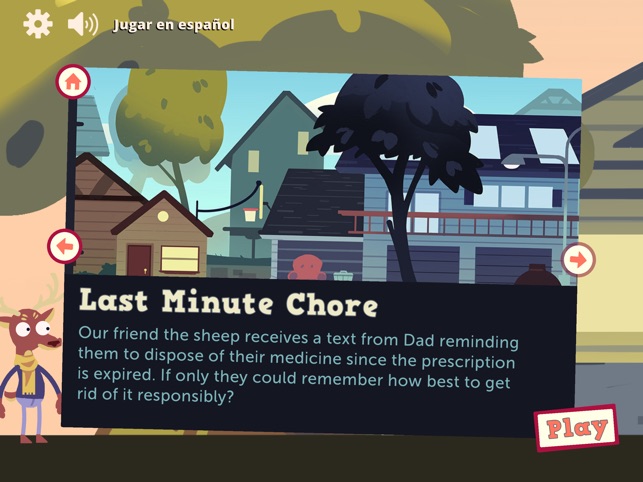
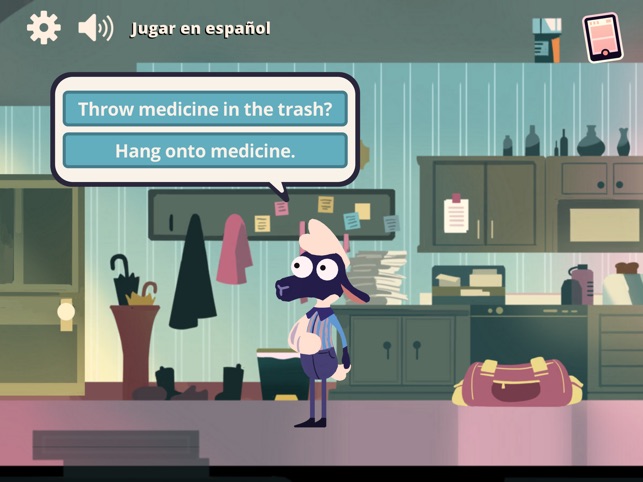
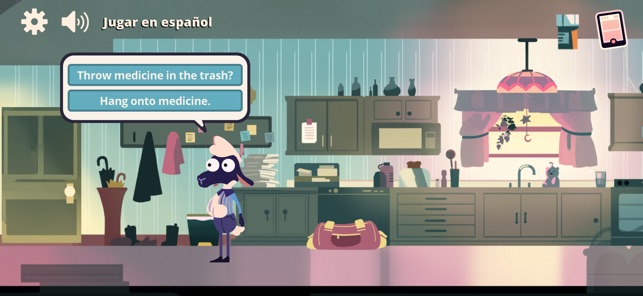
MedSMA℞T Mobile delivers pedagogical content on safe opioid management through a serious game titled 'Adventures in PharmaCity'. The intervention leverages a narrative where players guide a character through five levels, making decisions about medication storage, disposal, and sharing. A typical gameplay session is approximately 20-30 minutes. Developed as part of the MedSMA℞T Families intervention, the system is designed to engage adolescents by simulating real-world scenarios and demonstrating the direct consequences of medication-related choices through in-game outcomes.

Evidence & Research Context

  • Across two quantitative evaluations (N=177 adolescents, N=68 parents total), the game demonstrated statistically significant pre-post improvements in opioid safety self-efficacy, perceived knowledge, and behavioral intent.
  • Multiple evaluations with key stakeholders, including adolescents (N=72), parents (N=93), pharmacists (N=22), and emergency department staff (N=23), indicate high acceptability and perceived educational value.
  • The intervention has been evaluated for implementation in clinical settings, with emergency department staff and pharmacists identifying it as an effective, age-appropriate patient education tool.
  • Associated research highlights the positive findings but notes that a randomized controlled trial is required to definitively establish the intervention's effectiveness for sustained behavioral change.

Intended Use & Scope

The application is intended for use by adolescents (ages 12-18) and their parents as a preventative health education tool. Its primary utility is to supplement clinician counseling on the safe use, storage, and disposal of prescribed opioids. This system does not provide medical advice, track medication adherence, or replace consultation with a qualified healthcare professional for prescription management.

Studies & Publications

11 publications

Peer-reviewed research associated with this app.

Non-Evaluative Reference

Adolescents' and Parents' Perspectives on Using the MedSMARxT Families Intervention in Emergency Departments for Opioid Medication Safety Education: Mixed Methods Study

Abraham et al. (2025) · JMIR Serious Games

Adolescents and parents found the game-based opioid safety education tool engaging and helpful for emergency department settings.
Abstract Background The opioid crisis has significantly impacted adolescents and their families. This is attributed in part to increased opioid prescriptions in pediatric emergency departments (EDs) due to acute pain conditions and injuries. Although EDs frequently prescribe opioids, no effective preventative interventions have been implemented to educate adolescents and their families on safe opioid use. This study evaluates the MedSMA℞T Families intervention, which consists of an engaging serious game, Adventures in PharmaCity, and a personalized Family Medication Safety Plan (FMSP) with the aim of reducing opioid misuse and promoting opioid medication safety. The MedSMA℞T Families intervention was developed to educate adolescents and adults prescribed opioids on safe practices such as opioid storage and disposal. Objective This study aimed to explore and characterize adolescents' and parents' experiences and perspectives on implementing the MedSMA℞T Families intervention in the ED to improve opioid education and safety among adolescents. Methods A total of 93 participants, including 16 children and 77 parents, were recruited from the pediatric ED at a tertiary academic hospital to play the MedSMA℞T game in the ED. A total of 16 participants, including 8 children and 8 parents, were followed up with interviews to gather qualitative feedback. Participants engaged with the MedSMA℞T game—Adventures in PharmaCity—and the FMSP. Data were collected through gameplay observation and 75-minute semistructured interviews via Zoom. Quantitative in-game data were analyzed using descriptive analysis and qualitative data were analyzed using thematic analysis with NVivo (version 14; Lumivero). Results Parents spent an average of 22.16 (SD 4.97) minutes playing the game, while children spent an average of 21.99 (SD 8.06) minutes. Families appreciated the game's design and noted usability challenges and suggested enhancements for clearer gameplay instructions. Participants reported increased knowledge of opioid safety, highlighted the importance of communication with health care providers, and a desire for a mobile app to assist with medication management. The FMSP was perceived as valuable for promoting awareness of safe practices and connected well to the knowledge gained from the game. Conclusions The MedSMA℞T Families intervention was well received as a beneficial educational tool to educate adolescents and their families on safe opioid use. Additionally, it highlights a clear need for more accessible digital tools to increase opioid education. This feedback indicates a strong interest in improving educational resources to ensure safe opioid management within families.
... Read More
Qualitative Study

Using MedSMA℞T Families for Opioid Safety Education: Emergency Department Staff Perspective

Nadi et al. (2025) · Pediatrics Open Science

Emergency department staff saw potential for using the game to educate families about opioid safety.
OBJECTIVES Misuse of opioid medications was associated with 75% of drug-related deaths in 2020. Although emergency departments (EDs) frequently prescribe opioids, no preventive interventions have been implemented to educate adolescents and their families on safe opioid use. This study aimed to characterize ED staff's perspectives on implementing the MedSMA℞T Families intervention in the ED to improve opioid education and safety among adolescents. METHODS ED staff played the MedSMA℞T game, completed a survey, and were asked open-ended questions regarding their experience interfacing with the technology. Transcripts were coded using NVivo to conduct content analysis. The analysis integrated the Systems Engineering Initiative for Patient Safety 3.0 model into the intervention. RESULTS A total of 23 ED staff were recruited. Staff reported that the game was more interactive and age-appropriate for adolescents compared with other educational materials in the ED. Reflecting on the care team, nurses and child life specialists were identified as appropriate roles for delivering the game to patients. Moreover, staff buy-in, training, and ED workflows were recognized as important factors within the organizational conditions allowing for game implementation. Space, loudness, and allocated resources in the ED were perceived as challenges to game implementation. Lastly, waiting room gameplay was thought to be the most efficient setting of game implementation. CONCLUSIONS MedSMA℞T Families can be efficiently implemented into ED settings. It is one of the first serious games to target opioid education and to engage and better retain the attention of younger patients and was well received by ED staff.
... Read More

In the Media

UW levels up opioid misuse prevention among teens, adolescents with innovative mobile gaming

The University of Wisconsin and University of Kentucky developed MedSMA℞T Mobile to prevent opioid misuse among teens through digital gaming, supported by a $1.9 million grant from the Agency for Healthcare Research and Quality. "Through the MedSMA℞T Mobile game, we're making learning fun while helping families discuss the dangers of opioid misuse and safe use of these medicines," said principal investigator Olufunmilola Abraham. The mobile app will launch in UW Health-affiliated emergency departments across Wisconsin and northern Illinois with potential for nationwide expansion.

WiscRead article

An Opioid Safety Game-Changer - School of Pharmacy

The University of Wisconsin-Madison School of Pharmacy's Olufunmilola Abraham developed MedSMA℞T Mobile to educate teens about opioid safety, using a digital game format that leverages what people enjoy in their daily lives as health interventions. Abraham recently concluded an 18-month pilot study examining the game's implementation in the UW Health Emergency Department to test its feasibility and effectiveness in teaching youth about opioid use and misuse. The research addresses a critical need, as a 2021 study found nearly 19 percent of adolescents had used opioids in the previous year, but only 15.7 percent were using them as medically prescribed.

WiscRead article

New study in collaboration with UW School of Pharmacy uses game-based learning to teach opioid safety

Dr. Irene Hurst and Dr. Olufunmilola Abraham from UW-Madison developed MedSMA℞T Mobile to address prescription opioid misuse among adolescents and families through an innovative digital gaming app that educates emergency department patients about safe medication practices. The study received "$150,000 grant from the 2022 Dissemination & Implementation Research pilot award program" and targets the emergency department setting where doctors frequently prescribe pain medications to young patients accompanied by caregivers. The app features anthropomorphized characters teaching users how to handle social pressures surrounding opioids and promotes safe use, handling, and disposal practices.

WiscRead article

MedSMA℞T Mobile

Free