
AppsFromResearch
Step It Up by CHAI icon

Step It Up by CHAI

Published in academic literature

For:General Public & Enthusiasts

App Summary

Step It Up by CHAI is a mobile health intervention designed to increase physical activity and support cardiovascular health in resource-limited communities using personalized feedback, device integration, and location-based messaging. The associated research protocol outlines a randomized controlled trial that will compare the effects of location-based messaging to standard messaging on physical activity levels in African American women. This trial aims to identify the most effective mobile health strategies to increase physical activity and characterize the effects on cardiovascular disease risk biomarkers.

App Screenshots

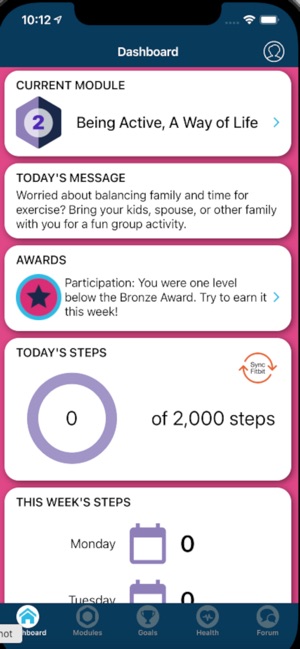
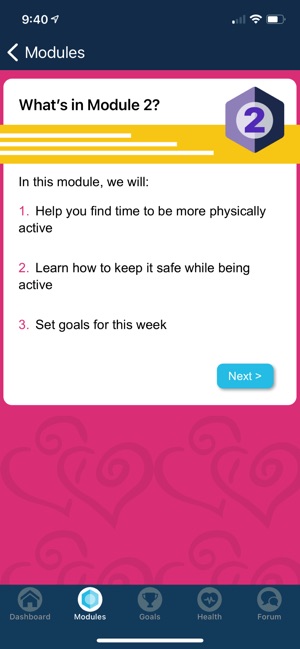
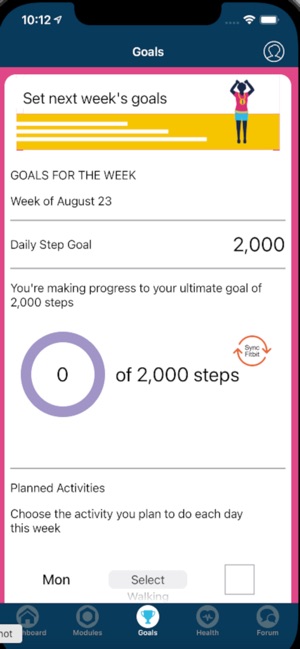
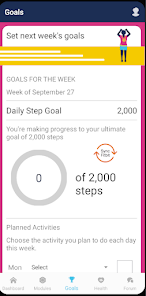
Step It Up by CHAI screenshot 1 of 5Step It Up by CHAI screenshot 2 of 5Step It Up by CHAI screenshot 3 of 5Step It Up by CHAI screenshot 4 of 5Step It Up by CHAI screenshot 5 of 5

Detailed Description

Functionality & Mechanism

Step It Up by CHAI is a wellness platform designed to promote physical activity for cardiovascular health. The system integrates biometric data from connected devices, including Fitbit activity trackers, Aria II scales, and Omron blood pressure monitors. Its core mechanism leverages geofencing to deliver location-specific notifications that prompt community-based exercise opportunities. The interface also delivers educational modules and incorporates a social support forum to facilitate sustained behavior change through personalized feedback and peer interaction.

Evidence & Research Context

  • The application's design and multilevel intervention strategy are detailed in a published protocol for a randomized controlled trial (NCT03288207).
  • The protocol was developed to evaluate the intervention's utility for increasing physical activity among African American women in resource-limited communities.
  • The intervention is grounded in the socioecological framework and employs an adaptive, sequential multi-assignment randomized trial (SMART) design.
  • The study's primary aim is to assess the effects of location-based ('tailored-to-place') messaging versus standard messaging on physical activity levels and cardiovascular biomarkers.

Intended Use & Scope

This application is intended for researchers implementing behavioral interventions and for individuals seeking a structured tool for cardiovascular wellness. Its primary utility is as an adjunct platform to encourage physical activity and monitor health metrics. The system is not a medical device and does not provide diagnosis or clinical treatment recommendations. Users should consult a healthcare professional for medical guidance.

Studies & Publications

1 publication

Peer-reviewed research associated with this app.

Study Protocol

Multilevel mobile health approach to improve cardiovascular health in resource-limited communities with Step It Up: a randomised controlled trial protocol targeting physical activity

Tamura et al. (2020) · BMJ Open

Research study planned or in progress; results not yet available
Introduction Although physical activity (PA) reduces cardiovascular disease (CVD) risk, physical inactivity remains a pressing public health concern, especially among African American (AA) women in the USA. PA interventions focused on AA women living in resource-limited communities with scarce PA infrastructure are needed. Mobile health (mHealth) technology can increase access to PA interventions. We describe the development of a clinical protocol for a multilevel, community-based, mHealth PA intervention for AA women. Methods and analysis An mHealth intervention targeting AA women living in resource-limited Washington, DC communities was developed based on the socioecological framework for PA. Over 6 months, we will use a Sequential Multi-Assignment, Randomized Trial approach to compare the effects on PA of location-based remote messaging (named 'tailored-to-place') to standard remote messaging in an mHealth intervention. Participants will be randomised to a remote messaging intervention for 3 months, at which point the intervention strategy will adapt based on individuals' PA levels. Those who do not meet the PA goal will be rerandomised to more intensive treatment. Participants will be followed for another 3 months to determine the contribution of each mHealth intervention to PA level. This protocol will use novel statistical approaches to account for the adaptive strategy. Finally, effects of PA changes on CVD risk biomarkers will be characterised. Ethics and dissemination This protocol has been developed in partnership with a Washington, DC-area community advisory board to ensure feasibility and acceptability to community members. The National Institutes of Health Intramural IRB approved this research and the National Heart, Lung, and Blood Institute provided funding. Once published, results of this work will be disseminated to community members through presentations at community advisory board meetings and our quarterly newsletter. Trial registration number NCT03288207.
... Read More

Step It Up by CHAI

Free