

Michigan Liar's Dice
Published in academic literature
App Summary
App Screenshots
Detailed Description
Functionality & Mechanism
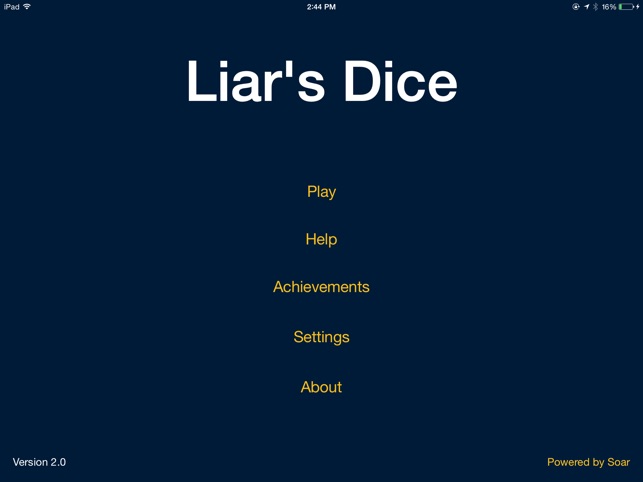
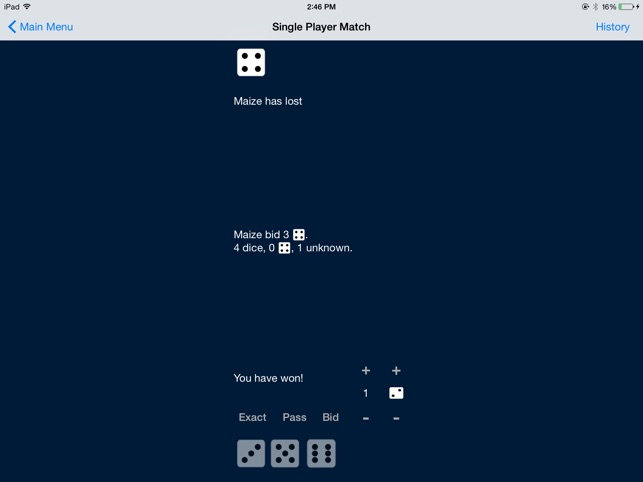
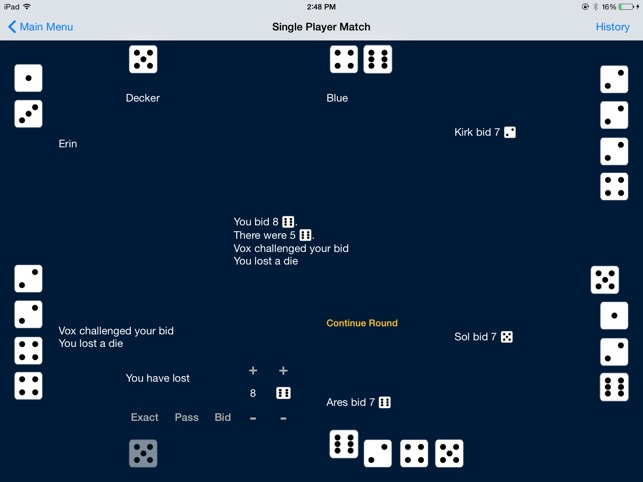
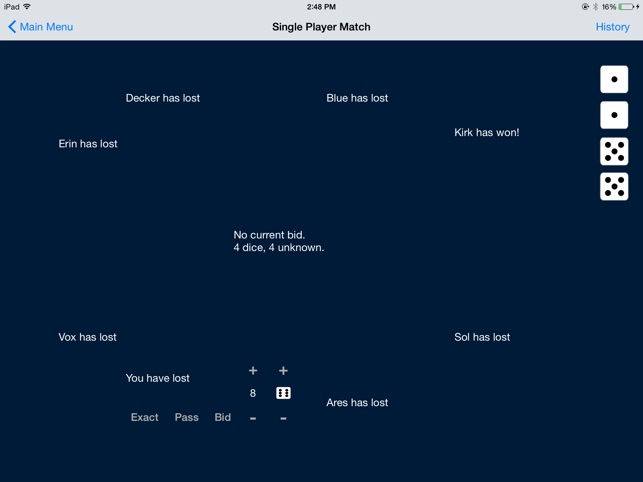
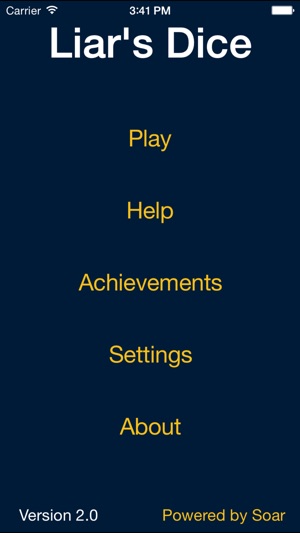
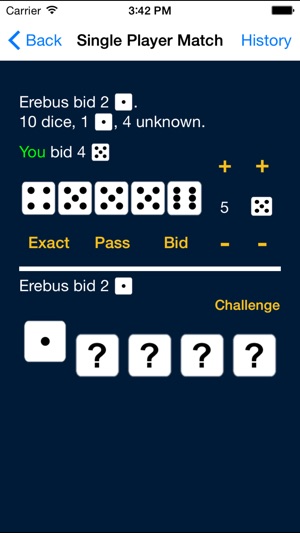
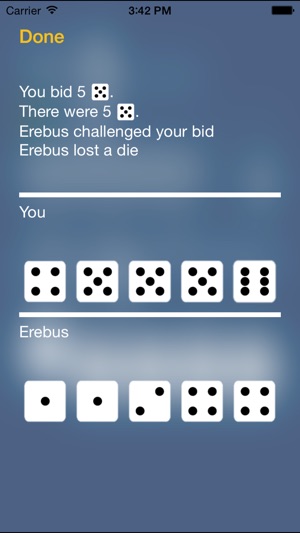
Michigan Liar's Dice is a game-based simulation developed by the Soar research group at the University of Michigan. Gameplay sessions involve competing against one to three artificial intelligence opponents in the bluffing game Liar's Dice. The interface facilitates a complete set of bids, including pushes and exact calls. The system leverages the Soar cognitive architecture to power opponent behavior, which integrates probabilistic reasoning, symbolic heuristics, and opponent modeling to inform its in-game decision-making.
Evidence & Research Context
- A published case study details the system's function as a testbed for integrating probabilistic decision-making and symbolic reasoning within a cognitive architecture.
- The associated research describes the development and evaluation of a collection of Soar-based agents that utilize different combinations of probabilistic logic and heuristic knowledge.
- The study demonstrated that the architecture's learning mechanisms could be used to convert deliberate probabilistic reasoning into implicit, tuned performance for the game agents.
Intended Use & Scope
This application is intended for the general public as a recreational game and for researchers as a demonstration of the Soar cognitive architecture. Its primary utility is to provide a challenging gameplay experience against a sophisticated AI. The application is not designed as a data collection instrument or a pedagogical tool for teaching principles of artificial intelligence.
Studies & Publications
Peer-reviewed research associated with this app.
A Case Study in Integrating Probabilistic Decision Making and Learning in a Symbolic Cognitive Architecture: Soar Plays Dice
Laird et al. (2023) · AAAI Fall Symposium Series Proceedings
Describes the research-driven development of this appApp Information
Developer
University of MichiganCategory
Evidence Profile
Published in academic literature
Platforms
Updated
Jun 2015
© 2025 University of Michigan
Tags



Michigan Liar's Dice
Free