
Midwest Stink Bug
Published in academic literature
App Summary
App Screenshots
Detailed Description
Functionality & Mechanism
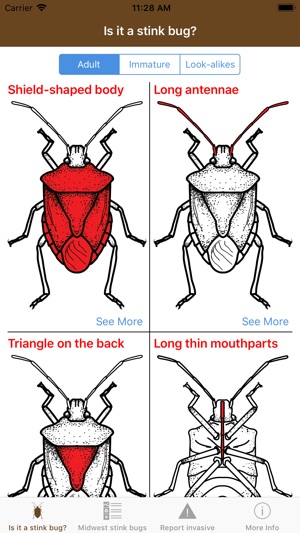
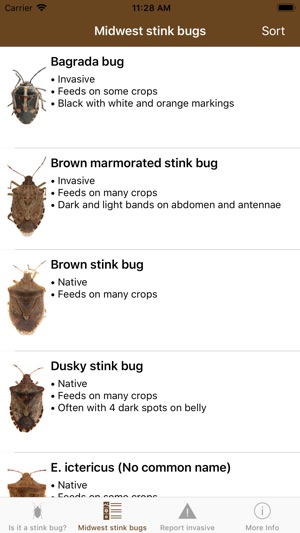
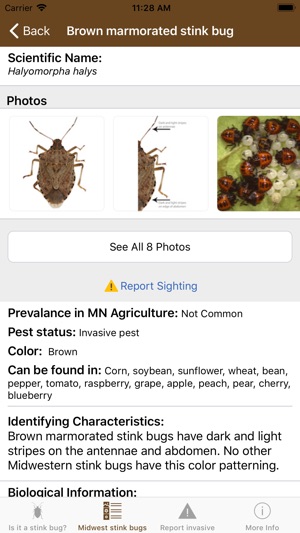
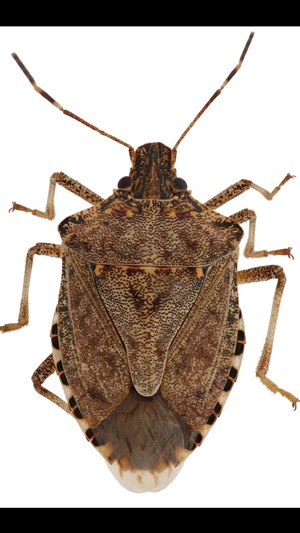
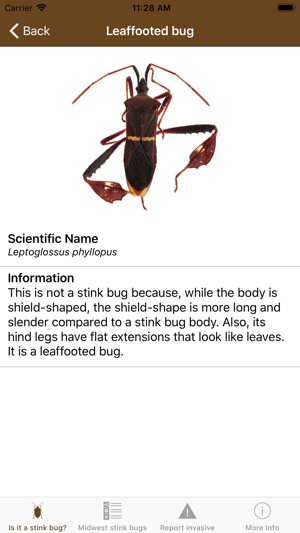
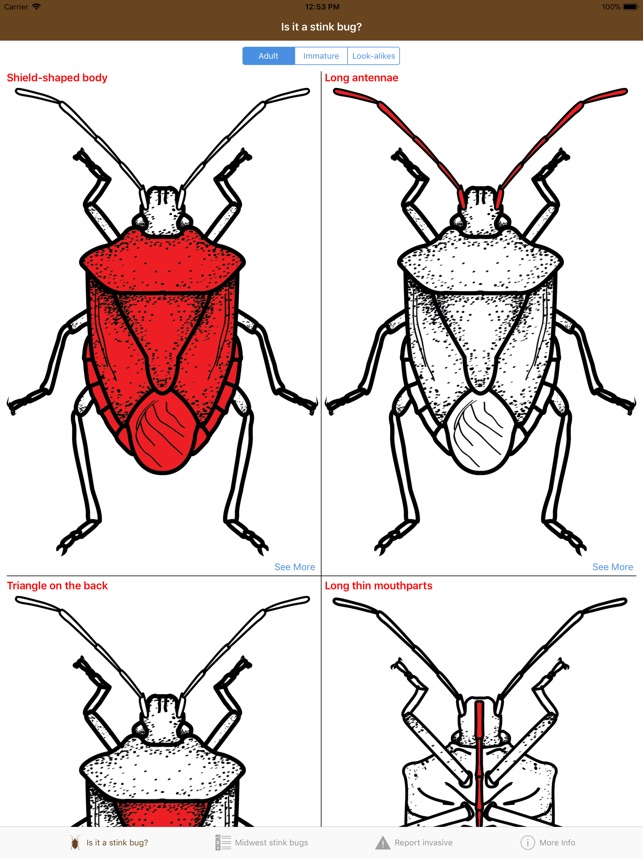
The system facilitates identification of common Midwestern stink bugs through a high-resolution image library and a side-by-side comparison interface. This visual reference tool enables differentiation between invasive agricultural pests and beneficial native species. An integrated reporting module captures user submissions of suspected invasive insects and transmits the data directly to designated state agencies. The interface is engineered for rapid field use to support timely pest management and regional monitoring efforts by agricultural producers and homeowners.
Evidence & Research Context
- Stink bugs represent a significant and increasing risk to key agricultural outputs, particularly soybean production, in the Midwest region of the United States.
- The associated research highlights a need for practical, efficient decision-making frameworks for on-farm pest management, as traditional sampling protocols are often designed for research.
- Optimized binomial sequential sampling plans have been developed to reduce the number of sample units required to achieve a correct management decision with high probability (≥99%).
- By enabling rapid species identification, the app serves as a foundational tool supporting the initial step required for implementing these evidence-based pest management protocols.
Intended Use & Scope
This application is designed for agricultural producers, crop advisors, and homeowners as a field-based visual identification aid. Its primary utility is to facilitate the differentiation of invasive from native species and streamline reporting. The tool does not provide pest management recommendations or action thresholds; users should consult local agricultural extension services for treatment guidance.
Studies & Publications
Peer-reviewed research associated with this app.
Presence-Absence Sampling Plans for Stink Bugs (Hemiptera: Pentatomidae) in the Midwest Region of the United States
Aita et al. (2021) · Journal of Economic Entomology
Referenced in academic literature; no direct evaluation of the appIn the Media
New App for Midwest Farmers: Midwest Stinkbug Assistant
The University of Minnesota Extension IPM Program developed Midwest Stink Bug Assistant to help Midwest farmers identify and manage stink bug pests, partnering with the Minnesota Invasive Terrestrial Plants and Pests Center and Purdue University. The free app provides identification tools and management guidance for both iOS and Android platforms.
Keep an eye out for the brown marmorated stink bug, and yes, there's an app for that
The University of Minnesota Extension and Purdue University developed the Midwest Stink Bug app to better track the invasive brown marmorated stink bug across Minnesota, using high-resolution photos to help users distinguish it from similar species. "The whole reason behind the app is because we're trying to figure out where this new stink bug occurs in Minnesota," said Bob Koch, a U Extension entomologist. Reports from the public feed into a larger regional monitoring system to track the pest that threatens crops and has caused millions in agricultural losses on other coasts.
App helps identify invasive stink bug before it hurts crops
University of Minnesota Extension and Purdue University developed Midwest Stink Bug to help researchers identify the invasive brown marmorated stink bug before it spreads to commodity crops, using high-quality illustrations and photo reporting functions. "The brown marmorated stink bug has caused millions of dollars in crop losses in both the East and Pacific Northwest and we want to avoid that here," said Extension entomologist Bill Hutchison. The free app targets farmers, gardeners and crop consultants with funding from the Minnesota Invasive Terrestrial Plants and Pests Center.
App Information
Developer
Purdue UniversityCategory
Evidence Profile
Published in academic literature
Platforms
Updated
Mar 2018
© 2025 Purdue University
Tags


Midwest Stink Bug
Free