
AppsFromResearch
MISSION Syncope icon

MISSION Syncope

Evidence Tier:DOCUMENTED

Published in academic literature

For:Clinicians & Healthcare Professionals

App Summary

MISSION Syncope is a clinical decision support tool designed for medical professionals to help standardize the evaluation of patients with syncope by generating a differential diagnosis, assessing prognosis, and providing guideline-driven recommendations. The associated research describes its development, which integrated clinical guidelines and a review of the literature with a user-centered design process, including validation of its diagnostic model against actual clinical cases. The authors conclude that the app provides an evidence-based tool that aligns with real-world workflows to help clinicians implement complex syncope guidelines at the point of care.

App Screenshots

MISSION Syncope screenshot 1 of 4MISSION Syncope screenshot 2 of 4MISSION Syncope screenshot 3 of 4MISSION Syncope screenshot 4 of 4

Detailed Description

Functionality & Mechanism

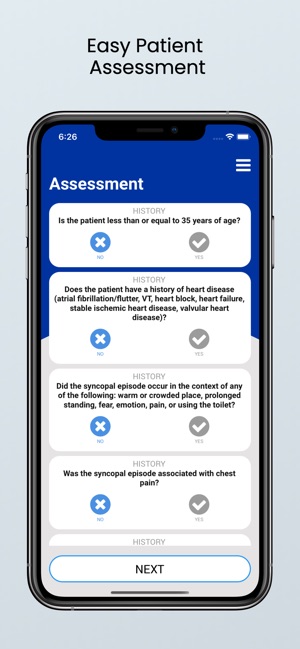
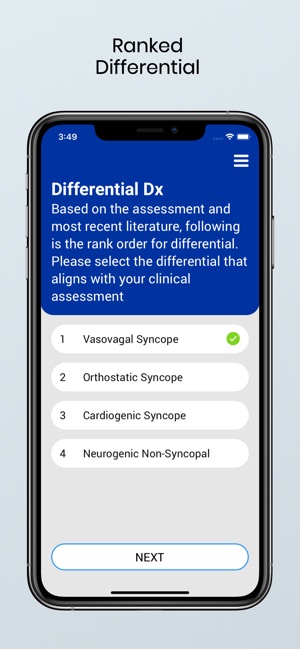
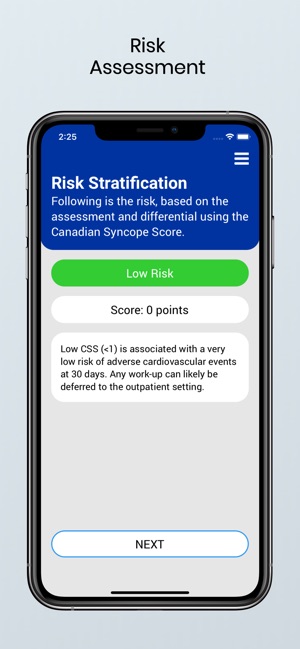
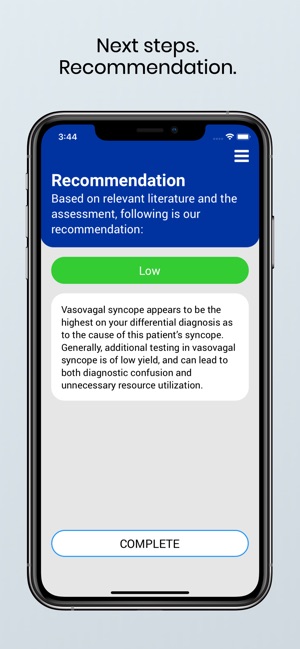
MISSION Syncope is a clinical decision support tool designed to standardize the evaluation and management of syncope. The interface mirrors a real-world clinical workflow, guiding the clinician through sequential modules for patient assessment, differential diagnosis (DDx), risk stratification, and management recommendations. The system leverages published likelihood ratios to generate a ranked DDx and integrates the Canadian Syncope Score to facilitate prognosis. Recommendations are explicitly aligned with established clinical practice guidelines to support evidence-based decision-making at the point of care.

Evidence & Research Context

  • The app was developed to translate American College of Cardiology/American Heart Association (ACC/AHA) Syncope Guideline recommendations into a point-of-care tool aimed at standardizing practice and reducing service overuse.
  • Its internal differential diagnosis model was validated pragmatically through an iterative review process applying the logic to actual clinical cases, as described in the app's development protocol.
  • A user-centered design process involving observations, storyboarding, and beta-testing with clinicians established the tool's functionality and usability within emergency department workflows.
  • The app is one component of the broader, multicomponent MISSION implementation strategy, which a pilot study found to be feasible, acceptable, and show initial success in promoting appropriate testing.

Intended Use & Scope

This tool is intended for use by medical professionals to augment clinical evaluation of patients presenting with syncope. Its primary utility is as an adjunct for formulating a differential diagnosis and assessing prognosis. The app does not replace professional clinical judgment, provide a definitive diagnosis, or constitute medical advice. Clinicians must synthesize the tool's output with their own comprehensive patient assessment.

Studies & Publications

2 publications

Peer-reviewed research associated with this app.

Study Protocol

Planning Implementation Success of Syncope Clinical Practice Guidelines in the Emergency Department Using CFIR Framework

Li et al. (2021) · Medicina

Research study planned or in progress; results not yet available
Background and Objectives: Overuse and inappropriate use of testing and hospital admission are common in syncope evaluation and management. Though guidelines are available to optimize syncope care, research indicates that current clinical guidelines have not significantly impacted resource utilization surrounding emergency department (ED) evaluation of syncope. Matching implementation strategies to barriers and facilitators and tailoring strategies to local context hold significant promise for a successful implementation of clinical practice guidelines (CPG). Our team applied implementation science principles to develop a stakeholder-based implementation strategy. Methods and Materials: We partnered with patients, family caregivers, frontline clinicians and staff, and health system administrators at four health systems to conduct quantitative surveys and qualitative interviews for context assessment. The identification of implementation strategies was done by applying the CFIR-ERIC Implementation Strategy Matching Tool and soliciting stakeholders' inputs. We then co-designed with patients and frontline teams, and developed and tested specific strategies. Results: A total of 114 clinicians completed surveys and 32 clinicians and stakeholders participated in interviews. Results from the surveys and interviews indicated low awareness of syncope guidelines, communication challenges with patients, lack of CPG protocol integration into ED workflows, and organizational process to change as major barriers to CPG implementation. Thirty-one patients and their family caregivers participated in interviews and expressed their expectations: clarity regarding their diagnosis, context surrounding care plan and diagnostic testing, and a desire to feel cared about. Identifying change methods to address the clinician barriers and patients and family caregivers expectations informed development of the multilevel, multicomponent implementation strategy, MISSION, which includes patient educational materials, mentored implementation, academic detailing, Syncope Optimal Care Pathway and a corresponding mobile app, and Lean quality improvement methods. The pilot of MISSION demonstrated feasibility, acceptability and initial success on appropriate testing. Conclusions: Effective multifaceted implementation strategies that target individuals, teams, and healthcare systems can be employed to plan successful implementation and promote adherence to syncope CPGs.
... Read More
Development/Design Paper

Developing and Demonstrating the Viability and Availability of the Multilevel Implementation Strategy for Syncope Optimal Care Through Engagement (MISSION) Syncope App: Evidence-Based Clinical Decision Support Tool

Amin et al. (2020) · Journal of Medical Internet Research

Describes the research-driven development of this app
Background Syncope evaluation and management is associated with testing overuse and unnecessary hospitalizations. The 2017 American College of Cardiology/American Heart Association (ACC/AHA) Syncope Guideline aims to standardize clinical practice and reduce unnecessary services. The use of clinical decision support (CDS) tools offers the potential to successfully implement evidence-based clinical guidelines. However, CDS tools that provide an evidence-based differential diagnosis (DDx) of syncope at the point of care are currently lacking. Objective With input from diverse health systems, we developed and demonstrated the viability of a mobile app, the Multilevel Implementation Strategy for Syncope optImal care thrOugh eNgagement (MISSION) Syncope, as a CDS tool for syncope diagnosis and prognosis. Methods Development of the app had three main goals: (1) reliable generation of an accurate DDx, (2) incorporation of an evidence-based clinical risk tool for prognosis, and (3) user-based design and technical development. To generate a DDx that incorporated assessment recommendations, we reviewed guidelines and the literature to determine clinical assessment questions (variables) and likelihood ratios (LHRs) for each variable in predicting etiology. The creation and validation of the app diagnosis occurred through an iterative clinician review and application to actual clinical cases. The review of available risk score calculators focused on identifying an easily applied and valid evidence-based clinical risk stratification tool. The review and decision-making factors included characteristics of the original study, clinical variables, and validation studies. App design and development relied on user-centered design principles. We used observations of the emergency department workflow, storyboard demonstration, multiple mock review sessions, and beta-testing to optimize functionality and usability. Results The MISSION Syncope app is consistent with guideline recommendations on evidence-based practice (EBP), and its user interface (UI) reflects steps in a real-world patient evaluation: assessment, DDx, risk stratification, and recommendations. The app provides flexible clinical decision making, while emphasizing a care continuum; it generates recommendations for diagnosis and prognosis based on user input. The DDx in the app is deemed a pragmatic model that more closely aligns with real-world clinical practice and was validated using actual clinical cases. The beta-testing of the app demonstrated well-accepted functionality and usability of this syncope CDS tool. Conclusions The MISSION Syncope app development integrated the current literature and clinical expertise to provide an evidence-based DDx, a prognosis using a validated scoring system, and recommendations based on clinical guidelines. This app demonstrates the importance of using research literature in the development of a CDS tool and applying clinical experience to fill the gaps in available research. It is essential for a successful app to be deliberate in pursuing a practical clinical model instead of striving for a perfect mathematical model, given available published evidence. This hybrid methodology can be applied to similar CDS tool development.
... Read More

MISSION Syncope

Free