AppsFromResearch
MnMotion Lite icon

MnMotion Lite

Evidence Tier:DOCUMENTED

Published in academic literature

For:Clinicians & Healthcare ProfessionalsPatients & Caregivers

App Summary

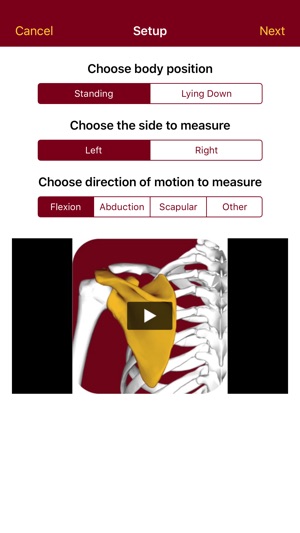
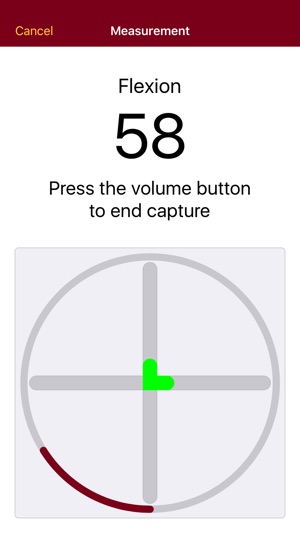
MnMotion Lite helps patients in physical therapy track their shoulder range of motion, using the phone's sensors to measure flexion, abduction, and rotation during rehabilitation exercises. The app is based on biomechanical research demonstrating that shoulder conditions like impingement are associated with specific, measurable alterations in scapular and humeral movement patterns. The associated research concludes that a detailed understanding of these motions can improve patient assessment and help clinicians plan more targeted rehabilitation programs.

App Screenshots

MnMotion Lite screenshot 1 of 3MnMotion Lite screenshot 2 of 3MnMotion Lite screenshot 3 of 3

Detailed Description

Functionality & Mechanism

MnMotion Lite, developed by physical therapists, leverages a mobile device's onboard motion sensors to quantify shoulder joint range of motion. The system captures kinematic data during prescribed movements, including flexion, abduction, scapular plane elevation, and rotation. It records peak angular measurements for each session, maintains a longitudinal record of performance, and facilitates data export to clinicians via email as CSV or text files. The interface is designed for patient self-monitoring as part of a structured rehabilitation program.

Evidence & Research Context

  • The app's design is grounded in biomechanical research identifying distinct alterations in scapulothoracic kinematics, such as decreased upward rotation, in individuals with shoulder impingement symptoms.
  • Foundational research demonstrates that normal overhead arm elevation involves complex, coupled three-dimensional rotations at the sternoclavicular, acromioclavicular, and glenohumeral joints, underscoring the utility of multiplanar assessment.
  • The measurement of distinct elevation planes (flexion, abduction, scapular plane) aligns with studies showing significant kinematic differences across these specific motions in healthy individuals.
  • The authors of associated research note that abnormal movement patterns are correlated with altered muscle activation, particularly decreased serratus anterior activity, a common target for therapeutic exercise.

Intended Use & Scope

This tool is intended for patients to self-monitor shoulder range of motion as an adjunct to a professionally supervised rehabilitation program. It provides objective data to track progress but does not offer diagnostic information or generate treatment recommendations. Clinical consultation is required for the interpretation of results and the modification of therapeutic protocols.

Studies & Publications

3 publications

Peer-reviewed research associated with this app.

Non-Evaluative Reference

Shoulder impingement: biomechanical considerations in rehabilitation

Ludewig et al. (2011) · Manual Therapy

Referenced in academic literature; no direct evaluation of the app
Shoulder impingement is a common condition presumed to contribute to rotator cuff disease. Impingement can occur externally with the coracoacromial arch or internally with the glenoid rim. Normal scapulothoracic motions that occur during arm elevation include upward rotation, posterior tilting, and either internal or external rotation. These scapulothoracic motions and positions are the result of coupled interactions between sternoclavicular and acromioclavicular joints. The sternoclavicular and acromioclavicular joints both contribute to scapulothoracic upward rotation. Posterior tilting is primarily an acromioclavicular joint motion. The sternoclavicular and acromioclavicular joint motions offset one another regarding final scapulothoracic internal/external rotation position. This manuscript discusses these coupled interactions in relation to shoulder muscle function. Two case examples are presented to demonstrate application of understanding these interactions and potential mechanisms of movement abnormalities in targeting treatment interventions for movement based subgroups of impingement patients.
... Read More
Non-Evaluative Reference

Motion of the shoulder complex during multiplanar humeral elevation

Ludewig et al. (2009) · The Journal of Bone and Joint Surgery

Referenced in academic literature; no direct evaluation of the app
Background: Many prior studies have evaluated shoulder motion, yet no three-dimensional analysis comparing the combined clavicular, scapular, and humeral motion during arm elevation has been done. We aimed to describe and compare dynamic three-dimensional motion of the shoulder complex during raising and lowering the arm across three distinct elevation planes (flexion, scapular plane abduction, and coronal plane abduction). Methods: Twelve subjects without a shoulder abnormality were enrolled. Transcortical pin placement into the clavicle, scapula, and humerus allowed electromagnetic motion sensors to be rigidly fixed. The subjects completed two repetitions of raising and lowering the arm in flexion, scapular, and abduction planes. Three-dimensional angles were calculated for sternoclavicular, acromioclavicular, scapulothoracic, and glenohumeral joint motions. Joint angles between humeral elevation planes and between raising and lowering of the arm were compared. Results: General patterns of shoulder motion observed during humeral elevation were clavicular elevation, retraction, and posterior axial rotation; scapular internal rotation, upward rotation, and posterior tilting relative to the clavicle; and glenohumeral elevation and external rotation. Clavicular posterior rotation predominated at the sternoclavicular joint (average, 31°). Scapular posterior tilting predominated at the acromioclavicular joint (average, 19°). Differences between flexion and abduction planes of humerothoracic elevation were largest for the glenohumeral joint plane of elevation (average, 46°). Conclusions: Overall shoulder motion consists of substantial angular rotations at each of the four shoulder joints, enabling the multiple-joint interaction required to elevate the arm overhead. Clinical Relevance: Improved knowledge of the normal motion of the shoulder during humeral elevation will improve the assessment of patients with shoulder motion abnormalities, planning for rehabilitation programs, and performance of stabilization procedures.
... Read More

MnMotion Lite

Free