
Mole Mapper Melanoma Study
Published in academic literature
App Summary
App Screenshots
Detailed Description
Functionality & Mechanism
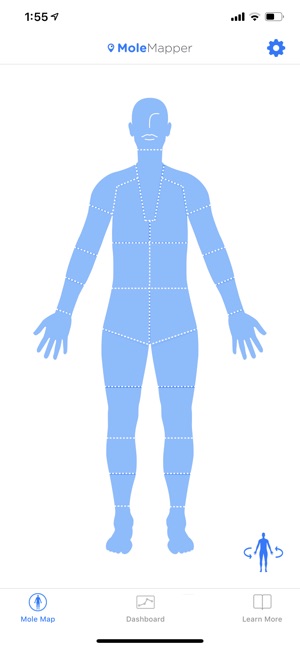
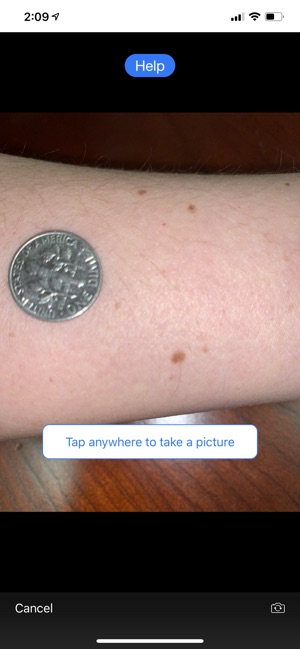
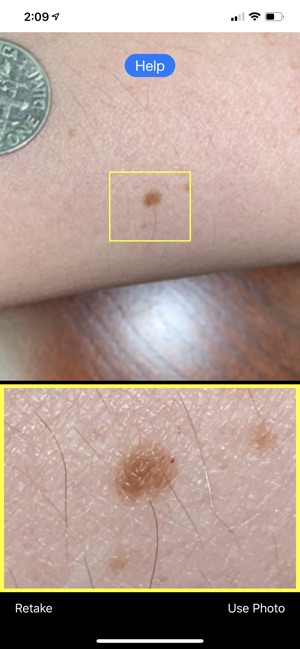
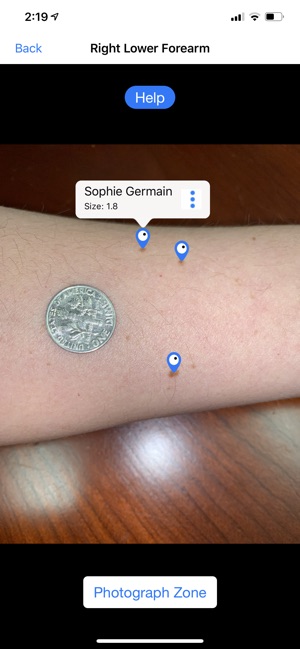
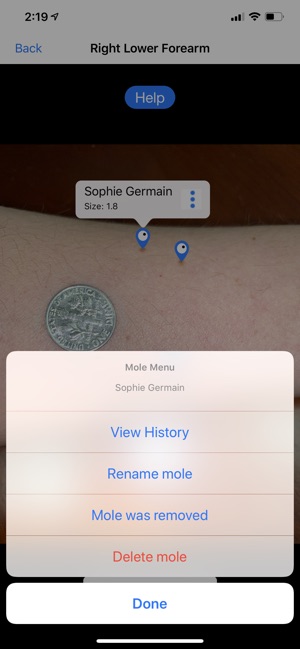
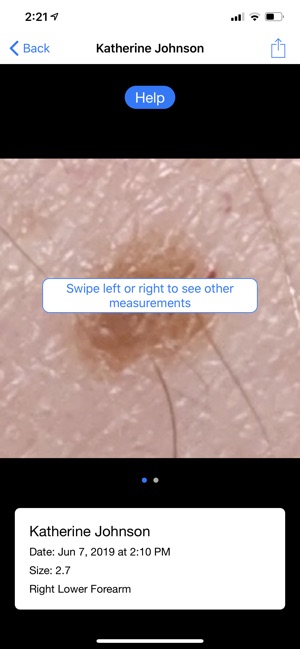
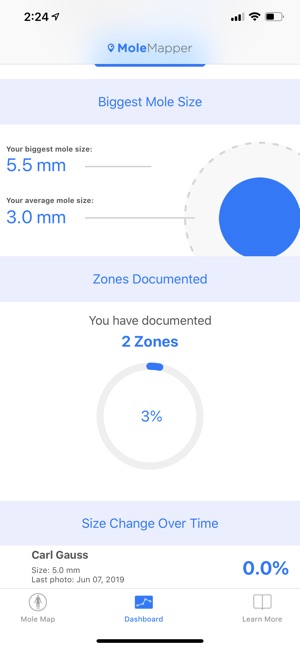
Developed by Oregon Health & Science University, Mole Mapper is a citizen science application designed for longitudinal self-monitoring of skin lesions. The system leverages the smartphone camera to capture high-resolution images of moles. Its interface facilitates measurement by using a common coin as a size reference, enabling individuals to digitally map and track changes in mole size, shape, and location over time. The application functions as both a personal tracking tool and a data-collection platform for melanoma research.
Evidence & Research Context
- The application serves as the primary data collection tool for the Oregon Health & Science University (OHSU) MoleMapper observational study.
- Initial research associated with the app (N=2,069 participants) collected demographic surveys, mole measurements, and images, successfully recapitulating known melanoma risk factors.
- The study has produced the largest publicly available dataset of consumer-collected smartphone images of pigmented skin lesions, comprising over 27,000 curated mole images.
- This dataset is intended to enable quantitative analysis and the development of machine learning algorithms for skin lesion assessment by qualified researchers.
Intended Use & Scope
This tool is intended for the general public for personal, longitudinal monitoring of skin lesions and for contributing data to melanoma research. It is designed to augment, not replace, professional dermatological care. The application does not provide diagnostic information or medical advice, and any concerning changes must be evaluated by a qualified clinician.
Studies & Publications
Peer-reviewed research associated with this app.
New Release of User-Captured Images from the Oregon Health & Science University Melanoma MoleMapper Project
Petrie et al. (2025) · Scientific Data
Referenced in academic literature; no direct evaluation of the appThe Mole Mapper Study, mobile phone skin imaging and melanoma risk data collected using ResearchKit
Webster et al. (2017) · Scientific Data
Participants successfully contributed skin images and melanoma risk data through the mobile app.In the Media
OHSU offers FREE Mole Mapping App
Ph.D. cancer biologist Dan Webster developed Mole Mapper to help his high-risk wife monitor her moles, later partnering with OHSU's Sancy Leachman to create a smartphone-based mole tracking system. The app allows users to "accurately measure and monitor their moles using their smartphone cameras" while optionally contributing anonymous photos to melanoma research through Apple's ResearchKit platform. Leachman joined the design team to put proactive skin health technology directly in consumers' hands amid lengthy dermatology appointment wait times.
Mole Mapper app crowd-sources photos for skin cancer research, prevention
OHSU's Sancy Leachman joined the design team for Mole Mapper to collect patient-generated skin images and data needed to train artificial intelligence for melanoma detection, launching the app on iTunes in October 2015. The app's first seven months generated data from 2,798 U.S. participants who contributed 1,920 demographic surveys and 3,274 mole measurements, which OHSU and Sage Bionetworks published in Nature Scientific Data. Leachman noted that AI technology could help users "get into their physician more quickly" when needed while allowing others to "avoid making an unnecessary trip to the doctor."
OHSU releases Mole Mapper ResearchKit app to track potential skin cancers
Oregon Health & Science University released Mole Mapper to advance melanoma research by enabling users to accurately measure and monitor moles using their iPhone cameras and ResearchKit technology. Cancer biologist Dan Webster created the app initially to help monitor his wife's moles between dermatologist visits, stating "It's amazing to think this app â something I created in my spare time â now has the capacity to involve so many people in the fight against melanoma." The app allows users to photograph moles relative to reference objects like coins and contribute data to OHSU's melanoma research initiative through the Knight Cancer Institute.
App Information
Developer
Oregon Health & Science UniversityCategory
Evidence Profile
Published in academic literature
Platforms
Updated
Dec 2022
© 2025 Oregon Health & Science University
Tags
Relevant Links
Privacy Policy
Mole Mapper Melanoma Study
Free