AppsFromResearch
MyChildCMC icon

MyChildCMC

Evidence Tier:VALIDATED

Proven effective in research studies

For:Clinicians & Healthcare ProfessionalsPatients & Caregivers

App Summary

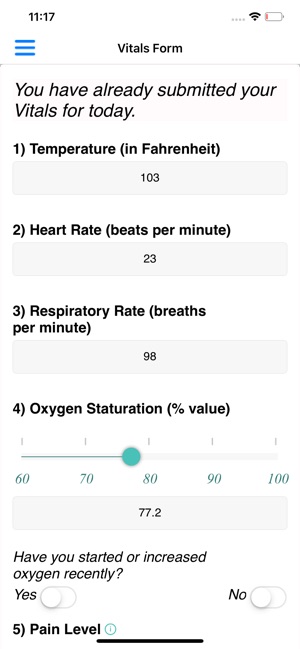
MyChildCMC is a home monitoring system for parents of children with complex medical conditions (CMC) to track daily vital signs and symptoms against a personalized baseline to detect early signs of illness. A preliminary pilot study (N=24) found the app was feasible for daily use, and associated research indicates that parental concern tracked by the app is a strong early indicator of clinical changes like increased pain or oxygen needs. The authors conclude the app has the potential to detect early health deteriorations for timely intervention, and a larger trial is needed to confirm its impact.

App Screenshots

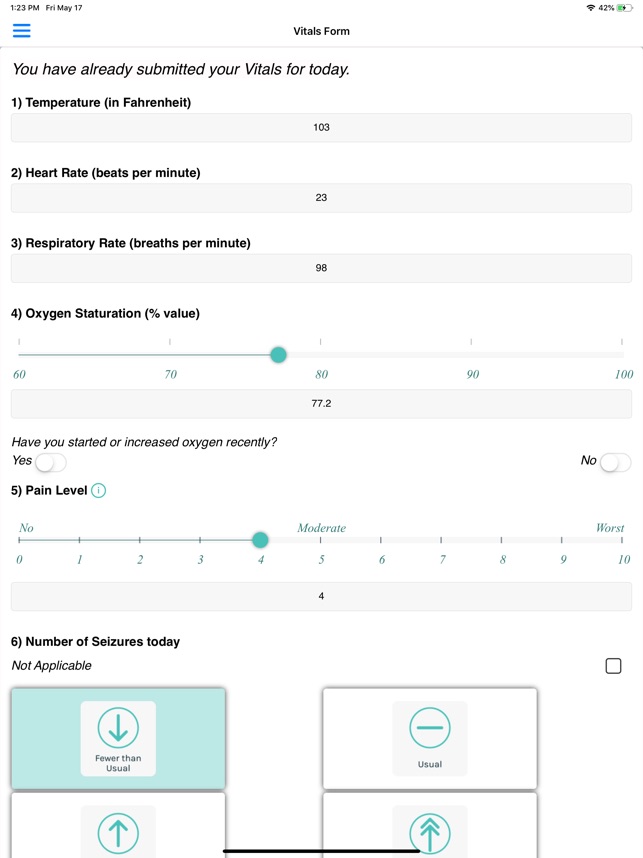
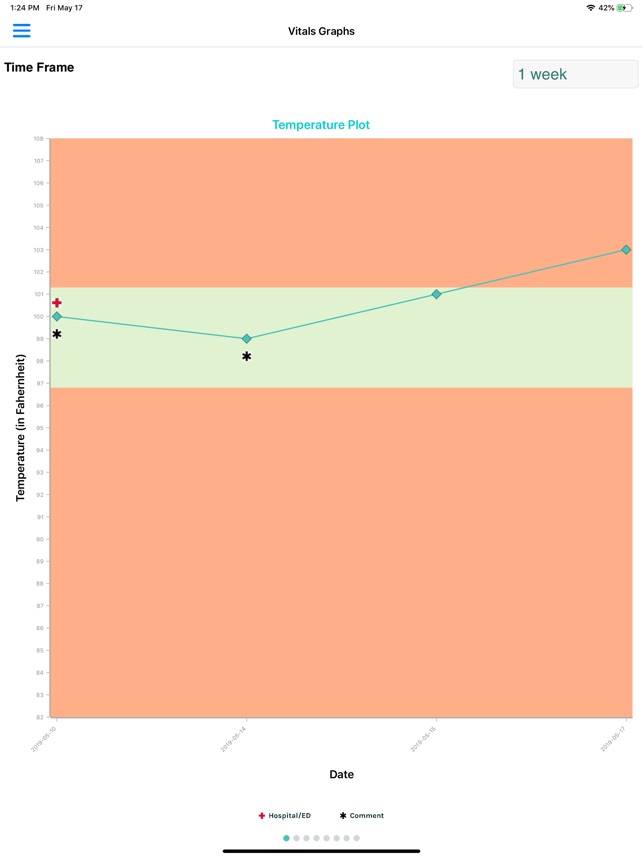
MyChildCMC screenshot 1 of 6MyChildCMC screenshot 2 of 6MyChildCMC screenshot 3 of 6MyChildCMC screenshot 4 of 6MyChildCMC screenshot 5 of 6MyChildCMC screenshot 6 of 6

Detailed Description

Functionality & Mechanism

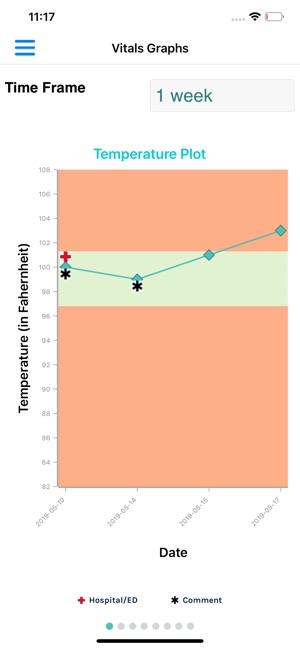
MyChildCMC is a home monitoring system designed for caregivers of children with complex medical conditions. The system prompts daily input of vital signs and symptoms via a structured, multiple-choice interface. A personalized two-week baseline period calibrates the system's alerting algorithm. The interface then presents a real-time health status summary categorized into three zones (Green, Yellow, Red) and provides longitudinal data visualizations. This mechanism facilitates the early detection of clinical changes, generating alerts for both caregivers and connected healthcare providers.

Evidence & Research Context

  • A preliminary pilot study (N=50) demonstrated the system's feasibility, with high enrollment (80.6%), 3-month retention (74%), and significantly higher parental satisfaction compared to usual care (P=.035).
  • The pilot trial observed a significant pre-post enrollment decrease in hospital days for the intervention group (rate ratio=0.49, P<.001), though no significant difference in admissions was found between groups.
  • A secondary analysis of pilot data confirmed that specific clinical parameters captured by the app, such as increased oxygen requirements (OR 28.91), were strongly associated with high parental concern.
  • The authors conclude a larger, definitive study is required to confirm the system's impact on healthcare utilization and its long-term sustainability.

Intended Use & Scope

This system is intended for use by parents and caregivers of children with complex medical conditions as an adjunct monitoring tool under clinical supervision. Its primary utility is to support early intervention by tracking deviations from a personalized health baseline. It is not a diagnostic tool and does not replace professional medical assessment or emergency care.

Studies & Publications

2 publications

Peer-reviewed research associated with this app.

Cohort/Longitudinal Study

High Parental Concern in Children With Medical Complexity: An Early Indicator of Illness

Nkoy et al. (2023) · Hospital Pediatrics

High parental concern was validated as an early warning sign, correlating with measurable changes in clinical parameters.

High concern about child's health is a common reason parents of children with medical complexity (CMC) seek care in emergency departments and hospitals. Factors driving parental concern are unknown. This study explores associations of parent's sociodemographic and child's clinical factors with high parental concern. Secondary analysis of a pilot study of CMC and parents who used daily for 3 months MyChildCMC, a home monitoring app. Parents recorded their child's vital signs (temperature, heart rate, respiratory rate, oximetry), symptoms (pain, seizures, fluid intake/feeding, mental status), and oxygen use, and received immediate feedback. Parents rated their child's health concern on a 4-point Likert scale. Concern scores were dichotomized (3-4 = high, 1-2 = low) and modeled in a mixed-effects logistic regression to explore important associations. We analyzed 1223 measurements from 24 CMC/parents, with 113 (9.24%) instances of high concern. Child factors associated with high parental concern were increased pain (odds ratio [OR], 5.10; 95% confidence interval [CI], 2.53-10.29; P < .01), increased oxygen requirement (OR, 28.91; 95% CI, 10.07-82.96; P < .01), reduced nutrition/fluid intake (OR, 71.58; 95% CI, 13.01-393.80; P < .01), and worsened mental status (OR, 2.15; 95% CI, 1.10-4.17, P = .02). No other associations existed. Changes in CMC's clinical parameters were associated with high concern, which may be an early indicator of acute illness in CMC when it is the primary complaint. Monitoring and responding to high parental concerns may support CMC care at home.
... Read More
Pilot/Feasibility Study

Home-Monitoring Application for Children With Medical Complexity: A Feasibility Trial

Nkoy et al. (2021) · Hospital Pediatrics

Feasibility confirmed — 80.6% enrollment, 74% retention, and successfully detected early health deteriorations before hospital admissions.

Mobile apps are suggested for supporting home monitoring and reducing emergency department (ED) visits and hospitalizations for children with medical complexity (CMC). None have been implemented. We sought to assess the MyChildCMC app (1) feasibility for CMC home monitoring, (2) ability to detect early deteriorations before ED and hospital admissions, and (3) preliminary impact. Parents of CMC (aged 1-21 years) admitted to a children's hospital were randomly assigned to MyChildCMC or usual care. MyChildCMC subjects recorded their child's vital signs and symptoms daily for 3 months postdischarge and received real-time feedback. Feasibility measures included parent's enrollment, retention, and engagement. The preliminary impact was determined by using quality of life, parent satisfaction with care, and subsequent ED and hospital admissions and hospital days. A total of 62 parents and CMC were invited to participate: 50 enrolled (80.6% enrollment rate) and were randomly assigned to MyChildCMC (n = 24) or usual care (n = 26). Retention at 1 and 3 months was 80% and 74%, and engagement was 68.3% and 62.6%. Run-chart shifts in vital signs were common findings preceding admissions. The satisfaction score was 26.9 in the MyChildCMC group and 24.1 in the control group (P = .035). No quality of life or subsequent admission differences occurred between groups. The 3-month hospital days (pre-post enrollment) decreased from 9.25 to 4.54 days (rate ratio = 0.49; 95% confidence interval = 0.39-0.62; P P < .001) in the control group. MyChildCMC was feasible and appears effective, with the potential to detect early deteriorations in health for timely interventions that might avoid ED and hospitalizations. A larger and definitive study of MyChildCMC's impact and sustainability is needed.
... Read More

MyChildCMC

Free