
AppsFromResearch
MyPath KY icon

MyPath KY

Evidence Tier:EVALUATED

Assessed for usability and quality

For:Patients & Caregivers

App Summary

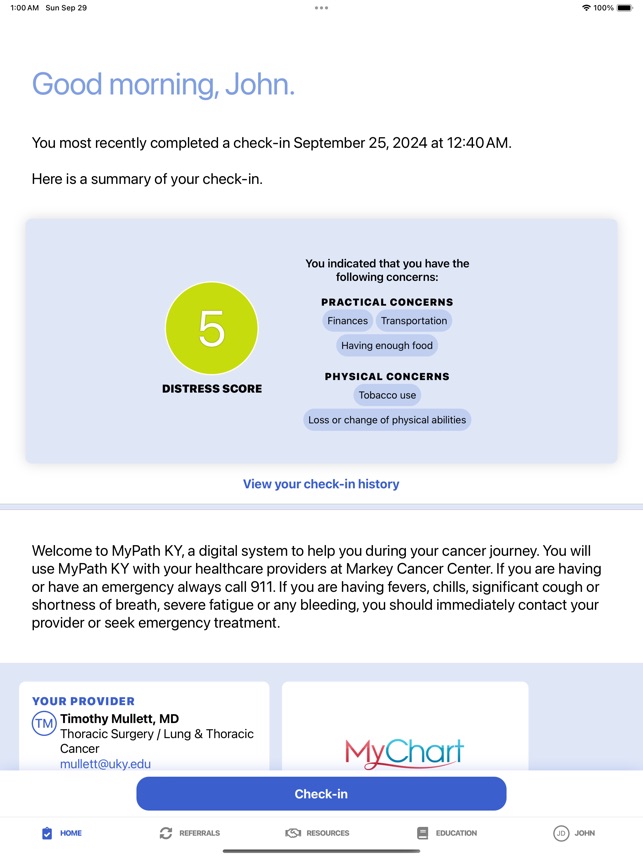
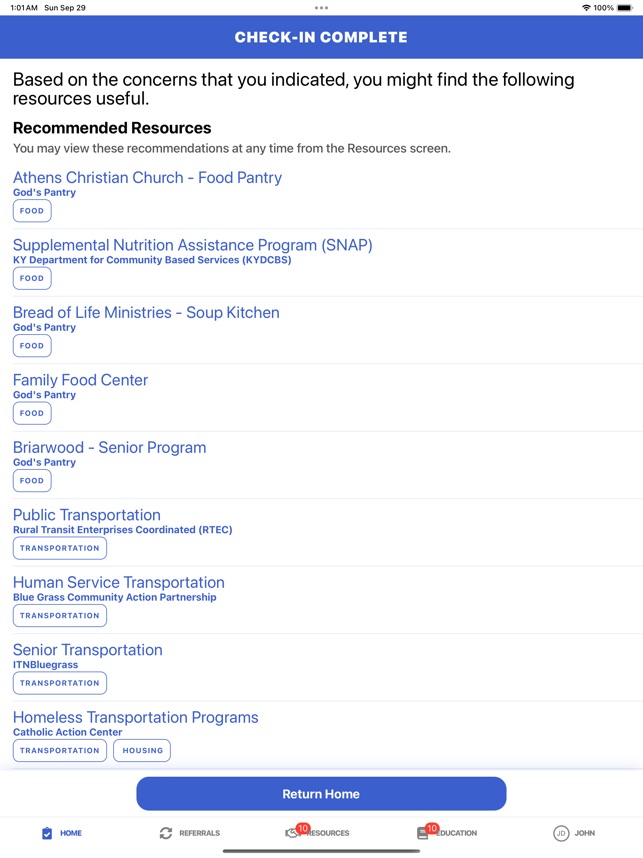
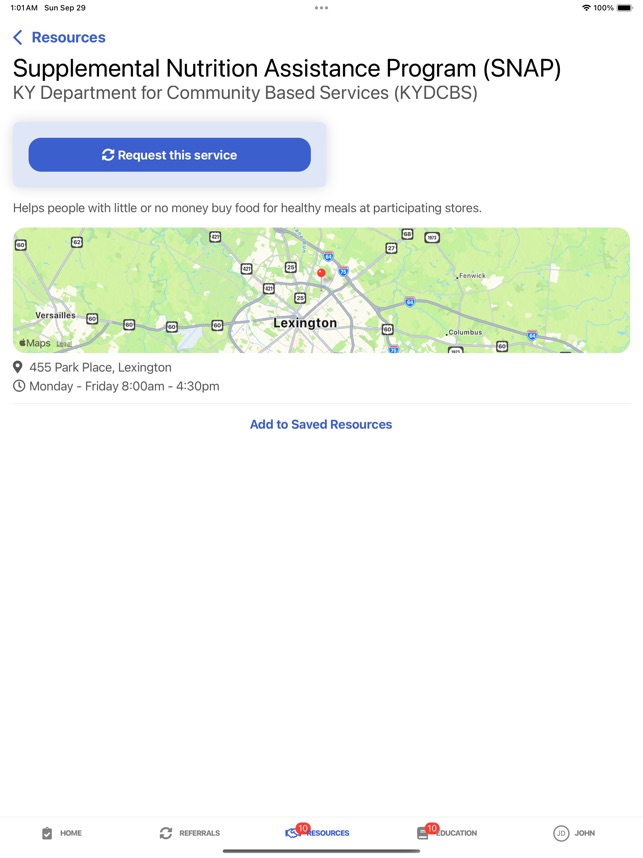
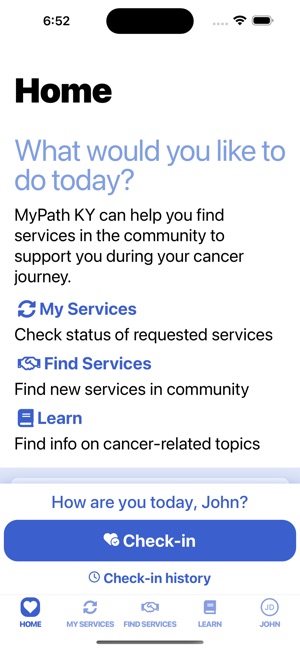
MyPath KY is a mobile app designed for cancer patients, particularly those in rural communities, that uses a digital distress screening tool to connect them with local support services for practical needs. A preliminary usability study (N=30) involving primarily older, rural patients found that two-thirds of participants rated the app's interface as having above-average usability. The authors conclude that mobile health tools built on standard frameworks can be made accessible for less tech-savvy populations, helping to reduce practical barriers to cancer care.

App Screenshots

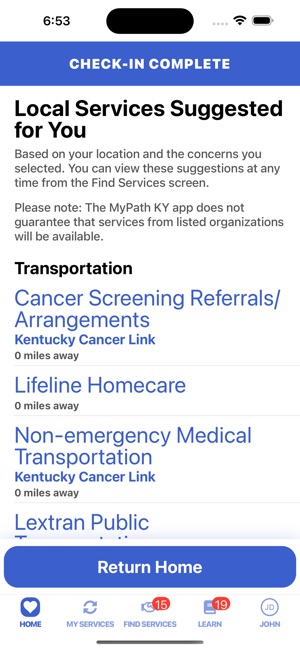
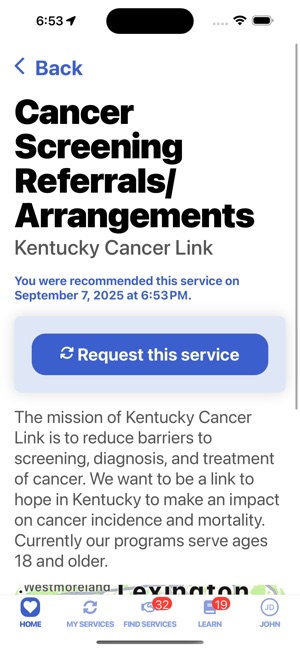
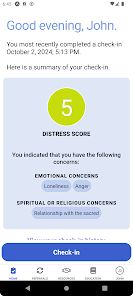
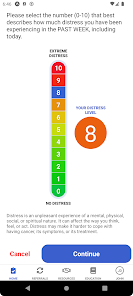
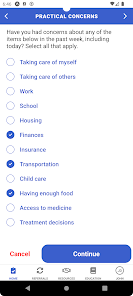
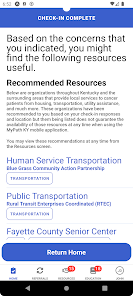
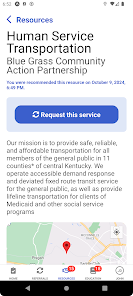
MyPath KY screenshot 1 of 16MyPath KY screenshot 2 of 16MyPath KY screenshot 3 of 16MyPath KY screenshot 4 of 16MyPath KY screenshot 5 of 16MyPath KY screenshot 6 of 16MyPath KY screenshot 7 of 16MyPath KY screenshot 8 of 16MyPath KY screenshot 9 of 16MyPath KY screenshot 10 of 16MyPath KY screenshot 11 of 16MyPath KY screenshot 12 of 16MyPath KY screenshot 13 of 16MyPath KY screenshot 14 of 16MyPath KY screenshot 15 of 16MyPath KY screenshot 16 of 16

Detailed Description

Functionality & Mechanism

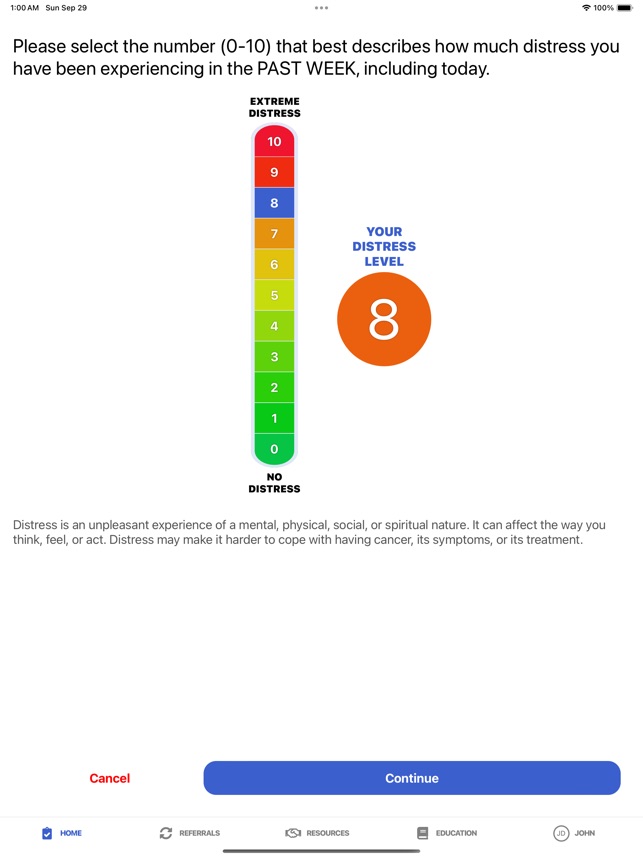
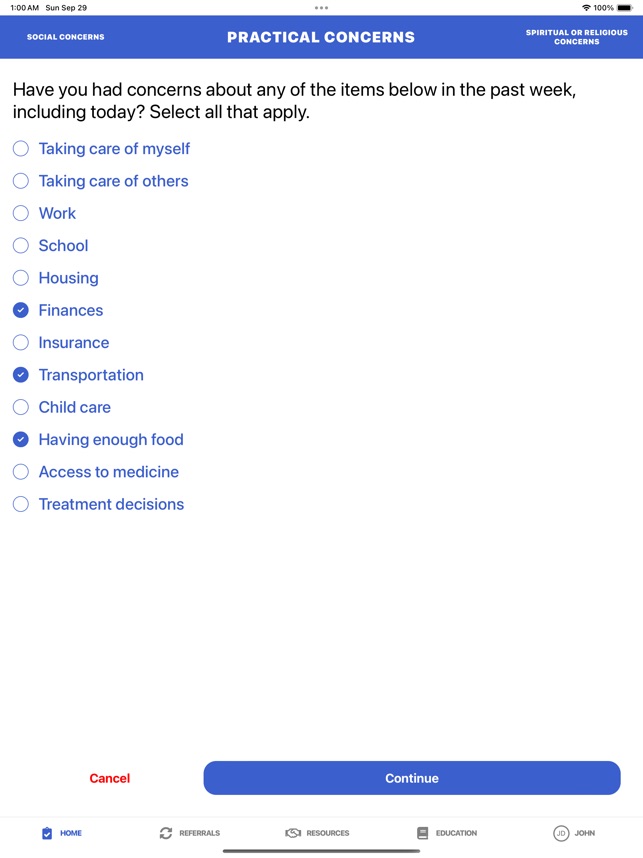
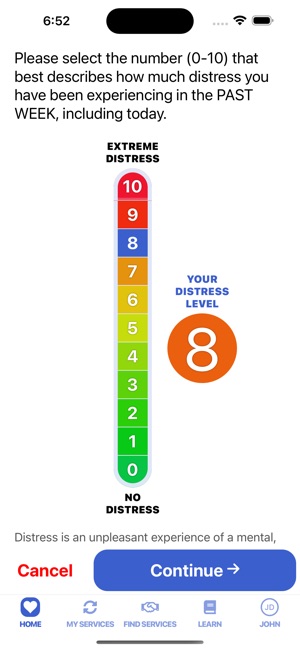
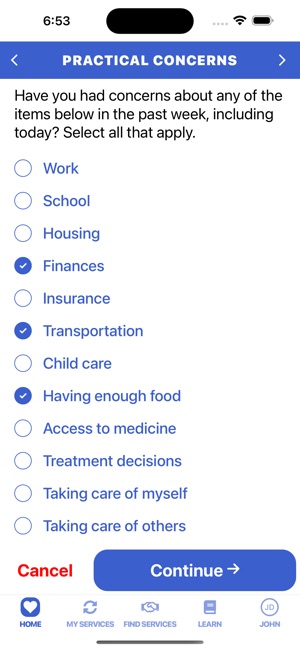
MyPath KY is a remote screening and referral system designed for cancer patients. The application leverages a digital version of the NCCN Distress Thermometer to systematically assess patient-reported distress and identify practical barriers to care, such as needs for transportation, food, or housing. Based on the captured input, the system automatically matches patients with a curated directory of local community-based services. The interface, built on Apple's ResearchKit and CareKit frameworks, facilitates a direct connection between identified needs and available resources.

Evidence & Research Context

  • The app, evaluated in research under the name 'Assuage', was assessed in pilot usability studies (total N=45) specifically with medically underserved cancer patients.
  • A key study (N=30) focused on older (80% >50 years), rural (83%), and mHealth-inexperienced (70%) patients, demonstrating above-average usability with a mean System Usability Scale score of 75.8.
  • The research established that certain user interfaces built with Apple's ResearchKit and CareKit frameworks achieve "good" usability (SUS score ≥80) for this population with minimal design alterations.

Intended Use & Scope

This application is an adjunct screening tool for cancer patients to self-identify distress and practical barriers to care. Its primary utility is to facilitate timely connections to non-clinical, community-based support services. The tool does not provide medical advice, deliver mental health interventions, or replace consultation with a clinical care team regarding patient distress levels.

Studies & Publications

2 publications

Peer-reviewed research associated with this app.

Usability Study

Designing Survey-Based Mobile Interfaces for Rural Patients With Cancer Using Apple's ResearchKit and CareKit: Usability Study

Donawa et al. (2024) · JMIR Formative Research

Rural cancer patients found the app acceptably usable with a System Usability Scale score of 75.8.

Background: Despite the increased accessibility and availability of technology in recent years, equality and access to health-related technology remain limited to some demographics. In particular, patients who are older or from rural communities represent a large segment of people who are currently underusing mobile health (mHealth) solutions. System usability continues to hinder mHealth adoption among users with nontraditional digital literacy. Objective: This study aims to investigate if state-of-the-art mobile app interfaces from open-source libraries provide sufficient usability for rural patients with cancer, with minimal design changes and forgoing the co-design process. Methods: We developed Assuage (Network Reconnaissance Lab) as a research platform for any mHealth study. We conducted a pilot study using Assuage to assess the usability of 4 mobile user interfaces (UIs) based on open-source libraries from Apple's ResearchKit and CareKit. These UIs varied in complexity for reporting distress symptoms. Patients with cancer were recruited at the Markey Cancer Center, and all research procedures were conducted in person. Participants completed the distress assessment using a randomly selected UI in Assuage with little to no assistance. Data were collected on participant age, location, mobile app use, and familiarity with mHealth apps. Participants rated usability with the System Usability Scale (SUS), and usability issues were documented and compared. A one-way ANOVA was used to compare the effect of the UIs on the SUS scores. Results: We recruited 30 current or postsurgery patients with cancer for this pilot study. Most participants were aged >50 years (24/30, 80%), from rural areas (25/30, 83%), had up to a high school education (19/30, 63%), and were unfamiliar with mHealth apps (21/30, 70%). General mobile app use was split, with 43% (14/30) of the patients not regularly using mobile apps. The mean SUS score across the UIs was 75.8 (SD 22.2), with UI 3 and UI 4 achieving an SUS score ≥80, meeting the industry standard for good usability of 80. Critical usability issues were related to data input and navigation with touch devices, such as scale-format questions, vertical scrolling, and traversing multiple screens. Conclusions: The findings from this study show that most patients with cancer (20/30, 67%) who participated in this study rated the different interfaces of Assuage as above-average usability (SUS score >68). This suggests that Apple's ResearchKit and CareKit libraries can provide usable UIs for older and rural users with minimal interface alterations. When resources are limited, the design stage can be simplified by omitting the co-design process while preserving suitable usability for users with nontraditional technical proficiency. Usability comparable to industry standards can be achieved by considering heuristics for interface and electronic survey design, specifically how to segment and navigate surveys, present important interface elements, and signal gestural interactions.
... Read More
Development/Design Paper

Assessing Cancer Patient Usability of a Mobile Distress Screening App

Donawa et al. (2022) · COMPASS '22: Proceedings of the 5th ACM SIGCAS/SIGCHI Conference

Describes the research-driven development of this app
Despite the increase of accessibility and availability of technology in recent years, equality and access to health-related technology remains limited to certain demographics. In particular, patients who are older or from rural communities represent a large segment of people who are currently not utilizing electronic health solutions; and are considered medically underserved. Rural communities commonly have a higher rate of chronic disease and reduced access to providers; therefore, rural patients could benefit from the adoption of electronic health solutions such as mobile health apps. This pilot study explores the usability of the mobile iOS application, Assuage; designed for remote symptom monitoring in rural cancer patients and built using Apple's ResearchKit, CareKit, and HealthKit frameworks. Two different interfaces for reporting symptoms are assessed using the System Usability Scale by fifteen (15) current and/or post surgery cancer patients.
... Read More

MyPath KY

Free