AppsFromResearch
myProlapse icon

myProlapse

Evidence Tier:EVALUATED

Assessed for usability and quality

For:Clinicians & Healthcare ProfessionalsGeneral Public & EnthusiastsPatients & Caregivers

App Summary

myProlapse is a 3D interactive educational tool designed for clinicians to explain the anatomy of post-hysterectomy pelvic organ prolapse (enterocele) to their patients. An associated evaluation study describes how the app's 3D models were developed from patient CT and MRI scans to ensure anatomical accuracy. The authors conclude that the tool has the potential to increase patient understanding and decrease anxiety, helping to normalize conversations about this common condition.

App Screenshots

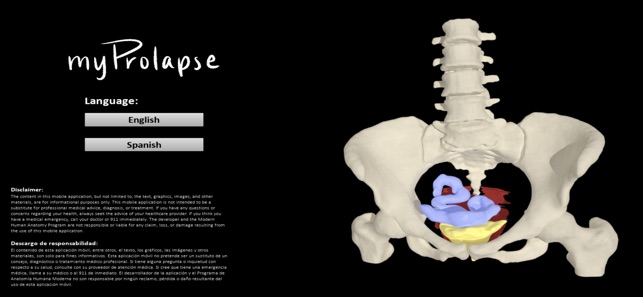
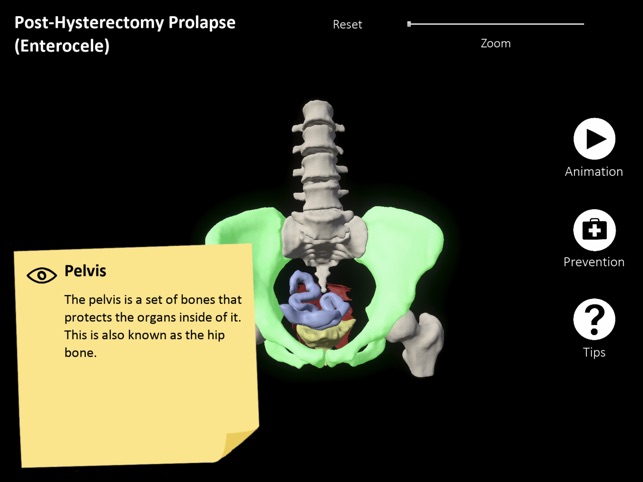
myProlapse screenshot 1 of 2myProlapse screenshot 2 of 2

Detailed Description

Functionality & Mechanism

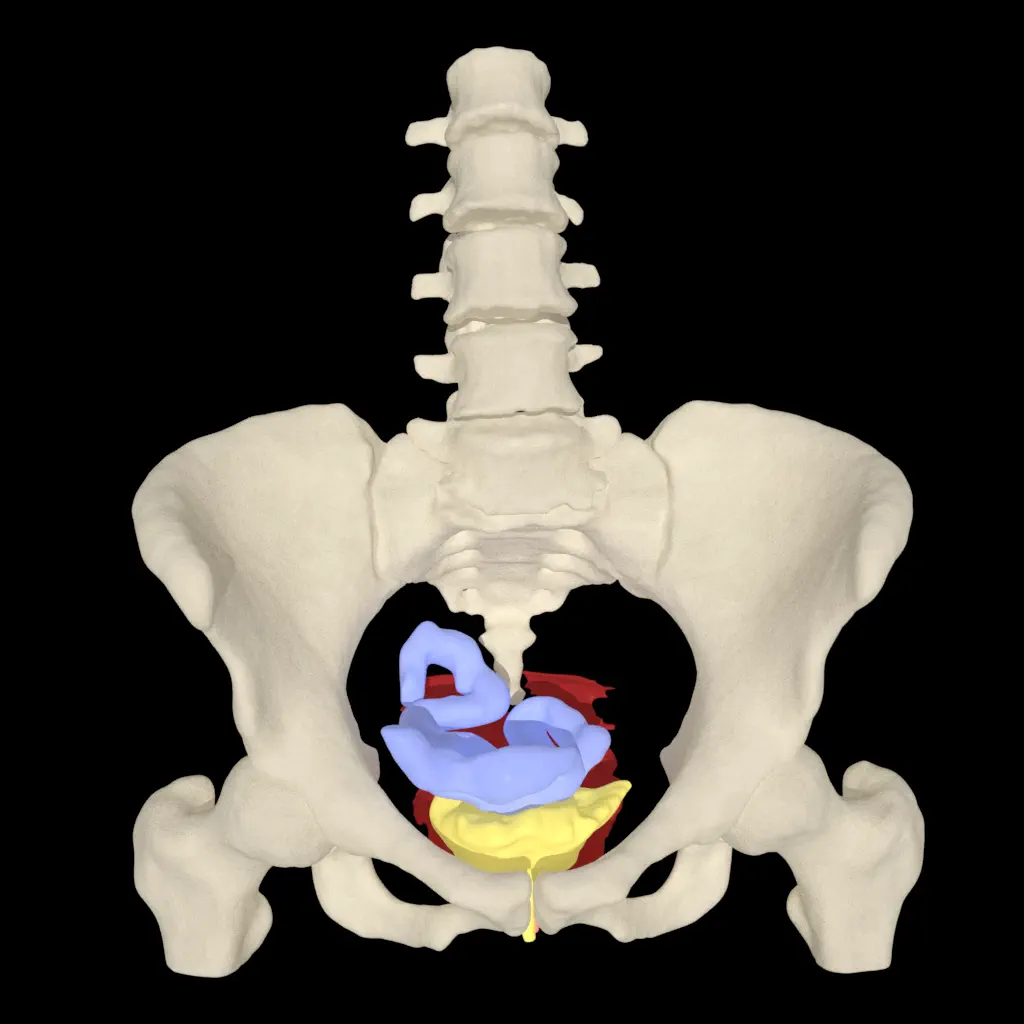
Developed at the University of Colorado Anschutz Medical Campus, myProlapse delivers interactive 3D anatomical content for patient education on enterocele. The system leverages a detailed 3D model, segmented from patient CT and MRI scans to ensure anatomical accuracy. Its interface facilitates model manipulation (rotation, zoom) and provides contextual information via selectable structures. An integrated animation visualizes prolapse progression, and supplementary modules deliver content on prevention strategies. The app offers full functionality in both English and Spanish.

Evidence & Research Context

  • The app's anatomical model was developed using a de-identified CT urogram and pelvic MRI from a female diagnosed with enterocele post-hysterectomy.
  • An evaluation study assessed the app's efficacy as a visual aid to supplement standard clinical counseling for post-hysterectomy women.
  • The study utilized a randomized design, comparing standard counseling to counseling augmented by the myProlapse app.
  • Preliminary data from pre- and post-intervention surveys suggest a high potential for the app to enhance patient anatomical understanding and decrease diagnosis-related anxiety.

Intended Use & Scope

This application is designed for healthcare providers as an adjunct educational tool during patient consultations about post-hysterectomy enterocele. Its primary utility is to visually supplement clinical explanations of pelvic anatomy and prolapse pathology. The app does not provide diagnostic information or treatment recommendations and is not a substitute for professional medical advice.

Studies & Publications

1 publication

Peer-reviewed research associated with this app.

Evaluation Study

"My Vagina Did What?": Evaluating a 3D Mobile App of Enterocele Anatomy in Post-Hysterectomy Women

Park et al. (2020) · The FASEB Journal

Researchers found the 3D mobile app effective as an educational tool for enterocele anatomy counseling.

Pelvic organ prolapses are becoming more prevalent, with the number of diagnoses projected to increase by 46% in the United States by 2050. One type of prolapse is enterocele, a condition in which a peritoneal sac containing the small intestines herniates into the vaginal wall. Secondary to weakened pelvic floor muscles, enterocele is strongly associated with hysterectomy, with 60% of women diagnosed with enterocele having a past history of hysterectomy. Healthcare providers discover prolapse during a physical exam when the vaginal wall bulges outside the vaginal opening. Despite the increasing prevalence and complicated anatomy of enterocele, there are few resources to educate women on the anatomy of a prolapse. Knowledge gaps cause patients stress and shame surrounding their condition, limiting their ability to confide in others and seek medical advice. Thus, supplementing counseling with patient education resources on enterocele anatomy may increase patient understanding and improve communication between patient and provider. Effective counseling may decrease patient anxiety by addressing patient fears, relieving humiliation, and putting an end to self‐blame. The first aim of this project was to develop an interactive three‐dimensional (3D) mobile application (app) to assist healthcare providers in educating post‐hysterectomy women on the anatomy of enterocele. The second aim was to assess the educational value of the mobile app as a visual aid during counseling and its ability to increase patient understanding and decrease anxiety. The 3D model utilized in the app was segmented using 3D Slicer from a de‐identified CT urogram and pelvic MRI of a female diagnosed with enterocele post‐hysterectomy. Artifacts were smoothed in ZBrushCore 2018, and the model was animated in Autodesk Maya 2019. The model was imported into a game engine, Unreal Engine 4, and packaged into a mobile app, which was iteratively designed to highlight relevant structures of pelvic anatomy and allow the model to be enlarged and rotated. The mobile app was revised based on surveys from healthcare providers on the app's usability and educational value. To test the efficacy of the app, patients were randomized into two groups: (1) a control group with standard counseling and (2) an experimental group with counseling supplemented by the mobile app. Patients completed pre‐ and post‐intervention surveys assessing anatomical understanding and anxiety regarding their diagnosis. Preliminary data suggest the mobile app has a high potential to assist healthcare providers with educating patients. Complete analysis of patient and clinician data will be presented. Women's perspectives and issues are traditionally underrepresented in medicine. By developing a mobile app to increase awareness, we intend to normalize the conversation and overcome the social stigma of female pelvic organ prolapse.
... Read More

myProlapse

Free