Name That Language
Published in academic literature
App Summary
App Screenshots
Detailed Description
Functionality & Mechanism
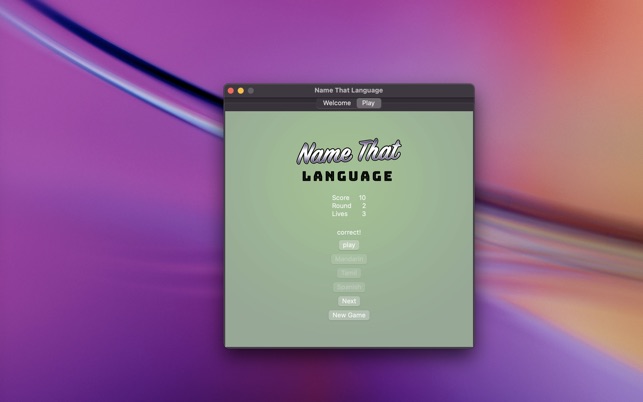
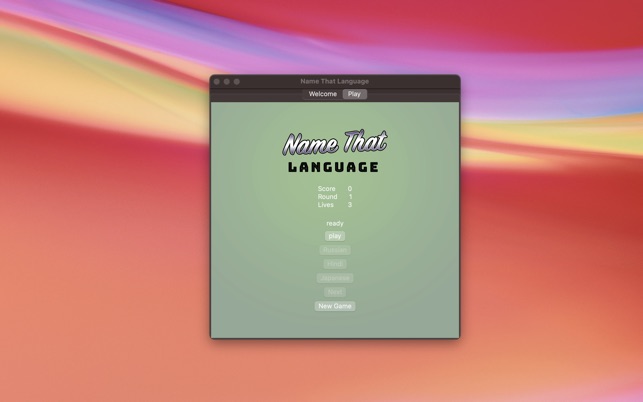
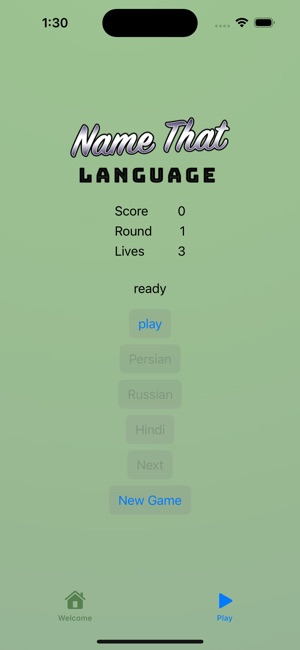
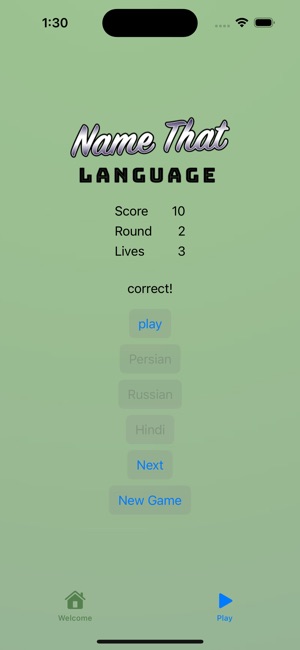
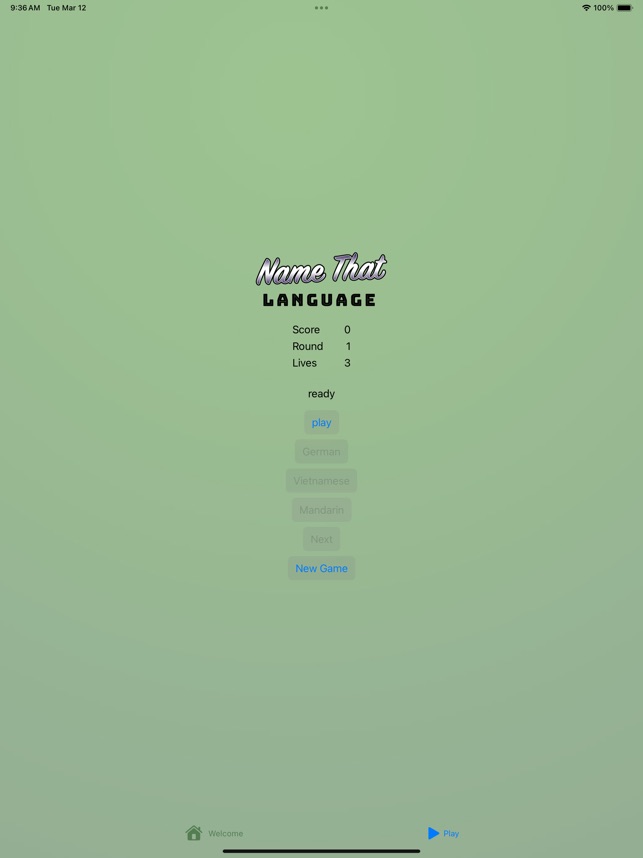
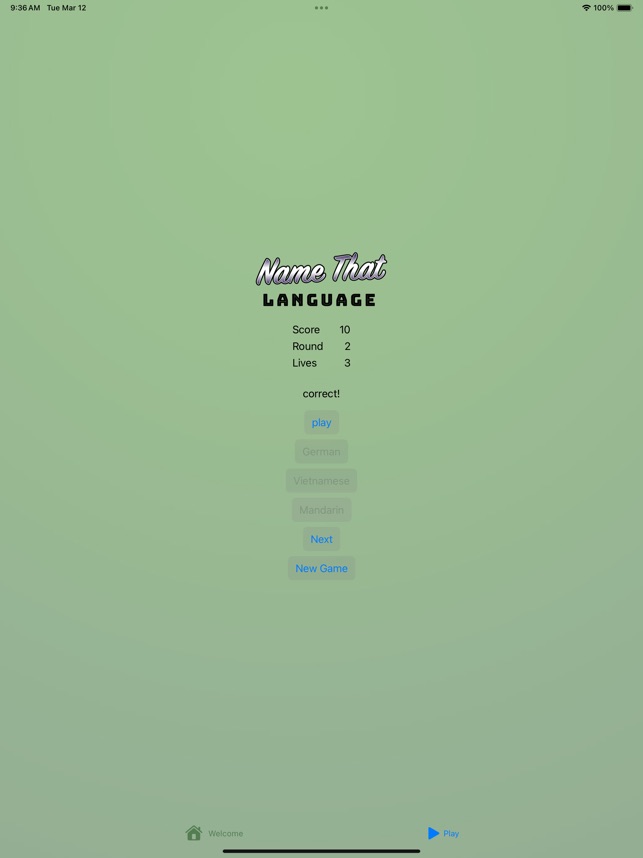
Developed by the Linguistic Data Consortium (LDC), Name That Language is a gamified assessment tool. The system presents short, spoken-language audio clips to the user. For each clip, the interface provides three multiple-choice options for language identification. Input is captured through user selection within a scored, game-based framework. Sessions are structured into rounds, challenging the user to correctly identify languages from aural stimuli to achieve a high score before exhausting a set number of attempts.
Evidence & Research Context
- The associated research describes the app as an instrument within the LDC's Novel Incentives and Workflows (NIEUW) project for developing language resources.
- The project, supported by the National Science Foundation, leverages gamification to elicit linguistic data from a wide variety of contributors, including citizen scientists.
- The app functions as a data collection tool, contributing to a larger corpus of language resources utilized for research, education, and technology development.
- Its design employs novel incentives to engage game players in generating and annotating linguistic data through the LingoBoingo web portal.
Intended Use & Scope
This tool is designed for the general public and citizen scientists as an engaging interface for linguistic data collection. Its primary utility is to gather language identification data for research purposes. The app is not a comprehensive pedagogical tool for language acquisition nor a validated measure of auditory processing or linguistic aptitude. Users seeking formal language instruction should consult dedicated educational resources.
Studies & Publications
Peer-reviewed research associated with this app.
The NIEUW Project: Developing Language Resources Through Novel Incentives
Fiumara et al. (2022) · Proceedings of the 2nd Workshop on Novel Incentives in Data Collection from People
Describes the research-driven development of this appApp Information
Developer
University of PennsylvaniaCategory
Evidence Profile
Published in academic literature
Platforms
Updated
Mar 2024
© 2025 University of Pennsylvania
Tags
Relevant Links
Privacy Policy

Name That Language
Free