
NASA Mars Cardboard Experience
Published in academic literature
App Summary
App Screenshots
Detailed Description
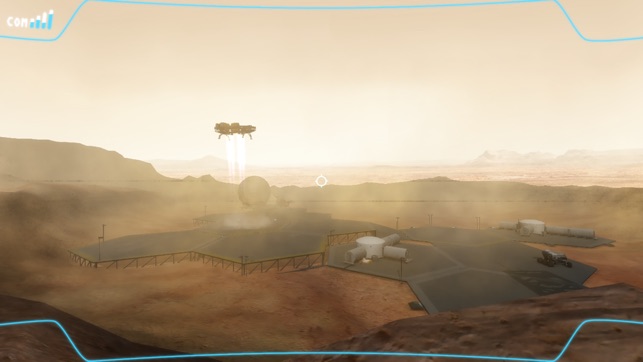
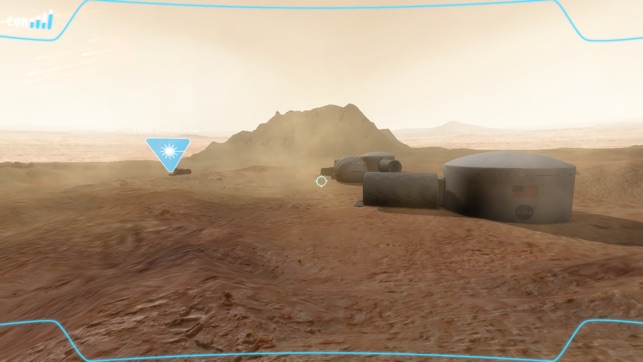
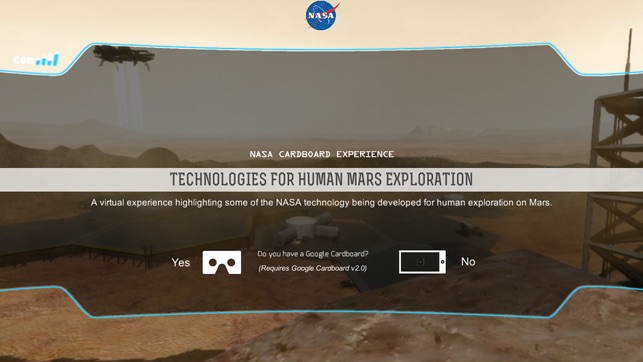
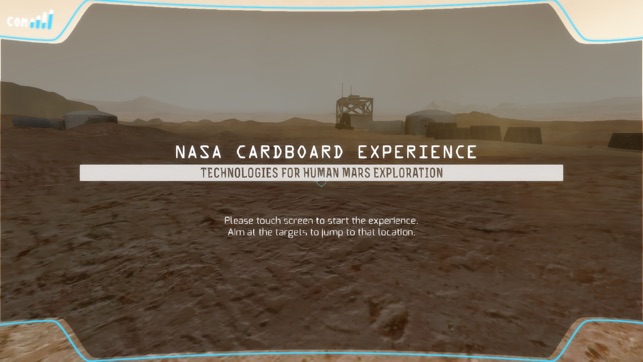
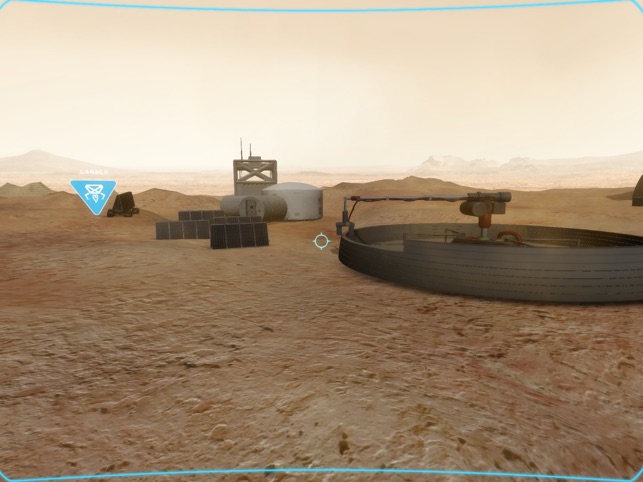
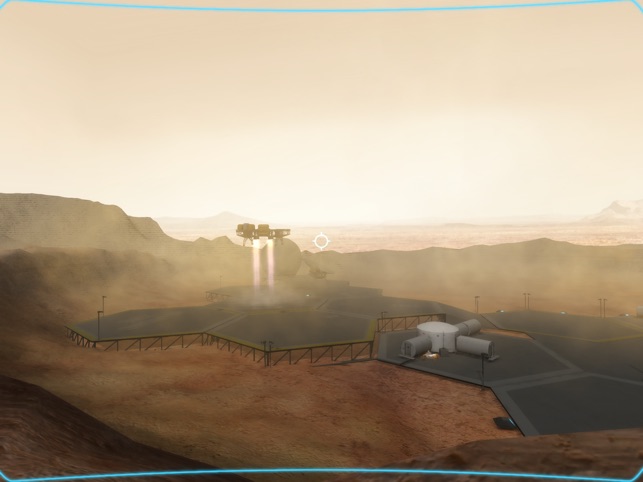
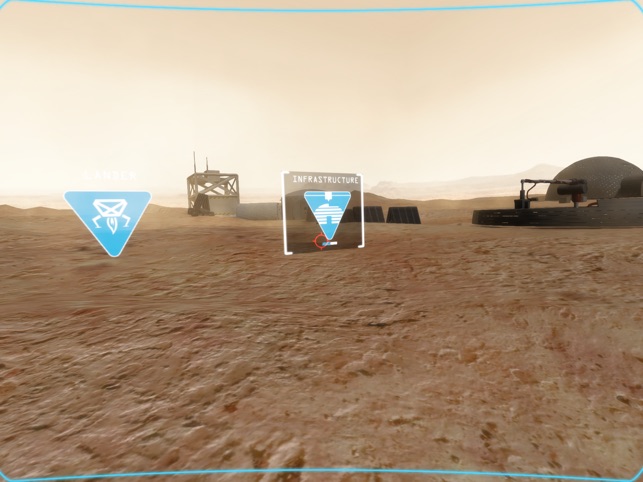
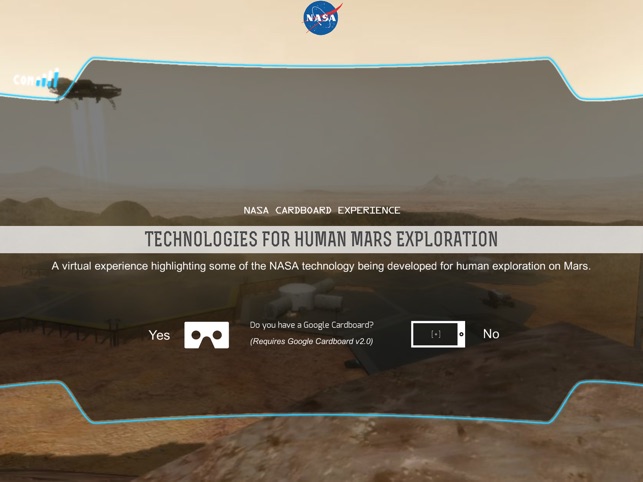
Functionality & Mechanism The NASA Mars Cardboard Experience is a mobile simulation delivering immersive educational content on Martian exploration. The system leverages a smartphone's internal sensors to facilitate a virtual reality experience when paired with a compatible cardboard viewer, though a standard screen mode is also available. Within a session, the interface presents a reconstructed Martian landscape populated with various exploration technologies. Navigation through this environment allows for observation and interaction with informational modules about each technology.
Evidence & Research Context
- The app's pedagogical approach is informed by broader NASA research into immersive technologies for planetary science.
- Associated research details the development of professional augmented reality systems, such as OnSight, which reconstruct 3D Martian terrain from rover data for scientific analysis.
- The use of immersive visualization in this context has been demonstrated to enhance geologists' spatial awareness and data interpretation compared to traditional 2D displays.
- These principles of immersive interaction are noted by researchers to improve intuitive understanding of complex, remote environmental data.
Intended Use & Scope This application is designed for educators, students, and the general public as a science communication and educational tool. Its primary utility is to provide a conceptual and visual introduction to technologies proposed for human exploration of Mars. The simulation is not a scientific instrument and does not provide research-grade data or mission planning capabilities. For detailed scientific data, users should consult primary NASA mission archives.
Studies & Publications
Peer-reviewed research associated with this app.
Exploring Mars in augmented reality: lessons for earth science
Abercrombie et al. (2017) · NASA Technical Reports Server
Referenced in academic literature; no direct evaluation of the appIn the Media
Using Cardboard to Tour Mars
NASA developed the Mars Cardboard Experience to help former rover driver Scott Maxwell share Mars panoramas with audiences, using virtual reality technology to overcome the limitations of traditional slide presentations. Maxwell, who drove three of the four rovers that have landed on Mars including Spirit, Opportunity, and Curiosity, explains that "looking at only a single image is like seeing the Grand Canyon through a straw." The app leverages NASA's policy of making rover images freely available on the Web within hours of transmission from Mars.
I Went on a Field Trip to Mars with a Piece of Cardboard
Google developed the NASA Mars Cardboard Experience to offer virtual field trips to schools, using imagery from NASA's Spirit probe and Google's low-cost Cardboard VR viewer. Former NASA engineer and Google employee Scott Maxwell guides users through Martian landscapes, pointing out rocks, mountains, and geological features while participants scan the horizon and sky. Google has been running eight pilot projects in schools worldwide, including one in Ghana, with plans to eventually sell the educational setup more broadly.
App Information
© 2025 NASA
Tags

NASA Mars Cardboard Experience
Free