

NDSU Nitrogen Calculator
Studied in research · Did not demonstrate expected effectiveness
App Summary
App Screenshots
Detailed Description
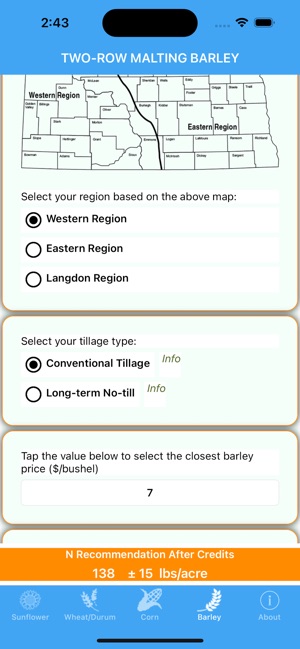
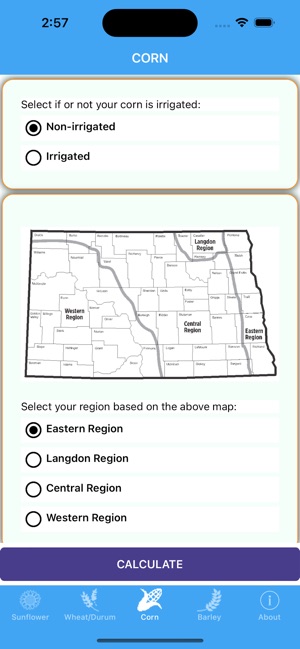
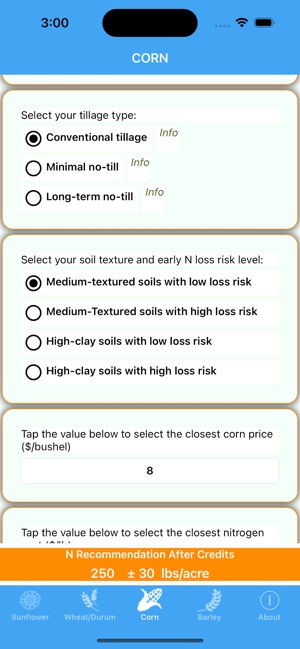
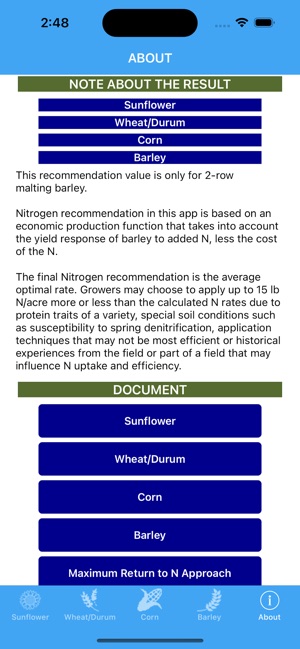
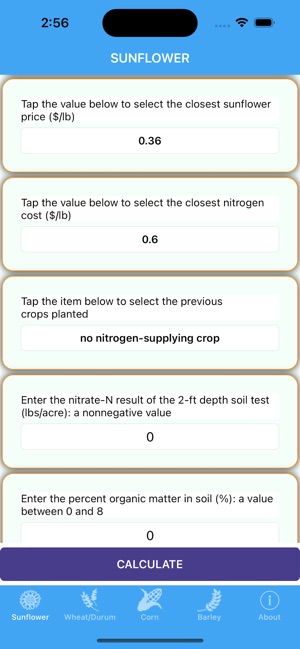
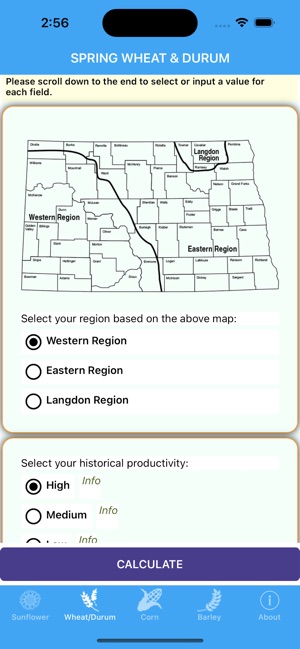
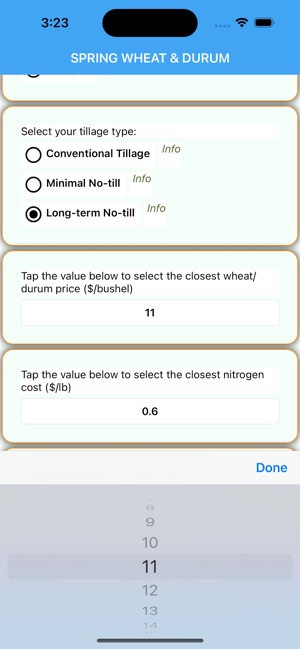
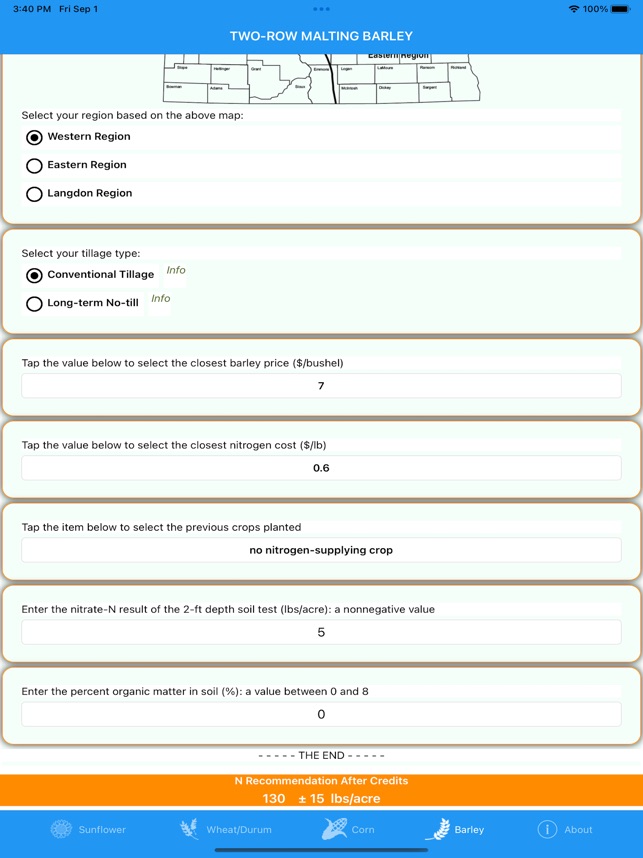
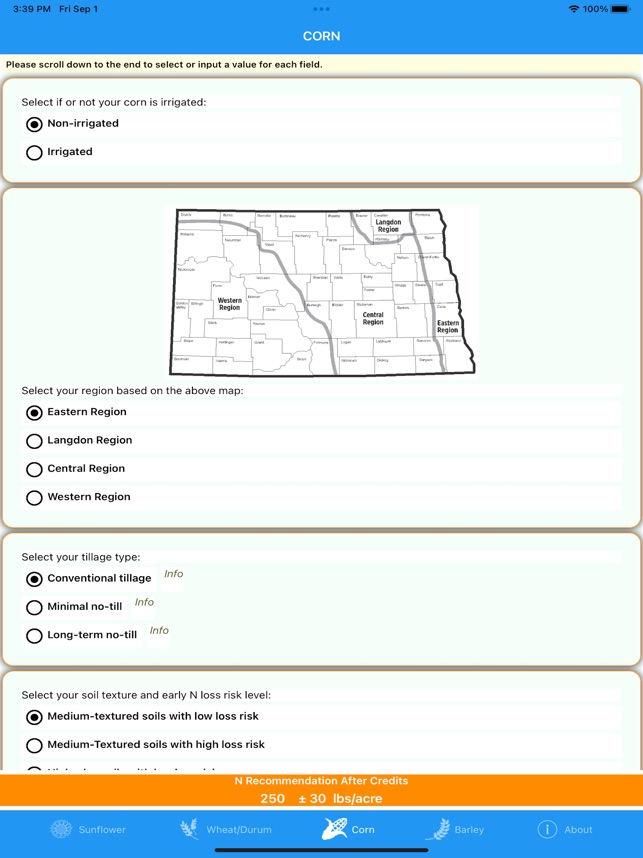
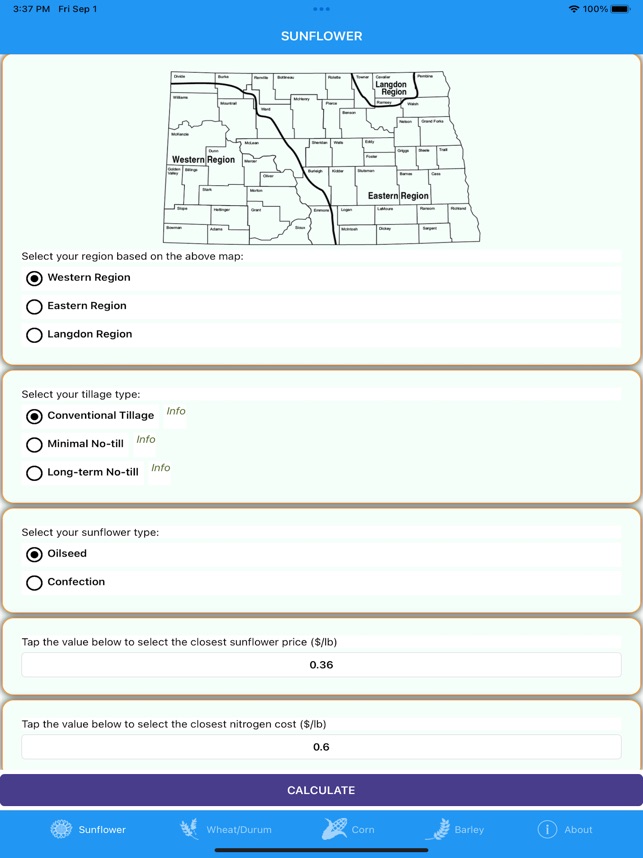
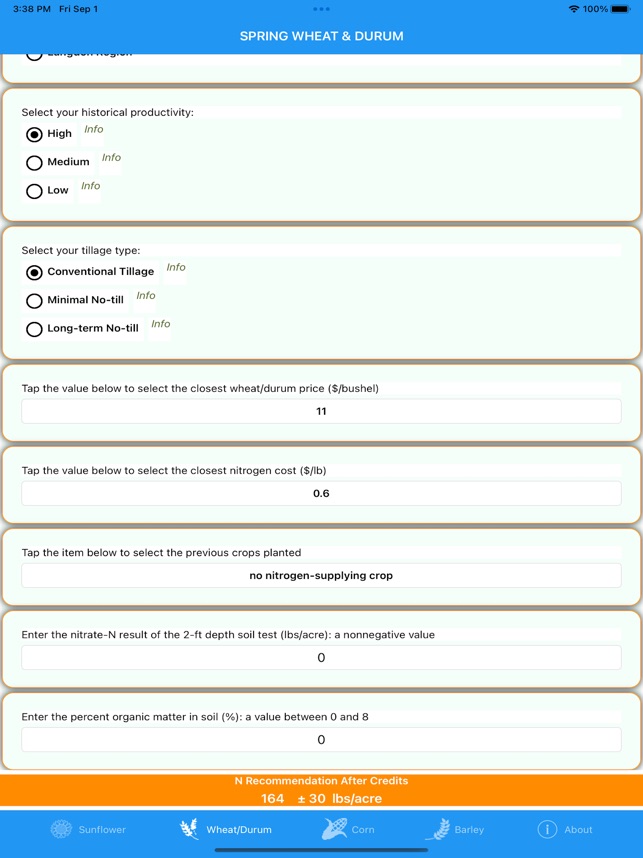
Functionality & Mechanism Developed by North Dakota State University Extension, this tool provides nitrogen rate recommendations for corn, sunflower, spring wheat/durum, and malting barley. The interface captures field-specific inputs including previous crop, soil test nitrate levels, fertilizer costs, and commodity prices. It leverages a "Return to N" economic model, replacing older yield-goal-based formulas, to calculate an optimal rate that balances agronomic response with economic return. Sessions deliver immediate, in-field recommendations for nutrient management planning.
Evidence & Research Context
- The recommendation algorithm is grounded in a "Return to N" economic model, which calibrates nitrogen rates based on fertilizer cost and crop price to maximize profitability.
- The calculator's database integrates findings from extensive regional research, including over 90 corn and 52 sunflower field experiments conducted across North Dakota.
- Recommendations are specifically calibrated for distinct North Dakota productivity zones and adjusted for variables such as long-term no-till management and soil texture.
- Associated research indicates that this economic-based approach is designed to be more efficient than traditional yield-goal models, which have been linked to higher environmental costs.
Intended Use & Scope This tool is intended for agricultural producers and crop consultants in North Dakota for in-field nutrient management planning. Its primary utility is optimizing nitrogen fertilizer application. The calculator is region-specific and its accuracy depends on precise soil test data; it does not replace the need for professional agronomic consultation for a complete fertility program.
Studies & Publications
Peer-reviewed research associated with this app.
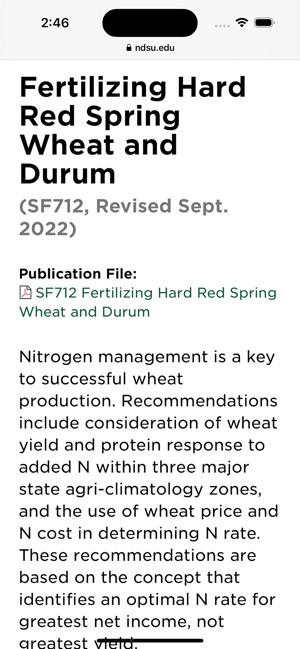
Fertilizing Hard Red Spring Wheat and Durum (SF-712)
Franzen et al. (2022) · NDSU Extension Service
Referenced in academic literature; no direct evaluation of the appCorn nitrogen rate recommendation tools' performance across eight US midwest corn belt states
Ransom et al. (2018) · Agronomy Journal
No nitrogen recommendation tool proved reliably accurate for predicting optimal corn fertilizer rates across different conditions.
In the Media
NDSU Nitrogen Calculators Help Farmers Determine Profitable Nitrogen Rates ÃÂÂâÃÂÂÃÂÂÃÂÂàExtension and Ag Research News
North Dakota State University Extension developed the NDSU Nitrogen Calculator to help farmers determine profitable nitrogen rates for sunflower, spring wheat/durum and corn crops using variable crop prices and nitrogen costs. "Although the calculators are now under revision to accommodate seamlessly for these higher prices and costs, the calculators can still be used by dividing the grain by the seed costs and the fertilizer prices by two," says Dave Franzen, NDSU Extension soil specialist. The calculators are available as free iOS and Android apps or through web-based platforms.
Double Check When Using NDSU Nitrogen Calculators
NDSU Extension developed the NDSU Nitrogen Calculator to help farmers make fertilizer application decisions, but Extension Soil Specialist Dave Franzen warns users to verify current crop and fertilizer prices. "When I developed the calculator, I never thought nitrogen prices would go above $1," Franzen explains, noting that sunflower contracts now exceed the calculator's 30-cent maximum at over 40 cents per pound. Franzen advises farmers to divide prices by two when actual market values exceed the calculator's built-in limits.
App Information
Developer
North Dakota State UniversityCategory
Evidence Profile
Studied in research · Did not demonstrate expected effectiveness
Platforms
Updated
Sep 2023
© 2025 North Dakota State University
Tags
Relevant Links
Privacy Policy


NDSU Nitrogen Calculator
Free