

Nerve Whiz
Published in academic literature
App Summary
App Screenshots
Detailed Description
Functionality & Mechanism
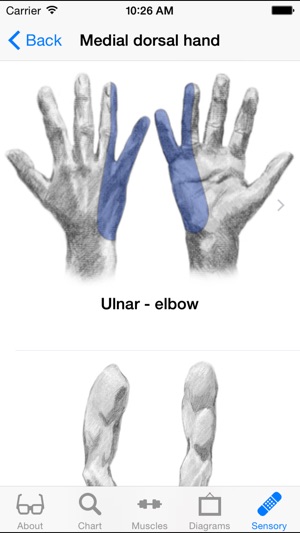
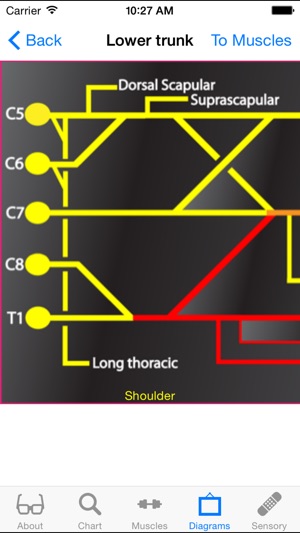
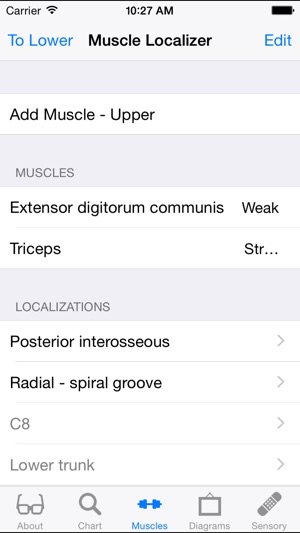
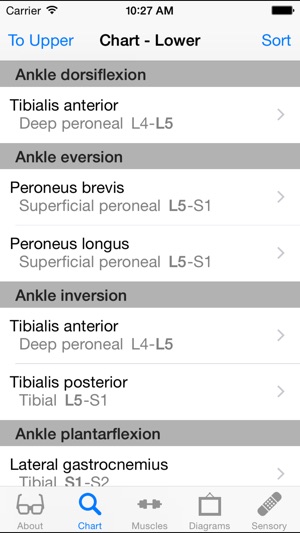
Developed by a neuromuscular specialist at the University of Michigan, Nerve Whiz is an educational reference tool for peripheral nervous system anatomy. The interface is organized into four core modules: Nerve and Muscle Charts, Muscle Localizer, Nerve Diagrams, and a Sensory Localizer. Based on captured input regarding specific muscle weakness or sensory deficits, the application generates a list of potential anatomical localizations (root, plexus, or nerve). The system provides detailed diagrams and distinguishing features to facilitate anatomical correlation and clinical reasoning.
Evidence & Research Context
- An associated review article describes the application as a key educational resource for medical professionals, particularly neurology trainees, in the context of high smartphone adoption in clinical training.
- The system is positioned as a dual-function tool, serving as both a pedagogical platform for anatomical review and a point-of-care aid to support clinical localization.
- The Muscle and Sensory Localizer modules are noted to facilitate the generation of a differential diagnosis and suggest additional examination steps to clarify findings.
- The review identifies the app's utility in providing clinically relevant content through an intuitive interface, while also noting that navigation can be cumbersome on smaller devices.
Intended Use & Scope
This application is designed for clinicians, residents, and medical students as an educational and clinical reference tool. Its primary utility is to reinforce anatomical knowledge and assist in the formulation of a differential diagnosis for peripheral nerve lesions. The tool is not intended to supplant comprehensive clinical evaluation or serve as a standalone diagnostic instrument; users must consider patient-specific variability.
Studies & Publications
Peer-reviewed research associated with this app.
Media and Book Reviews: Nerve Whiz
Lemmon et al. (2012) · Neurology
Referenced in academic literature; no direct evaluation of the appIn the Media
Nerve Whiz App, a tool for learning muscle and sensory innervations and peripheral nerve anatomy
The University of Michigan's Department of Neurology developed Nerve Whiz to help medical students and clinicians learn motor and sensory innervations in an easy way, using nerve charts and diagrams that help users digest this difficult-to-learn subject. The app features a 'Charts' section that provides spinal nerve root information in textual format, including name, position, action, and physical exam suggestions for identifying problems. Healthcare providers can download this free app without creating an account and access it on mobile devices they typically carry during shifts.
App For Your Brain: New Tool Developed By UM Doctor Works On Smartphones
University of Michigan neurologist Dr. Zachary London developed Nerve Whiz to help medical professionals localize neurological lesions by interpreting clinical examinations on smartphones and tablets. "Nerve Whiz helps you localize by taking the information from your physical examination of a patient and synthesizing a list of possible anatomic regions which could be disrupted," London explains. As of May, over 33,000 users had downloaded the free application, which was financed by the Jerry Isler Neuromuscular Fund.
Neurologist develops Nerve Whiz tool for iPhone, iPod and iPad
University of Michigan neurologist Zachary London, M.D., developed Nerve Whiz to help medical professionals better understand peripheral nervous system anatomy by allowing them to enter patient symptoms and receive differential diagnoses with supporting visual materials. Dr. London explained that "Before you can figure out what is causing neurologic symptoms, you have to determine what part of the nervous system isn't functioning normally," noting that Nerve Whiz helps localize lesions by synthesizing examination information. The app has achieved over 30,000 downloads and maintains a four-star App Store rating among physicians, medical students, and therapists.
App Information
Developer
University of MichiganCategory
Evidence Profile
Published in academic literature
Platforms
Updated
May 2015
© 2025 University of Michigan
Tags



Nerve Whiz
Free