
AppsFromResearch
NIH Stroke Scale Calculator icon

NIH Stroke Scale Calculator

Evidence Tier:CLINICAL GRADE

Validated in clinical trials

For:Clinicians & Healthcare Professionals

App Summary

The NIH Stroke Scale Calculator allows clinicians to rapidly assess the severity of a suspected ischemic stroke, providing a faster digital alternative to the standard pen-and-paper method. The underlying scale was validated in the associated research (N=65), demonstrating that scores correlate with clinical outcomes and show high interrater reliability across neurologists, nurses, and other physicians. The authors conclude that various healthcare providers, including non-neurologists, can be rapidly trained to apply the scale reliably, supporting its use in time-sensitive clinical situations.

App Screenshots

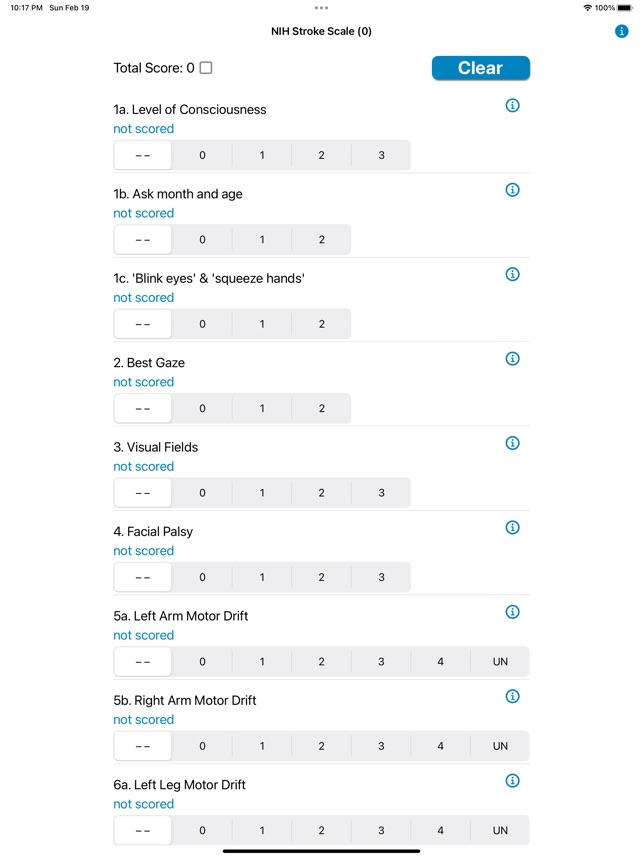
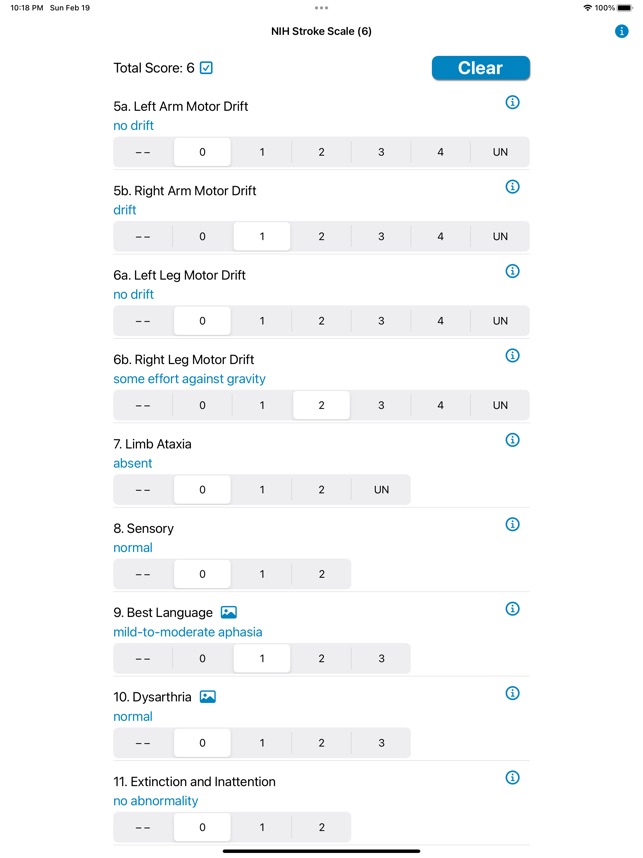
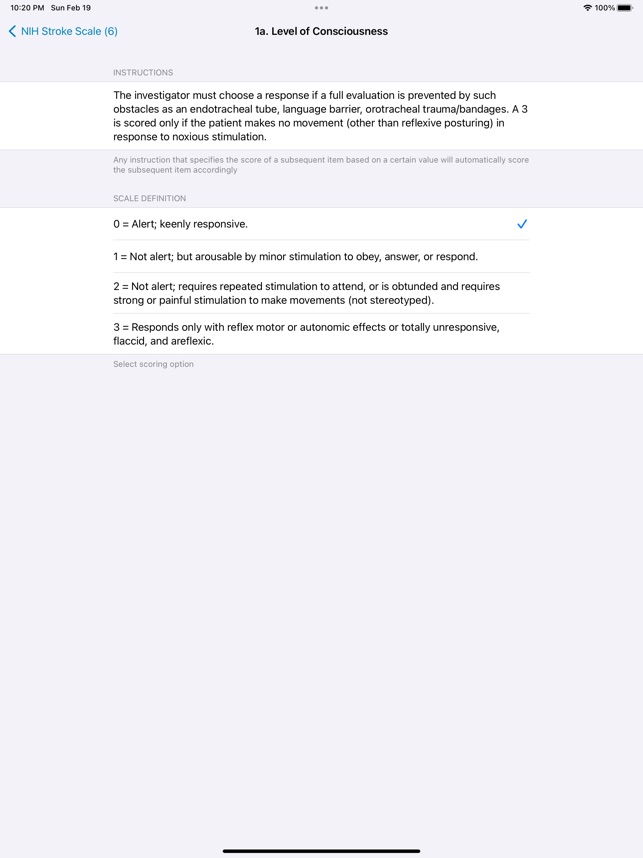
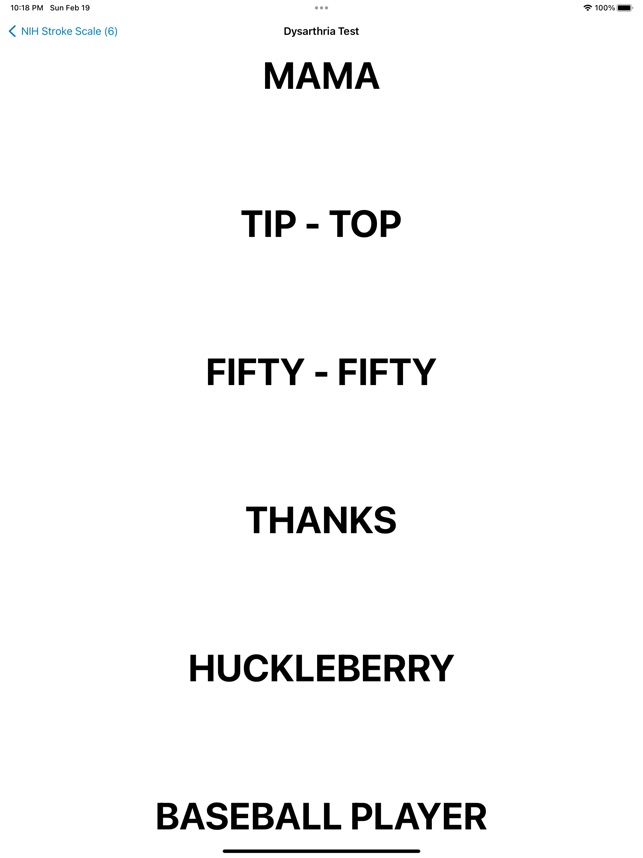
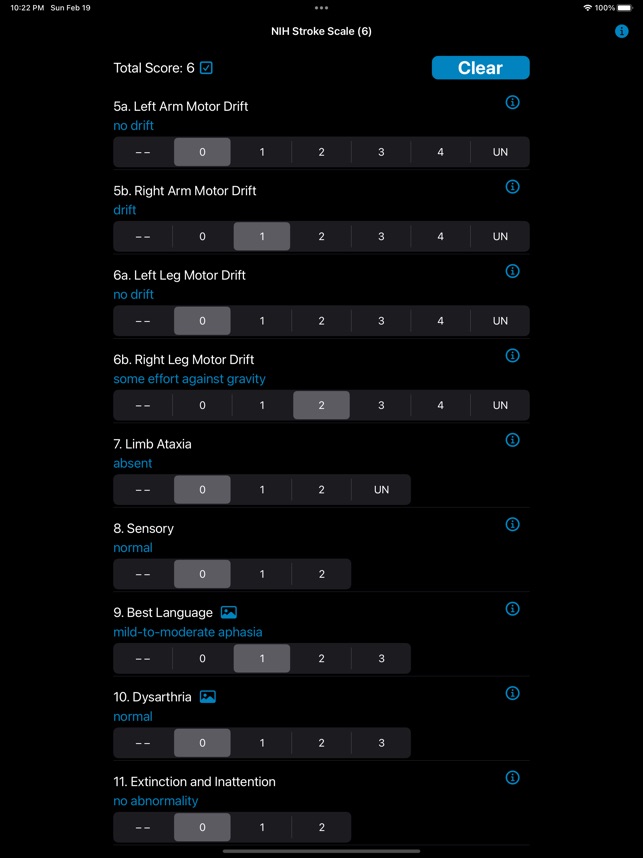
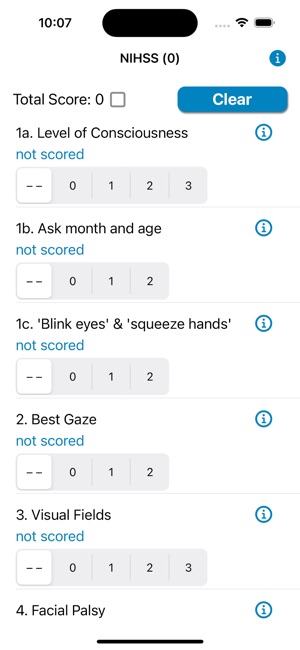
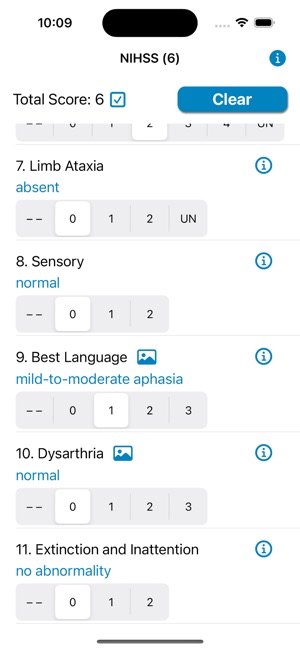
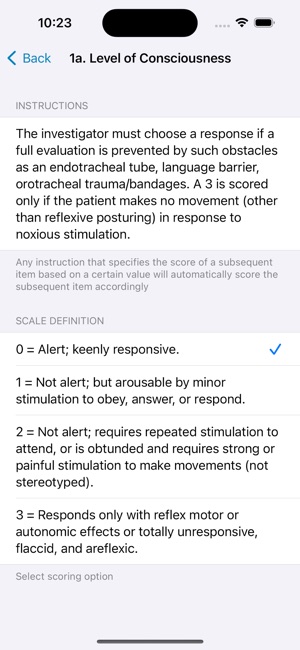
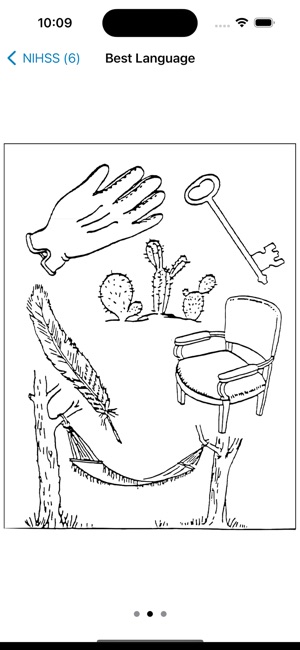
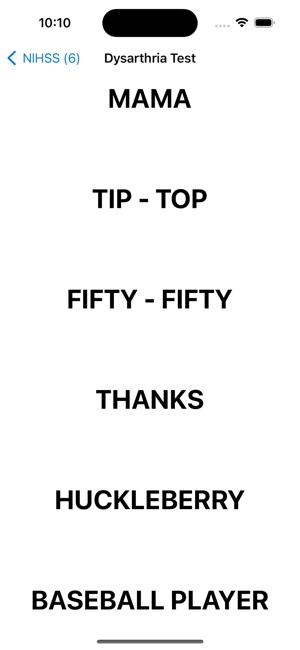
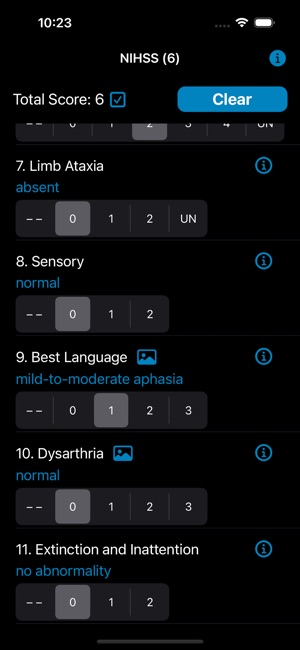
NIH Stroke Scale Calculator screenshot 1 of 12NIH Stroke Scale Calculator screenshot 2 of 12NIH Stroke Scale Calculator screenshot 3 of 12NIH Stroke Scale Calculator screenshot 4 of 12NIH Stroke Scale Calculator screenshot 5 of 12NIH Stroke Scale Calculator screenshot 6 of 12NIH Stroke Scale Calculator screenshot 7 of 12NIH Stroke Scale Calculator screenshot 8 of 12NIH Stroke Scale Calculator screenshot 9 of 12NIH Stroke Scale Calculator screenshot 10 of 12NIH Stroke Scale Calculator screenshot 11 of 12NIH Stroke Scale Calculator screenshot 12 of 12

Detailed Description

Functionality & Mechanism

The NIH Stroke Scale Calculator digitizes the standardized 15-item neurologic examination for acute stroke assessment. The interface systematically guides clinicians through each component of the scale, from level of consciousness to limb ataxia and sensory loss. Input is captured via responsive controls, facilitating a more rapid evaluation compared to manual methods. The system then automatically computes a final score to quantify the severity of the neurological deficit, streamlining a critical component of the acute stroke workflow.

Evidence & Research Context

  • The underlying NIH Stroke Scale demonstrates robust inter- and intra-rater reliability (intraclass correlation coefficients >.93) across various rater roles, including neurologists, emergency physicians, and nurses.
  • In foundational validation research (N=65), prospective NIHSS scores correlated strongly with both CT-measured infarction size (r=0.68) and 3-month clinical outcomes (r=0.79), supporting the scale's predictive validity.
  • The scale's reliability has been explicitly extended to non-neurologist physicians and non-physician study coordinators, confirming its utility for multidisciplinary stroke teams with standardized training.

Intended Use & Scope

Designed for clinicians, including physicians and nurses, as a point-of-care tool for the rapid assessment of patients with suspected ischemic stroke. The calculator facilitates standardized scoring to quantify neurological deficits. It is not a standalone diagnostic instrument and does not replace clinical judgment; all outputs require interpretation by a qualified professional.

Studies & Publications

2 publications

Peer-reviewed research associated with this app.

Validation Study

Reliability of the National Institutes of Health Stroke Scale. Extension to non-neurologists in the context of a clinical trial

Goldstein et al. (1997) · Stroke

Non-neurologists can reliably use the NIHSS stroke scale with the same accuracy as neurologists.

Background and Purpose The reliability of the National Institutes of Health Stroke Scale (NIHSS) has been established through testing its use in live and videotaped patients. This reliability testing has primarily focused on the use of the scale by neurologists. We sought to determine the reliability of the NIHSS as used by non-neurologists in the context of a clinical trial. Methods In anticipation of the initiation of a randomized trial of a new therapy for patients with acute ischemic stroke, 30 physician investigators (30% of whom were not neurologists) and 29 non-physician study coordinators were trained in the use of the NIHSS at an informational and training conference using standardized videotaped patient examinations. A series of 4 patients were rated initially. After 3 months, the same 4 patients were rerated, providing a measure of intraobserver reliability. An additional series of 4 new patients were also rated after 3 months and, with the initial 4 ratings, provided data for assessment of interobserver reliability. Results Overall, 28% of the raters had previous experience with the NIHSS, and 22% had previously used the videotapes as used in the present trial. The coefficients of determination ( r 2 ) were each greater than .95 when the means of the two ratings of the same 4 cases were compared between (1) neurologists and other types of physicians, (2) physicians and study coordinators, (3) raters who had prior experience with the NIHSS and those without prior experience, and (4) raters who had used the videotapes in the past and those who had never viewed the tapes. The calculated r 2 s were greater than .98 for the initial rating of the first 4 cases and for the later rating of the 4 new cases. The slopes of the regression lines were all near 1, indicating that the raters were similarly calibrated. The intraclass correlation coefficients were .93 and .95, reflecting high levels of intraobserver and interobserver reliability. Conclusions These data extend the previously demonstrated reliability of the NIHSS to non-neurologists and show that both a variety of physician investigators and nurse study coordinators can be rapidly trained to reliably apply the scale in the context of an actual clinical trial.
... Read More
Validation Study

Measurements of acute cerebral infarction: a clinical examination scale

Brott et al. (1989) · Stroke

Stroke scale reliably measures stroke severity and accurately predicts lesion size and patient outcomes.

We designed a 15-item neurologic examination stroke scale for use in acute stroke therapy trials. In a study of 24 stroke patients, interrater reliability for the scale was found to be high (mean kappa = 0.69), and test-retest reliability was also high (mean kappa = 0.66-0.77). Test-retest reliability did not differ significantly among a neurologist, a neurology house officer, a neurology nurse, or an emergency department nurse. The stroke scale validity was assessed by comparing the scale scores obtained prospectively on 65 acute stroke patients to the patients' infarction size as measured by computed tomography scan at 1 week and to the patients' clinical outcome as determined at 3 months. These correlations (scale-lesion size r = 0.68, scale-outcome r = 0.79) suggested acceptable examination and scale validity. Of the 15 test items, the most interrater reliable item (pupillary response) had low validity. Less reliable items such as upper or lower extremity motor function were more valid. We discuss methods for improving the reliability and validity of brief examination scales to be used in stroke therapy trials.
... Read More

NIH Stroke Scale Calculator

Free