
AppsFromResearch
PCAC Score icon

PCAC Score

Evidence Tier:CLINICAL GRADE

Validated in clinical trials

For:Clinicians & Healthcare Professionals

App Summary

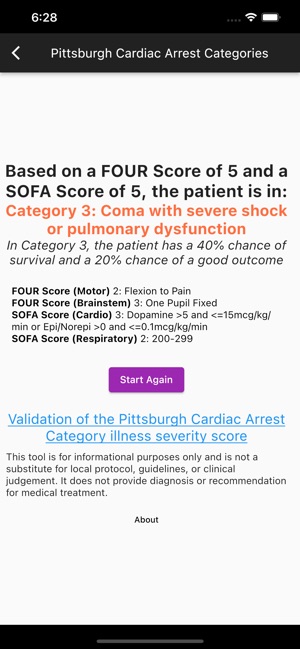
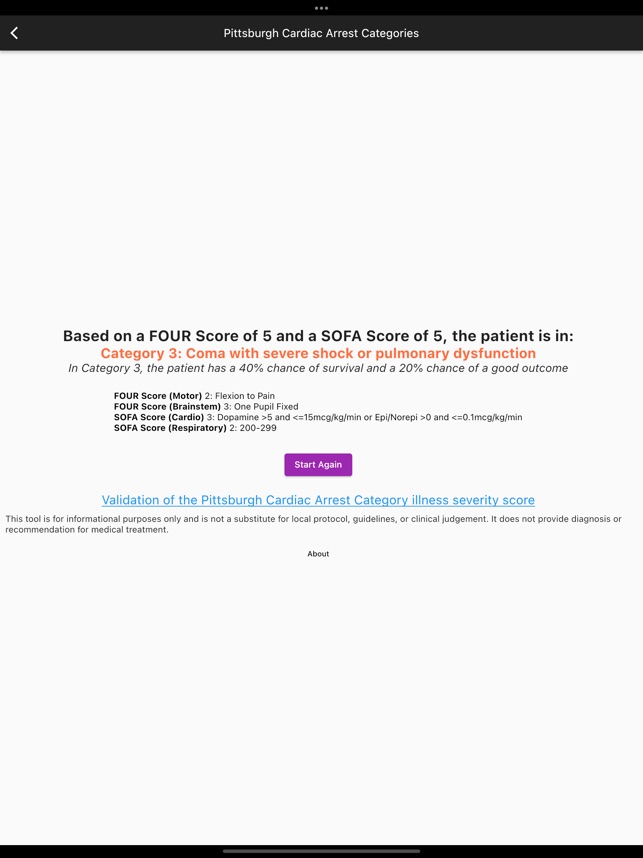
This app calculates the Pittsburgh Cardiac Arrest Category (PCAC) score, a tool for clinicians to stratify patients by illness severity shortly after a cardiac arrest. A validation study (N=607) demonstrated that the PCAC score has excellent inter-rater reliability (κ=0.81) and is strongly predictive of survival and good functional outcomes after cardiac arrest. The associated research concludes this model provides early prognostic information at hospital arrival that may be used to stratify patients and inform clinical management.

App Screenshots
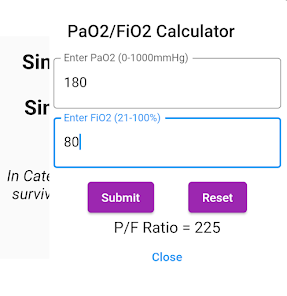
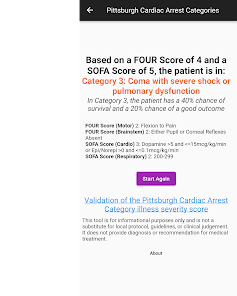
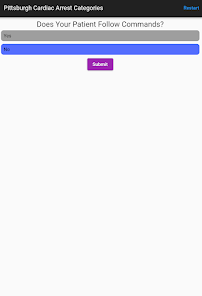
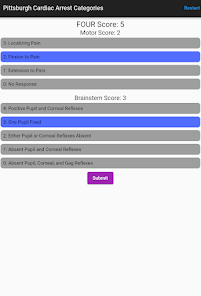
PCAC Score screenshot 1 of 25PCAC Score screenshot 2 of 25PCAC Score screenshot 3 of 25PCAC Score screenshot 4 of 25PCAC Score screenshot 5 of 25PCAC Score screenshot 6 of 25PCAC Score screenshot 7 of 25PCAC Score screenshot 8 of 25PCAC Score screenshot 9 of 25PCAC Score screenshot 10 of 25PCAC Score screenshot 11 of 25PCAC Score screenshot 12 of 25PCAC Score screenshot 13 of 25PCAC Score screenshot 14 of 25PCAC Score screenshot 15 of 25PCAC Score screenshot 16 of 25PCAC Score screenshot 17 of 25PCAC Score screenshot 18 of 25PCAC Score screenshot 19 of 25PCAC Score screenshot 20 of 25PCAC Score screenshot 21 of 25PCAC Score screenshot 22 of 25PCAC Score screenshot 23 of 25PCAC Score screenshot 24 of 25PCAC Score screenshot 25 of 25

Detailed Description

Functionality & Mechanism

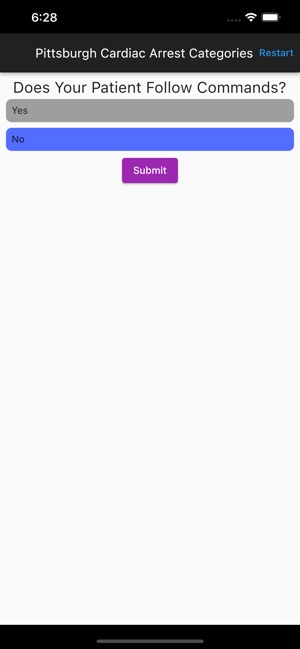
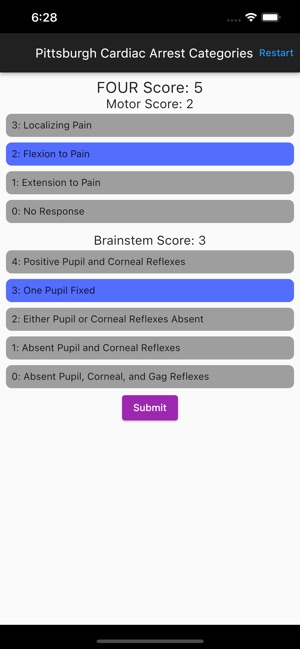
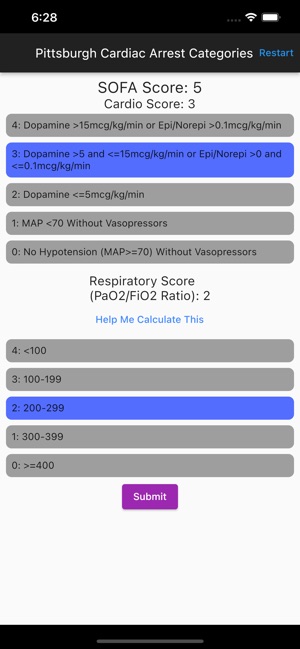
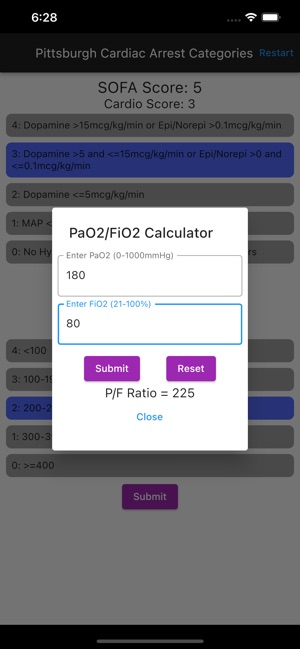
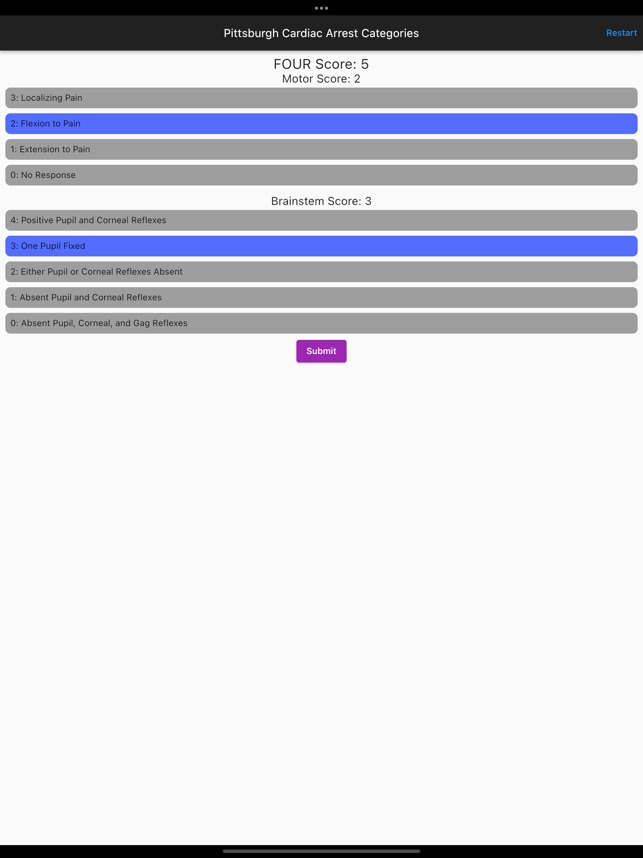
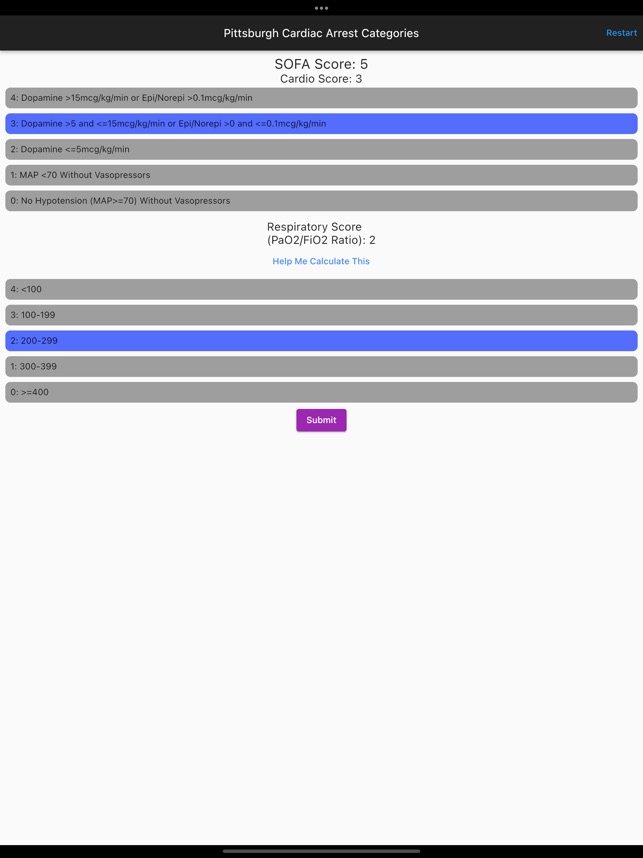
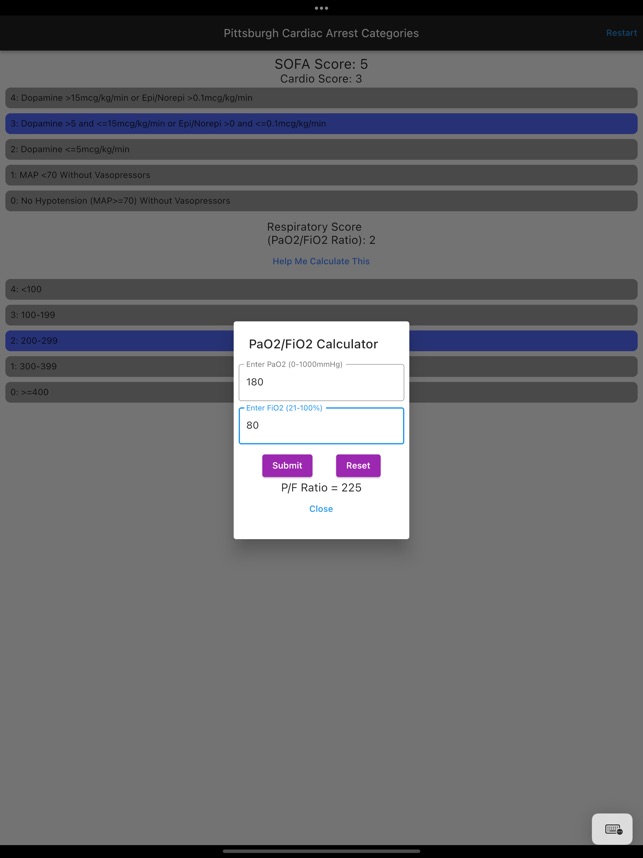
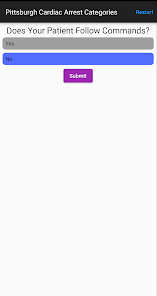
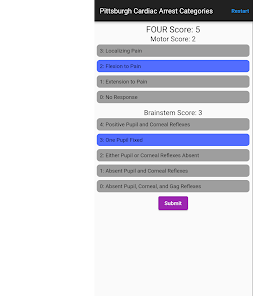
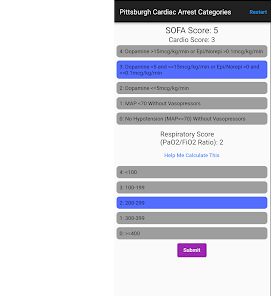
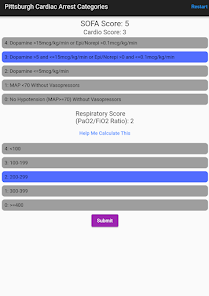
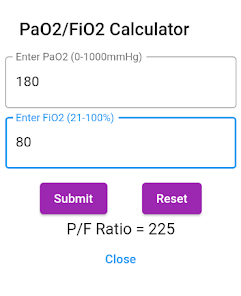
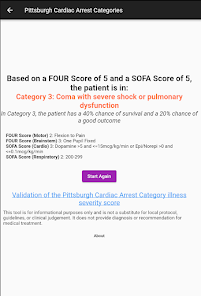
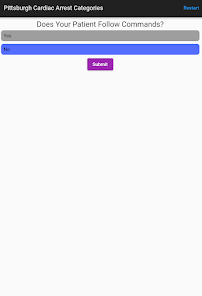
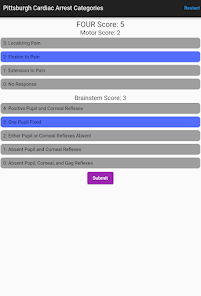
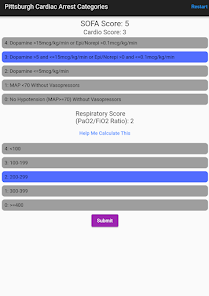
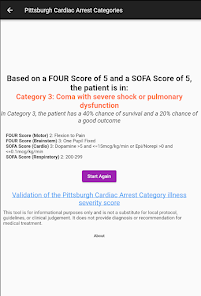
This tool facilitates calculation of the Pittsburgh Cardiac Arrest Categories (PCAC) Illness Severity Score. The interface guides clinicians through a series of inputs derived from the Full Outline of Unresponsiveness (FOUR) and Sequential Organ Failure Assessment (SOFA) scores. Based on these inputs, the system computes the score and classifies the post-cardiac arrest patient into one of four distinct severity categories, providing prognostic information to support early clinical assessment upon hospital or intensive care unit arrival.

Evidence & Research Context

  • The PCAC scoring system was developed in a retrospective study (N=457), which found that illness severity category was independently associated with survival, good functional outcome, and multiple organ failure.
  • Two subsequent multi-center validation studies (N=924 combined) confirmed the score is strongly predictive of survival to discharge and favorable neurological outcomes in post-cardiac arrest patients.
  • The score's predictive value is established for both in-hospital (IHCA) and out-of-hospital (OHCA) cardiac arrest populations, even after statistical adjustment for other clinical variables.
  • A validation study (N=607) demonstrated excellent inter-rater reliability for retrospective PCAC assignments by clinicians (κ=0.81), indicating consistent application.

Intended Use & Scope

This calculator is designed for clinicians in emergency and critical care settings as an adjunct for early prognostication. Its primary utility is to facilitate rapid illness severity classification to inform clinical assessment. The score is not a substitute for comprehensive clinical judgment or local institutional protocols and does not provide treatment recommendations.

Studies & Publications

3 publications

Peer-reviewed research associated with this app.

Validation Study

External validation of Pittsburgh Cardiac Arrest Category illness severity score

Nassal et al. (2021) · Resuscitation

PCAC severity score accurately predicted survival and functional outcomes in cardiac arrest patients.

Early prognostication post-cardiac arrest can help determine appropriate medical management and help evaluate effectiveness of post-arrest interventions. The Pittsburgh Cardiac Arrest Category (PCAC) severity score is a 4-level illness severity score found to strongly predict patient outcomes in both in- (IHCA) and out-of-hospital cardiac arrests (OHCA). We aimed to validate the PCAC severity score in an external cohort of cardiac arrest patients. We retrospectively assigned PCAC scores to both IHCA and OHCA patients treated by our hypothermia team from July 1, 2009 to July 1 2016. Our primary outcome was survival to hospital discharge. Secondary outcomes were favorable functional status defined as favorable discharge disposition (home or acute rehabilitation), discharge Cerebral Performance Category (CPC); and discharge modified Rankin Scale (mRS). We tested the association of PCAC and outcomes using a multivariable adjusted logistic regression model. We included 317 subjects in our model. PCAC was strongly associated with survival I Reference; II adjusted odds ratio (OR) 0.20 95% confidence interval (CI) 0.35-0.66, III (OR 0.14 CI 0.3-0.73, p < 0.05); IV (OR 0.05 CI 0.01-0.24, p < 0.01). PCAC was similarly associated with favorable functional outcomes: favorable discharge disposition II (OR 0.12 CI 0.02-0.68), III (OR 0.19 CI 0.05-0.74, p < 0.05) IV (OR 0.05 CI 0.01-0.22, p < 0.01); favorable CPC score II (OR 0.25 CI 0.06-1.03), III (OR 0.14 CI 0.03-0.57, p < 0.01), IV (OR 0.05 CI 0.01-0.20, p < 0.01) and favorable mRS (OR 0.47 CI (0.33-0.68)). Early (<6 h post-arrest) PCAC severity scoring strongly predicts patient outcomes from cardiac arrest in both OHCA and IHCA.
... Read More
Validation Study

Validation of the Pittsburgh Cardiac Arrest Category illness severity score

Coppler et al. (2015) · Resuscitation

PCAC scores reliably predicted patient outcomes with excellent consistency between raters across two hospitals.

The purpose of this study was to validate the ability of an early post-cardiac arrest illness severity classification to predict patient outcomes. The Pittsburgh Cardiac Arrest Category (PCAC) is a 4-level illness severity score that was found to be strongly predictive of outcomes in the initial derivation study. We assigned PCAC scores to consecutive in and out-of-hospital cardiac arrest subjects treated at two tertiary care centers between January 2011 and September 2013. We made assignments prospectively at Site 1 and retrospectively at Site 2. Our primary outcome was survival to hospital discharge. Inter-rater reliability of retrospective PCAC assessments was assessed. Secondary outcomes were favorable discharge disposition (home or acute rehabilitation), Cerebral Performance Category (CPC) and modified Rankin Scale (mRS) at hospital discharge. We tested the association of PCAC with each outcome using unadjusted and multivariable logistic regression. We included 607 cardiac arrest patients during the study (393 at Site 1 and 214 at Site 2). Site populations differed in age, arrest location, rhythm, use of hypothermia and distribution of PCAC. Inter-rater reliability of retrospective PCAC assignments was excellent (κ=0.81). PCAC was associated with survival (unadjusted odds ratio (OR) for Site 1: 0.33 (95% confidence interval (CI) 0.27-0.41)) Site 2: 0.32 (95% CI 0.24-0.43) even after adjustment for other clinical variables (adjusted OR Site 1: 0.32 (95% CI 0.25-0.41) Site 2: 0.31 (95% CI 0.22-0.44)). PCAC was predictive of secondary outcomes. Our results confirm that PCAC is strongly predictive of survival and good functional outcome after cardiac arrest.
... Read More

PCAC Score

Free