

Prevent Group B Strep(GBS)
Published in academic literature
App Summary
App Screenshots
Detailed Description
Functionality & Mechanism
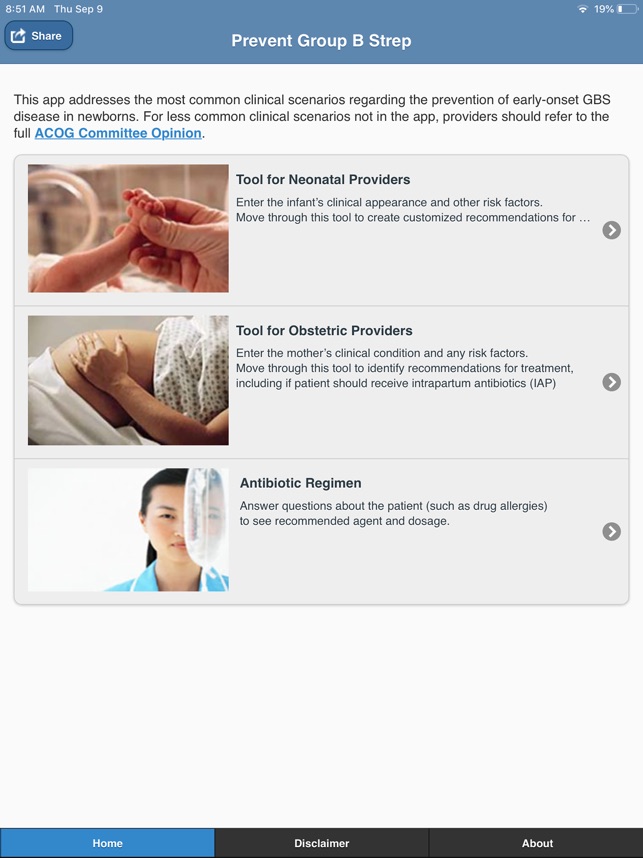
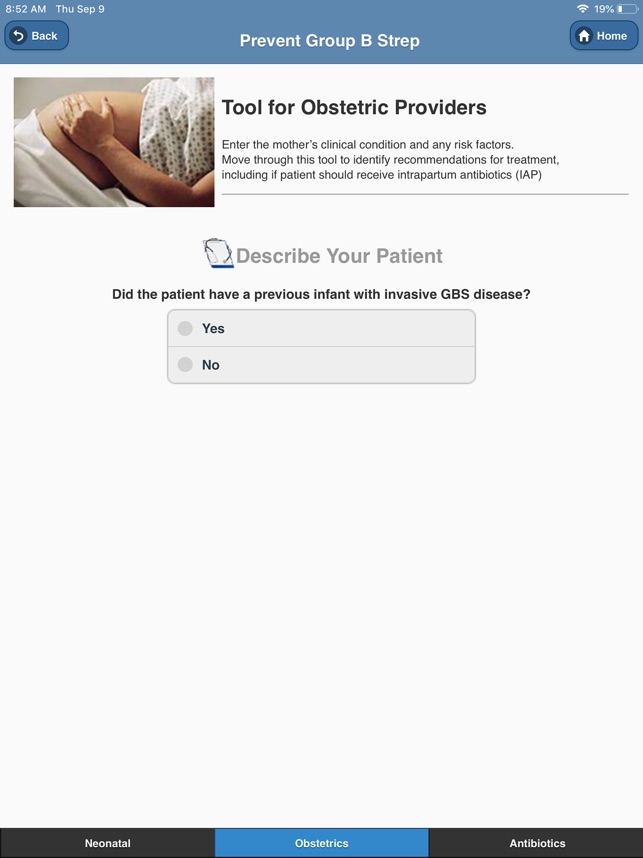
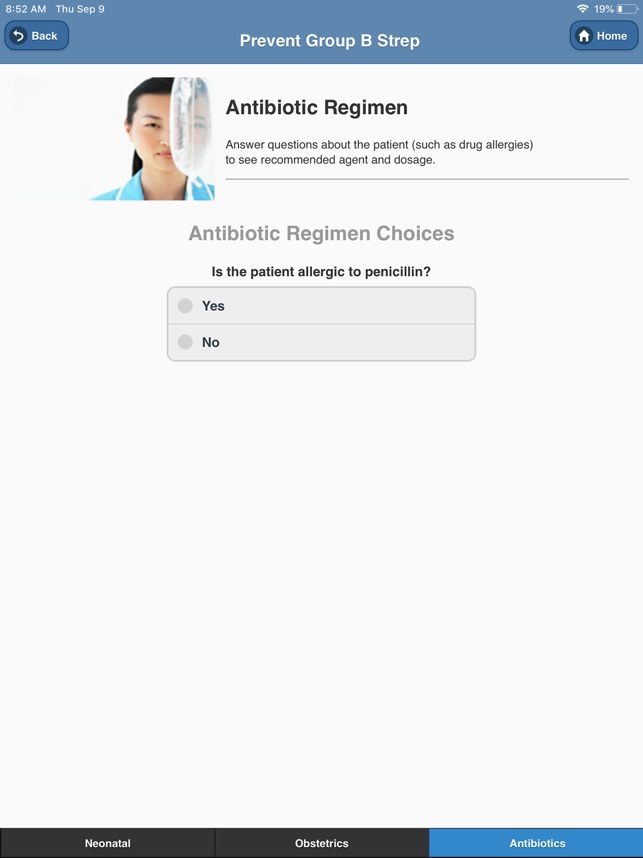
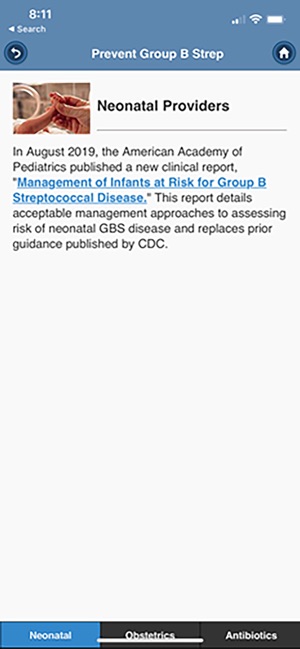
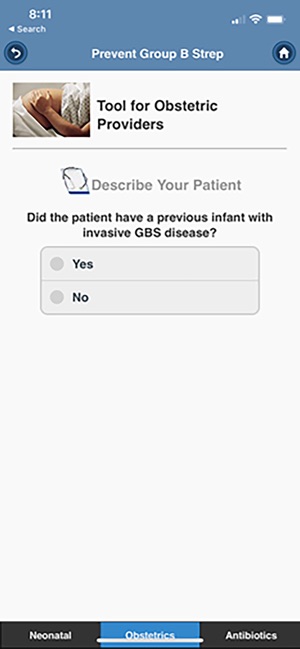
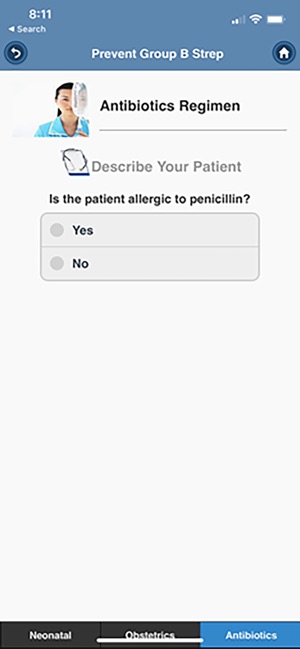
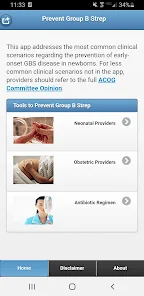
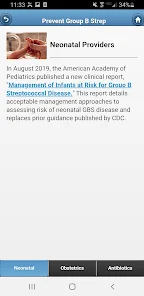
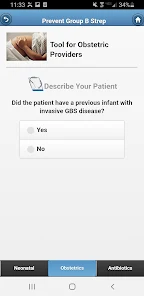
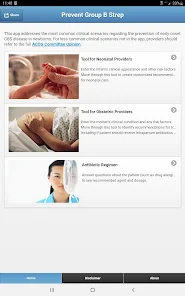
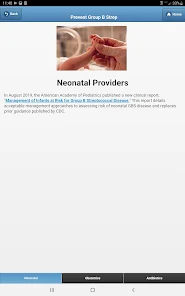
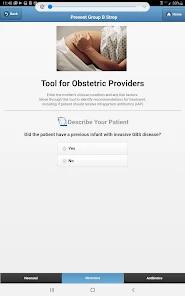
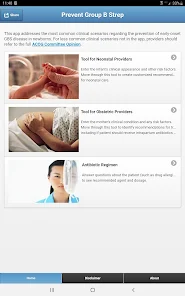
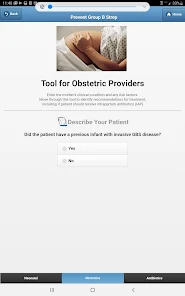
Developed by the Centers for Disease Control and Prevention (CDC) and endorsed by major professional bodies, this clinical decision support tool synthesizes complex GBS prevention guidelines into an interactive, point-of-care workflow. The interface captures patient- and scenario-specific data through a sequence of up to 12 questions. Based on these inputs, the system delivers customized, evidence-based management recommendations, including the necessity of intrapartum antimicrobial prophylaxis and optimal antibiotic regimens for penicillin-allergic patients.
Evidence & Research Context
- The app's design is detailed in associated research, which describes its development as a tool to improve the implementation of intricate national guidelines for GBS prevention.
- Its logic and recommendations are explicitly grounded in clinical protocols and Committee Opinions from the American College of Obstetricians and Gynecologists (ACOG).
- The platform translates multi-page guideline documents into a streamlined digital format to facilitate rapid decision-making in high-pressure clinical environments.
- Key functionalities, such as guidance on universal screening timing and antibiotic selection, directly align with evidence-based standards aimed at reducing neonatal GBS disease.
Intended Use & Scope
This application is intended for obstetric and pediatric clinicians, including physicians, nurse-midwives, and pediatricians, as a point-of-care reference tool. Its primary utility is providing rapid, standardized guidance on GBS prophylaxis. The tool is designed to augment, not replace, independent clinical judgment, and complex cases may warrant further consultation or adherence to local institutional protocols.
Studies & Publications
Peer-reviewed research associated with this app.
Prevent Group B Strep App for Obstetric Providers
Centers et al. (2025) · Centers for Disease Control and Prevention
Describes the research-driven development of this appSmartphone Application Available for Preventing Group B Streptococcus Infections
Centers et al. (2022) · Morbidity and Mortality Weekly Report
Referenced in academic literature; no direct evaluation of the appIn the Media
Prevent Group B Strep App for Obstetric Providers
The CDC developed Prevent Group B Strep(GBS) to provide obstetric care providers with patient- and scenario-specific guidance for preventing Group B strep infections in newborns, using guidance consistent with the American College of Obstetricians and Gynecologists 2019 Committee Opinion. The app was developed in collaboration with and endorsed by experts in obstetric care and does not request, collect, or store any personal identifying information. The web-based tool requires an internet connection and is designed specifically for obstetric care providers to help prevent serious illness in newborns caused by Group B strep bacteria.
ACOG, AAP Update Guidance on Group B Strep in Infants
The American College of Obstetricians and Gynecologists (ACOG) and American Academy of Pediatrics (AAP) updated their guidance on preventing Group B Strep transmission from mothers to infants, recommending universal maternal screening and targeted antibiotic prophylaxis. Since GBS prevention recommendations were first introduced in 1990, the national incidence of early-onset GBS disease has declined dramatically from 1.8 cases per 1,000 live births to 0.23 cases per 1,000 live births in 2015. The updated guidelines specify that all pregnant women should undergo antepartum screening at 36-0/7 to 37-6/7 weeks of gestation, providing a five-week window for valid culture results.
CDC app helps prevent group B strep
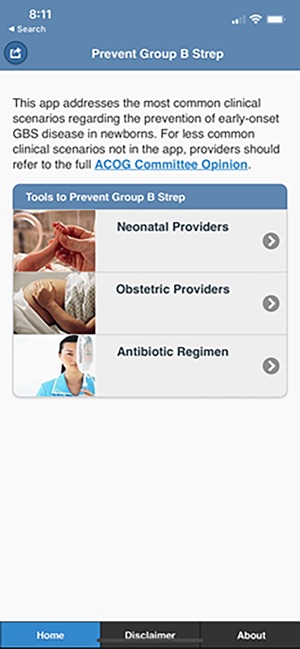
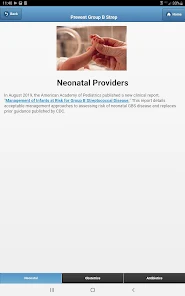
The Centers for Disease Control and Prevention developed the "Prevent GBS" app to help prevent group B strep, using guidance consistent with 2010 prevention guidelines. The app was developed with and endorsed by major medical organizations including the American College of Obstetricians and Gynecologists, American Academy of Pediatrics, American College of Nurse-Midwives, and American Academy of Family Physicians. Providers select either obstetric or neonatal portals and answer patient questions to receive specific guidance and antibiotic regimen recommendations.
App Information
Category
Evidence Profile
Published in academic literature
Platforms
Updated
Sep 2021
© 2025 US Centers for Disease Control and Prevention