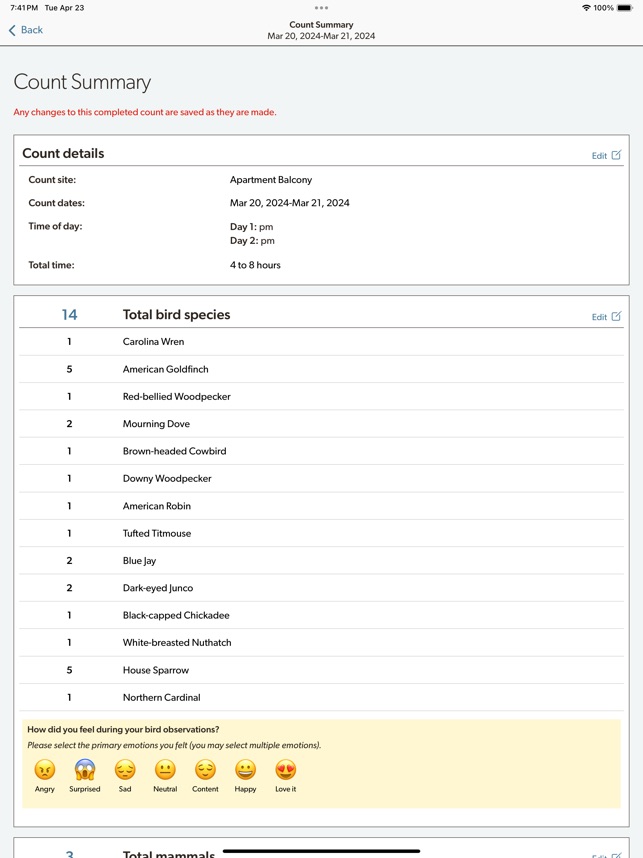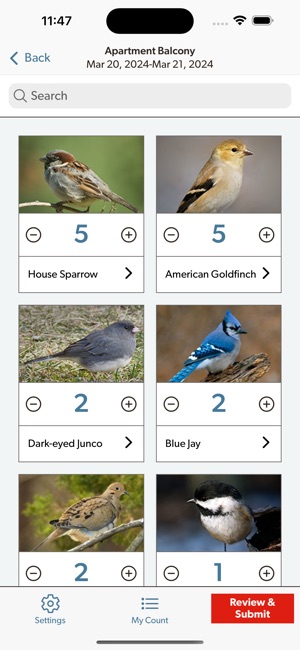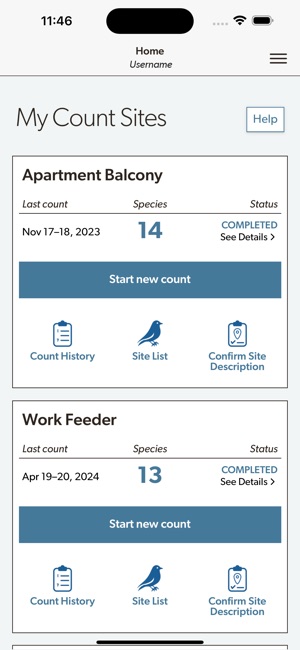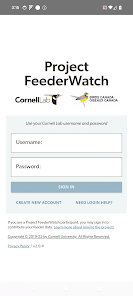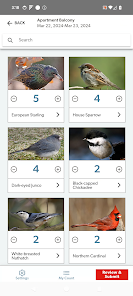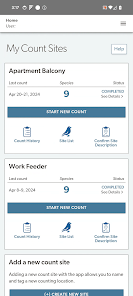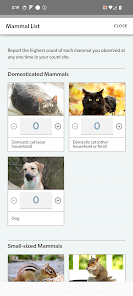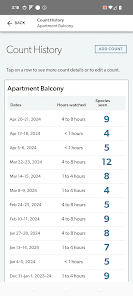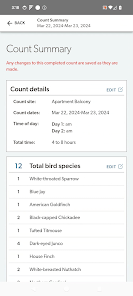
Project FeederWatch is a citizen science app that allows individuals in North America to contribute to conservation research by reporting winter bird observations at their feeders using a standardized protocol. The associated research confirms that this multi-decade, place-based dataset provides biologically meaningful insights into avian population trends, with findings consistent with other large-scale bird abundance surveys. The authors conclude that these citizen-collected data are invaluable for studying the impacts of environmental factors, such as climate change and habitat modification, on bird populations at a continental scale.
App Screenshots
Detailed Description
Functionality & Mechanism
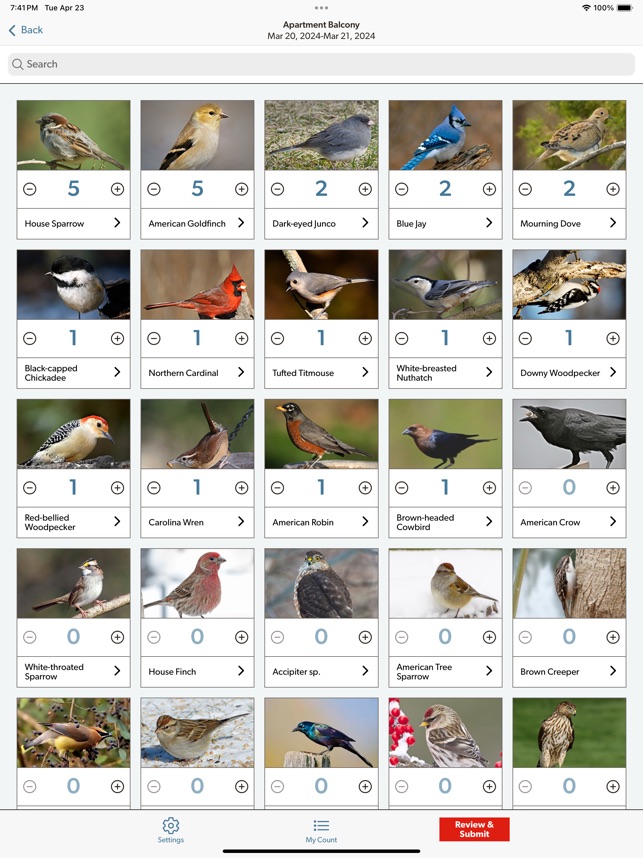
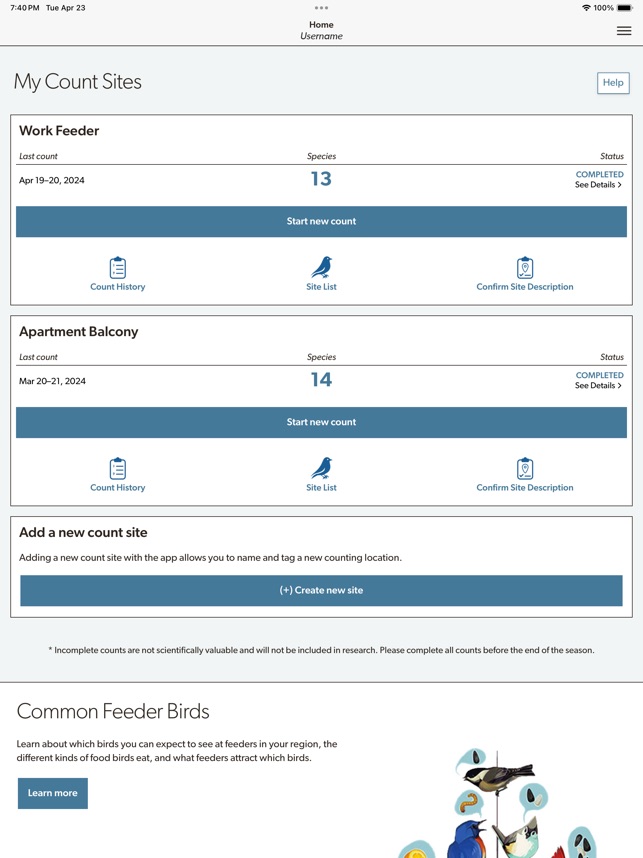
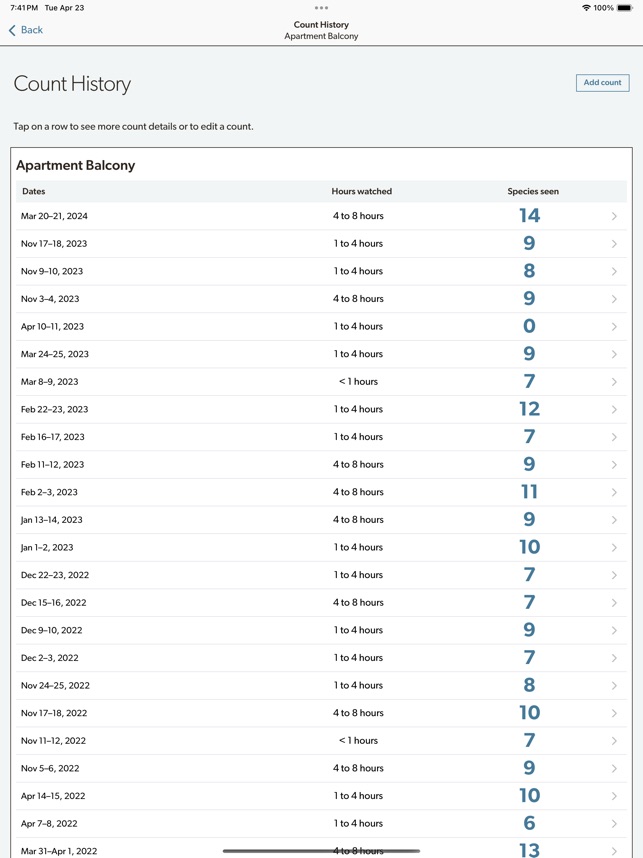
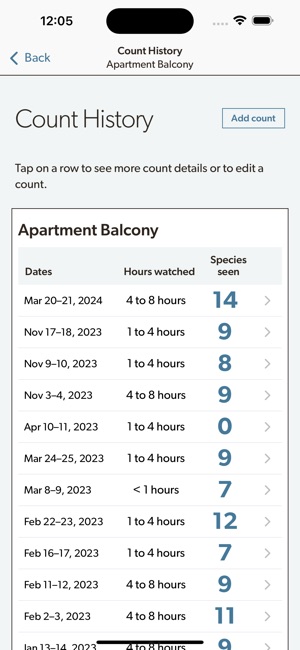
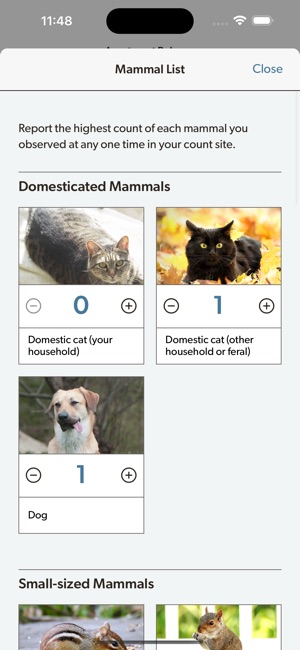
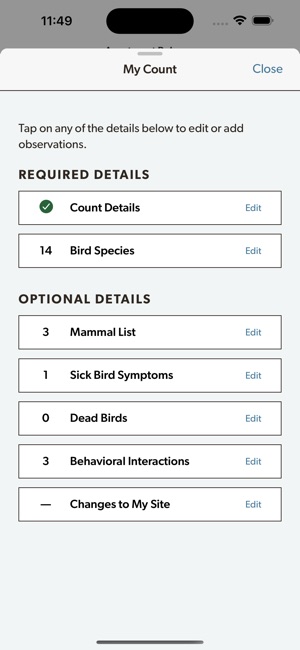
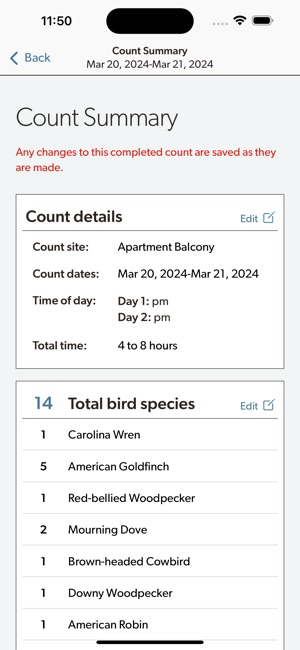
Developed by the Cornell Lab of Ornithology and Birds Canada, the Project FeederWatch system facilitates citizen science data collection on North American winter feeder-bird populations. Participants follow a standardized protocol, recording the maximum number of individuals for each species observed at a designated count site over a two-day checklist period. The mobile interface captures these counts, syncs with a web-based portal for multi-platform data management, and provides access to sighting statistics and historical count archives.
Evidence & Research Context
The mobile application contributes to a longitudinal dataset spanning over 30 years, collating approximately 180,000 checklists annually from more than 25,000 participants across North America.
Data collected through the project have been utilized in dozens of peer-reviewed publications to investigate ecological topics including climate change impacts, disease ecology, and invasive species dynamics.
The system incorporates a data validation protocol where automated filters flag geographically or temporally unexpected observations (1.52% of records) for subsequent expert review before final inclusion.
Independent analyses indicate consistency between avian population trends identified in FeederWatch data and those from other large-scale ornithological surveys, suggesting robust data quality despite its citizen science origin.
Intended Use & Scope
This system is designed for use by the general public as a citizen science data collection tool. Its primary utility is to enable standardized, longitudinal reporting of winter bird populations in North America for the Project FeederWatch database. The tool is not a comprehensive field guide for bird identification or a general-purpose sighting log for use outside the project protocol.
Bonter et al. (2021) · Frontiers in Ecology and Evolution
Referenced in academic literature; no direct evaluation of the app
Citizen science datasets are becoming increasingly important means by which researchers can study ecological systems on geographic and temporal scales that would be otherwise impossible (Kullenberg & Kasperowski, 2016). Birds are both a tractable study taxa for citizen science efforts, and an indicator of more broad ecological and evolutionary themes such as climate change and anthropogenic habitat modification, invasive species dynamics and disease ecology (Bock & Root 1981; Link & Sauer 1998; Bonney et al. 2009), to name a few. Enjoying birds around one's home may seem like an ephemeral pastime, but in the context of citizen science, such a pastime has built a multi-decade long, continent-wide dataset of bird abundance through the program Project FeederWatch (hereafter, FeederWatch). FeederWatch is a place-based citizen science program that asks participants to identify and count the birds that visit the area around their home, particularly focused around supplementary feeding stations (i.e., bird feeders). Place-based datasets provide a unique view of change through time and engage participants in long-term data collection from a single location, inspiring them to engage more deeply in the preservation of the place they study (Loss et al. 2015; Haywood et al 2016). The concept of FeederWatch began when Erica Dunn of Canada's Long Point Bird Observatory established the Ontario Bird Feeder Survey in 1976 (Dunn 1986). Ten years later, in 1986, the organizers expanded the survey to cover all provinces in Canada and states in the United States by partnering with the Cornell Lab of Ornithology to create the program now called Project FeederWatch (Wells et al 1998). In the winter of 1987-88, more than 4,000 people enrolled and began counting birds following the current counting protocol. Since then, the number of project participants has grown to > 25,000 annually across the U.S. and Canada, approximately half of which submit bird checklists (Figure 1A). The program collates approximately 180,000 checklists annually (as of the 2019-2020 season) with submissions increasing over time (Figure 1B). FeederWatch continues to be a cooperative research project of the Cornell Lab of Ornithology and Birds Canada (formerly the Long Point Bird Observatory and later Bird Studies Canada) and has an inter-annual participant retention rate of approximately 60-70%.Data from FeederWatch have been used in dozens of scientific publications, ranging in topic from invasive species dynamics (Bonter et al. 2010), disease ecology (Hartup et al. 2001), irruptive movements (Dunn 2019), predator-prey interactions (McCabe et al. 2018), range expansions (Greig et al. 2017), dominance hierarchies (Leighton et al 2018) and climate change (Zuckerberg et al. 2011, Prince & Zuckerberg 2014). Studies use either the standard protocol bird count dataset, which is the dataset we describe here, or supplementary data protocols such as reports of signs of disease (Hartup et al. 2001), reports of behavioral interactions (Miller et al. 2017) or reports of window strike mortality (Dunn 1993). Irrespective of the exact data type being collected, the strength of the FeederWatch dataset lies in the repeated observations made from the same location over time, which creates a data structure perfectly suited to occupancy modeling or repeated measures analyses. It also cultivates long-term participation in the project, which is predicted to increase data accuracy because participants are expected to improve their data collection skills the longer they participate (Kelling 2015). METHODSData collection protocol Participants follow a standardized counting protocol to record all the bird species they see around their count site, typically their home, and typically in the proximity of supplementary feeding stations or other resources (e.g. water or plantings). Specifically, participants count the maximum number of every bird species seen in their count site over a two-day checklist period. By requiring that participants only report the maximum number of each species in view simultaneously during the checklist period, the protocol ensures that participants are not repeatedly recording the same individuals multiple times within a single checklist. Further, the protocol requires that participants submit complete checklists of all bird species observed, allowing for the inference of zeros (i.e. both detection and non-detection) in all checklists. These checklists are conducted from late fall through early spring in the northern hemisphere (November to April each year, the FeederWatch "season"). Participants can submit checklists as often as once per week within this time frame. For each checklist, participants are required to report two categorical measures of observation effort (detailed below). Participants also record a categorical estimate of snow cover. Historically, participants were asked to record additional weather variables during their checklist periods, but with the availability of large-scale climate datasets, collection of additional weather data has been discontinued. The protocol instructions provided to participants are available on the project web site (https://feederwatch.org/about/detailed-instructions/) and are archived in the data repository. Because the FeederWatch protocol is a repeated measures design, participants are reporting from the same location as often as weekly, with many people reporting for many years. As such, it is useful to capture a description of the participant's count site and supplementary feeding procedures and how those change over time. Annually, participants can describe their count site on a form that records information about habitat, resources, and threats to birds. Completing the site description is not compulsory, so not every location has a complete site description for every year of participation (site description data were provided for 39% of count sites during the 2019-2020 season). Although the site description information is not available for all locations, this information can be useful for addressing specific research questions. For example, researchers may be interested in the effects of supplementary food type or amount on the detectability or occupancy of bird species in the community (e.g., Greig et al. 2017). Details of the 64 data fields recorded on the site description form are available in the data repository. Data validationAll FeederWatch checklists are passed through geographically and temporally explicit filters to flag observations that are unexpected for any species in a particular state/province or month (Bonter & Cooper 2012). This flagging system was implemented in 2006 and all previous observations were run through the system and retroactively flagged if considered unexpected. The flagging system takes into account the FeederWatch protocol which instructs that participants record the largest number of birds in view at a single time. Because the territorial and flocking behavior of species limits the maximum number of each species that is likely to be viewed in a single location at the same time, the system filters were set to trigger a flag if the count reported exceeded three standard deviations from the mean for each species/state or province combination. Count limits were originally calculated based on FeederWatch data submitted prior to the 2006 season and have been manually adjusted over time (e.g., to allow for range expansions). Therefore, the flagging system is not only triggered by a species reported outside of its typical geographic range (e.g. 1 Verdin, Auriparus flaviceps, in Maine), but also by unusually high counts (e.g. 30 Black-capped Chickadees, Poecile atricapillus) and by species rarely seen in the context of backyard bird feeding (e.g. waterfowl and migratory warblers). Over time the flagging system has become more sophisticated. Since 2014, a real-time data entry trigger has been used to flag suspect observations, whereby the participant entering the count is immediately asked to review and confirm that their entry is correct. This provides an opportunity for participants to correct typographical errors or identification mistakes before they are entered into the database. If the participant chooses to enter their flagged observation into the database, it is automatically entered into a manual review system to be checked by an expert reviewer before being accepted as valid, corrected, or left flagged as an unexpected observation. Flagged observations are identified in the database as "0" in the VALID field and their status in the review process is described using a combination of the VALID field and the REVIEWED field as defined here:VALID = 0; REVIEWED = 0; Interpretation: Observation triggered a flag by the automated system and awaits the review process. Note that such observations should only be used with caution.VALID = 0; REVIEWED = 1; Interpretation: Observation triggered a flag by the automated system and was reviewed; insufficient evidence was provided to confirm the observation. Note that such observations should not be used for most analyses.VALID = 1; REVIEWED = 0; Interpretation: Observation did not trigger the automatic flagging system and was accepted into the database without review.VALID = 1; REVIEWED = 1; Interpretation: Observation triggered the flagging system and was approved by an expert reviewer.The decisions of expert reviewers are based on a knowledge of bird biology and supporting information from the participant in the form of a description, photo, or confirmation that they are following the counting protocol correctly. All reports irrespective of their VALID or REVIEWED status are included in the full dataset, because incorrect identifications may themselves be of interest to researchers. For example, this dataset could be used to study longitudinal changes through time in participant data collection accuracy. It is up to researchers to appropriately remove invalid and unreviewed sightings from their analysis. Note that the overall proportion of flagged records is small relative to the entire dataset; of the 34,074,558 observations submitted from 1988–2020, only 516,614 (1.52%) were flagged for review, and only 48,417 (0.14%) of those were permanently flagged following review due to lack of supporting evidence.Undoubtedly, some of the presumed valid reports in the database involve incorrect identifications that have not triggered a flag (e.g. misidentification of one common species for another), or reports by participants who do not correctly follow the FeederWatch protocol but whose incorrect counts are within the range permitted by the filter system. Researchers may want to consider lumping similar-looking species in some analyses depending on their questions, for example Black-capped and Carolina Chickadees (Poecile carolinensis) in the areas where populations overlap and hybridize, or Cooper's and Sharp-shinned Hawks (Accipiter cooperii and A. striatus), which are difficult to distinguish throughout their ranges. Despite the fact that a dataset of this temporal and geographic scale must contain some imperfections, there is consistency in avian population trends found with FeederWatch and other indices of bird abundance (e.g. Christmas Bird Counts; Lepage & Francis 2002). This suggests that unidentified errors do not drive broad patterns in the data, and that FeederWatch data provide biologically meaningful insights.DATASETDataset structureThere are two datasets that are the primary Project FeederWatch data: 1) the checklists (i.e. the bird counts) and 2) the site descriptions. The key data fields associated with these datasets are listed in Table 1, with a complete dictionary of data fields included with the raw data files in the open access data repository. The "data level" column in Table 1 defines levels of organization of the dataset, of which there are four levels: 1) "site level," referring to fixed data associated with the site, or location, at which the observations are made (e.g. the latitude and longitude); 2) "season level," which are site-level descriptors that may (or may not) change from one season to the next (e.g. number of feeders maintained), 3) "checklist level," referring to variables shared across a single checklist (e.g., date and sampling effort), and 4) "observation level," referring to aspects of an individual species count within a checklist (e.g., the number of Black-capped Chickadees observed). When combining raw data from the checklists and site descriptions, researchers should link datasets using location (LOC_ID) and year (PROJ_PERIOD_ID). The data are organized for easy incorporation into a occupancy modelling framework (Fiske & Chandler 2011). Specifically, the site-level variables are static across seasons and equivalent to site-level covariates. Season-level variables are dynamic across seasons and equivalent to season-level covariates. The season-level also includes the year in which a series of checklists were made, equivalent to the primary sampling period. Checklist- and observation-level variables are equivalent to "visits" or "observations" using the occupancy modelling terminology in Fiske & Chandler (2011). Data are either binary (e.g. whether or not cats are present at the site), categorical (e.g. the approximate depth of snow cover), continuous (e.g. the number of chickadees observed on a checklist), or a date, indicated by the "data type" column in Table 1. The data are either entered by participants (e.g. the number of suet feeders provided) or assigned automatically by the database (e.g. the unique LOC_ID for every location), indicated by the "data entry" column in the data dictionary housed with the raw data. Categorical variables entered by participants are constrained by drop-down menu options or check boxes at the time of data entry. The dataset is stored with all observations of presence recorded, but observations of absence are not recorded. Because the FeederWatch protocol instructs participants to record all species seen within the count area, researchers can infer absence for any species of interest by assuming that if it was not reported on a particular checklist (i.e. a particular SUB_ID), it was not observed. It is necessary for researchers to zero-fill the data themselves for their species of interest. This zero-filling can be accomplished by extracting a list of unique checklists (SUB_ID values), filling the HOW_MANY field for the species of interest with zeros, then overwriting the zeros with actual counts for the species on the dates (SUB_ID) in which the species was observed. Interpretation and useThe content of most data fields is self-explanatory from Table 1, but there are a few details to be aware of when interpreting some fields. The latitude and longitude fields are identified with varying degrees of accuracy depending upon how participants submitted their data and how locations were estimated. Prior to 2000, all data were submitted on paper forms (identified as "paper" in the DATA_ENTRY_METHOD field) and all sites were given the latitude and longitude of the centroid of the ZIP code (United States) or postal code (Canada), and identified as "POSTCODE LAT/LONG LOOKUP" in the ENTRY_TECHNIQUE field. The online data entry system was developed in late 1999 and, since then, a series of mapping tools with varying degrees of location accuracy have been implemented, most of which tie into Google Maps Application Programming Interfaces (APIs). These systems are identified in the ENTRY_TECHNIQUE field. Researchers seeking high spatial accuracy should exclude sites created using the centroid of the ZIP/postal code (e.g., when linking observations to high resolution land cover and weather datasets). Locations are subject to some degree of error because participants are responsible for inputting their site location and any changes in that location over time (e.g. if the participant moves). However, participants are likely self-motivated to maintain the accuracy of their site location, because they themselves wish to accurately monitor their site's birds through time using the data outputs provided on the FeederWatch website. While the data collection protocols have remained fixed over time, data entry methods have changed, with implications for data interpretation. Before 2004, the paper data forms had boxes that only accommodated values up to 9, 99, or 999 for some species (the maximum value allowed varied depending on the typical flocking behavior of the species). If the participant observed a larger number of a species than could be accommodated on the paper forms, then they recorded the maximum number permitted on the data form and marked the "Plus_Code" field as "1". These observations should be interpreted with caution because there is no way to know the true number of birds observed by the participant. In 2018, the Cornell Lab of Ornithology released a mobile phone application for FeederWatch data entry. The mode of data entry is documented in the DATA_ENTRY_METHOD field. The codes are continuously evolving with new releases of the web and mobile apps but should be self-explanatory and can be functionally distilled to the three modes of data entry (web vs. mobile vs. paper). Because the mobile app is a new development, we have not yet attempted to quantify any potential differences in observations submitted using the mobile versus web-based apps. Previous research clearly demonstrates the importance of including sampling effort in analyses of FeederWatch data (e.g. Zuckerberg et al. 2011, Prince & Zuckerberg 2014, Greig et al. 2017). There are two measures of effort within the dataset. The EFFORT_HRS_ATLEAST field records a 4-level categorical measure of observation effort ( 8 hours). The second measure of effort divides the two-day observation period into 4 half days, with the observer recording whether or not they observed their feeders during each of the four half-day periods. The series of four fields, labeled DAY1_AM, DAY1_PM, DAY2_AM, DAY2_PM, is often aggregated into a derived metric of the number of half-days that the participant spent observing during one checklist. Typically, the greater the sampling effort, the greater the number of species and individuals observed (Figure 1C).Researchers may want to consider using occupancy modeling frameworks (e.g. Fiske & Chandler 2011) when analyzing FeederWatch data because the data structure is well suited to this form of analysis. Occupancy modeling allows for inferences about both presence/absence, abundance, and behavior. For example, finding complementary patterns in occupancy and detectability for a species across some environmental gradient may suggest changes in abundance (e.g. Zuckerberg et al. 2011). However, finding contrasting patterns in occupancy and detectability over an environmental gradient may suggest changes in behavior (e.g. Greig et al. 2017). As always, researchers should interpret data with care and within the context of the biological system being studied. Other modeling approaches can also be appropriate, such as generalized linear mixed models (GLMMs) because of the repeated counts from the same locations (e.g. Bonter & Harvey 2008), as well as general algebraic modeling system (GAMS) approaches.Data accessRaw data from 1989-present are available in the Mendeley data repository with the most permissive open access level (doi: 10.17632/cptx336tt5.1). Data are also available with open access from the FeederWatch website maintained by the Cornell Lab of Ornithology (https://feederwatch.org/explore/raw-dataset-requests/). FeederWatch is an ongoing program and future data updates will be added to the Cornell Lab of Ornithology website. Data are updated annually around June 1.
Referenced in academic literature; no direct evaluation of the app
Changes in the climate and land use over time can lead to changes in the composition of wildlife communities. Using data from Project FeederWatch, we examine trends in the abundance and occurrence of birds documented in the winters from 1988 to 2012 in New
Hampshire. Changes in abundance and occurrence are summarized for individual bird species as well as across species based on life history traits. In addition, we examined trends for the state as a whole as well as in subregions, using counties as area designators. We discuss these changes with regards to the variations of climate and land use that are occurring throughout New Hampshire.