
PSU Wear-IT
Assessed for usability and quality
App Summary
App Screenshots







Detailed Description
Functionality & Mechanism
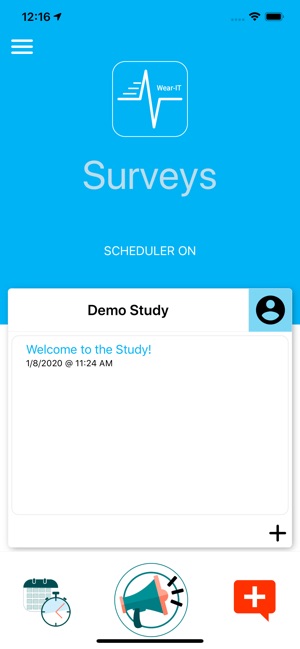
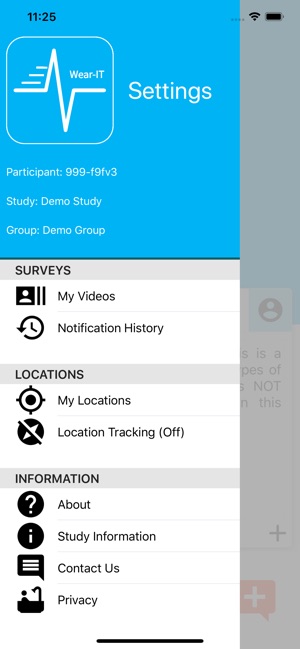
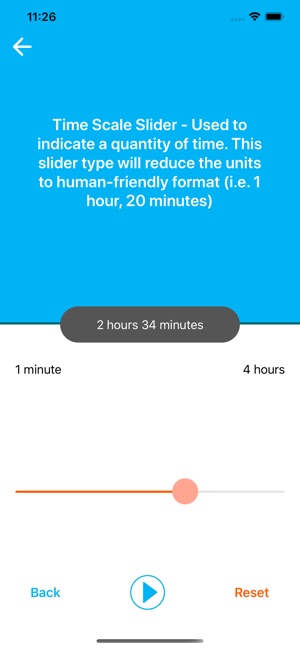
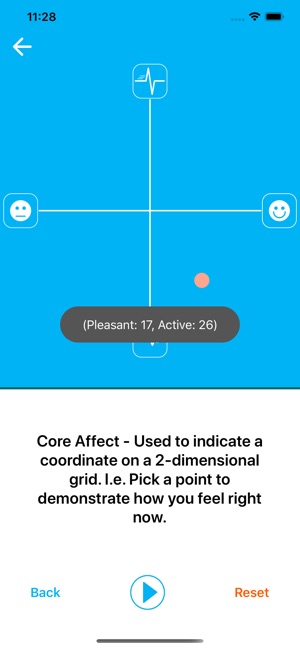
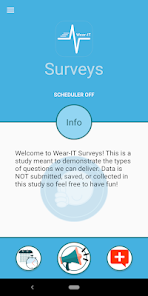
PSU Wear-IT is a framework enabling researchers to design and deploy mobile health (mHealth) data collection protocols. The system minimizes participant burden by integrating passive data from smartphone and wearable sensors with adaptive, low-burden active assessments. Via a web-based server, researchers construct complex survey logic with context-dependent triggers (e.g., location, schedule) and diverse question types. This real-time, responsive architecture facilitates the optimal balance of high-quality data collection with minimal participant effort for longitudinal research.
Evidence & Research Context
- The framework is designed to address limitations in long-term mHealth studies by optimizing the trade-off between data utility and participant burden.
- Its mechanism combines passive monitoring, real-time data processing, and adaptive assessments to deliver personalized, low-burden interventions and data capture.
- A foundational usability study employing qualitative interviews with participants indicated positive feedback regarding the framework's ease of use and overall experience.
- The associated research positions the framework as a platform for developing and studying adaptive assessment and intervention designs in real-world settings.
Intended Use & Scope
This framework is intended for academic, clinical, and scientific researchers for the construction and deployment of mobile data collection studies. Its primary utility is as a research platform for implementing adaptive protocols that require longitudinal monitoring. The system is not a diagnostic or therapeutic tool and requires institutional review board (IRB) oversight for any human subjects data collection.
Studies & Publications
Peer-reviewed research associated with this app.
Low-Burden Mobile Monitoring, Intervention, and Real-Time Analysis Using the Wear-IT Framework: Example and Usability Study
Brick et al. (2019) · JMIR Formative Research
Participants found the wearable monitoring system easy to use and practical for long-term health tracking.
In the Media
Placing technology in the hands of those who need it
Penn State researchers Zita Oravecz and Timothy R. Brick developed PSU Wear-IT to collect real-time data from human research subjects, combining smartphone technology with wearable devices to track both self-reported responses and passively collected data for analyzing psychological states. According to Oravecz, "When people are aware of the factors that influence their emotions and levels of stress, craving, or risk, it can really help them see the patterns in the challenges they face and their emotional responses to them." The researchers have filed a patent application and plan to spin off a company using the technology developed six years ago.
Penn State researchers developing startup to help people in addiction recovery
Penn State researchers developed WearIT to help individuals battle addiction, utilizing wearable devices like Fitbits or Apple watches along with smartphones to detect stress and anxiety indicators. "The real goal of WearIT is to help people recovering from addiction to not just survive without the object of their addiction, but to thrive," said Timothy Brick, co-principal investigator. The system won $10,000 from Ben Franklin Technology Partners' TechCelerator program in December to bring the technology closer to market.
App Information
Developer
Pennsylvania State UniversityCategory
Evidence Profile
Assessed for usability and quality
Platforms
Updated
Sep 2026
© 2025 Pennsylvania State University