
AppsFromResearch
QARRD icon

QARRD

Evidence Tier:VALIDATED

Initial evidence from research studies

For:Clinicians & Healthcare ProfessionalsEducators & TeachersStudents

App Summary

The Questioning Aid for Rich, Real-Time Discussion (QARRD) is an educational tool that helps health professions educators use Bloom's Taxonomy to formulate higher-order questions for learners in clinical settings. An evaluation of a workshop (N=37) found that after training with the tool, the complexity of educators' discussion prompts increased significantly, shifting from 71% lower-order questions pre-workshop to 69% higher-order questions post-workshop. The associated research concludes that QARRD is a practical tool that allows educators to purposefully adjust their instructional methods to meaningfully engage learners and help facilitate clinical reasoning.

App Screenshots

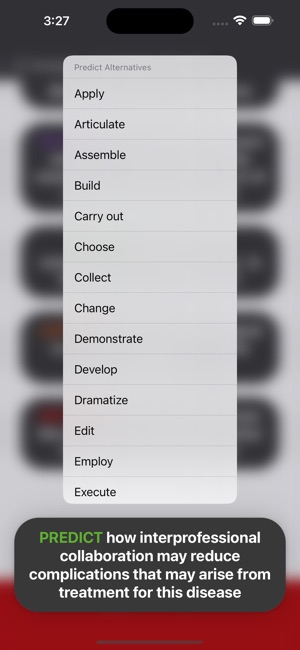
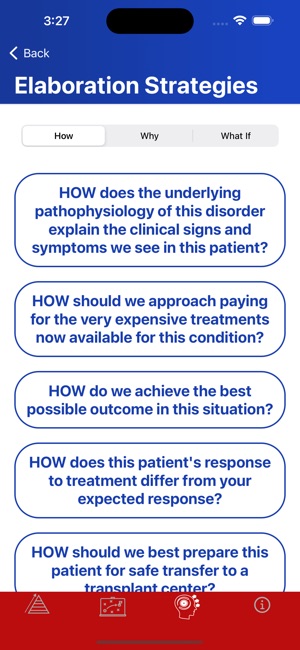
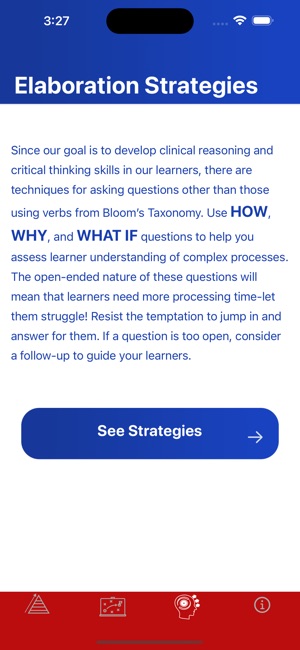
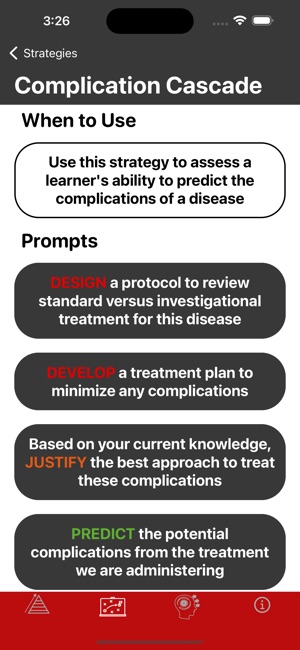
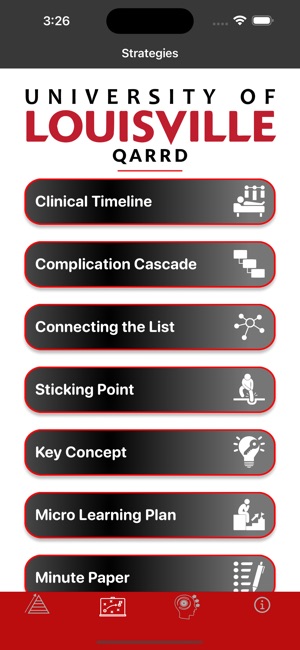
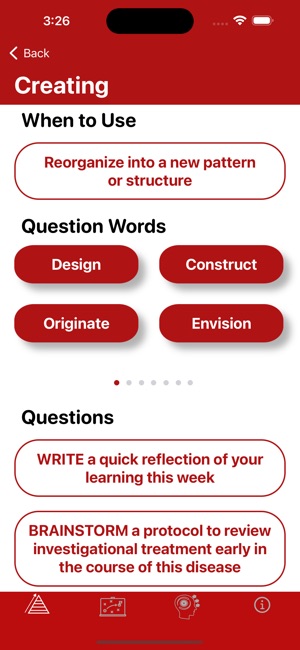
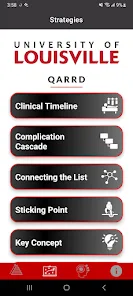
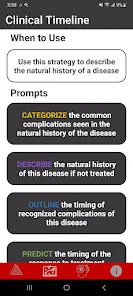
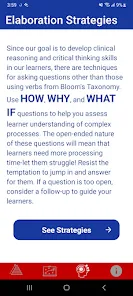
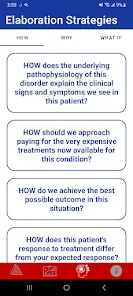
QARRD screenshot 1 of 20QARRD screenshot 2 of 20QARRD screenshot 3 of 20QARRD screenshot 4 of 20QARRD screenshot 5 of 20QARRD screenshot 6 of 20QARRD screenshot 7 of 20QARRD screenshot 8 of 20QARRD screenshot 9 of 20QARRD screenshot 10 of 20QARRD screenshot 11 of 20QARRD screenshot 12 of 20QARRD screenshot 13 of 20QARRD screenshot 14 of 20QARRD screenshot 15 of 20QARRD screenshot 16 of 20QARRD screenshot 17 of 20QARRD screenshot 18 of 20QARRD screenshot 19 of 20QARRD screenshot 20 of 20

Detailed Description

Functionality & Mechanism

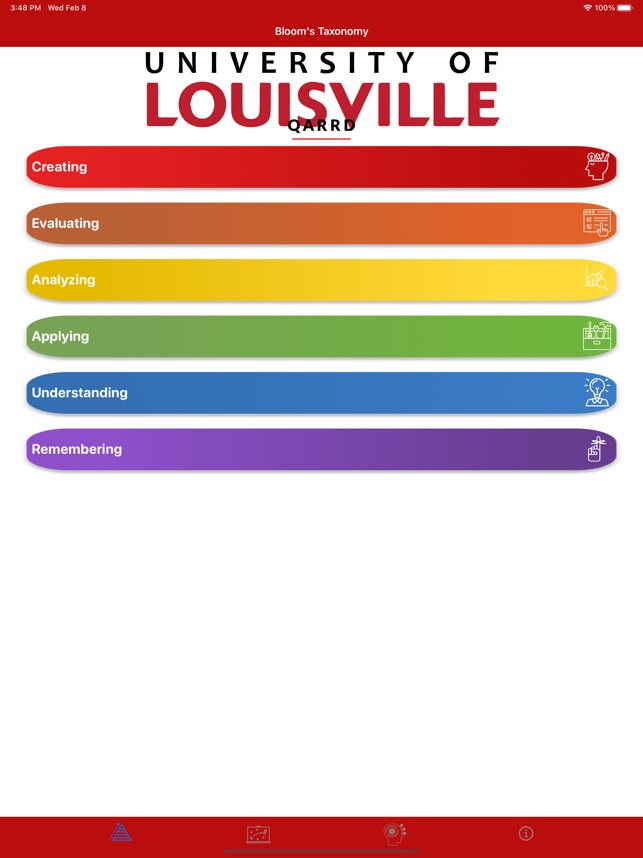
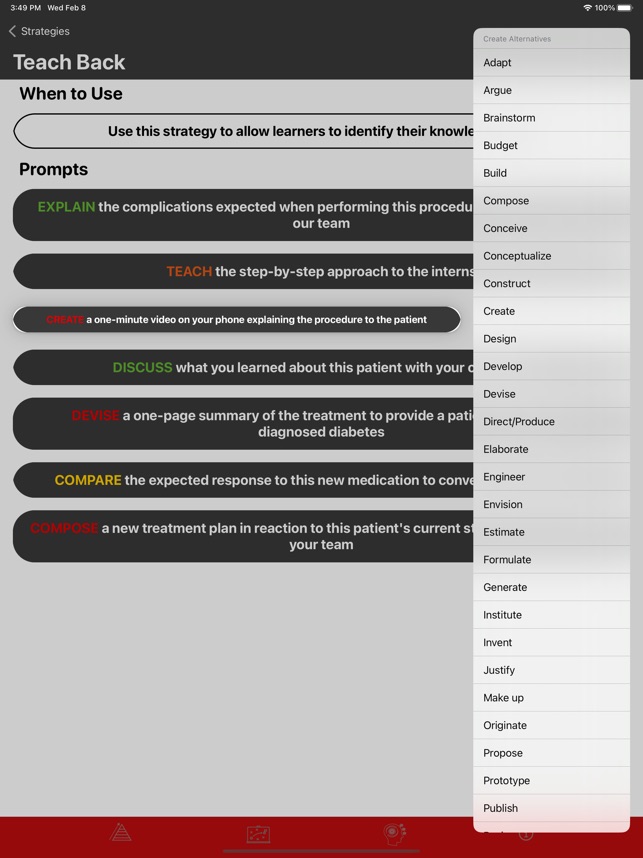
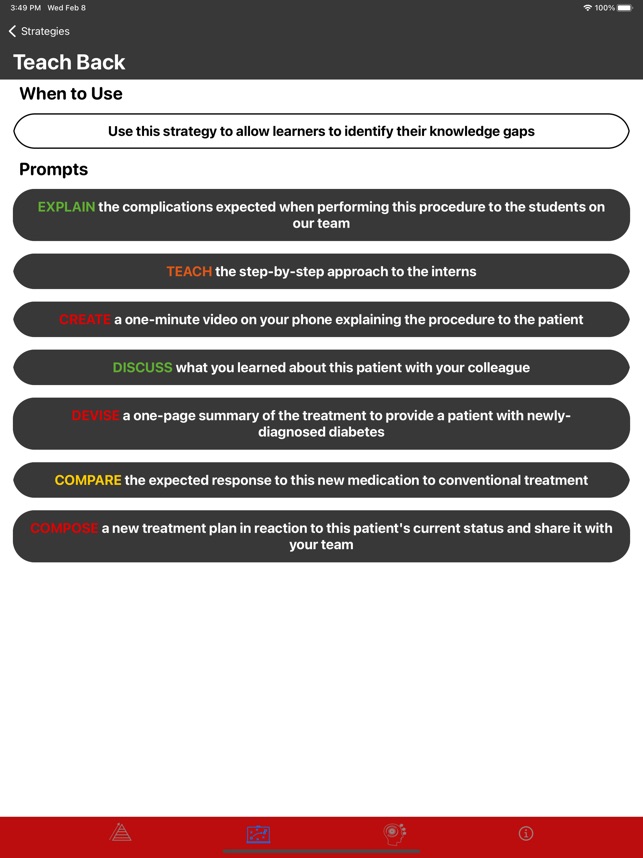
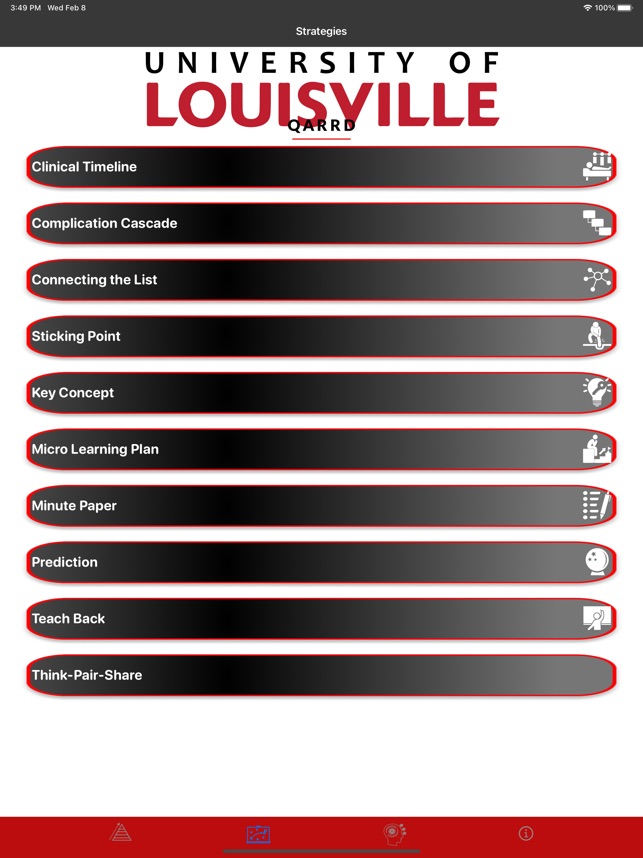
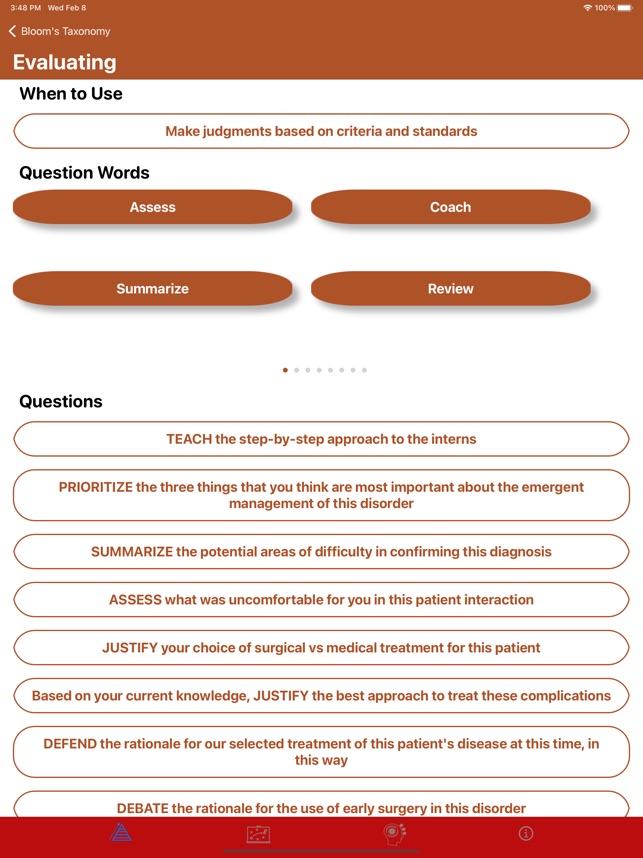
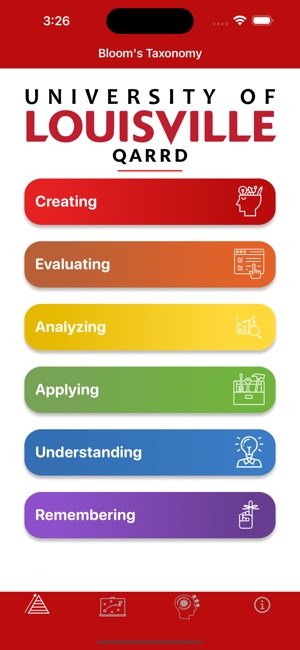
The Questioning Aid for Rich, Real-Time Discussion (QARRD) is a pedagogical tool designed for clinical educators. The system organizes questioning prompts according to Bloom's Taxonomy, providing specific verbs to help faculty formulate higher-order questions. The interface facilitates rapid, real-time application during clinical activities such as rounds or precepting. By structuring inquiry, QARRD systematically guides educators to prompt learners beyond simple fact recall toward complex cognitive processes like application, analysis, evaluation, and creation.

Evidence & Research Context

  • An evaluation study (N=37) assessed the impact of a workshop that introduced the QARRD tool to a cohort of interprofessional health educators.
  • Prior to the intervention, 71% of case-based discussion prompts developed by participants were categorized as targeting lower-order thinking skills (remembering/understanding).
  • Following the workshop, the complexity of prompts increased significantly, with 69% reflecting higher-level cognitive skills (apply/analyze/evaluate/create).
  • Participants reported that the tool provided a practical method for implementing established learning frameworks in active clinical instruction.

Intended Use & Scope

This system is intended for health professions educators to enhance instructional methods and foster clinical reasoning in learners. Its primary utility is as a cognitive aid for structuring pedagogical dialogue in real time. The tool is a framework for questioning; it does not assess learner competence or substitute for direct, comprehensive clinical supervision and feedback.

Studies & Publications

1 publication

Peer-reviewed research associated with this app.

Effectiveness/Outcome Study

Questioning Aid for Rich, Real-Time Discussion (QARRD): A Tool to Improve Critical Thinking in Clinical Settings

Farmer et al. (2021) · MedEdPORTAL

Educators shifted from 71% lower-order questions to 69% higher-order questions after using the tool.

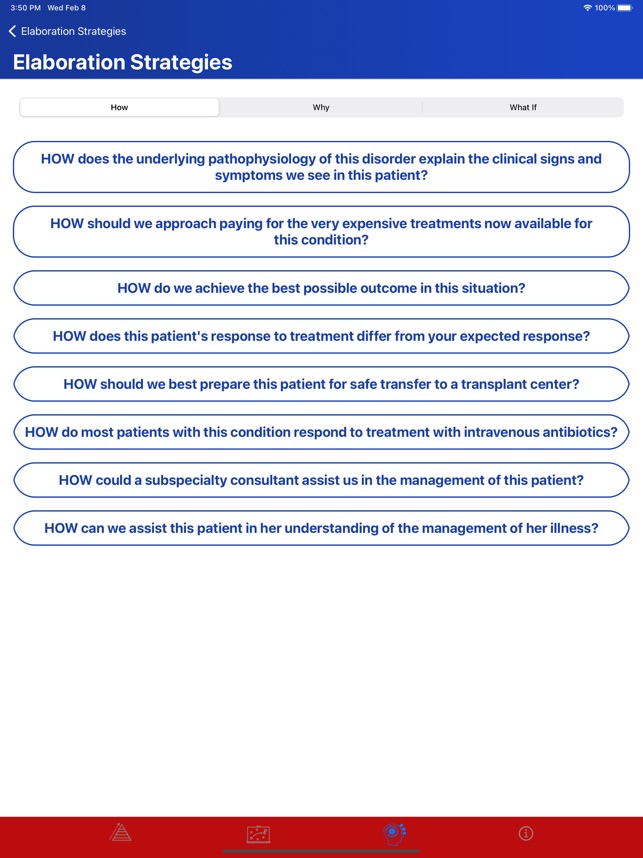
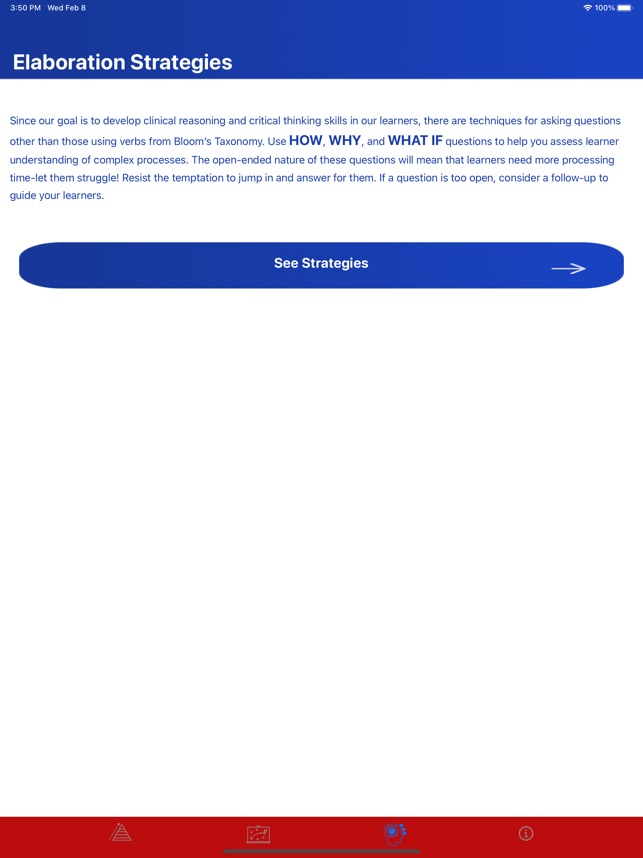
Introduction: Critical thinking skills are crucial for health professionals, especially in clinical settings. However, most health professions educators engage learners with only lower-level concepts such as definitions, fact recall, or basic explanations. Employing strategic questioning methods that require learners to use higher-order thinking can help develop clinical reasoning skills. Methods: The Questioning Aid for Rich, Real-time Discussion (QARRD) was created for health professions educators to purposefully implement concepts from Bloom's taxonomy and hierarchical questioning in clinical settings. The tool was introduced to faculty in a 1-hour, interprofessional workshop that described learning science and evidence-based questioning methods. Participants practiced QARRD questioning strategies and completed a pre/post case-based evaluation in which they developed discussion prompts for learners. Results: Thirty-seven educators participated in two separate workshops. The majority (71%) of preworkshop prompts were lower-order thinking skills (remembering/understanding). After the workshop, the complexity of participants' discussion prompts increased significantly. Most postworkshop prompts (69%) reflected higher-level thinking skills (apply/analyze/evaluate/create). Many participants reported that, despite previously knowing about Bloom's taxonomy, they had not known how to implement this learning framework in clinical instruction until completing the QARRD training. Discussion: The QARRD is a versatile, practical tool for health professions educators to practice promoting higher-level thinking in clinical settings. QARRD strategies allow educators to make small, purposeful adjustments to instructional methods that meaningfully engage learners to help facilitate clinical reasoning. This workshop can be delivered at other institutions and adapted as a virtual grand rounds to broadly enhance strategic questioning in clinical education.
... Read More

QARRD

Free