
RADiDOC
Published in academic literature
App Summary
App Screenshots
Detailed Description
Functionality & Mechanism
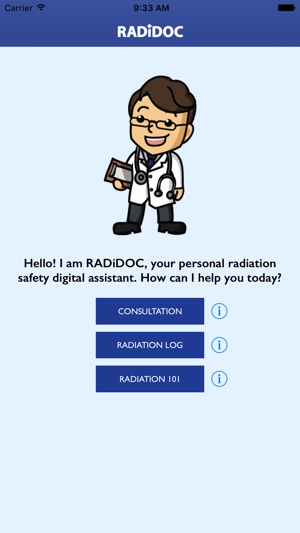
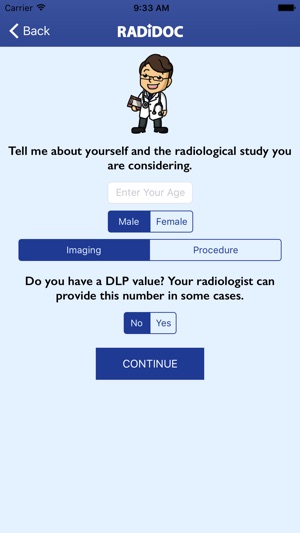
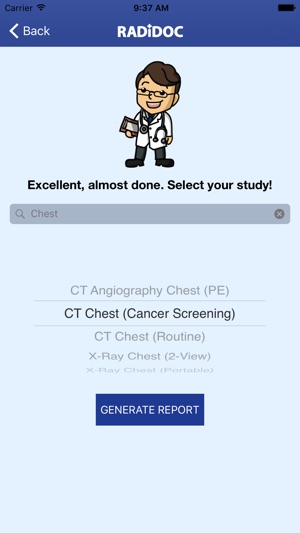
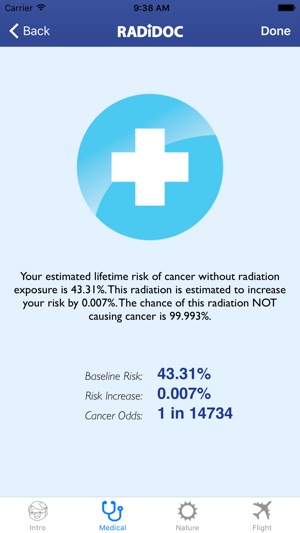
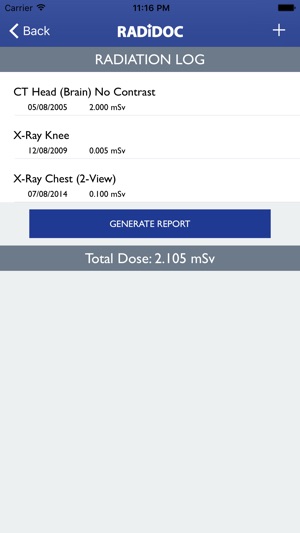
Developed by academic radiologists, RADiDOC is a digital assistant designed to quantify and track personal radiation exposure from medical imaging. The system operates through three primary modules. A consultation interface provides estimated radiation doses for specific imaging studies queried from its database. A log function enables the calculation and monitoring of cumulative lifetime exposure by capturing user-inputted imaging history. The platform also delivers pedagogical content on fundamental radiation concepts to enhance patient understanding.
Evidence & Research Context
- The system integrates data from academic research to provide dose estimates and risk context for a wide array of medical imaging procedures.
- Associated research describes the increasing integration of mobile technologies into radiological practice to enhance patient engagement and education.
- Educational content within the application is developed and curated by practicing radiologists affiliated with an academic university.
Intended Use & Scope
This application is designed as an educational and personal tracking tool for the general public to foster a better understanding of medical radiation exposure. Its primary utility is to facilitate informed patient-provider conversations. The tool does not provide medical advice, and its dose estimates should not be used to decline medically indicated imaging procedures.
Studies & Publications
Peer-reviewed research associated with this app.
Radiology, Mobile Devices, and Internet of Things (IoT)
Gupta et al. (2020) · Journal of Digital Imaging
Referenced in academic literature; no direct evaluation of the appIn the Media
Radiologist creates app that simplifies how we talk about radiation exposure
UCLA radiology resident Kevin Seals, MD, developed RADiDOC to help patients and physicians better understand radiation exposure from medical imaging by translating doses into simple, everyday terms like sun exposure or airplane flights. Seals explains that while telling someone a chest x-ray involves "some quantitative number of millisieverts" doesn't mean much, comparing it to "a certain number of flights" makes the risk more comprehensible. The app was released in May in Apple's App Store and allows patients to log their radiation exposure over time.
Mobile App Spotlight: RADiDOC
Dr. Kevin Seals, a radiology resident at UCLA, developed RADiDOC to address the gap between patients wanting radiation risk information and clinicians lacking expertise to explain it accurately. Seals stated that he "wanted to create an app that explains radiation risk in the simplest and most intuitive way possible while also offering a high level of quantitative detail and medical accuracy." The iOS app serves as a personal radiation safety digital assistant, providing dose estimates, cumulative tracking, and educational content for patients, clinicians, and radiologists.
App Information
Category
Evidence Profile
Published in academic literature
Platforms
Updated
May 2016
© 2025 University of California, Los Angeles
Tags

RADiDOC
Free