

Reconnaissance Blind Chess
Published in academic literature
App Summary
App Screenshots
Detailed Description
Functionality & Mechanism
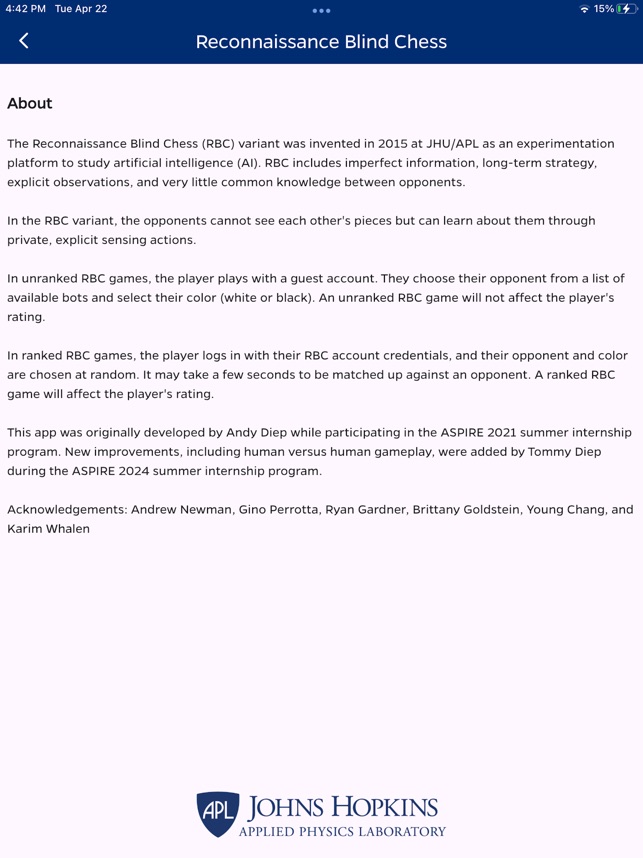
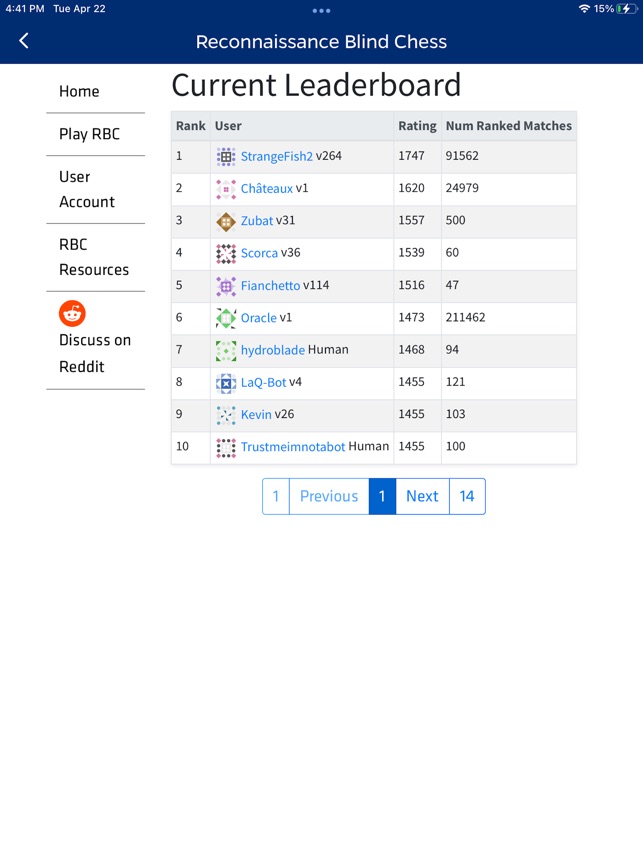
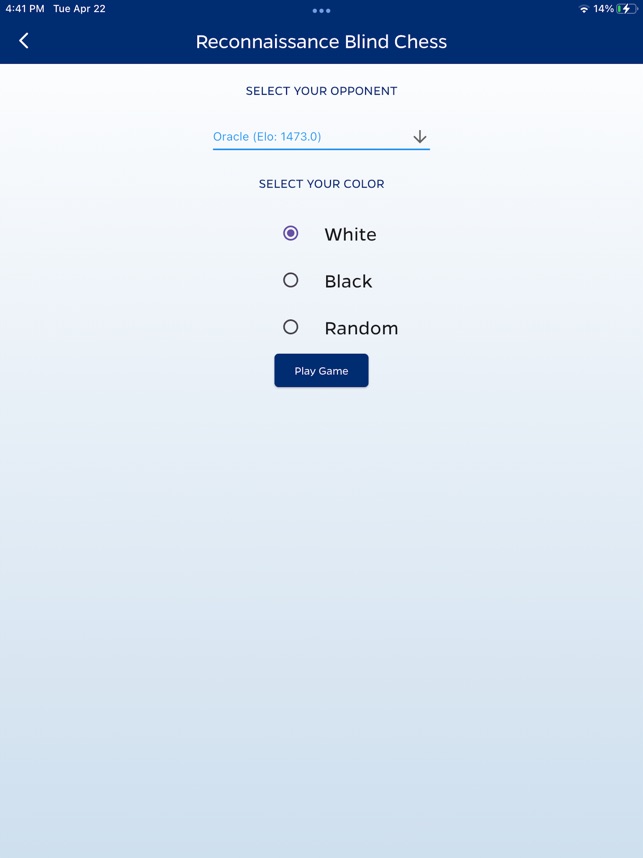
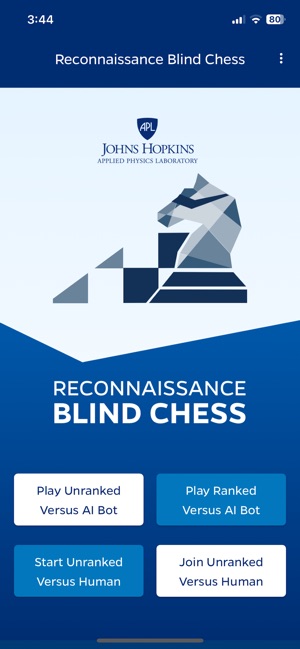
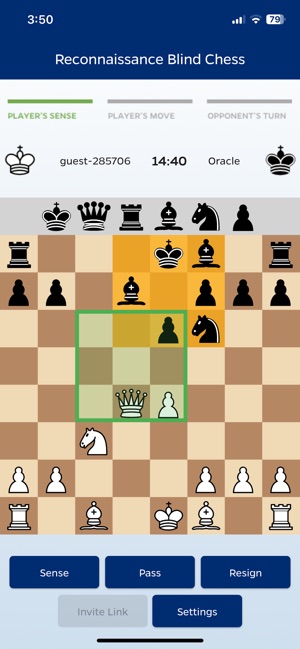
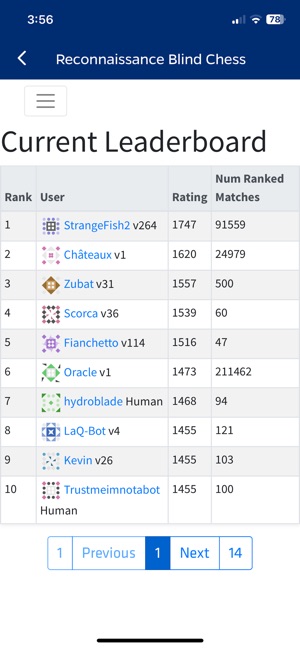
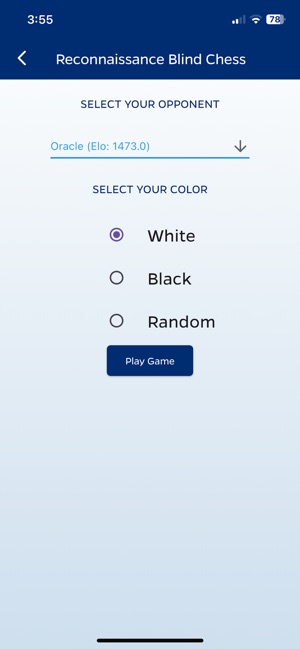
Developed by the Johns Hopkins University Applied Physics Laboratory, Reconnaissance Blind Chess (RBC) is an experimentation platform for artificial intelligence research. The system modifies standard chess by obscuring opponent piece locations. Each turn requires a player to first select a 3×3 board region to privately "sense," which reveals the true piece configuration within that area. The interface supports ranked and unranked games against bots, communicates captures opaquely, and provides visualization tools to manage state uncertainty.
Evidence & Research Context
- The platform was designed as a standardized environment to investigate AI strategies for decision-making under conditions of extreme uncertainty and limited common knowledge.
- Game-theoretic analysis demonstrates that RBC's state-space complexity is comparable to that of Go, while the average size of a player's information set is substantially larger than in games like poker.
- The system serves as the official platform for the NeurIPS machine Reconnaissance Blind Chess competition, which has hosted thousands of games between dozens of unique bot submissions.
- Published tournament results show progressive improvements in bot performance, yet the development of a sound, unexploitable playing algorithm remains an unsolved research challenge.
Intended Use & Scope
This system is intended for artificial intelligence researchers and computer scientists. Its primary utility is as a testbed for developing and benchmarking algorithms that operate with imperfect information. The platform implements a non-standard chess variant and is not designed for general chess instruction or recreational gameplay. Further guidance from associated publications is recommended for research applications.
Studies & Publications
Peer-reviewed research associated with this app.
The Machine Reconnaissance Blind Chess Tournament of NeurIPS 2022
Gardner et al. (2023) · Proceedings of Machine Learning Research
Referenced in academic literature; no direct evaluation of the appThe Second NeurIPS Tournament of Reconnaissance Blind Chess
Perrotta et al. (2022) · Proceedings of Machine Learning Research
Referenced in academic literature; no direct evaluation of the appApp Information
Developer
Johns Hopkins UniversityCategory
Evidence Profile
Published in academic literature
Platforms
Updated
Apr 2025
© 2025 Johns Hopkins University
Tags
Relevant Links
Privacy Policy


Reconnaissance Blind Chess
Free