

Renwick Gallery WONDER 360
Assessed for usability and quality
App Summary
App Screenshots
Detailed Description
Functionality & Mechanism
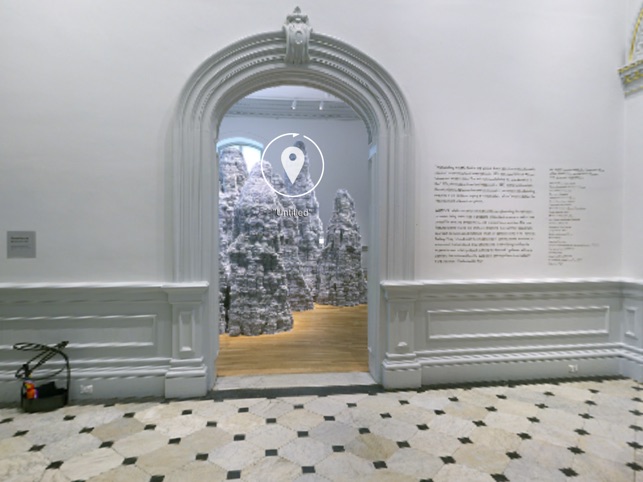
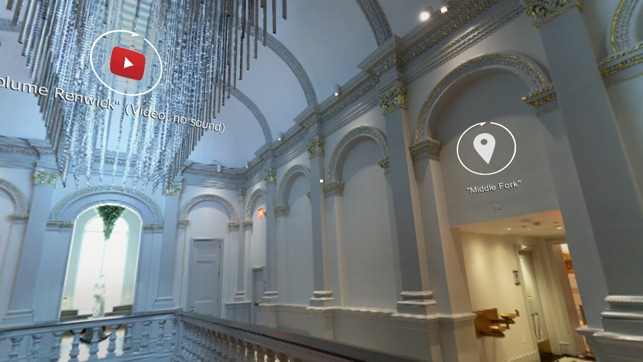
The Renwick Gallery WONDER 360 application, developed by the Smithsonian American Art Museum, provides a virtual reality experience of the WONDER exhibition. It leverages 360-degree photography to present site-specific installations from nine contemporary artists. The interface facilitates navigation through the virtual gallery space, allowing exploration of each artwork. Designed for mobile devices, the system replicates the aesthetic and immersive qualities of the physical museum visit for a remote audience, offering a digital archival representation of the temporary installation.
Evidence & Research Context
- The application's development was documented as a case study in a general research article exploring virtual reality production by the Smithsonian American Art Museum.
- The primary research objective was to evaluate mobile-based VR as a vehicle for delivering aesthetic and educational experiences to a remote audience.
- The associated publication analyzes the costs, benefits, and logistical lessons learned from this in-house production to inform future digital projects.
- This project served as a foundational experiment to establish institutional criteria for evaluating virtual visitation technologies within cultural heritage contexts.
Intended Use & Scope
This application is designed for the general public, educators, and art enthusiasts as a tool for remote virtual visitation. Its primary utility is to provide an immersive, aesthetic experience and a digital record of a temporary exhibition. The system is not a substitute for a physical museum visit and does not provide comprehensive curatorial interpretation beyond the visual presentation.
Studies & Publications
Peer-reviewed research associated with this app.
Possibilities and constraints for virtual visits: Experimental approaches to VR at the Smithsonian American Art Museum
Snyder et al. (2018) · MW 2018 Conference
Researchers successfully identified strengths and weaknesses of different VR approaches for museum virtual visits.
In the Media
Smithsonian American Art Museum releases "Renwick Gallery WONDER 360" virtual reality app
The Smithsonian American Art Museum launched Renwick Gallery WONDER 360 to provide immersive access to its blockbuster exhibition using 360-degree virtual reality technology for mobile devices. "The app captures the 'WONDER' exhibition as a moment in time and lets you carry the beauty of that experience around in your pocket, anywhere in the world," said Sara Snyder, chief of the museum's media and technology office. The app recreates the museum's most popular exhibition to date, which attracted more than 730,000 visitors and featured nine contemporary artists' gallery-sized installations.
Smithsonian American Art Museum releases "Renwick Gallery WONDER 360" virtual reality app
The Smithsonian American Art Museum developed "Renwick Gallery WONDER 360" to provide immersive 360-degree virtual reality access to its 2015 blockbuster exhibition featuring nine contemporary artists' installations, marking the Smithsonian's first published VR mobile app. Sara Snyder, chief of the museum's media and technology office, explained, "The app captures the 'WONDER' exhibition as a moment in time and lets you carry the beauty of that experience around in your pocket, anywhere in the world." The app is available for free download via iTunes for iOS devices and Google Play for Android.
App Information
Developer
Smithsonian InstitutionCategory
Evidence Profile
Assessed for usability and quality
Platforms
Updated
Aug 2016
© 2025 Smithsonian Institution
Tags
Relevant Links
Privacy Policy


Renwick Gallery WONDER 360
Free