
RescueVoice
Published in academic literature
App Summary
App Screenshots
Detailed Description
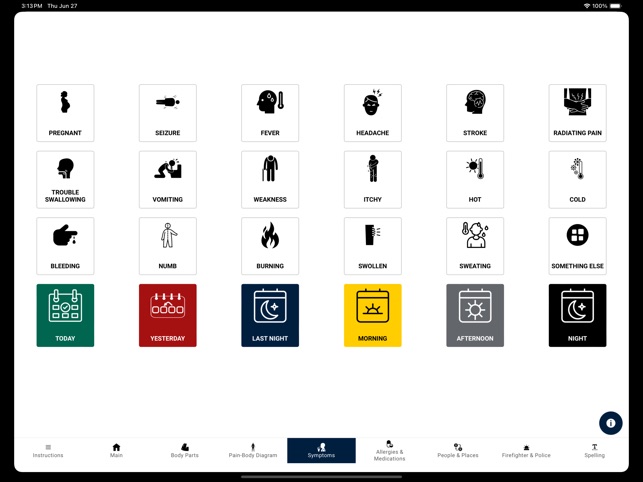
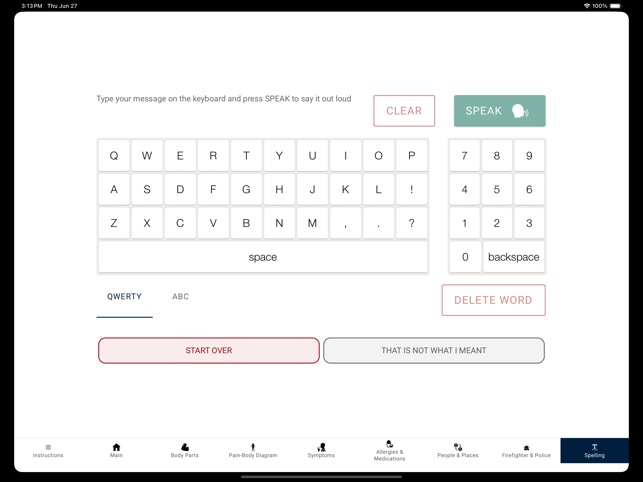
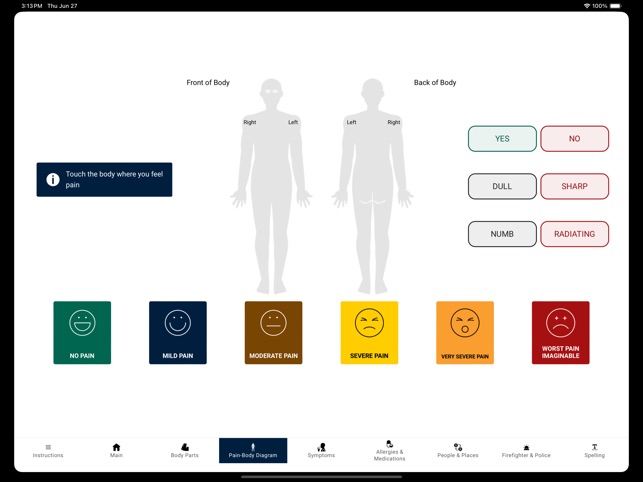
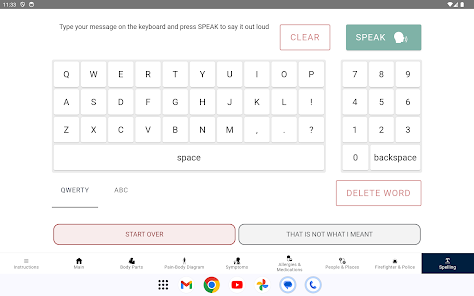
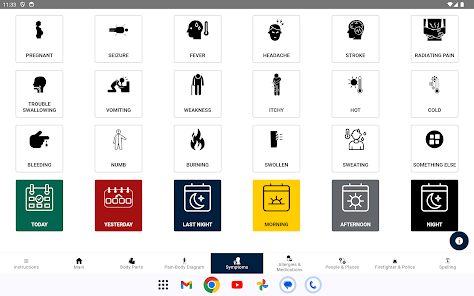
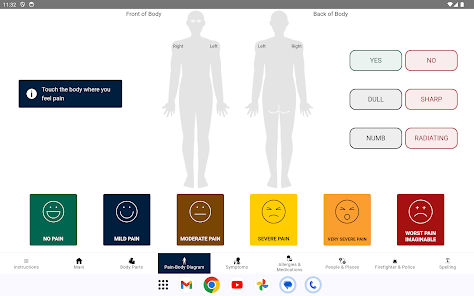
Functionality & Mechanism Developed at The University of Iowa, RescueVoice is an augmentative and alternative communication (AAC) system engineered for emergency medical settings. It facilitates communication between first responders and individuals with limited or absent speech. The interface leverages a combination of tap-to-talk icons with pre-stored, context-specific vocabulary and a text-to-speech module for custom messages. Core content domains cover symptoms, pain, allergies, and medications. The system operates in both English and Spanish to support diverse populations.
Evidence & Research Context
- The app's pre-stored vocabulary was developed based on direct input from first responders and experienced users of AAC systems.
- Associated research highlights the critical communication challenges that can arise between law enforcement or first responders and individuals with neurodevelopmental disorders.
- Academic literature indicates that behaviors associated with conditions like autism spectrum disorder (ASD) or intellectual disability (ID) can be misinterpreted during high-stress encounters.
- This research underscores the need for specialized tools and training to improve interaction safety and efficacy for vulnerable populations during emergency events.
Intended Use & Scope This application is intended for use by first responders, emergency medical personnel, and clinicians to establish initial communication in acute care settings. It functions as a point-of-care communication aid, not a comprehensive, long-term AAC solution. The system is not designed to integrate with custom third-party AAC voices and requires further clinical assessment for complex cases.
Studies & Publications
Peer-reviewed research associated with this app.
Advancing inclusivity: The case for change in law enforcement training regarding individuals with intellectual disabilities and autism
Stendel et al. (2025)
Referenced in academic literature; no direct evaluation of the appIn the Media
UI Research Working on App to Help First Responders with Communication
University of Iowa professor Krista Davidson developed RescueVoice to help first responders communicate with patients who can't speak during emergencies, using feedback she received from emergency personnel. Davidson says the app "has the potential to be life-changing" and costs $9.99 in app stores after being funded through grants and local non-profits like the Solon Lions Club. An Ohio children's hospital is among the first users of the tablet-based app, which Davidson plans to expand to smartphones and additional languages.
Iowa educator builds app to give a voice to nonverbal patients
University of Iowa professor Krista Davidson developed RescueVoice to help first responders communicate with nonverbal patients during emergencies, using speech-generating technology with tap-to-talk icons and text-to-speech capabilities. Davidson says the app includes "vocabulary related to symptoms, pain, body parts and we also have a Spanish option now where the text is in Spanish but it will speak English to the first responder." The app costs $9.99 and was funded through grants, local nonprofits, and a $10,000 prize Davidson won from UI's entrepreneur center pitch contest.
First responders receive new resource to bridge communication barriers
University of Iowa Clinical Professor Krista Davidson developed RescueVoice to bridge communication barriers between first responders and individuals with limited speech abilities, using speech-generating technology specifically engineered for emergency situations. "RescueVoice came from first responders," Davidson said, explaining they asked for an app-based solution after being given low-tech communication methods like paper boards. The app was released in 2024 and features symbols for pain indication, medical vocabulary, and pages for allergies and preexisting conditions.
CLAS faculty member develops app to bridge gap between first responders and people with limited speech during an emergency
University of Iowa clinical professor Krista Davidson developed RescueVoice to bridge challenging communication gaps between first responders and individuals with limited speech during emergencies, using digital communication tools. Davidson created the app after years of training first responders with paper-based communication boards, noting that "each group we presented to asked, 'Is there an app for that?'" RescueVoice is now available for download in the Apple Store and Google Play.
App Information
Developer
University of IowaCategory
Evidence Profile
Published in academic literature
Platforms
Updated
Jul 2025
© 2025 University of Iowa