

Showbiz Safari
Published in academic literature
App Summary
App Screenshots
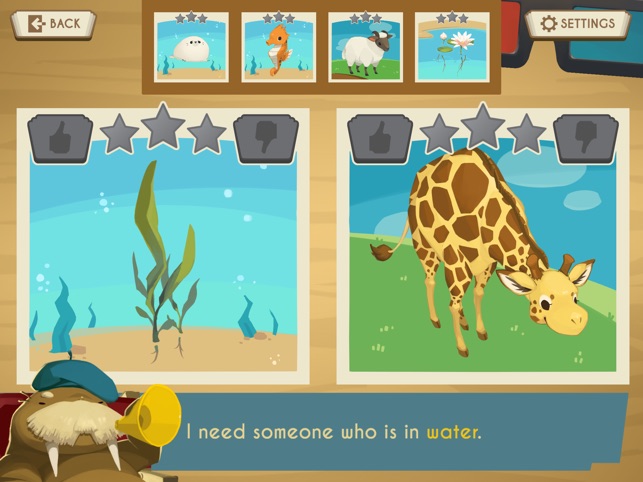
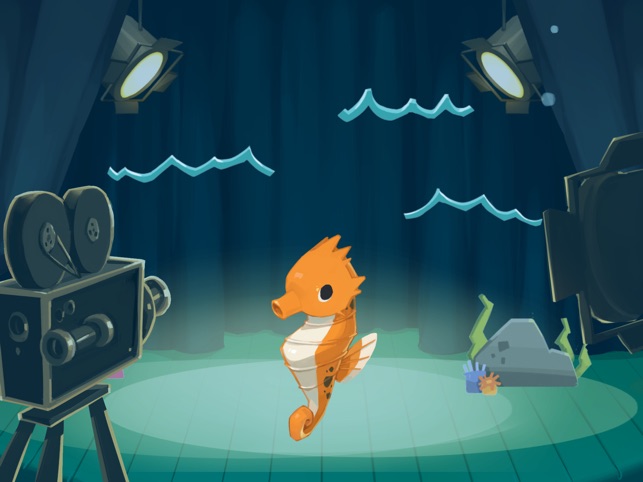
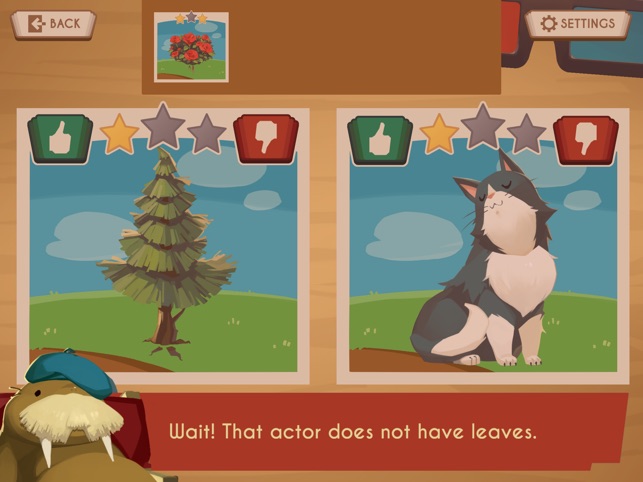
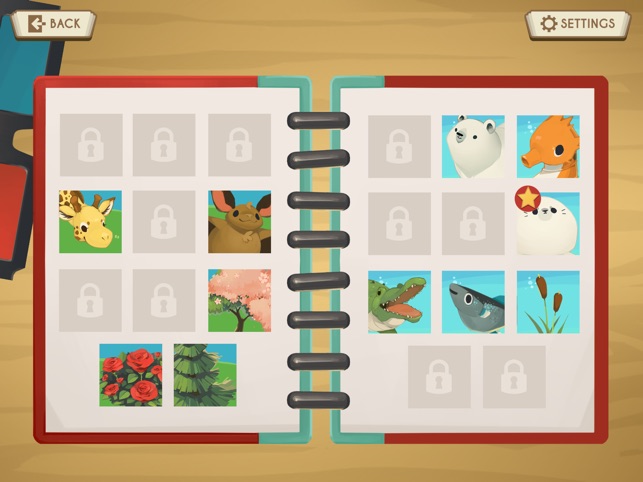
Detailed Description
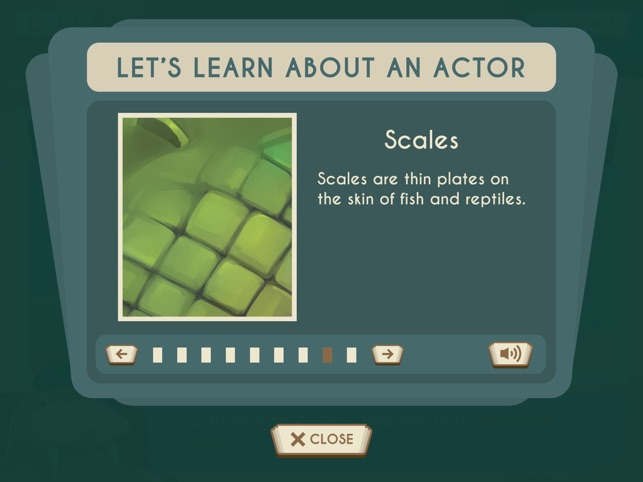
Functionality & Mechanism Developed by the Smithsonian Science Education Center, Showbiz Safari is an educational life science game that delivers pedagogical content through a simulated movie casting scenario. The interface prompts learners to select animal "actors" based on biological traits suitable for specific habitats, such as land or water. Sessions feature randomized levels to introduce a wide variety of organisms. Tapping an organism reveals further information about its characteristics. The system integrates audio and text-based content to support early readers.
Evidence & Research Context
- This app was created using the Smithsonian Science Education Center's evidence-based framework for developing educational games, as detailed in associated research.
- The framework utilizes an iterative, seven-phase design process that integrates subject matter expertise with feedback from educational stakeholders.
- A critical component of the development model is field testing in diverse classroom settings to establish usability and alignment with pedagogical goals.
- The authors of the framework describe its purpose as transforming abstract STEM concepts into dynamic, interactive learning experiences.
Intended Use & Scope The system is designed for second-grade students in classroom or at-home settings as a supplementary tool for life science education. Its primary utility is to introduce concepts of animal traits, biodiversity, and habitats. This tool is not a comprehensive curriculum and should be integrated by educators into a broader instructional plan.
Studies & Publications
Peer-reviewed research associated with this app.
Unveiling the Smithsonian's digital games success stories
Mandell et al. (2023) · SmartBrief
Referenced in academic literature; no direct evaluation of the appIn the Media
Unveiling the Smithsonian's digital games success stories
The Smithsonian Science Education Center developed Showbiz Safari as part of their digital games initiative to bring science concepts to life through engaging interactive experiences. The Center has achieved remarkable success, developing eight of the top 10 most downloaded apps across the Smithsonian Institution and earning Webby Awards nominations for Best Public Service and Activism games. Their digital games are deployed across the US and even in Ukrainian Digital Learning Centers for youth.
6 Super Cool Creatures Featured in Showbiz Safari!
The Smithsonian Science Education Center developed Showbiz Safari to teach life science concepts, using a game where students serve as assistant casting directors helping Walrus cast different organisms for three types of movies. The game features diverse creatures including dolphins that use echolocation for underwater hunting and sea turtles that migrate up to 1,400 miles between feeding grounds and nesting beaches. Students must apply their knowledge of plant and animal characteristics to match the perfect organisms for each movie role.
App Information
Developer
Smithsonian InstitutionCategory
Evidence Profile
Published in academic literature
Platforms
Updated
Dec 2015
© 2025 Smithsonian Institution
Tags
Relevant Links
Privacy Policy


Showbiz Safari
Free